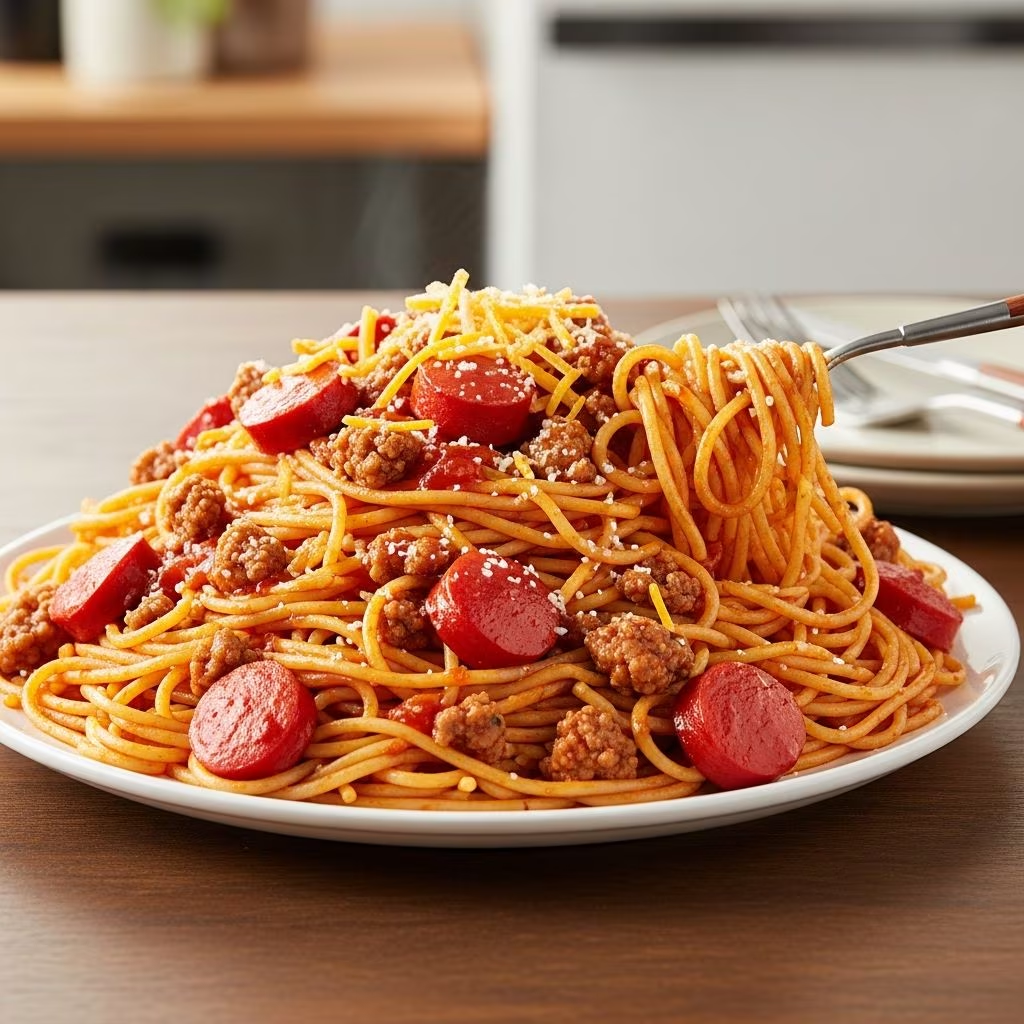
Filipino spaghetti stands out as a beloved dish that fuses familiar pasta traditions with uniquely tropical twists, creating a sweet and savory sensation that’s irresistible to both children and adults. This pasta dish, often gracing party tables and family dinners, features a rich meat sauce enhanced by banana ketchup and sliced hot dogs, topped generously with melted cheese.
The Unique Appeal of Filipino Spaghetti
What sets Filipino spaghetti apart from its Italian roots is its bold sweetness balanced with meaty depth. Introduced during the American colonial period, it evolved to incorporate local ingredients like banana ketchup—a staple condiment made from mashed bananas, sugar, and spices—resulting in a sauce that’s tangier and sweeter than traditional bolognese.
This adaptation reflects Filipino culinary ingenuity, where abundance of bananas led to innovative uses in everyday cooking. The dish’s popularity surged through fast-food chains like Jollibee, turning it into a national icon synonymous with celebrations and comfort food.
Essential Ingredients for Authentic Flavor
To capture the true essence, focus on these core components:
- Spaghetti noodles: Standard long pasta holds the thick sauce well, typically 1 pound for 4-6 servings.
- Ground beef: Lean varieties (1 pound) provide a hearty base; pork or turkey work as substitutes for variety.
- Hot dogs: Filipino-style red hot dogs (4-6, sliced diagonally) add smoky sweetness; regular beef dogs or sausages are fine alternatives.
- Banana ketchup: 1/2 to 1 cup delivers the signature sweetness; regular ketchup plus sugar mimics it if unavailable.
- Tomato base: Combine sauce (2 cups) and paste (1/2 cup) for richness, plus beef broth for depth.
- Aromatics and veggies: Onions, garlic, bell peppers, and carrots build flavor layers.
- Sweeteners and seasonings: Sugar (1-2 teaspoons), evaporated milk (optional for creaminess), and seasoning mixes like Magic Sarap.
- Cheese topping: Grated quick-melt cheddar (1/2-1 cup) is non-negotiable for that gooey finish.
These elements create a sauce that’s thick, clingy, and packed with umami, distinguishing it from milder Western versions.
Historical Roots and Cultural Significance
Filipino spaghetti traces back to the 1940s during World War II, when American soldiers brought spaghetti bolognese to the Philippines. Local cooks adapted it using available ingredients, swapping ragu for sweeter profiles influenced by banana ketchup, invented in the 1940s by Maria Orosa to bypass tomato shortages.
Post-war, it became a fixture in homes and eateries. Jollibee’s version in the 1980s propelled it to fame, blending fast-food convenience with nostalgic flavors. Today, it’s a staple at birthdays, fiestas, and school events, symbolizing joy and togetherness.
| Aspect | Filipino Spaghetti | Italian Bolognese |
|---|---|---|
| Sweetness | High (banana ketchup, sugar) | Low (herbs, wine) |
| Meats | Ground beef + hot dogs | Ground beef/pork + pancetta |
| Sauce Base | Tomato sauce + ketchup | Tomato puree + milk |
| Topping | Melted cheddar | Parmesan |
| Occasion | Parties, kids’ favorite | Everyday dinner |
Step-by-Step Recipe Guide
Preparing Filipino spaghetti is straightforward, taking about 45 minutes. This yields 6 servings.
- Boil pasta: Cook 1 lb spaghetti in salted water per package instructions until al dente. Drain and set aside, tossing with oil to prevent sticking.
- Brown hot dogs: In a large pan over medium heat, sauté sliced hot dogs (4 links) in 1 tbsp oil until browned and crisp-edged. Remove and reserve.
- Sauté aromatics: In the same pan, cook 1 chopped onion, 3 minced garlic cloves, 1 chopped bell pepper, and 1 grated carrot until softened, about 5 minutes.
- Cook meat: Add 1 lb ground beef, breaking it up as it browns. Drain excess fat.
- Build sauce: Stir in 2 cups tomato sauce, 1/2 cup tomato paste, 1 cup banana ketchup, 1 cup beef broth, and 1-2 tsp sugar. Season with salt, pepper, and optional Magic Sarap. Simmer covered for 20-30 minutes until thickened, adding broth if needed.
- Combine: Mix in browned hot dogs and cooked spaghetti. Stir in a splash of evaporated milk for creaminess if desired.
- Serve: Plate and top with 1/2 cup grated cheddar cheese. Garnish with parsley.
Pro tip: Adjust sweetness by tasting during simmering—some prefer less sugar for balance.
Customizations and Variations
Filipino spaghetti’s versatility allows endless tweaks:
- Protein swaps: Use ground pork, chicken, turkey, or plant-based crumbles for lighter options. Add bacon or spam for extra smokiness.
- Vegetable boosts: Incorporate mushrooms, celery, or fresh tomatoes for nutrition without overpowering flavors.
- Spice it up: A pinch of chili flakes or soy sauce adds subtle heat and savoriness.
- Make-ahead: Sauce stores in the fridge for 3 days or freezes for months; reheat with pasta.
- Kid-friendly: Double cheese and hot dogs for picky eaters.
- Gluten-free: Swap spaghetti for rice noodles or zucchini noodles.
For Jollibee-style authenticity, emphasize banana ketchup and lean beef exclusively.
Perfecting Texture and Taste
Achieving restaurant-quality results hinges on technique. Use lean meat to avoid greasiness, and simmer low-and-slow for sauce cohesion. Banana ketchup’s thickness prevents watery sauce—dilute sparingly.
Cheese melts best when sprinkled hot; quick-melt varieties like Eden are ideal outside the Philippines. Balance sweetness by starting low on sugar, as natural fruit sugars in ketchup amplify over time.
Pairing Suggestions and Serving Ideas
Serve Filipino spaghetti hot with garlic rice, lumpia (spring rolls), or ensalada for a full Pinoy meal. Beverages like calamansi juice or iced tea cut through the richness.
For parties, keep warm in a chafing dish and set up a toppings bar: extra cheese, green onions, or fried garlic.
Frequently Asked Questions
What is banana ketchup, and where to find it?
Banana ketchup is a sweet, banana-based condiment popular in the Philippines. Look for brands like UFC or Jufran in Asian markets; substitute regular ketchup + 1 tsp sugar per 1/2 cup.
Can I make it vegetarian?
Yes—omit meat, use lentils or mushrooms, and vegetable broth. It retains sweetness and heartiness.
How spicy is Filipino spaghetti?
Not spicy by default; it’s sweet-savory. Add chili for heat.
Does it reheat well?
Absolutely—sauce thickens beautifully. Add water when reheating pasta.
What’s the best cheese?
Quick-melt cheddar for gooeyness; parmesan works but less traditional.
Nutritional Snapshot
Per serving (1/6 recipe): ~550 calories, 25g protein, 70g carbs, 18g fat. High in iron from beef; veggies add vitamins. Adjust portions for diets.
References
- Filipino-Style Spaghetti — Iankewks. 2023. https://www.iankewks.com/filipino-style-spaghetti/
- Filipino Spaghetti — Pinch of Yum. 2022. https://pinchofyum.com/filipino-spaghetti
- Filipino-style Spaghetti — Kawaling Pinoy. 2024. https://www.kawalingpinoy.com/filipino-style-spaghetti/
- Jollibee Filipino Spaghetti RECIPE — YouTube (LookCatchu). 2023-10-15. https://www.youtube.com/watch?v=7v1G4kk5ZP0
- Jollibee Spaghetti (Filipino-style Spaghetti) — Urban Bliss Life. 2023. https://urbanblisslife.com/jollibee-style-filipino-spaghetti/