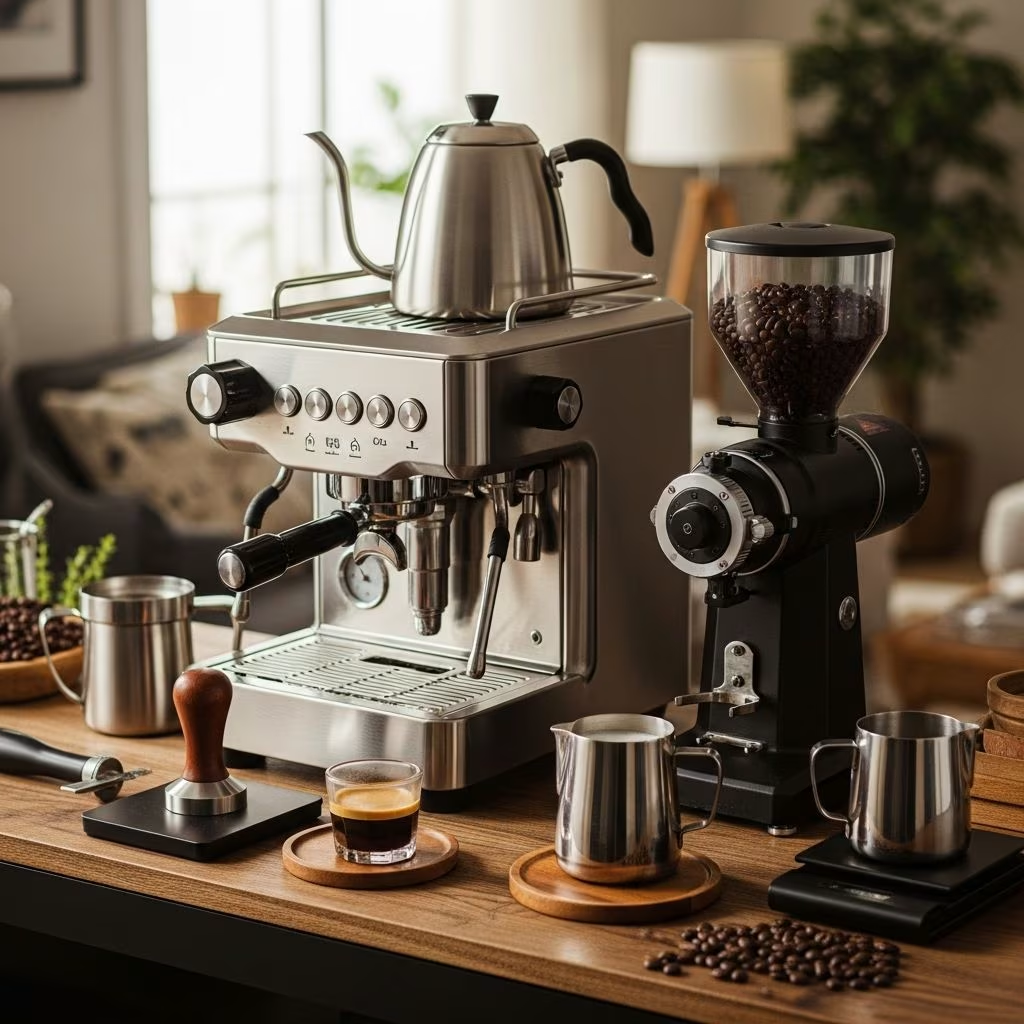
Creating a satisfying home coffee routine goes far beyond simply purchasing any machine and beans from your local grocery store. The journey toward brewing excellent coffee at home requires thoughtful consideration of various tools, each playing a specific role in the extraction process. Whether you’re beginning your coffee exploration or refining an existing setup, understanding what equipment matters most will help you make informed decisions that align with your lifestyle and preferences.
The foundation of any successful home coffee operation rests on a few core principles: consistency, precision, and understanding your preferred brewing method. This guide explores the essential components of a home coffee setup, helping you navigate the often-overwhelming world of coffee equipment with clarity and purpose.
The Critical Role of Grinding Equipment
Among all the equipment you might purchase, none has a greater impact on your final cup than the grinder. The grinder determines the surface area of your coffee particles, which directly controls how quickly water extracts flavors and compounds from the grounds. Many coffee enthusiasts overlook the grinder’s importance, mistakenly believing that a high-end brewer can compensate for inconsistent grinding.
The primary distinction in grinder technology separates burr grinders from blade grinders. Burr grinders use two revolving surfaces—either conical or flat burrs—to crush beans uniformly. This design produces particles of consistent size, which is essential for even extraction. Blade grinders, conversely, chop beans randomly, creating an inconsistent mixture of particle sizes from dust to chunks. This irregularity inevitably leads to uneven extraction, resulting in sour or bitter notes depending on which particle size dominates your brew.
Electric Burr Grinders: Speed and Convenience
Electric burr grinders have become the practical choice for most home coffee enthusiasts. These machines excel at processing larger quantities of coffee quickly, making them ideal for people who brew multiple cups daily. The user experience is remarkably straightforward: simply measure your beans, add them to the hopper, select your desired grind size, and press a button.
The advantages of electric grinders include efficiency, minimal effort, and the ability to dial in precise grind settings. Many quality models offer multiple grind size options, allowing you to transition smoothly between brewing methods. The investment in a reliable electric grinder typically ranges from eighty to several hundred dollars, depending on features and build quality.
However, electric grinders do present certain trade-offs. They occupy more counter space than hand grinders, require electrical access, and often need regular cleaning to maintain optimal performance. Some models generate considerable heat during grinding, which can affect the flavor profile of your beans if you’re processing large quantities.
Manual Burr Grinders: Portability and Ritual
For those who value the meditative aspect of coffee preparation or prioritize portability, manual burr grinders offer an appealing alternative. These hand-operated devices produce consistently sized particles through mechanical crushing, delivering comparable results to electric models. The grinding process requires active participation, which many coffee lovers find rewarding rather than burdensome.
Manual grinders typically cost less than their electric counterparts and require no electricity. For travelers or people with limited kitchen space, this portable solution works exceptionally well. The primary drawback involves time investment—grinding enough coffee for multiple cups can take several minutes depending on the grind size and your physical effort.
Precision Measurement Through Scales
Achieving consistency in your coffee brewing depends significantly on accurate measurement. While many people rely on scoops or eyeballing their coffee and water amounts, a dedicated coffee scale transforms your brewing precision dramatically.
Digital scales specifically designed for coffee brewing display weight in grams or ounces, enabling you to measure both your dry coffee grounds and the precise volume of water you use. This quantifiable approach removes guesswork from the brewing equation. For methods like pour-over brewing, you can place your brewer on the scale and measure water as you pour, maintaining exact control over your coffee-to-water ratio.
Quality coffee scales range from budget-friendly options around sixteen to twenty dollars up to specialized scales exceeding two hundred dollars. Many mid-range scales include integrated timers, which helps you track your brew time while simultaneously measuring weight—a valuable feature for methods that depend on specific timing.
Temperature Control Through Advanced Kettles
Water temperature dramatically influences extraction rates and the flavor profile of your finished coffee. Too-hot water over-extracts, pulling excessive bitter compounds, while water that’s too cool under-extracts, leaving your coffee thin and sour.
Temperature-controlled kettles feature digital displays that let you set and maintain water at specific temperatures. These electric kettles heat water to your desired degree and maintain that temperature, ensuring consistency across multiple brewing sessions. This level of precision elevates the entire brewing experience, particularly for methods sensitive to temperature variations.
The Gooseneck Advantage
Beyond temperature control, the spout design of your kettle significantly affects brewing quality. Gooseneck kettles feature elongated, slender necks that provide superior pouring control. This design allows you to direct water with precision, essential for pour-over methods where proper saturation of grounds determines extraction quality.
A gooseneck spout enables slow, controlled circular pouring motions that ensure even water distribution across all your coffee grounds. This careful pour technique promotes balanced extraction throughout your brewing process. Many coffee enthusiasts find that upgrading to a quality gooseneck kettle with temperature control represents one of the most impactful equipment investments they make.
Exploring Primary Brewing Methods
The brewing method you choose fundamentally shapes your entire equipment ecosystem and daily routine. Different approaches to combining ground coffee with hot water produce distinctly different flavor profiles and require varying equipment investments.
Pour-Over Brewing: Control and Clarity
Pour-over methods represent an excellent starting point for home brewers seeking maximum control. These brewers work through a simple principle: hot water flows through a bed of coffee grounds supported by a filter, with gravity pulling the water downward through the coffee and into your cup or carafe below.
The pour-over category includes various dripper designs, each offering slightly different water flow characteristics and flavor results. The core equipment need involves only a dripper, filters, and hot water, making this method both accessible and forgiving for beginners. The hands-on nature of pour-over brewing appeals to people who enjoy actively participating in their coffee preparation.
French Press: Full-Bodied Immersion
French press brewing uses an immersion method where coffee grounds steep directly in hot water for several minutes. This extended contact time extracts a fuller-bodied cup with more oils and sediment compared to filtered methods. The result tastes richer and more robust, appealing to people who prefer heavier mouthfeel.
French press equipment consists of a glass or metal carafe with a plunger fitted with a metal mesh filter. The simplicity of this design keeps costs low, though glass versions require careful handling to avoid breakage. The main consideration involves cleanup—the mesh filter retains some sediment and oils, requiring thorough rinsing after each use.
AeroPress: Versatility and Speed
The AeroPress occupies a unique middle ground between pour-over and immersion brewing. This compact device uses air pressure and a combination of immersion and filtration to produce coffee quickly, typically within two to three minutes. The brewing chamber holds grounds, water, and a paper filter, with a plunger creating pressure that forces water through the coffee into your cup.
AeroPress brewers are remarkably portable, affordable, and easy to clean. The paper filters produce a clean cup similar to pour-over while the immersion phase creates more body than standard drip brewing. This versatility appeals to travelers and people who appreciate experimenting with different brewing parameters.
Automatic Drip Coffee Makers: Convenience Brewing
Automatic drip machines represent the most straightforward approach to brewing multiple cups with minimal active participation. These brewers heat water internally and distribute it over grounds in a filter basket, collecting brewed coffee in a carafe below. Many modern models include programmable features, allowing you to schedule brewing time in advance.
Drip coffee makers range from simple mechanical models to sophisticated machines with temperature stability and precise water distribution systems. For busy mornings or households where multiple people drink coffee at different times, a quality drip brewer provides reliable, hands-off coffee production.
Espresso and Beyond: Advanced Equipment Options
Espresso represents an entirely different coffee category, requiring specialized equipment that forces hot water through finely ground coffee under pressure. Espresso machines range from simple manual lever models to fully automatic machines with built-in grinders and milk frothing systems.
Home espresso machines present a higher barrier to entry than other brewing methods, both financially and technically. Entry-level machines start around two hundred dollars, while quality models often exceed five hundred. Additionally, espresso demands a steeper learning curve—dialing in the correct grind, tamping pressure, and extraction time takes practice.
For people committed to espresso, machines offering programmable shot volumes and consistent temperature control simplify the learning process. Many quality espresso machines include components like portafilters, filter baskets, tampers, and milk pitchers, providing most of what you need to begin creating espresso-based beverages at home.
Storage and Bean Preservation
Once you’ve invested in quality beans and equipment, proper storage preserves the flavor compounds that make specialty coffee worthwhile. Coffee begins deteriorating immediately after roasting, with oxidation and moisture exposure gradually diminishing quality.
Airtight containers specifically designed for coffee storage protect your beans from oxygen, moisture, and light exposure. Vacuum canisters represent the premium option, using one-way valves to eliminate oxygen while remaining simple to use. Standard airtight containers cost significantly less while still providing substantial protection compared to storing beans in their original bags or in regular containers.
Store your containers in a cool, dark location away from direct sunlight. Many coffee enthusiasts keep their beans in kitchen cabinets rather than on countertops, where light exposure accelerates degradation. Avoid refrigerating or freezing beans, as condensation damage outweighs any potential benefits from temperature reduction.
Building Your Setup: Equipment Categories and Budget Considerations
| Equipment Category | Budget Option | Mid-Range Option | Premium Option |
|---|---|---|---|
| Grinder | Burr grinder ($85-99) | Electric conical burr ($139-199) | High-end burr grinder ($250+) |
| Kettle | Basic gooseneck ($20-30) | Temperature-controlled gooseneck ($80-120) | Premium temperature-control kettle ($150+) |
| Scale | Basic digital scale ($17-25) | Scale with timer ($50-75) | Precision espresso scale ($200+) |
| Brewer | Pour-over or AeroPress ($15-30) | Quality drip maker ($100-200) | Espresso machine ($500+) |
| Storage | Standard airtight container ($20-30) | Quality sealed canister ($35-50) | Vacuum storage system ($75+) |
Frequently Asked Questions About Home Coffee Equipment
Do I really need both a scale and a grinder to make good coffee?
While scales and grinders each play important roles, the grinder is non-negotiable for quality coffee. Inconsistent grind size creates uneven extraction and unpredictable flavor. Scales significantly improve consistency, but you can brew acceptable coffee using weight estimates with an experienced hand. However, starting with both tools establishes better habits from the beginning.
What brewing method should I choose as a beginner?
Pour-over or AeroPress methods offer excellent starting points. Both methods are forgiving, affordable, and relatively simple to master. They require minimal equipment investment while teaching fundamental brewing principles that transfer to other methods. As your skills develop, you can explore additional methods.
Is an expensive espresso machine worth the investment?
Espresso machines demand significant financial and time investment alongside a steep learning curve. For casual drinkers, alternative brewing methods deliver excellent results at lower cost. However, if you’re committed to daily espresso consumption, a quality machine eliminates cafe visits and pays dividends over time.
How often should I clean my brewing equipment?
Clean your brewer after every use to prevent oil buildup and flavor degradation. For equipment like French press or AeroPress, daily rinsing is sufficient. Espresso machines require more thorough backflushing and cleaning. Deep cleaning—descaling kettles and thoroughly flushing machines—should occur monthly depending on water hardness and usage frequency.
Can I use pre-ground coffee, or do I need to grind whole beans?
Pre-ground coffee begins losing flavor immediately after grinding. Whole beans retain flavor compounds significantly longer. For optimal results, grind immediately before brewing. However, quality pre-ground coffee from specialty roasters beats poor-quality whole beans any day. If grinding isn’t feasible, purchase pre-ground coffee from reputable sources and use it quickly.
Creating Your Ideal Setup
Building an effective home coffee system doesn’t require purchasing everything simultaneously or spending excessively. Start with essentials—a quality grinder, your preferred brewing method, and filtered water—then expand gradually as your skills and preferences develop. Pay careful attention to your grinder investment, as this equipment influences every cup you brew.
Consider your daily routine, available space, and brewing preferences when selecting equipment. A busy professional might prioritize automatic drip brewers for convenience, while a weekend enthusiast might embrace pour-over’s hands-on control. There’s no single correct setup; instead, the best equipment aligns with your lifestyle and priorities.
As you gain experience, you’ll discover which equipment features genuinely matter to your brewing experience and which represent unnecessary complications. This hands-on learning process transforms casual coffee drinkers into thoughtful enthusiasts who appreciate the craft and science behind their favorite beverage.
References
- Beginner’s Guide to Home Coffee Essentials and Accessories — Ratio Coffee. 2024. https://ratiocoffee.com/blogs/coffee-guides/beginner-s-guide-to-home-coffee-essentials-and-accessories
- The Coffee Lover’s Toolkit: Essential Gear for Your Best Home Brew — 787 Coffee. 2024. https://www.787coffee.com/blog/home-barista-equipment
- Best Coffee Making Equipment — Drink Trade. 2024. https://www.drinktrade.com/blogs/education/best-home-coffee-brewing-equipment
- Coffee Essentials to Make Great Coffee at Home — Low Key Coffee Snobs. 2024. https://www.lowkeycoffeesnobs.com/recommended-products/
- The Best Way to Make Coffee at Home (2026) Tested by Baristas — Coffee Chronicler. 2026. https://coffeechronicler.com/best-way-to-make-coffee-at-home/