Cooking a special dinner at home offers an opportunity to create meaningful moments with loved ones. Among all protein choices, few ingredients carry the same prestige and luxurious appeal as lobster. Its delicate sweetness, tender texture, and association with fine dining make it an ideal centerpiece for occasions you want to remember. Whether celebrating an anniversary, planning a proposal, or simply wanting to impress your partner, lobster-based meals elevate any intimate gathering beyond the ordinary.
Why Lobster Remains the Choice for Special Dinners
Lobster has earned its reputation as a symbol of celebration and elegance. The ingredient transcends being merely food—it represents thoughtfulness and effort. When you prepare lobster at home rather than visiting a restaurant, you demonstrate commitment to creating something meaningful. The process of cooking lobster requires attention to detail and timing, transforming the meal into an act of care.
The flavor profile of lobster works beautifully across multiple culinary styles. Its mild, slightly sweet taste pairs seamlessly with rich butter sauces, delicate herbs, and refined preparations. Unlike more assertive proteins, lobster enhances rather than dominates accompanying flavors, making it versatile for various sauce combinations and side dishes.
Classic Creamy Pasta Preparations
Lobster pasta dishes represent one of the most accessible yet impressive preparations for home cooks. The combination of tender pasta, succulent lobster meat, and luxurious cream-based sauces creates restaurant-quality results in your own kitchen.
Alfredo-Style Lobster and Seafood Pasta
This preparation pairs lobster with complementary seafood like shrimp, creating depth and complexity. The dish begins with fresh ingredients: quality butter, heavy cream, Parmesan cheese, and aromatic garlic. Fresh fettuccine or linguine serves as the foundation, providing texture that captures the sauce beautifully.
Preparation involves several coordinated steps. Begin by bringing salted water to a boil for the pasta. Simultaneously, prepare the lobster tails through broiling, ensuring the meat stays tender and moist. Sauté shrimp separately with garlic until just cooked through. The cream sauce develops through gentle heating—never boiling—which prevents separation and maintains silky consistency. Combining all elements at the final moment ensures each component retains its optimal texture.
Wine selection matters significantly. A crisp Chardonnay or Pinot Grigio complements the richness of the sauce while cleansing the palate between bites. These wines’ acidity cuts through the cream beautifully, enhancing rather than competing with the delicate seafood flavors.
Herbed Cream Sauce Lobster Pasta
This version incorporates fresh herbs—tarragon, thyme, and parsley—creating a more nuanced flavor profile. The sauce building process differs slightly, incorporating tomato paste and fresh tomatoes alongside the cream, adding subtle acidity and complexity.
The technique involves sautéing reserved lobster shells and bodies to extract flavor compounds, creating a rich foundation. This step, often skipped in simpler preparations, distinguishes restaurant-quality results from basic versions. White wine and vinegar add brightness, while fresh herbs provide aromatic complexity that elevates the entire dish.
Creamy Risotto with Lobster
Lobster risotto offers a more interactive cooking experience, ideal for couples who enjoy preparing meals together. This Northern Italian preparation showcases lobster as a prominent element while creating a luxurious, velvety base.
Technique Essentials
Successful risotto requires constant attention and proper rice selection. Arborio or Carnaroli rice varieties contain sufficient starch to create creamy consistency without cream alone. The process involves toasting rice briefly in butter and aromatics before gradually adding warm broth, stirring frequently to release starches gradually.
Lobster integration works best in two approaches. Some cooks dice lobster meat and stir it directly into the developing risotto during the final minutes, allowing it to absorb flavors while staying tender. Others plate the risotto and crown each serving with lobster pieces, creating visual elegance and highlighting the protein.
Flavor Development
Brown butter—butter cooked until milk solids caramelize—adds nuttiness and depth impossible to achieve with regular butter. Incorporating this element transforms risotto from pleasant to memorable. White wine, typically a dry variety like Sauvignon Blanc, adds acidity that brightens the richness.
Finishing touches include fresh chives, additional Parmigiano-Reggiano, and perhaps a whisper of lobster roe if available. These elements add visual appeal and textural variety, preventing the dish from feeling one-dimensional.
Simplified Elegant Preparations
Broiled Lobster Tails with Complementary Sides
Not every impressive meal requires complex techniques. Sometimes simplicity showcases ingredients best. Broiled lobster tails paired with roasted asparagus and garlic mashed potatoes creates elegant plating within 30 minutes.
The broiling technique proves straightforward: split lobster tails lengthwise, brush with melted butter infused with garlic and herbs, then broil 8-10 minutes until meat turns opaque. The direct heat creates slightly caramelized edges while maintaining tender interiors.
Accompanying vegetables deserve equal attention. Asparagus, when roasted with olive oil and sea salt, develops caramelized edges and concentrated flavor. Mashed potatoes enriched with butter and perhaps a touch of cream create comfort alongside the luxury of lobster, a sophisticated contrast appreciated at the finest establishments.
Lobster with Creamy Polenta Base
Polenta, cornmeal cooked slowly in broth until creamy, provides an unexpected yet elegant foundation for lobster. The ingredient pairs naturally with butter and Parmigiano-Reggiano, creating richness that complements rather than overwhelms delicate lobster meat.
This preparation appeals to those seeking alternatives to traditional starches. The corn’s subtle sweetness echoes lobster’s own gentle flavor, creating harmonious rather than contrasting elements on the plate.
Contemporary Flavor Explorations
Tropical-Inspired Lobster Tacos
Not all romantic meals require traditional French technique. Lobster tacos with mango salsa offer vibrancy and freshness while maintaining sophistication. Tender lobster meat, gently warmed and perhaps touched with lime, pairs beautifully with ripe mango’s sweetness and fresh cilantro’s aromatic qualities.
This preparation works well for couples preferring lighter fare or those seeking meals reflecting their cultural preferences. The informality of tacos paradoxically can feel more intimate than formal plating, encouraging shared enjoyment and conversation.
Lobster and Avocado Salad
Health-conscious elegance emerges through lobster and avocado combinations. Crisp greens, tender lobster chunks, creamy avocado, and bright vinaigrette create dishes that feel indulgent while remaining nutritionally balanced.
This option suits various occasions—anniversary lunches, lighter dinner preferences, or situations where kitchen time constraints matter. The salad’s visual appeal through contrasting colors and textures creates restaurant presentation without complex technique.
Sauce and Flavor Enhancements
The sauce accompanying lobster determines much of the dining experience. Several proven approaches enhance rather than mask the ingredient’s inherent qualities.
Butter-Based Sauces
Clarified butter, drawn butter with garlic, or brown butter represent the simplest yet most effective accompaniments. These preparations highlight lobster’s natural sweetness without introducing competing flavors. A squeeze of fresh lemon juice brightens butter’s richness, providing contrast and preventing heaviness.
Cream-Forward Preparations
Heavy cream-based sauces create luxurious mouthfeel that many associate with special occasion dining. Building these sauces requires restraint—using cream to complement rather than smother. Fresh herbs, white wine, and subtle aromatics prevent cream from becoming cloying.
Tomato-Influenced Approaches
For those preferring brighter, more acidic flavor profiles, tomato-based preparations offer elegance. Lobster fra diablo, featuring spicy tomato sauce, appeals to those comfortable with heat and intensity. The acidity of tomatoes balances lobster’s richness naturally, requiring less cream and butter to achieve satisfaction.
Wine and Beverage Pairings
Beverage selection significantly impacts the overall dining experience. Wine pairing considers both the lobster itself and its accompanying sauce.
| Sauce Profile | Wine Recommendations | Characteristics |
|---|---|---|
| Butter or Cream-Based | Chardonnay, Pinot Grigio | Bright acidity cuts richness, complements delicate flavors |
| Tomato or Spiced | Pinot Noir, Vermentino | Earthiness and slight tannin structure balance intensity |
| Light or Herb-Focused | Sauvignon Blanc, Albariño | Herbal notes echo preparation, refresh palate |
| Rich and Luxurious | Prosecco, Champagne | Bubbles add festive element, acidity prevents heaviness |
Beyond wine, consider cocktails for aperitifs. A classic martini precedes dinner beautifully, setting an elegant tone. Champagne or sparkling wine, whether for toasting or sipping throughout the meal, elevates any occasion from pleasant to memorable.
Essential Cooking Techniques and Timing
Selecting Quality Lobster
Success begins at the market. Live lobsters should move when handled, indicating freshness. Tail meat should be firm, white or slightly translucent, never brown or mushy. Frozen lobster tails, properly thawed, work acceptably but fresh lobster delivers superior flavor and texture.
Cooking Methods Explained
Boiling: Traditional and effective, though some argue it dilutes flavor. Boiling works well when lobster will be incorporated into other dishes, as the cooking time is predictable. Maintain a rolling boil—lobster cooks approximately 12 minutes for 1.5-pound specimens.
Broiling: Ideal for lobster tails, this method creates desirable texture and allows flavor building through herb butter. Broiling requires less time than boiling, typically 8-10 minutes, and produces slightly caramelized surfaces.
Steaming: Gentle and flavorful, steaming prevents dilution while maintaining tender meat. This method works beautifully when you plan serving lobster with melted butter or specialized sauces.
Doneness Indicators
Properly cooked lobster meat appears opaque white throughout, never translucent. The shell transitions from blue-green to bright red when fully cooked. For tail meat, a toothpick inserted through the thickest section should meet no resistance. Slightly underdone lobster remains tender and succulent; overcooking produces tough, rubbery texture impossible to remedy.
Plating and Presentation
The visual component of dining matters profoundly. Restaurant presentation translates surprisingly well to home settings with modest attention.
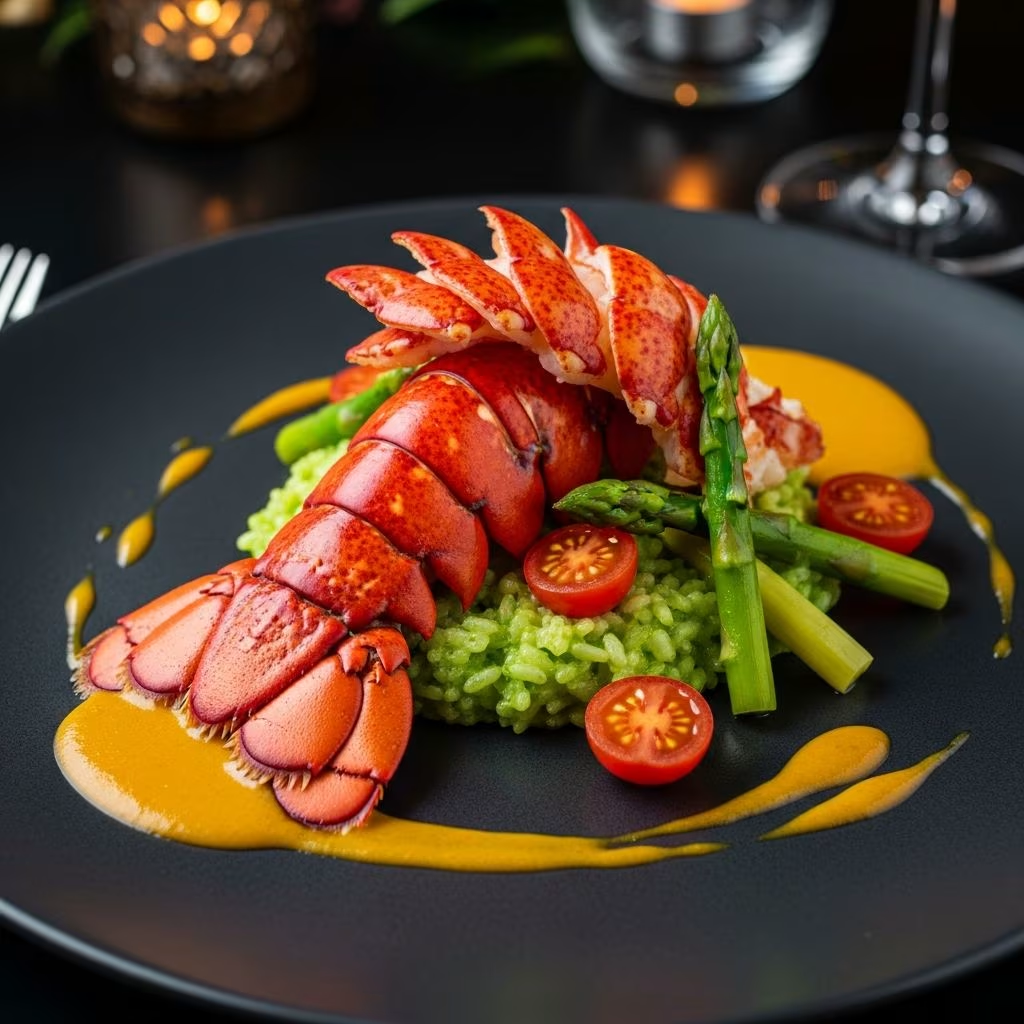
Odd-numbered plating elements create visual interest—three asparagus spears, a single herb sprig, perhaps one edible flower. Negative space on the plate, rather than crowding, suggests refinement. Height variation through component stacking or standing vegetables upright adds dimension that flat arrangements lack.
Color contrast enhances appeal. Vibrant green asparagus against creamy risotto, scarlet lobster against pale butter sauce, or fresh herbs as garnish against neutral backgrounds all create visual interest supporting the culinary experience.
Timeline for Preparation Success
Effective entertaining requires planning. A suggested timeline prevents last-minute stress:
- Two days prior: Plan menu, confirm ingredient availability, acquire fresh lobster if possible
- One day prior: Prepare any components allowing advance preparation—homemade pasta, stocks, or desserts
- Two hours before: Set table, chill wine, prepare aromatics and ingredients
- One hour before: Begin risotto, bring pasta water to boil, or preheat broiler depending on menu
- 30 minutes before: Cook lobster, prepare sauce, finish garnishes
- Final minutes: Complete plating, final seasoning adjustments, brief resting if needed
Frequently Asked Questions
Can I prepare components in advance?
Yes. Sauces and many sides can be prepared earlier and gently reheated. Pasta cooks best just before serving but can be prepared slightly underdone and finished with sauce. Risotto requires last-minute attention but benefits from completed stock and prepared ingredients.
How do I prevent overcooking lobster?
Use a timer religiously—different sizes require different times. Remove lobster slightly before full doneness if incorporating into warm dishes; carryover cooking finishes the process. When in doubt, undercook slightly rather than overcooking.
What alternatives exist for guests with seafood preferences?
Many preparations adapt beautifully to other proteins. Risotto works wonderfully with mushrooms or asparagus. Pasta sauces accommodate scallops, shrimp, or even chicken. Consider preferences when planning but remember that serving lobster typically indicates a special occasion worthy of the specific protein.
How much lobster per person is appropriate?
For main course servings, plan 1.25 to 1.5-pound whole lobsters or 6-8 ounces lobster meat per person. When lobster combines with pasta or risotto, slightly less suffices as the dish becomes the focus rather than the protein alone.
References
- Romantic Lobster & Shrimp Alfredo Dinner — The Crab Place (YouTube). 2024. https://www.youtube.com/watch?v=Fifa8SMIKUE
- Date Night Lobster Pasta with Herbed Cream Sauce — D’Artagnan Foods. 2024. https://www.dartagnan.com/lobstergram/lg-date-night-lobster-pasta.html
- Best Lobster Risotto Recipe — Dessert For Two. 2024. https://www.dessertfortwo.com/dinner-for-two-lobster-risotto/
- Love and Lobsters: Romantic Dinner Ideas at Home — Lobster Anywhere. 2024. https://lobsteranywhere.com/seafood-savvy/romantic-dinner-ideas/
- Lobster Recipes to Fall in Love With — No Crumbs Left. 2025. https://nocrumbsleft.net/2025/07/16/lobster-recipes-to-fall-in-love-with/