Ratatouille stands as a cornerstone of Provençal cuisine, celebrating the bounty of summer gardens through a harmonious blend of eggplant, zucchini, bell peppers, tomatoes, and herbs. This versatile dish, originating from the sun-drenched fields of southern France, transforms humble vegetables into a flavorful stew or casserole that delights year-round. Whether simmered on the stovetop or layered in the oven, ratatouille offers endless adaptations for modern kitchens.
Origins and Cultural Significance
The roots of ratatouille trace back to the Provence region, where it emerged as a peasant dish in the early 20th century, though its ingredients echo older stew-like preparations. Unlike its Sicilian cousin caponata, which features capers and olives with a sweet-sour profile, ratatouille emphasizes slow-cooked vegetables in olive oil with fresh herbs like thyme and basil. It embodies the Mediterranean diet’s focus on seasonal produce, olive oil, and simplicity.
Historically, ratatouille gained fame through Julia Child’s adaptations in the 1960s, elevating it from rustic fare to global staple. Today, it symbolizes healthy, plant-based eating, aligning with dietary guidelines promoting vegetable intake for heart health and weight management.
Core Ingredients and Their Roles
Authentic ratatouille relies on fresh, high-quality produce. Key components include:
- Eggplant: Provides creamy texture; salt and drain to remove bitterness.
- Zucchini and Yellow Squash: Add mild sweetness and tenderness when browned.
- Bell Peppers: Red or yellow varieties contribute vibrant color and subtle heat.
- Tomatoes: Fresh or canned form the juicy base; crush for sauce-like consistency.
- Onions and Garlic: Build savory depth through caramelization.
- Herbs: Thyme, oregano, bay leaf, and basil infuse Provençal aroma.
- Olive Oil: Essential for sautéing and flavor; use extra-virgin for best results.
Proportions vary by recipe, but aim for equal parts eggplant, squash, and peppers, with tomatoes comprising about a quarter of the volume.
Traditional Stovetop Method
The classic approach cooks vegetables separately to preserve distinct flavors before combining. Start by cubing eggplant, salting for 30 minutes, then rinsing and patting dry. Heat olive oil in a large skillet, cook eggplant until golden, and set aside. Repeat with zucchini and squash, then onions, peppers, and garlic. Deglaze with white wine, add tomatoes, crushed tomatoes, bay leaf, oregano, and red pepper flakes. Simmer 20-30 minutes until thickened. Finish with fresh basil and season.
This method, detailed in chef-driven recipes, yields a chunky, rustic stew perfect over polenta or with crusty bread. Cooking time: 45-60 minutes. Serves 6-8.
Roasted Ratatouille for Hands-Off Perfection
Roasting intensifies flavors through caramelization. Preheat oven to 400°F. Chop eggplant, zucchini, peppers, onions, tomatoes, and garlic into 1-inch pieces. Toss with olive oil, herbs de Provence, salt, and pepper on sheet pans. Roast 40-50 minutes, stirring halfway, until vegetables soften and release juices. Stir in chopped basil post-roast. This version stores beautifully and tastes better reheated.
| Method | Prep Time | Cook Time | Best For |
|---|---|---|---|
| Stovetop | 20 min | 45 min | Weeknight dinners |
| Roasted | 15 min | 50 min | Meal prep |
| Baked Casserole | 25 min | 60 min | Entertaining |
Creative Baked Casserole Variations
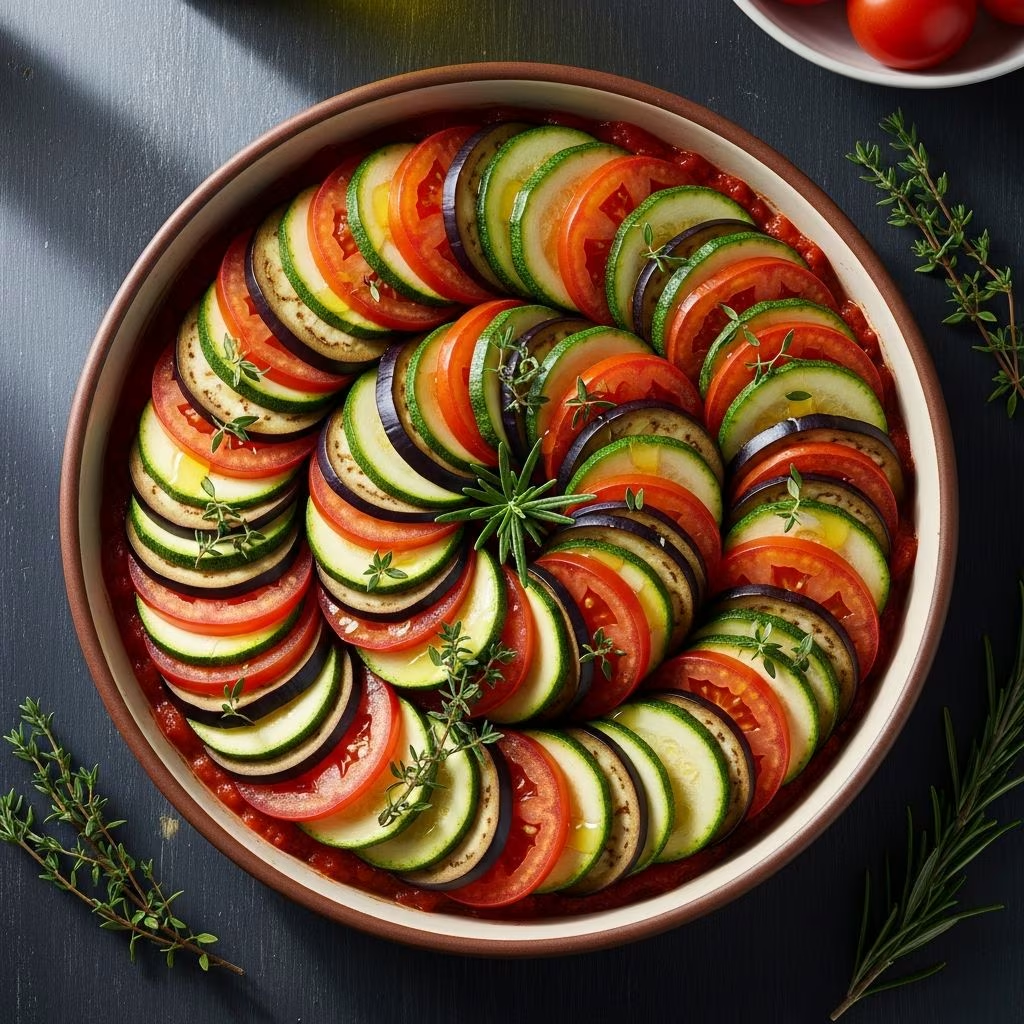
For a showstopper, layer thinly sliced zucchini, eggplant, squash, potatoes, and peppers in a spiral over a garlicky tomato sauce. Top with béchamel for creaminess: melt butter, whisk in flour, add warm milk, nutmeg, and season. Bake covered at 375°F for 55-60 minutes until tender and bubbling.
Enhance with smoky elements like paprika or goat cheese crumbles for tang. A 25-minute quick version simmers veggies with canned tomatoes, then broils with toppings.
Nutritional Profile and Health Benefits
Ratatouille is naturally vegan, gluten-free, and low-calorie (about 150 kcal per serving). Rich in fiber, vitamins A and C from peppers and tomatoes, and antioxidants like lycopene. Eggplant provides nasunin, supporting brain health. Paired with olive oil, it aids absorption of fat-soluble nutrients. USDA guidelines highlight such veggie stews for reducing chronic disease risk.
Seasonal Twists and Substitutions
- Winter Adaptation: Use sweet potatoes instead of squash; jarred tomatoes for freshness.
- Smoky Version: Add smoked paprika and pine nuts.
- Protein Boost: Stir in white beans or top with eggs.
- Gluten-Free: Naturally compliant; serve over quinoa.
- Low-Carb: Omit potatoes in casseroles.
Storage, Make-Ahead, and Freezing Tips
Stovetop or roasted ratatouille keeps 4-5 days refrigerated. Reheat with a splash of water. Freeze up to 3 months in portions. Make-ahead: Prepare sans basil, store 1-2 days, refresh herbs at serving.
18 Gourmet Serving Ideas
Elevate ratatouille beyond side dish status:
- Over creamy polenta with Parmesan.
- Stuffed into omelets.
- As pizza topping with mozzarella.
- In lasagna layers.
- With grilled sausages.
- Tossed with pasta and feta.
- Topped with poached eggs (shakshuka-style).
- In tartes with puff pastry.
- Mixed into risotto.
- With goat cheese crostini.
- As bruschetta base.
- In grain bowls with farro.
- With seared fish.
- Under roast chicken.
- In shepherd’s pie veggie layer.
- With couscous and chickpeas.
- As soup base, blended smooth.
- Cold with burrata salad.
Frequently Asked Questions
What makes ratatouille different from caponata?
Ratatouille is a French Provençal stew of cooked eggplant, zucchini, peppers, and tomatoes in olive oil, while caponata is Sicilian with eggplant, celery, olives, capers, and a sweet-sour agrodolce sauce.
Can I make ratatouille ahead?
Yes, it improves overnight. Refrigerate 1-2 days or freeze. Reheat gently.
Is ratatouille vegan?
Traditional versions are, but check variations with cheese or béchamel.
How do I prevent mushy vegetables?
Cook in batches on stovetop or roast at high heat to brown first.
What’s the best oil for ratatouille?
Extra-virgin olive oil for authentic flavor and health benefits.
Pairing Suggestions
Complement with crisp rosé from Provence, crusty baguette, or herbed goat cheese. For heartier meals, pair with grilled meats or fish.
References
- Traditional French Ratatouille Recipe — From A Chef’s Kitchen. 2023-05-15. https://www.fromachefskitchen.com/ratatouille/
- Ratatouille Recipe — ChefDeHome.com. 2022-11-10. https://www.chefdehome.com/recipes/561/ratatouille
- 25 Minute Ratatouille Recipe — Healthy Seasonal Recipes. 2024-06-20. https://www.healthyseasonalrecipes.com/smoky-ratatouille-with-goat-cheese-and-pine-nuts/
- Roasted Ratatouille Recipe — Pamela Salzman. 2023-08-01. https://pamelasalzman.com/roasted-ratatouille-recipe/
- Roasted Ratatouille Pasta — Alexandra’s Kitchen. 2017-09-01. https://alexandracooks.com/2017/09/01/roasted-ratatouille-pasta/
- 18 Gourmet Ways To Serve Ratatouille — Mortadella Head. 2024-03-12. https://mortadellahead.com/how-to-serve-ratatouille/