Mornings can be hectic, especially when you’re trying to feed a family or prepare breakfast for guests. An egg casserole offers an excellent solution—it’s a versatile dish that comes together quickly, requires minimal hands-on cooking time, and delivers consistent, satisfying results. Whether you’re a novice cook or an experienced home chef, mastering the art of egg casseroles can transform your breakfast routine and free up valuable time during busy weekday mornings.
Understanding the Basics of Egg Casseroles
An egg casserole is fundamentally a baked dish that combines eggs with various complementary ingredients to create a cohesive, filling meal. The beauty of this approach lies in its simplicity and flexibility. Unlike traditional scrambled eggs or omelets that require active attention at the stove, a casserole allows you to combine all your ingredients in advance and let the oven handle most of the cooking process. This hands-off methodology makes egg casseroles particularly valuable for meal planning and entertaining.
The foundation of any successful egg casserole rests on understanding the role each component plays. Eggs serve as the binding agent that holds everything together while providing protein and structure. Additional liquid—typically milk, cream, or sour cream—creates a custard-like consistency that keeps the finished dish moist and tender. Starches like hashbrowns or bread serve as fillers that absorb moisture and add substance, while proteins such as sausage or bacon contribute flavor and heartiness. Cheese adds richness and helps everything bind together cohesively.
Essential Ingredients and Their Functions
Building a successful egg casserole starts with understanding what each ingredient contributes to the final product:
- Eggs: The primary ingredient that creates the custard base. Most casseroles use between 8 to 14 eggs, depending on the baking dish size and desired density.
- Liquid component: Milk, heavy cream, sour cream, or cottage cheese adds moisture and creates a light, fluffy texture when baked.
- Protein: Cooked sausage, bacon, or ham provides savory depth. Some recipes incorporate both meat and vegetables for additional nutrition.
- Starch: Frozen hashbrowns, cubed bread, or potatoes absorb excess moisture and add texture variation.
- Cheese: Cheddar, mozzarella, or your preferred variety melts throughout the dish, binding ingredients and adding rich flavor.
- Seasonings: Salt, pepper, and optional herbs like Italian seasoning or garlic powder enhance overall flavor profile.
Preparation Methods and Techniques
The preparation process for egg casseroles follows a logical sequence that minimizes complexity while maximizing flavor development. Understanding these steps ensures consistent results:
Prepping Your Workspace
Begin by preheating your oven to the appropriate temperature—typically between 350°F and 400°F depending on your specific recipe. Spray your baking dish with non-stick cooking spray or lightly butter it to prevent sticking. A 9×13-inch pan serves as the standard size for most casserole recipes, yielding approximately 12 servings.
Preparing the Protein Component
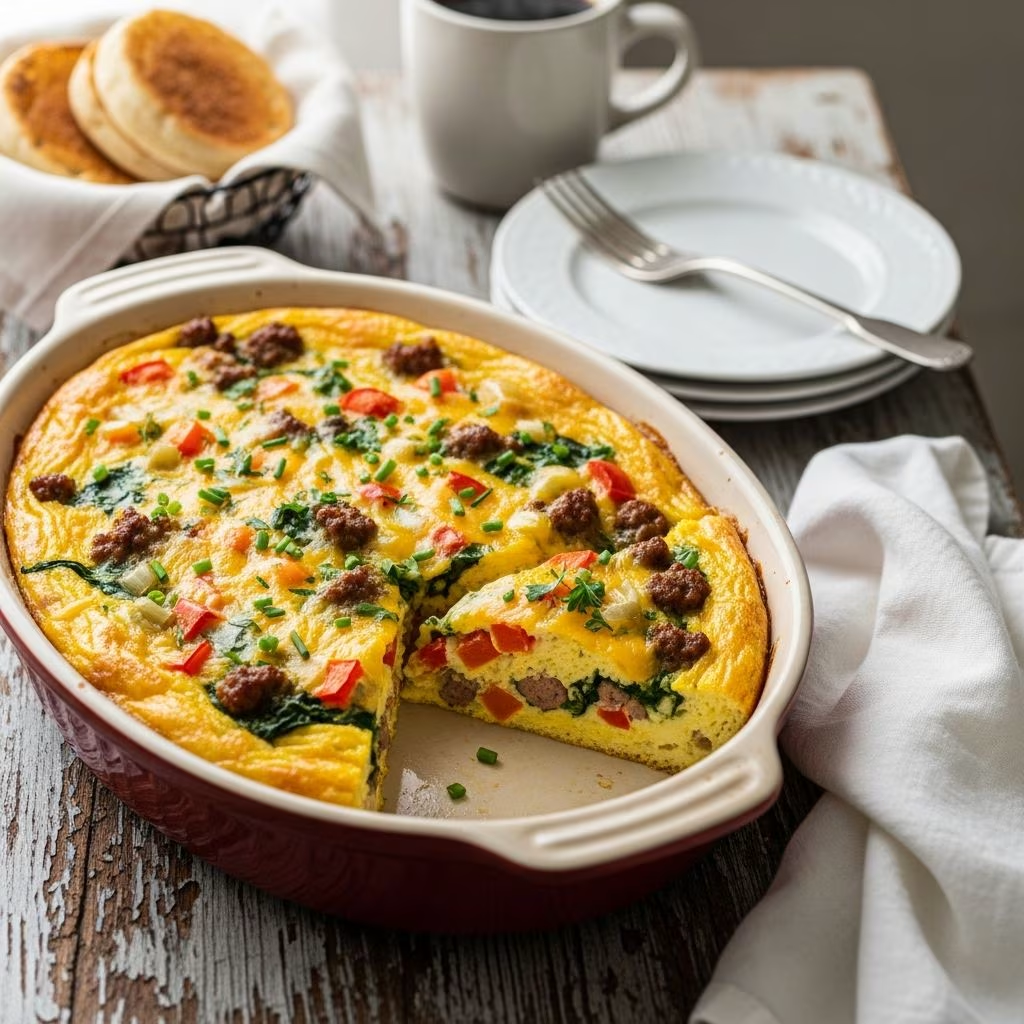
If your recipe includes meat, cook it first and set it aside. Brown sausage in a skillet, breaking it into small pieces as it cooks, then drain excess grease. This pre-cooking step ensures the meat is properly cooked and develops deeper flavors through browning. Some recipes also call for sautéing vegetables like bell peppers and onions in the same pan to capture additional flavors.
Creating the Egg Mixture
In a large bowl, whisk together your eggs and liquid component until well combined. This thorough mixing ensures the eggs incorporate properly and create a uniform custard base when baked. Add your seasonings at this stage, stirring until evenly distributed. Some recipes recommend using an electric mixer on low speed for particularly smooth mixtures.
Combining All Elements
Arrange your prepared ingredients in the baking dish in layers or mixed together, depending on preference. Add the starch component (hashbrowns or bread), followed by cooked meat, and finally pour the egg mixture over everything. Some recipes suggest reserving a portion of cheese to sprinkle on top during the final minutes of baking for enhanced browning and texture.
Baking Times and Temperature Guidelines
| Recipe Type | Oven Temperature | Baking Time | Covering Method |
|---|---|---|---|
| Traditional Sausage Casserole | 350°F | 45-50 minutes | Cover with foil for first 45 minutes |
| Cheesy Egg Casserole | 400°F | 30-40 minutes | Uncovered throughout |
| Vegetable-Based Casserole | 350°F | 35-50 minutes | Uncovered or partially covered |
| Cottage Cheese Variation | 375°F | 25-35 minutes | Uncovered throughout |
The casserole is done when the edges are set but the center retains a slight jiggle. This slight underdone appearance in the center is intentional—the residual heat will continue cooking the middle as the dish cools, preventing an overcooked, rubbery texture. Allow the casserole to rest for 5 to 10 minutes before slicing and serving.
Make-Ahead Strategies and Storage
One of the primary advantages of egg casseroles is their make-ahead capability. You can prepare the entire dish the night before, cover it with plastic wrap or aluminum foil, and refrigerate for up to 24 hours. When ready to bake, remove the casserole from the refrigerator and allow it to sit at room temperature for 10 to 15 minutes while your oven preheats. This brief warming period helps the casserole bake more evenly.
After baking, store leftover casserole in an airtight container in the refrigerator for up to three days. Reheat individual portions in the microwave or warm the entire casserole covered in a 350°F oven for approximately 15 to 20 minutes until heated through.
Customization and Ingredient Variations
The adaptability of egg casseroles makes them ideal for accommodating different dietary preferences and ingredient availability. Consider these variation strategies:
- Vegetarian options: Replace sausage with additional vegetables such as mushrooms, spinach, zucchini, or asparagus.
- Cheese selections: Experiment with different varieties including sharp cheddar, Swiss, Gruyère, or a combination of cheeses for complexity.
- Starch alternatives: Use cubed bread for a breakfast strata, diced potatoes, or omit starch entirely for a lower-carb option.
- Seasoning profiles: Incorporate herbs like fresh dill, thyme, or oregano, or try spice blends like everything bagel seasoning or taco seasoning.
- Protein combinations: Mix sausage with bacon, or add ham for a different flavor dimension.
Troubleshooting Common Issues
Even with careful preparation, issues occasionally arise. Understanding common problems and their solutions helps you achieve better results:
Watery or Runny Center: This typically indicates underbaking. Return the casserole to the oven for an additional 5 to 10 minutes, checking frequently. If the edges are browning too quickly, tent with foil.
Rubbery or Overcooked Texture: The casserole was baked too long or at too high a temperature. Remember that the center should retain a slight jiggle when removed from the oven. Next time, reduce baking time by 5 minutes.
Uneven Cooking: This may result from hot spots in your oven or uneven ingredient distribution. Try rotating the casserole halfway through baking or ensure ingredients are spread evenly before baking.
Lack of Browning: If the top isn’t browning adequately, increase the oven temperature by 25°F for the final 10 minutes, or use your oven’s broiler on low setting for a brief period.
Serving Suggestions and Presentation
A properly prepared egg casserole serves as a complete meal on its own, but thoughtful accompaniments enhance the overall dining experience. Consider serving with fresh fruit salad, whole-grain toast, or a simple green salad. Fresh garnishes like chopped parsley, green onions, or crispy bacon bits add visual appeal and textural contrast.
For entertaining, cut the casserole into generous portions and present on a warm platter or individual plates. The substantial nature of egg casseroles makes them satisfying as the main component of breakfast or brunch service, eliminating the need for multiple side dishes.
Nutritional Considerations
Egg casseroles provide significant nutritional value when thoughtfully prepared. Eggs contribute high-quality protein, essential amino acids, and choline, which supports brain health. Including vegetables increases fiber and micronutrient content, while the dairy component provides calcium and additional protein. To create a more balanced dish, aim for a vegetable-to-other-ingredients ratio of approximately one-third vegetables, ensuring adequate nutritional density.
Frequently Asked Questions
Can I freeze an egg casserole?
Yes, you can freeze an unbaked casserole for up to three months. Cover tightly with plastic wrap and foil before freezing. When ready to bake, thaw overnight in the refrigerator and add 10 to 15 minutes to the total baking time.
How far in advance can I prepare the casserole?
You can assemble the casserole up to 24 hours in advance and refrigerate it covered. This makes it ideal for holiday mornings or special occasions when you want to minimize morning preparation.
Can I use fresh hashbrowns instead of frozen?
Fresh hashbrowns work but require squeezing out excess moisture first to prevent a watery casserole. Alternatively, partially cook them before adding to the casserole.
What if I don’t have sour cream?
Greek yogurt, regular yogurt, or additional milk can substitute for sour cream, though the flavor profile will be slightly different. Maintain the same total liquid volume.
Can I make this vegetarian?
Absolutely. Omit meat and increase vegetables like peppers, mushrooms, spinach, and onions. The casserole will still be hearty and satisfying with adequate cheese and eggs.
References
- Breakfast Casserole Recipe — Tastes Better From Scratch. 2024. https://tastesbetterfromscratch.com/breakfast-casserole/
- Easy Breakfast Casserole Recipe — Sally’s Baking Addiction. 2024. https://sallysbakingaddiction.com/easy-make-ahead-breakfast-casserole/
- The Best Easy Breakfast Casserole — All Things Mamma. 2024. https://www.allthingsmamma.com/easy-breakfast-casserole/