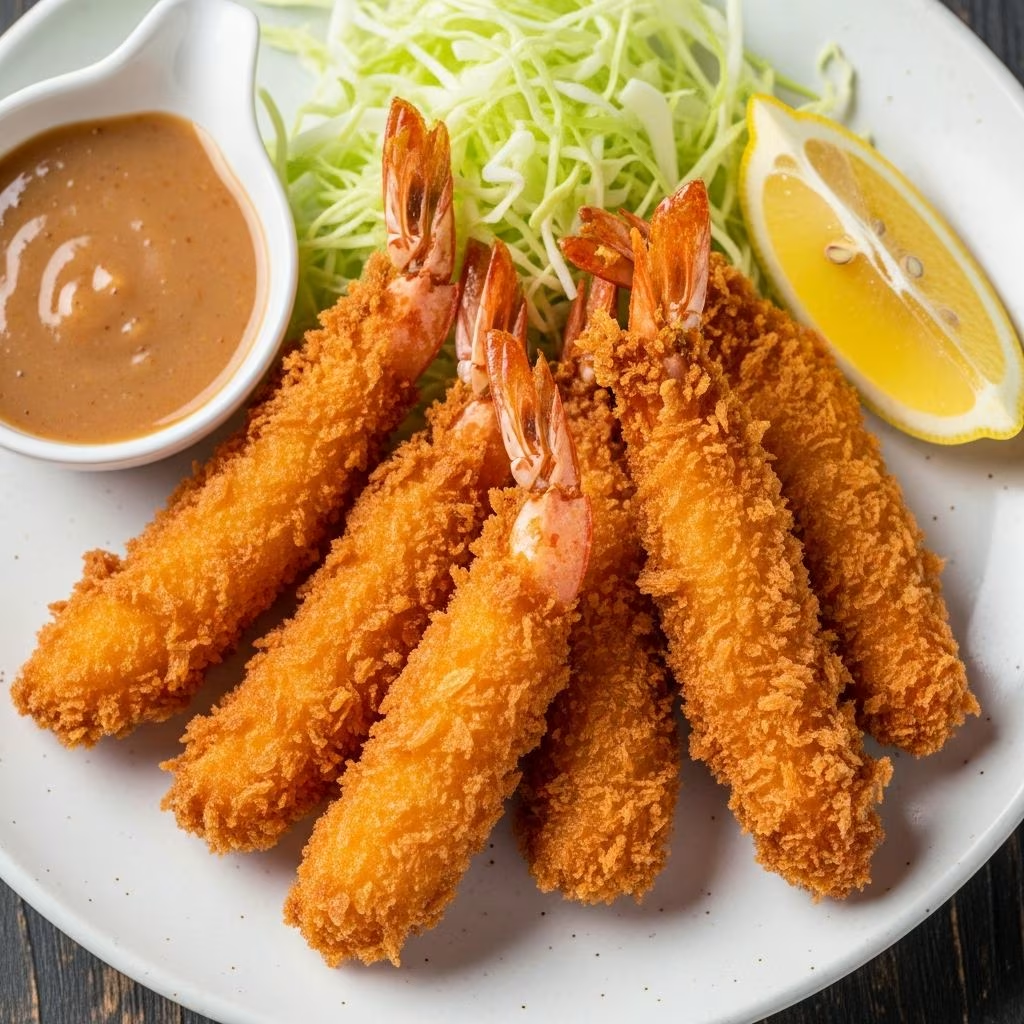
Golden, crunchy exteriors encasing tender, juicy shrimp define **Ebi Fry**, a beloved Japanese dish that blends Western frying techniques with local flair. This panko-coated delight offers superior crispiness compared to traditional breadcrumbs, making it a standout in home kitchens worldwide.
Understanding Ebi Fry’s Unique Appeal
Ebi Fry, or Japanese fried shrimp, elevates simple seafood into a textural masterpiece. The key lies in **panko breadcrumbs**, which are coarser and drier than standard varieties, creating an airy, shatteringly crisp coating when fried. Originating as a yōshoku adaptation—Western food popularized in Japan—this dish pairs beautifully with shredded cabbage, tartar sauce, or tonkatsu sauce for a balanced meal.
Its popularity stems from versatility: serve as an appetizer at gatherings, atop salads, or alongside rice for a hearty dinner. Home cooks appreciate its straightforward process, yielding professional results with minimal equipment.
Selecting and Preparing the Best Shrimp
Quality shrimp form the foundation of exceptional Ebi Fry. Opt for **extra jumbo or colossal prawns**, around 13/15 or 17/20 count per pound, such as black tiger varieties for their firm texture and sweetness. Fresh or properly thawed frozen shrimp work best; avoid pre-cooked options to prevent toughness.
Preparation ensures straight, plump results:
- Peel shells, leaving tails intact for easy handling.
- Devein by slicing along the back and removing the dark vein.
- Straighten by scoring the belly 2-3 times and gently snapping the segments to prevent curling.
- Optional: Treat with a baking soda-salt paste (½ tsp baking soda + ¼ tsp salt per pound) for 15 minutes, then rinse. This tenderizes and firms the flesh.
- Pat dry thoroughly to promote breading adhesion.
Season lightly with salt, pepper, and garlic powder for baseline flavor. Dry shrimp absorb coatings evenly, leading to uniform frying.
Essential Ingredients for Authentic Flavor
Gather these staples for 4 servings:
| Ingredient | Quantity | Purpose |
|---|---|---|
| Extra jumbo shrimp (peeled, deveined, tails on) | 1 lb (about 17-20 pieces) | Main protein |
| All-purpose flour | ½ cup | First breading layer |
| Large eggs (beaten) | 2-3 | Binder for crumbs |
| Panko breadcrumbs | 2 cups | Crisp coating |
| Neutral oil (vegetable, canola) | 4 cups | Deep frying |
| Kosher salt, black pepper | To taste | Seasoning |
| Optional: Paprika, garlic powder | ½ tsp each | Flavor boost |
For tartar sauce (serves 4): Hard-boiled eggs (2), finely chopped onion (¼ cup), pickles or cornichons (2-3 tbsp), Japanese Kewpie mayonnaise (½ cup), lemon juice (1 tsp), salt, pepper. Neutral oil withstands high heat without imparting off-flavors.
Mastering the Triple Breading Technique
The standard breading procedure—flour, egg, panko—creates a robust barrier that seals in moisture. Variations enhance results:
- Basic Method: Dredge in seasoned flour (shake excess), dip in beaten eggs, then press into panko.
- Double-Dredge: Flour-egg-flour-egg-panko for thicker crust.
- Batter Variation: Mix egg, flour (3 tbsp), water (50 ml), and mayonnaise (1 tbsp) into a light batter for extra tenderness, then panko.
Pro Tip: Bread all shrimp first and chill 10-15 minutes. This sets the coating, preventing slippage during frying. Use one hand for dry (flour/panko), the other for wet (egg) to avoid clumping.
Perfect Frying: Temperature and Timing
Success hinges on oil at **340-350°F (170-180°C)**. Use a deep pot with 2-3 inches oil; a thermometer is essential for consistency.
- Heat oil slowly to target temperature.
- Fry in small batches (2-4 shrimp) to maintain heat—overcrowding drops temperature, yielding greasy results.
- Lower shrimp tail-first; fry 2½-3 minutes until deep golden, flipping midway for even browning.
- Remove with slotted spoon to wire rack or paper towels. Avoid stacking to preserve crispness.
Larger shrimp take up to 5 minutes; test one first. Rest fried shrimp 1-2 minutes before serving.
Homemade Tartar Sauce: The Ideal Accompaniment
Ebi Fry shines with creamy tartar sauce. Boil eggs 10 minutes, chop with onion and pickles. Mix with mayonnaise, lemon juice, salt, pepper, and optional parsley. Chill 30 minutes for flavors to meld. Kewpie mayo adds umami unmatched by standard brands.
Alternatives: Tonkatsu sauce for sweet-savory notes or shredded cabbage for crunch and freshness.
Serving Suggestions and Presentation
Plate Ebi Fry dramatically: Arrange on shredded cabbage beds, garnish with lemon wedges and parsley. Serve immediately for peak crispiness.
- Appetizer: With dipping sauces.
- Main: Over rice or udon noodles.
- Creative: In salads, sandwiches, or Bento boxes.
Pair with chilled beer or green tea for authentic vibes.
Common Mistakes and Troubleshooting
| Issue | Cause | Solution |
|---|---|---|
| Soggy coating | Oil too cool; overcrowding | Monitor temp; small batches |
| Shrimp curls | No scoring/snapping | Score belly 2-3 times |
| Breading falls off | Wet shrimp; no pressing | Pat dry; press panko firmly |
| Oily finish | Low temp; no draining | 350°F; wire rack |
Avoid flour with high protein (bread flour sogs); stick to all-purpose.
Storage, Reheating, and Make-Ahead Tips
Fresh is best, but store cooled Ebi Fry in airtight containers up to 2 days. Freeze breaded (unfried) shrimp up to 1 month.
Reheat in 350°F oven 5-7 minutes—no microwave, as it softens crust. Air fryer works too at 375°F for 3-4 minutes.
Health Considerations and Variations
While indulgent, use avocado oil for healthier fats. Air-fryer version: Spray breaded shrimp, cook 400°F 8-10 minutes, flipping halfway—less oil, similar crunch.
Gluten-free: Rice flour and gluten-free panko. Add spice with cayenne in flour.
Frequently Asked Questions
Can I use smaller shrimp for Ebi Fry?
Yes, but adjust fry time to 2 minutes. Larger yield juicier results.
What’s the best oil for frying?
Neutral oils like canola or vegetable; high smoke point essential.
Why panko over regular breadcrumbs?
Panko’s irregular shape traps air for lighter, crispier texture.
How do I know oil is ready?
350°F thermometer or breadcrumb test: Sizzle immediately, no smoke.
Make tartar sauce vegan?
Use plant-based mayo, skip eggs or sub aquafaba.
Advanced Techniques for Pro-Level Ebi Fry
Double-fry: First at 320°F 2 minutes, rest, then 375°F 1 minute for ultra-crisp. Beer batter (sake or beer in mix) adds lightness. Experiment with potato starch dust pre-flour for tenderness.
Scale up for parties: Prep breaded shrimp ahead, fry to order.
References
- Ebi Fry (Japanese Fried Shrimp) エビフライ — Just One Cookbook. 2023-05-15. https://www.justonecookbook.com/ebi-fry-fried-shrimp/
- Japanese Style Deep Fried Shrimp | Shrimp Recipes | Allrecipes.com — Allrecipes (YouTube). 2014-06-12. https://www.youtube.com/watch?v=1GL1LePWNu8
- Ebi Fry (Japanese Fried Shrimp) — Chopstick Chronicles. 2022-08-20. https://www.chopstickchronicles.com/ebi-fry/
- BEST Ebi Fry Recipe (エビフライ) Japanese Panko Fried Shrimp — No Recipes. 2021-11-10. https://norecipes.com/ebi-fry-japanese-fried-shrimp/
- Perfect Japanese Fried Shrimp | Ebi Fry — YouTube (Cooking Channel). 2023-02-14. https://www.youtube.com/watch?v=0kE8wDwWI1s