When summer arrives, grilled corn becomes a staple at backyard gatherings and outdoor celebrations. However, transforming this classic side dish into something extraordinary requires embracing bold flavors and unexpected ingredient combinations. Korean cuisine offers the perfect inspiration for reimagining grilled corn, introducing the umami-rich depth of gochujang—a fermented Korean chili paste—alongside fresh citrus and creamy components that create a truly memorable dining experience.
This fusion approach to grilled corn merges the heat and complexity of Korean cooking traditions with the casual comfort of summer barbecuing. The result is a dish that captures attention, delights taste buds, and transforms an ordinary cookout into a culinary adventure. Whether you’re hosting a gathering or simply looking to elevate your weeknight dinner, Korean-inspired grilled corn delivers impressive results with straightforward techniques.
Understanding the Foundation: Quality Corn Selection and Preparation
The journey to exceptional grilled corn begins long before the grill is heated. Selecting the right corn establishes the foundation for success. Fresh corn with intact, green husks and moist silk indicates peak ripeness and superior flavor. Look for ears that feel firm when gently squeezed, and avoid corn with brown or dried husks, which suggests age and potential flavor deterioration.
Proper preparation transforms raw corn into a canvas for flavor. Begin by carefully peeling back the outer husks without completely removing them. This step exposes the delicate silk that clings to the kernels. Remove all visible silk by hand or with a soft brush, as any remaining strands will burn and create an unpleasant texture. Once cleaned, fold the husks back into their original position and secure them using kitchen twine. This protective wrapping shields the kernels during grilling, maintaining moisture and preventing excessive char.
For extended grilling sessions, consider soaking prepared corn in cold salted water for 10 to 15 minutes before grilling. This hydration step ensures the husks remain supple and the kernels stay tender throughout the cooking process, preventing dryness that can result from prolonged heat exposure.
Crafting the Signature Gochujang Aioli: The Heart of the Recipe
The gochujang aioli represents the defining element of this dish, transforming simple grilled corn into an unforgettable creation. This creamy, spiced condiment combines the heat of Korean chili paste with the richness of traditional mayonnaise, creating a complex flavor profile that balances multiple taste dimensions.
Essential Components and Their Roles
- Mayonnaise: Serves as the creamy base, providing richness and helping distribute the spices evenly across each ear. The emulsified oil creates a luxurious coating that clings beautifully to grilled corn.
- Gochujang: This fermented Korean chili paste introduces heat alongside deep umami flavors developed through the fermentation process. Typically made from red chili peppers, soybeans, salt, and koji mold, gochujang delivers complexity that simple hot sauce cannot replicate.
- Sour cream or crema mexicana: Adds tanginess and additional body to the aioli, balancing the heat and creating a more voluminous coating that spreads easily across corn kernels.
- Fresh garlic: Minced garlic introduces pungency and aromatic depth, complementing the fermented notes of the gochujang.
- Fresh lime juice: Bright acidity cuts through the richness and adds freshness that prevents the dish from feeling heavy.
Preparation Method
Combine ¼ cup mayonnaise with ¼ cup sour cream in a small mixing bowl, stirring until uniform. Add 1 to 2 tablespoons of gochujang, adjusting based on your preferred heat level. Incorporate 2 minced garlic cloves, ½ teaspoon of garlic powder for additional depth, and the juice of one fresh lime. Season with kosher salt to taste. This aioli can be prepared several hours in advance and refrigerated until needed, allowing flavors to meld and develop greater complexity.
Mastering the Grilling Technique
Achieving perfectly grilled corn requires understanding heat management and timing. Preheat your grill to medium or medium-high heat, ensuring the grate is clean and well-oiled to prevent sticking. Place prepared corn directly on the grate, with husks still intact.
Grill corn for 20 to 40 minutes depending on intensity of heat and whether husks remain attached. The exact duration varies based on grill type, ambient temperature, and personal preference regarding char development. Turn the corn every 5 minutes to ensure even cooking and development of attractive charred spots across all sides. These darkened areas contribute smoky flavor and visual appeal.
The corn is finished when kernels feel tender when pierced with a sharp knife, and the husks display visible browning and charring. The fragrance intensifies noticeably as the kernels caramelize, signaling readiness. Resist the temptation to remove corn too early; adequate grilling time develops sweetness and creates the textural contrast between tender kernels and charred exterior that defines exceptional grilled corn.
Finishing Touches: Building Layers of Flavor
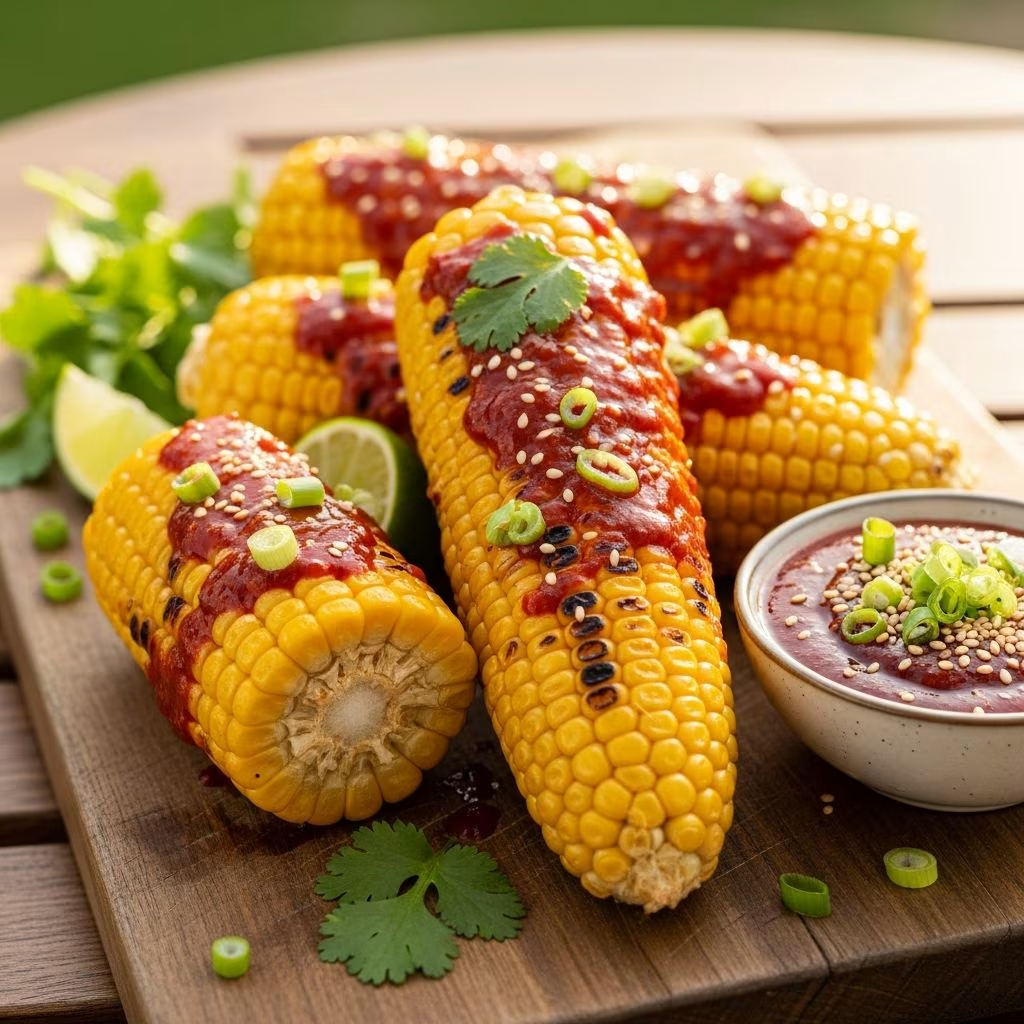
Once corn reaches peak temperature, remove it from the grill and allow it to cool briefly. Carefully peel back or remove the blackened husks. While corn remains warm, brush each ear generously with prepared gochujang aioli, ensuring complete coverage for consistent flavor throughout.
The warm corn allows the aioli to partially melt into the kernels, creating a coating that clings firmly. For additional dimension, roll coated corn in a bed of finely crumbled cotija or queso fresco cheese. These crumbly Mexican cheeses add salty richness and slight grittiness that contrasts beautifully with the creamy aioli.
Finish with fresh herbs such as finely chopped chives and parsley, providing brightness and visual contrast. Serve with lime wedges on the side, allowing diners to add additional citrus according to personal preference. Some preparations incorporate ancho chili powder for additional depth, while others feature cilantro for a more pronounced herbaceous note.
Ingredient Variations and Customization Options
| Component | Primary Option | Alternative Options | Impact on Flavor |
|---|---|---|---|
| Creamy Base | Mayonnaise | Greek yogurt, sour cream, crema mexicana | Affects richness and tang; yogurt reduces fat content |
| Heat Element | Gochujang | Sriracha, sambal oelek, Korean red chili flakes | Alters spice level and fermented depth |
| Cheese Topping | Cotija or queso fresco | Feta, Parmesan, Pecorino Romano | Modifies saltiness and textural crunch |
| Fresh Acid | Fresh lime juice | Lemon juice, lime zest, white vinegar | Adjusts brightness level and citrus intensity |
| Herbs | Cilantro, chives, parsley | Scallions, basil, mint | Contributes different aromatic profiles |
Scaling for Gatherings: Serving Multiple Guests
Korean-inspired grilled corn works beautifully for entertaining, though batch preparation requires strategic planning. When serving 8 to 12 people, prepare aioli in advance and store in a covered container at room temperature for up to 2 hours. Pre-crumble cheese and chop herbs, keeping each component in separate covered containers for efficient assembly.
Rather than coating each ear individually immediately after grilling, consider setting up a buffet station with warm grilled corn, bowls of aioli, cheese, and herbs. Guests can customize their portions according to preference, reducing pressure on preparation and accommodating different spice tolerances. This approach also allows corn to cool slightly, making it more comfortable to handle while still warm enough for optimal flavor development.
Complementary Side Dishes and Beverage Pairings
Korean-inspired grilled corn pairs exceptionally well with other summer sides. Serve alongside traditional coleslaw for textural contrast, or offer marinated cucumber salad for additional brightness. Grilled protein such as bulgogi-style beef or Korean-marinated chicken complements the flavor profile beautifully, creating a cohesive fusion meal.
For beverages, consider Korean lager beer, which provides crisp refreshment that balances the gochujang’s heat. Chilled white wine with citrus notes enhances the lime element of the dish. For non-alcoholic options, sparkling citrus drinks or iced green tea offer appropriate pairing balance.
Storage and Make-Ahead Strategies
Gochujang aioli can be prepared up to one day in advance and stored in a covered container in the refrigerator. This advance preparation streamlines day-of execution and allows flavors to develop greater complexity through resting. Remove from refrigeration 30 minutes before serving to allow the aioli to reach optimal consistency.
Grilled corn is best served immediately after coating with aioli while kernels remain warm. However, if necessary, grilled corn can be prepared several hours in advance and reheated gently before adding toppings. Allow grilled, uncoated corn to cool completely, then wrap tightly in foil and refrigerate. Reheat wrapped corn in a 350°F oven for approximately 10 minutes before applying aioli and finishing ingredients.
Frequently Asked Questions
Can gochujang be substituted if unavailable?
While gochujang’s fermented complexity is difficult to fully replicate, sriracha or sambal oelek can substitute in pinch. Use slightly less initially, as these alternatives tend to be spicier. The fermented umami depth will differ, but the dish remains delicious with adjusted heat levels.
What’s the difference between cotija and queso fresco?
Both are crumbly Mexican cheeses, but cotija contains higher salt content and delivers more pronounced savory notes. Queso fresco is slightly milder and creamier. Either works beautifully; selection depends on personal salt tolerance and available options.
How can the heat level be adjusted?
Reduce gochujang quantity to 1 tablespoon for mild versions, or increase to 2 to 3 tablespoons for extra heat. Adding a pinch of Korean red chili flakes amplifies spice without altering other flavor dimensions.
Is this recipe suitable for dietary restrictions?
For vegan versions, substitute mayonnaise with vegan mayo and use dairy-free sour cream. Skip cheese entirely or use nutritional yeast for savory notes. The core dish remains flavorful with these modifications.
Conclusion: Elevating Summer Dining
Korean-inspired grilled corn transforms a simple seasonal vegetable into an impressive dish that surprises and delights. The balance of creamy, spicy, tangy, and fresh elements creates complexity that keeps diners returning for more. Whether you’re an experienced griller seeking new flavor combinations or a home cook ready to expand your repertoire, this recipe delivers restaurant-quality results through straightforward techniques and readily available ingredients. The fusion of Korean and traditional summer barbecue elements represents the evolution of outdoor cooking—honoring culinary traditions while embracing creative experimentation.
References
- Gochujang (Korean Red Chili Paste): Ingredient Information — University of Illinois Extension. 2024. https://extension.illinois.edu/
- Corn Selection and Storage Best Practices — United States Department of Agriculture. 2023. https://www.usda.gov/
- Safe Food Handling for Outdoor Grilling — Centers for Disease Control and Prevention. 2024. https://www.cdc.gov/
- Cotija and Queso Fresco: Mexican Cheese Profiles — Specialty Cheese Association. 2023. https://www.specialty-cheese.org/
- Heat Management in Outdoor Grilling — Barbecue Industry Association. 2024. https://www.bbqindustry.org/