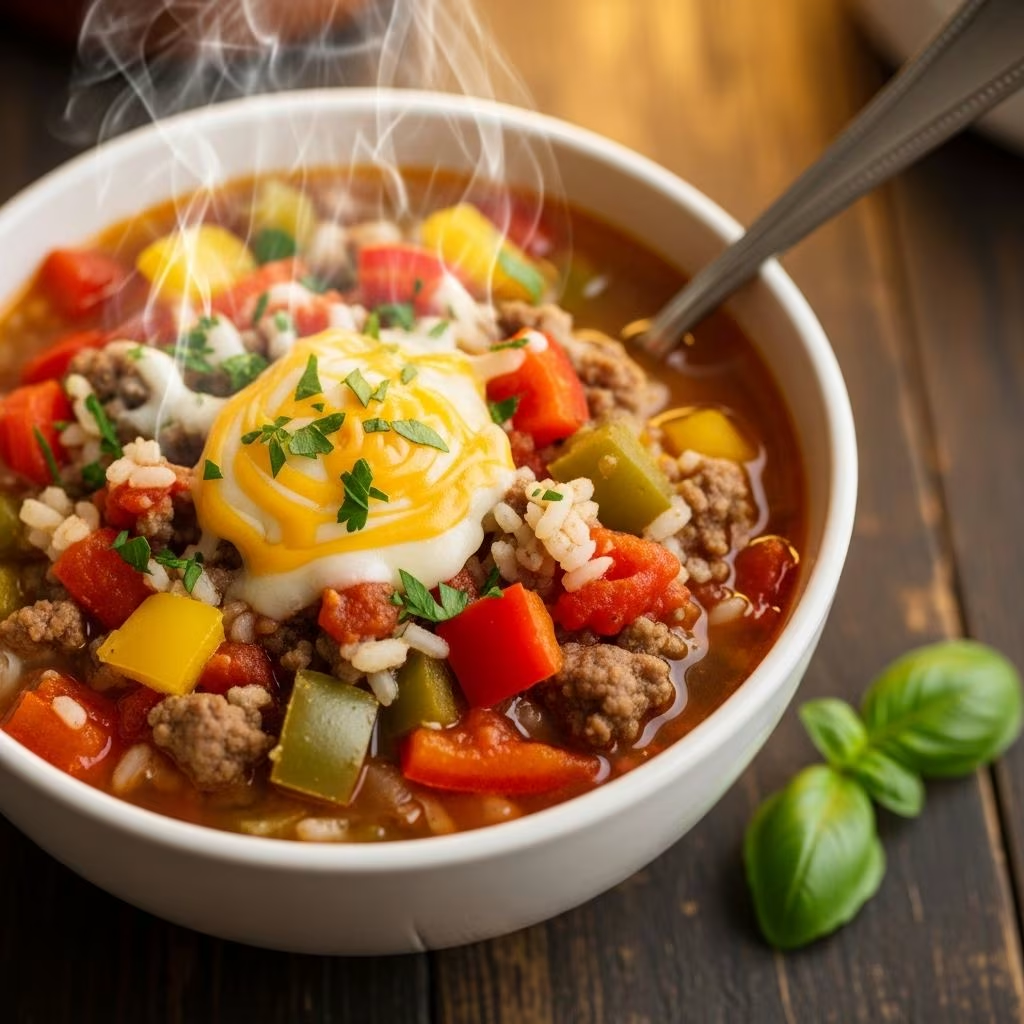
When you crave the comforting flavors of stuffed peppers but lack the time for intricate preparation, unstuffed pepper soup offers the perfect solution. This approachable dish captures all the beloved elements—tender bell peppers, seasoned ground meat, fluffy rice, and a rich tomato-based broth—combined into a single pot that comes together in roughly 35 to 40 minutes. Whether you’re feeding your family on a busy weeknight or preparing a meal for unexpected guests, this recipe delivers genuine satisfaction without demanding extensive culinary skills or hours in the kitchen.
Understanding the Core Appeal of This Dish
Unstuffed pepper soup represents a modern interpretation of traditional stuffed peppers, streamlining preparation while preserving authentic flavors. The transformation from individual stuffed vegetables to a unified soup format eliminates several time-consuming steps—no need to hollow out whole peppers, manage filling consistency, or monitor individual portions during baking. Instead, all components merge into a cohesive pot, allowing flavors to meld while the cook accomplishes other tasks. This method particularly appeals to individuals seeking nourishing meals that align with contemporary schedules and energy levels.
The beauty of this soup lies in its adaptability and forgiving nature. Unlike dishes requiring precise measurements or specific techniques, unstuffed pepper soup tolerates ingredient variations and welcomes creative substitutions. Cooks with dietary restrictions, ingredient preferences, or pantry limitations find this recipe accommodating and rewarding.
Essential Components and Ingredient Selections
Creating a successful unstuffed pepper soup begins with understanding the role each ingredient plays in the final result. While variations exist across different preparations, certain components form the foundation of this dish.
Protein Foundation
Ground meat serves as the primary protein source, providing hearty substance and savory depth. Ground beef, ground turkey, ground pork, and ground sausage each contribute distinct flavor profiles. Ground beef delivers classic richness and becomes a go-to choice for traditional preparations. Ground turkey offers a leaner alternative for health-conscious cooks, reducing overall fat content while maintaining satisfying texture. Ground pork brings subtle sweetness and complexity, particularly when combined with aromatic herbs. Ground sausage, whether spicy or Italian-seasoned varieties, infuses the broth with additional flavor dimensions without requiring extra seasoning additions.
Vegetable Components
Bell peppers form the aromatic heart of this dish, their natural sweetness balancing savory elements. While red, yellow, and orange peppers offer sweeter profiles, green peppers provide more assertive, slightly bitter notes that create depth. Incorporating multiple pepper colors adds visual appeal and nuanced flavor complexity. Onions, when diced and sautéed until translucent, develop natural sweetness and contribute aromatic foundation essential to the soup’s overall character. Celery adds subtle earthiness and contributes to the traditional mirepoix-inspired base. Garlic, whether fresh-minced or powdered, enhances savory qualities throughout the broth.
Grains and Starches
Rice represents the traditional carbohydrate component, with white long-grain rice being the most common choice. White rice cooks quickly, absorbs surrounding flavors effectively, and creates desired texture consistency. Brown rice offers increased nutritional value and nutty undertones, though requiring slightly longer cooking times. Some variations incorporate instant brown rice to maintain speed. Cooked rice can be prepared in advance, allowing cooks to add it directly to the soup in the final stages. Alternatively, uncooked rice enters the pot simultaneously with broth, softening as the soup simmers. Creative adaptations occasionally substitute quinoa or cauliflower rice for dietary modifications.
Liquid Components and Seasoning
Beef broth or beef stock forms the primary liquid base, though chicken broth or vegetable broth work effectively depending on meat choice and personal preference. Store-bought broth offers convenience, while homemade preparations or bouillon mixtures with water provide budget-friendly alternatives. Diced tomatoes and tomato sauce, typically from canned sources for year-round availability, establish acidity and umami-rich foundation. Tomato paste concentrates flavor intensity, typically incorporated when browning meat or sautéing vegetables. Water or additional broth adjusts consistency throughout cooking.
Seasoning combinations remain flexible, though Italian herbs dominate most variations. Dried oregano, dried basil, Italian seasoning blends, thyme, and bay leaves create familiar Mediterranean flavor profiles. Garlic powder, onion powder, black pepper, and salt balance flavors throughout. Some recipes incorporate red pepper flakes for subtle heat or sugar for balancing acidity. Fresh parsley added at serving time brightens the finished dish with herbal freshness.
Step-by-Step Preparation Process
Understanding the sequential cooking method ensures optimal flavor development and proper texture achievement throughout preparation.
Initial Meat Browning
Heat oil in a large pot or Dutch oven over medium-high heat, then add ground meat, stirring frequently to break it into small pieces as it browns. This step typically requires 5 to 8 minutes depending on meat quantity and heat intensity. Browning develops rich, complex flavors through the Maillard reaction—a chemical process creating savory depth. Once meat shows no pink coloring, carefully drain excess fat if needed, particularly when using higher-fat varieties.
Vegetable Sautéing
Add diced onions, bell peppers, and celery directly to the pot with browned meat, or sauté vegetables in oil beforehand and set aside temporarily. Cook until vegetables soften and onions become translucent, approximately 5 minutes, stirring occasionally. This gentle cooking allows natural sugars to emerge while vegetables release aromatics that enhance the overall soup character.
Building the Broth
Incorporate tomato products, broth, and seasonings into the pot, stirring thoroughly to combine. Add garlic, oregano, basil, thyme, bay leaves, and other herbs according to recipe specifications. If using uncooked rice, add it now along with water or additional broth as needed. Bring the soup to a boil over high heat, stirring occasionally.
Simmering and Finishing
Once boiling begins, reduce heat to low and cover the pot partially or fully, allowing gentle simmering for 15 to 25 minutes until rice becomes tender. If rice was pre-cooked, add it during final minutes simply to warm through. Taste and adjust seasonings as needed, increasing salt, pepper, or herbs to preference. Some recipes suggest simmering covered for 15 to 20 minutes to allow flavors to meld and intensify.
Flavor Variations and Creative Adaptations
While the basic formula remains consistent across interpretations, numerous variations accommodate different tastes and dietary needs.
Spice Level Adjustments
Traditional preparations typically offer mild to moderate spice levels. Adding cayenne pepper, jalapeños, or hot sauce increases heat for those preferring spicier profiles. Red pepper flakes provide adjustable heat without overpowering delicate flavors. Conversely, omitting pepper flakes or reducing herb quantities satisfies preferences for gentler, more subtle seasoning.
Protein Alternatives
Beyond traditional ground meats, lean ground chicken or turkey breast reduce overall fat content. Vegetarian versions substitute plant-based ground meat alternatives or increase vegetable quantities while maintaining hearty satisfaction. Italian sausage varieties—spicy or mild—eliminate need for additional seasoning additions.
Vegetable Modifications
Incorporating additional vegetables increases nutritional value and texture variation. Zucchini, mushrooms, carrots, or green beans adapt readily to existing recipes. Some preparations include garlic and fresh herbs like fresh basil or parsley for enhanced brightness.
Grain Substitutions
Brown rice replaces white rice for increased fiber and nutrients. Quinoa offers complete protein profile benefits for vegetarian variations. Cauliflower rice creates lower-carbohydrate alternatives while maintaining textural satisfaction. Orzo pasta substitutes for rice, creating entirely different textural experience while preserving the unstuffed pepper concept.
Serving Suggestions and Complementary Accompaniments
Presentation and accompanying elements enhance the overall dining experience and allow personalization for individual preferences.
Traditional Garnishes
Freshly grated Parmesan cheese adds umami richness and textural contrast to each spoonful. Shredded cheddar cheese offers creamier, more assertive flavor. Chopped fresh parsley brightens bowls visually while adding herbal notes. Fresh basil leaves scattered across the surface echo Italian flavor profiles present throughout the soup.
Bread and Dipping Options
Crusty bread, focaccia, or breadsticks provide satisfying dipping options, allowing diners to soak up savory broth. Garlic bread adds aromatic depth complementing the soup’s herbal profile. Cornbread offers slightly sweet contrast to savory components. Gluten-free bread accommodates dietary restrictions while maintaining textural satisfaction.
Side Dishes
Simple green salads with acidic vinaigrettes balance the soup’s richness. Roasted vegetable sides add nutritional depth and visual appeal. Grilled vegetables or steamed broccoli create well-rounded meal accompaniment.
Practical Storage and Make-Ahead Strategies
Understanding proper storage techniques extends this dish’s usefulness throughout the week, supporting meal planning efforts.
Refrigerated storage in airtight containers maintains soup quality for three to four days. Cool completely before transferring to prevent condensation and preserve flavor integrity. Freezer storage extends shelf life to three months, allowing advance preparation for future meals. Freeze in individual portions using ice cube trays or freezer bags for convenient single servings. Thaw overnight in refrigeration before reheating, or reheat directly in the pot over medium heat, adding water or broth if necessary to adjust consistency lost during storage. Stir frequently to ensure even heating throughout.
Nutritional Considerations and Dietary Adaptability
This soup naturally accommodates various dietary approaches while maintaining nutritional balance and satisfaction.
Lean ground meat selections reduce saturated fat content while preserving protein quantity necessary for sustained energy. Abundant vegetables contribute fiber, vitamins, and minerals supporting overall health. Rice provides carbohydrates offering sustained energy release. Herb-based seasoning eliminates excess sodium concerns associated with pre-packaged seasonings, allowing cooks to control salt levels precisely. Those following Whole30 protocols modify traditional preparations by substituting cauliflower rice and omitting grain-based starches entirely.
Troubleshooting Common Preparation Challenges
Understanding common issues and their solutions builds confidence while reducing frustration during cooking.
Undercooked or Crunchy Rice: Extend cooking time by 5 to 10 minutes, ensuring adequate liquid remains in the pot. Rice requires sufficient moisture for proper hydration and texture development. Add water or broth as needed.
Overly Thin Broth: Simmer uncovered for extended time, allowing excess moisture to evaporate while flavors concentrate. Alternatively, mix cornstarch with cold water and stir into simmering soup to thicken gradually.
Bland or Underseasoned Soup: Taste thoroughly before serving and adjust seasonings incrementally. Add salt gradually, as it becomes more pronounced as liquid reduces. Boost tomato flavor using tomato paste. Increase herb quantities by small increments, allowing flavors to incorporate throughout the broth.
Mushy or Overcooked Rice: Reduce simmering time for future preparations, or incorporate pre-cooked rice toward the end rather than cooking uncooked varieties from the start.
Why This Recipe Deserves Regular Rotation in Weekly Meal Plans
Unstuffed pepper soup represents intelligent cooking—combining minimal cleanup, straightforward techniques, genuine nutrition, and satisfying flavors. The one-pot approach reduces dishwashing burden while delivering restaurant-quality results. Ingredient flexibility accommodates household preferences and budget constraints without compromising quality. Preparation speed makes weeknight cooking achievable even during demanding schedules. Batch cooking possibilities support meal prep initiatives, providing ready-made meals reducing daily cooking stress.
Whether preparing dinner for your immediate family, hosting casual gatherings, or developing meal prep strategies supporting health goals, unstuffed pepper soup proves itself a reliable, rewarding addition to your cooking repertoire.
References
- Quick and Easy Unstuffed Pepper Soup — Fearless Dining. 2025. https://www.fearlessdining.com/unstuffed-pepper-soup/
- Easy Unstuffed Pepper Soup Recipe — Organized Island. 2025. https://www.organizedisland.com/unstuffed-pepper-soup/
- The Best Unstuffed Pepper Soup Recipe — Each Ordinary Moment. 2025. https://eachordinarymoment.com/the-best-unstuffed-pepper-soup-recipe/
- Italian Unstuffed Pepper Soup — Girl Gone Gourmet. 2025. https://www.girlgonegourmet.com/unstuffed-pepper-soup/
- Unstuffed Pepper Soup Recipe — Cooking with Tovia. YouTube. 2025. https://www.youtube.com/watch?v=GU4buIgIUgo
- Whole30 Un-Stuffed Bell Pepper Soup — The Defined Dish. 2025. https://thedefineddish.com/whole30-un-stuffed-bell-pepper-soup/