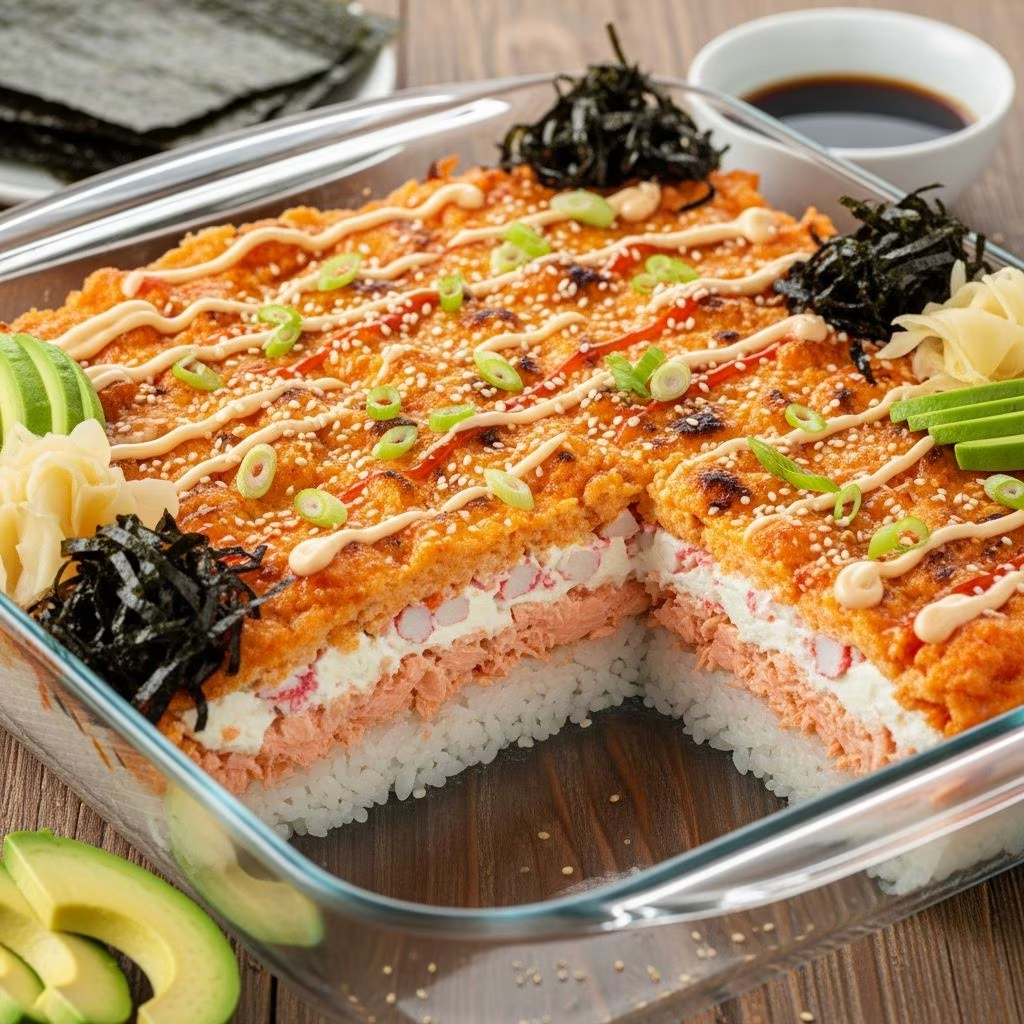
The culinary world has witnessed a remarkable evolution in how home cooks approach Japanese cuisine. Among the most significant developments in recent years is the emergence of sushi bake, a deconstructed interpretation of traditional sushi rolls that eliminates the need for rolling expertise while maintaining authentic flavors. This innovative dish transforms sushi components into a layered casserole format that offers both accessibility and visual appeal.
Sushi bake represents a fusion of traditional Japanese sushi principles with modern American casserole preparation methods. Rather than requiring the precision and skill associated with hand-rolling sushi, this dish allows cooks to layer ingredients in a baking dish and finish the preparation in an oven. The result is a satisfying dish that captures the essence of sushi while providing a more approachable cooking method for home cooks of all skill levels.
Understanding the Foundation: Sushi Rice Preparation
The foundation of any successful sushi bake begins with properly prepared sushi rice. This essential component requires attention to detail during both cooking and seasoning stages. Short-grain or medium-grain rice varieties work best for this application, as their sticky texture helps the casserole maintain structural integrity.
To prepare sushi rice, begin by rinsing the rice under cool water until the water runs clear. This process removes excess starch and prevents the rice from becoming overly gummy. Cook the rice using a standard rice cooker or stovetop method, maintaining a ratio of approximately one part rice to 1.5 parts water. Once cooking is complete, transfer the hot rice to a large bowl.
The seasoning mixture, commonly referred to as sushi vinegar, consists of rice vinegar, sugar, and salt combined in specific proportions. Traditional recipes typically call for one-quarter cup of rice vinegar, two tablespoons of sugar, and one-half teaspoon of salt per two cups of uncooked rice. Warm these ingredients together briefly to dissolve the sugar and salt completely, then gently fold this mixture into the hot rice using a wooden spatula or rice paddle. The folding motion, rather than stirring, prevents breaking the delicate rice grains. Allow the rice to cool to room temperature before using it in your sushi bake.
Crafting the Protein Layer: The Crab Mixture
The creamy crab mixture serves as the primary protein component and flavor driver for most sushi bake preparations. This layer combines imitation crab meat with various complementary ingredients to create a rich, umami-forward topping that distinguishes sushi bake from other rice casseroles.
Imitation crab meat, also known as surimi, provides an affordable and widely available protein option. To prepare this ingredient, shred the crab sticks lengthwise and then chop them into small, uniform pieces. This size reduction helps the mixture distribute evenly across the rice layer and ensures consistent flavor distribution throughout each serving.
The binding and flavor components of the crab mixture typically include the following elements:
- Japanese Mayonnaise: Kewpie brand mayo is preferred for its higher egg yolk content and slightly sweet flavor profile, which complements the other ingredients better than traditional American mayonnaise.
- Cream Cheese: Softened cream cheese adds richness and helps bind the mixture together, creating a cohesive topping that adheres well to the rice layer.
- Spice Elements: Sriracha or sambal provides heat and depth, while wasabi offers a more subtle, nasal-clearing kick for those preferring traditional Japanese flavor profiles.
- Aromatics: Finely diced scallions or green onions add freshness and a mild onion flavor that balances the richness of the cream and mayonnaise.
Combine these ingredients thoroughly, tasting as you go to adjust the heat and richness levels according to your preferences. Some cooks prefer a spicier mixture, while others favor a milder approach focused on the sweet and savory flavors of the seafood.
Assembly Process and Baking Techniques
The assembly of sushi bake requires attention to layering order and pan preparation to achieve the best results. Start by preheating your oven to between 375 and 425 degrees Fahrenheit, depending on your specific recipe and desired browning intensity.
Prepare your baking dish by applying a light coating of neutral oil to prevent sticking. Traditional rectangular baking dishes measuring nine by thirteen inches work well for standard serving sizes, though you can adjust the dish size based on your guest count. Transfer the cooled sushi rice to the prepared dish and press it firmly into an even layer approximately one-half to three-quarter inch thick. The pressure helps compact the rice without crushing individual grains, creating a stable base for subsequent layers.
The next layer involves applying furikake seasoning, a Japanese seasoning mixture containing sesame seeds, dried seaweed, dried fish flakes, and other umami-rich components. Sprinkle approximately two tablespoons of furikake evenly across the rice surface. This initial layer of furikake seasons the rice and provides textural contrast.
Spread the prepared crab mixture evenly across the furikake layer, working from the center outward to ensure uniform coverage. Apply another two tablespoons of furikake across the crab mixture. This sandwich approach creates multiple flavor layers and prevents any single element from overwhelming the palate.
Place the assembled casserole in your preheated oven for 15 to 20 minutes, depending on your oven’s characteristics and the thickness of your layers. The baking process warms all components throughout while encouraging slight browning on the surface. Some cooks prefer to broil the top for an additional one to two minutes after baking to achieve a more pronounced golden crust, though this step is optional.
Finishing Touches and Flavor Enhancement
Upon removal from the oven, while the sushi bake is still hot, apply finishing sauces and final garnishes to maximize visual appeal and flavor complexity. Traditional finishing elements include the following:
- Unagi Sauce: This sweet and savory eel sauce drizzled in decorative patterns across the top adds both sweetness and umami depth.
- Spicy Mayo: A combination of mayonnaise with sriracha and sesame oil provides creamy heat that complements the warm casserole perfectly.
- Fresh Garnishes: Thinly sliced green onions scattered across the surface add color and a fresh onion bite that cuts through the richness of the creamy components.
- Sesame Seeds: Toasted white or black sesame seeds provide visual contrast and a nutty flavor dimension.
Serving and Accompaniment Suggestions
Sushi bake is best served immediately after preparation while the components are still warm and the layers maintain optimal texture contrast. Cut the casserole into rectangular portions approximately two to three inches square. Serve alongside nori sheets, which diners can use to wrap individual pieces if desired, mimicking the experience of eating traditional sushi rolls.
Additional accompaniments enhance the dining experience considerably. Fresh avocado slices, cucumber rounds, and pickled vegetables provide textural contrast and freshen the palate between bites. Soy sauce or tamari offers an additional seasoning option for those preferring extra umami intensity. Wasabi and pickled ginger, traditional sushi condiments, work equally well with sushi bake and allow diners to customize their experience.
Customization and Variation Possibilities
One significant advantage of sushi bake over traditional sushi is the ease of customization. The casserole format accommodates ingredient substitutions and additions far more readily than rolling methods allow. Consider these popular variations:
| Variation | Primary Change | Flavor Profile |
|---|---|---|
| Spicy Tuna | Substitute canned spicy tuna for imitation crab | More pronounced heat and authentic fish flavor |
| Salmon Focused | Layer smoked or fresh salmon atop the crab mixture | Rich, buttery, luxurious seafood taste |
| Shrimp Forward | Replace crab with cooked bay shrimp | Delicate sweetness with firmer texture |
| Vegetarian Option | Omit protein and substitute with additional vegetables and tofu | Light, fresh, plant-based interpretation |
| Crispy Fusion | Add tempura flakes or panko for textural crunch | More complex texture with crispy components |
Ingredient Selection and Quality Considerations
While sushi bake is fundamentally a more forgiving dish than traditional sushi, ingredient quality still impacts the final result. Invest in authentic Japanese mayonnaise whenever possible, as the difference in flavor and texture is noticeable. Kewpie brand, available in most grocery stores and Asian markets, significantly outperforms standard American mayonnaise for this application.
Furikake seasoning quality varies considerably among brands. Higher-quality versions contain more visible pieces of nori and bonito flakes, creating better flavor complexity than budget options that may contain primarily salt and coloring agents. Purchasing furikake from Asian specialty shops typically yields superior results compared to mass-market grocery store varieties.
Rice selection also warrants consideration. Short-grain sushi rice varieties like Calrose perform better than long-grain varieties because their higher starch content creates the necessary adhesive quality. If sushi rice is unavailable, other short or medium-grain varieties provide acceptable alternatives, though the texture may differ slightly from traditional preparations.
Storage and Make-Ahead Preparation
Sushi bake maintains quality for two to three days when stored properly in an airtight container in the refrigerator. Reheat individual portions in the microwave for 30 to 60 seconds to restore warmth and slightly soften the components. Avoid reheating the entire casserole, as this can result in uneven heating and degradation of the top layer.
Preparation can begin several hours in advance. Prepare the sushi rice and crab mixture separately and store them in separate containers until assembly time. This approach allows flexibility in your cooking schedule and ensures all components are ready when needed. The final assembly and baking process requires approximately 30 minutes total, making this dish convenient for weeknight dinners or casual entertaining.
Nutritional Profile and Dietary Considerations
Sushi bake provides a more balanced macronutrient profile than many casserole-style dishes. The combination of rice carbohydrates, protein from seafood and mayonnaise, and healthy fats from sesame oil and avocado creates a relatively complete nutritional package. However, the creamy components do increase caloric density compared to traditional sushi rolls.
Individuals managing sodium intake should note that furikake seasoning, soy sauce, and other Japanese condiments contain substantial salt content. Reducing these elements or using low-sodium alternatives addresses this concern. Gluten-sensitive diners should verify that all components, particularly furikake and soy sauce, are certified gluten-free, as wheat is sometimes included in these products.
Troubleshooting Common Issues
Several common problems may arise during preparation, but understanding their causes facilitates easy resolution. If your rice layer appears too dry or crumbly, the issue typically stems from insufficient seasoning vinegar or over-packing. Adding a small amount of additional rice vinegar to the mixture and handling the rice more gently prevents this problem.
Excessive browning on the top layer suggests your oven temperature is too high or cooking time extended too long. Reduce the oven temperature by 25 degrees Fahrenheit and begin checking progress at the 12-minute mark. A soggy crab mixture often results from allowing the crab mixture to sit too long before baking; combine components immediately before assembling the casserole.
Frequently Asked Questions
Can I make sushi bake without an oven? Traditional preparation requires an oven or broiler, though some cooks report success using toaster ovens or even certain microwave settings. Results may vary significantly from standard oven baking.
Is imitation crab meat necessary? No. Real crab meat, cooked shrimp, or even properly prepared spicy tuna work excellently. Fish roe alternatives appeal to those seeking different flavor profiles.
How far in advance can I prepare sushi bake? Assemble and bake immediately before serving for optimal texture. However, you can prepare components separately several hours ahead.
What wine pairs well with sushi bake? Light, crisp white wines like Sauvignon Blanc or Pinot Grigio complement the dish’s flavors. Sake offers an authentic Japanese alternative.
Can I freeze sushi bake? Freezing is not recommended due to rice texture degradation and sauce separation upon thawing. Refrigeration for two to three days is preferable.
References
- Baked Sushi: Hawaii’s Best Easy Bake Recipe — Ono Hawaiian Recipes. Accessed April 2026. https://onohawaiianrecipes.com/recipes/baked-sushi/
- Sushi Bake Casserole Recipe — Belly Full. Accessed April 2026. https://bellyfull.net/sushi-bake/
- Sushi Bake — Emmymade. Accessed April 2026. https://www.emmymade.com/sushi-bake/
- Easy Sushi Bake Recipe (Family Friendly) — Abbey’s Kitchen. Accessed April 2026. https://www.abbeyskitchen.com/sushi-casserole-easy-family-friendly-casserole/
- Sushi Bake (Sushi Casserole) — Joyous Apron. Accessed April 2026. https://www.joyousapron.com/sushi-bake/