Stuffed bell peppers represent one of the most approachable yet impressive dishes that home cooks can master. This versatile meal combines tender vegetables with savory filling, creating a complete dinner that appeals to family members and guests alike. Whether you’re preparing a quick weeknight meal or impressing dinner guests, understanding the fundamentals of this classic dish ensures consistent, delicious results every time.
Understanding Your Key Ingredients
The foundation of exceptional stuffed peppers begins with selecting quality components. The bell peppers themselves should be firm and unblemished, typically ranging from four to six peppers depending on their size and your appetite. While green, yellow, red, and orange varieties all work beautifully, each offers slightly different flavor profiles—green peppers provide a more robust taste, while red and yellow varieties deliver sweeter notes.
Ground beef serves as the traditional protein base, though ground turkey, chicken, pork, or sausage can be excellent substitutes for different dietary preferences or flavor variations. One pound of ground meat typically fills four to six pepper halves adequately. Rice acts as the binding component that absorbs flavors while providing texture and substance to the filling. White rice, brown rice, or a combination works well; approximately one cup of cooked rice creates the proper ratio with the meat.
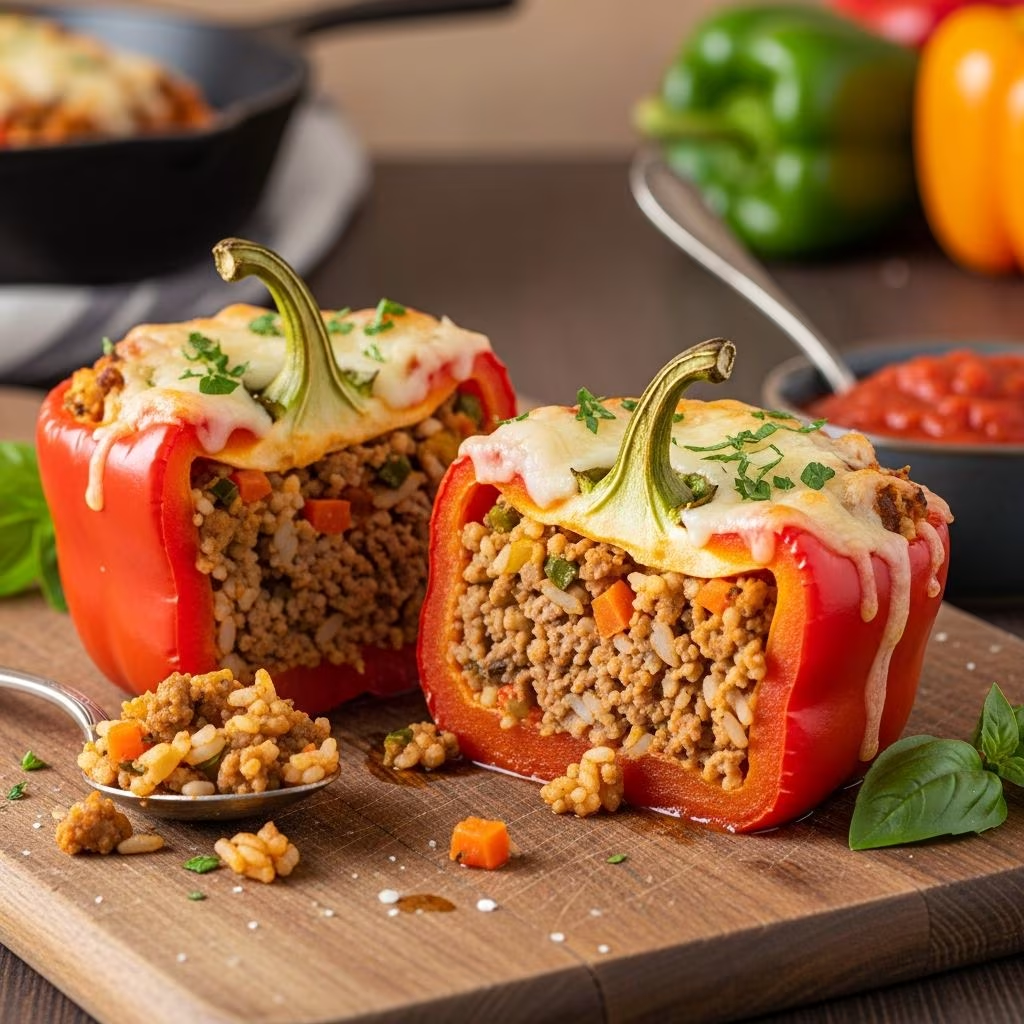
Cheese, particularly mozzarella or a blend of Italian cheeses, provides richness and creates the desirable melted top. Aromatics such as onions and garlic form the flavor base, while tomato-based ingredients—whether marinara sauce, diced tomatoes, or tomato juice—add moisture and acidity that balances the dish.
Preparing Peppers for Optimal Results
Proper pepper preparation significantly impacts both the cooking process and the final presentation. Begin by washing and thoroughly drying your peppers to remove any surface dirt or residue. The next step determines your cooking approach: you can either cut peppers horizontally into two halves or vertically into two halves, depending on your preference and serving style.
When cutting horizontally, you create flatter bottom surfaces that sit more stably in the baking dish and hold filling more easily. Using a sharp paring knife, carefully remove the stem portion from the top half. It’s acceptable if a small hole remains where the stem was attached. Scoop out all seeds and white membranes thoroughly, as these elements can create bitterness and prevent proper filling distribution.
Some recipes recommend pre-cooking the peppers before adding filling. Blanching in boiling water for approximately five minutes softens the peppers slightly while maintaining some firmness. Alternatively, baking empty pepper halves in a preheated 350°F oven for twenty minutes achieves similar results. This pre-cooking step ensures tender peppers throughout cooking without mushiness, though it adds time to overall preparation.
Before filling, brush each pepper half lightly with olive oil and season with salt and black pepper. This simple step enhances the pepper’s natural flavor and prevents sticking to the baking dish.
Developing Flavorful Filling Mixtures
The filling represents the true character of your dish, and building layers of flavor creates depth and complexity. Begin by heating oil in a large skillet over medium heat. Add your chosen ground meat and cook thoroughly, breaking it apart as it browns. Once cooked through, remove excess fat if necessary by draining or pressing the meat against the skillet sides with a wooden spoon.
Add diced onion and minced garlic cloves to the hot meat, cooking for two to three minutes until the onion becomes translucent and the garlic releases its aroma. This foundational mixture, known as the aromatic base, establishes the flavor profile for your entire dish. From this point, numerous variations are possible depending on your preferences and available ingredients.
Combine cooked rice with the meat mixture, then incorporate tomato-based ingredients such as marinara sauce, diced tomatoes, or tomato juice. Add seasonings including Italian seasoning, garlic powder, onion powder, oregano, salt, and pepper. Some recipes include Worcestershire sauce for umami depth, while others add frozen corn, diced jalapeños, or bell pepper pieces for texture and additional flavor. Stir thoroughly until all ingredients combine evenly, ensuring the rice absorbs the liquid and flavors distribute throughout.
Filling and Baking Techniques
Using a spoon or small measuring cup, fill each pepper cavity generously with the meat and rice mixture. Pack the filling firmly but not aggressively—you want it distributed throughout the pepper without creating an overly dense mass. Fill each pepper to the rim, as the mixture will settle during baking.
Arrange filled peppers in a 9×13-inch baking dish, cut side up. Distribute the shredded cheese evenly across the top of each pepper. Cover the baking dish loosely with aluminum foil tented so it doesn’t directly contact the cheese, which can cause sticking.
Bake at 350°F for fifteen to thirty minutes, depending on whether you pre-cooked the peppers. If peppers were pre-cooked, fifteen minutes should suffice. If starting from raw pepper halves, allocate thirty to thirty-five minutes for proper cooking. The peppers should appear tender but not collapsed, and the cheese should be melted and slightly beginning to brown.
For additional browning and visual appeal, remove the foil during the final minutes and increase the oven temperature to broil. Watch carefully—cheese can brown rapidly under broiler heat. Two to three minutes typically creates a golden, slightly crispy cheese surface. Remove from heat immediately once the desired color is reached.
Ingredient Variation Guide
| Component | Primary Options | Flavor Impact |
|---|---|---|
| Protein | Ground beef, turkey, chicken, pork, sausage, tofu | Changes richness and heartiness |
| Rice Type | White, brown, wild, jasmine | Affects texture and nutritional value |
| Tomato Base | Marinara, diced tomatoes, tomato sauce, tomato juice | Alters acidity and moisture content |
| Cheese | Mozzarella, cheddar, parmesan, Mexican blend | Changes melting quality and taste |
| Vegetables | Corn, mushrooms, spinach, zucchini, jalapeños | Adds nutritional value and texture |
Common Mistakes to Avoid
- Overfilling peppers: While generous filling is desirable, excessive amounts prevent even cooking and cause spilling during baking
- Insufficient seasoning: Season both the pepper flesh and the filling mixture to ensure balanced flavor throughout
- Direct foil contact with cheese: Tenting the foil prevents sticking and unwanted texture changes
- Overcooking peppers: Peppers should retain some firmness; mushy peppers indicate excessive baking time
- Skipping the pre-cook step: Raw peppers require longer baking, while pre-cooked peppers bake more quickly and evenly
- Using cold meat mixture: Room temperature or warm filling distributes more evenly and cooks more consistently
Storage and Make-Ahead Strategies
Stuffed peppers freeze remarkably well, making them excellent candidates for advance preparation. Assemble peppers completely without baking, cover tightly with plastic wrap and foil, and freeze for up to three months. When ready to cook, thaw completely in the refrigerator overnight, then bake as directed, possibly adding five to ten minutes to compensate for their previous frozen state.
Cooked stuffed peppers store in the refrigerator for three to four days in an airtight container. Reheat gently in a 350°F oven covered with foil until warmed through, approximately fifteen to twenty minutes. Microwave reheating is possible but may result in slightly softer peppers; use medium power and check frequently to avoid overheating.
Frequently Asked Questions
Can I prepare this dish in advance?
Absolutely. You can assemble peppers up to twenty-four hours before baking—store them covered in the refrigerator. This approach allows flavors to meld while keeping your preparation flexible. You can also freeze assembled but unbaked peppers for later use.
What should I do if my peppers become too soft?
Soft peppers typically result from either extended pre-cooking or overly long final baking. Reduce pre-cooking time to just five minutes or eliminate this step entirely. During final baking, check peppers after fifteen minutes rather than waiting the full thirty minutes.
How can I make this recipe vegetarian?
Replace ground meat with crumbled tofu, lentils, mushrooms, or additional beans mixed into the rice. Add extra seasonings and perhaps a soy sauce splash for umami depth. Vegetable broth can replace any meat-based broth in the recipe.
Which cheese works best for melting and browning?
Mozzarella remains the top choice due to its excellent melting properties and mild flavor that complements the filling. Cheddar creates a firmer, more flavorful top, while parmesan adds a sharpness. A combination of mozzarella and parmesan often produces ideal results.
Can I use a different cooking method?
Yes. Slow cooker preparation works well—arrange peppers in the slow cooker, cover, and cook on low for four to five hours. Instant Pot cooking accelerates the process using high pressure for eight to twelve minutes depending on whether peppers are pre-cooked. Air fryer cooking at 375°F for about fifteen minutes also produces excellent results.
Serving Suggestions and Accompaniments
Stuffed peppers are complete meals but pair wonderfully with complementary side dishes. Crisp garden salads with vinaigrette provide freshness and acidity to balance the richness. Garlic bread or crusty rolls allow guests to enjoy any flavorful liquid from the peppers. Steamed or roasted vegetables such as broccoli, green beans, or asparagus add nutritional variety without overwhelming the plate.
Garnish finished peppers with fresh parsley, chopped basil, or a light sprinkle of red pepper flakes for visual appeal and flavor interest. A dollop of sour cream or Greek yogurt can be offered on the side for those preferring additional richness.
Nutritional Considerations
Stuffed peppers offer a reasonably balanced nutritional profile. Bell peppers provide vitamin C, potassium, and fiber while remaining low in calories. The ground meat contributes protein and B vitamins, though higher-fat varieties add more calories. Rice provides carbohydrates for sustained energy. Using lean ground meat, limiting cheese portions, and incorporating vegetable additions can adjust the nutritional density according to individual dietary preferences.
This adaptable dish accommodates various dietary needs—reduced-sodium versions use low-sodium broth and minimal added salt, while higher-fiber versions incorporate brown rice or add vegetables such as spinach or mushrooms to the filling.
References
- Ground Beef Stuffed Peppers Recipe — Budget Bytes. Accessed April 2026. https://www.budgetbytes.com/stuffed-bell-peppers/
- Classic Stuffed Peppers — Chili Pepper Madness. Accessed April 2026. https://www.chilipeppermadness.com/recipes/stuffed-peppers/
- Best Stuffed Peppers Recipe — Delish. Accessed April 2026. https://www.delish.com/cooking/recipe-ideas/a23014857/classic-stuffed-peppers-recipe/
- Ground Beef Stuffed Peppers (No Boiling) — Real Food Whole Life. Accessed April 2026. https://realfoodwholelife.com/recipes/italian-stuffed-peppers/
- Classic Stuffed Peppers — Feast and Farm. Accessed April 2026. https://feastandfarm.com/classic-stuffed-peppers/