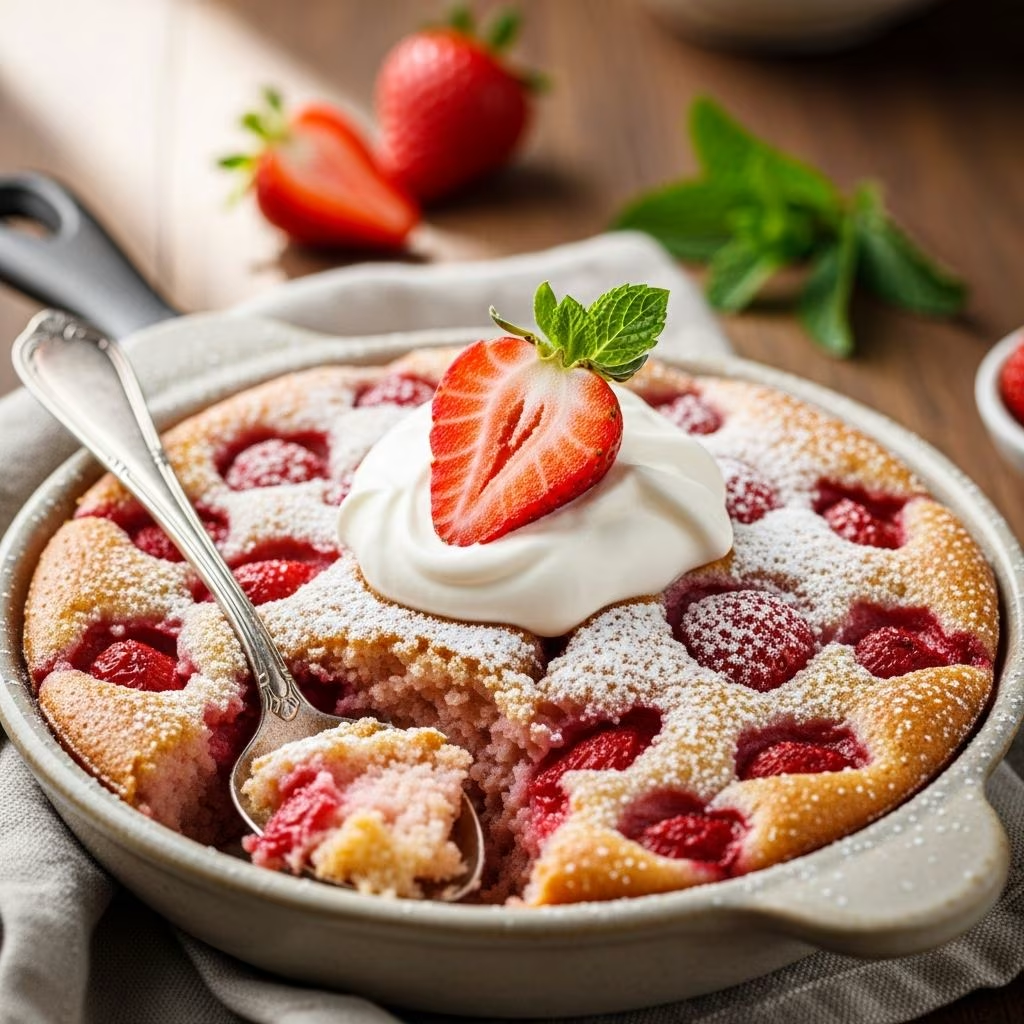
When the craving for something sweet strikes and time is limited, a strawberry spoon cake offers the ideal solution. This dessert bridges the gap between simplicity and sophistication, requiring just a handful of pantry staples and fresh fruit to create something genuinely memorable. Unlike elaborate layer cakes demanding precision and expertise, spoon cake thrives on its approachable nature, making it accessible to bakers of all skill levels. The beauty of this dessert lies in its intentional imperfection—the bumpy top, the berry-studded surface, and the soft, yielding crumb all contribute to its rustic charm.
Understanding What Makes Spoon Cake Different
Spoon cake occupies a unique space in the dessert world, neither a traditional cake nor quite a cobbler. The name itself hints at its defining characteristic: it’s typically served directly from the baking dish using a spoon, rather than sliced into individual portions. This casual presentation style makes it perfect for intimate gatherings or family meals where formality takes a backseat to comfort and flavor.
The structure of spoon cake relies on a simple batter that rises during baking, with fruit distributed throughout and across the top. As it bakes, the batter miraculously transforms into a cake-like crumb while simultaneously creating a slightly custardy or gooey interior, especially near the center. This textural contrast—crispy edges meeting tender middle—appeals to those seeking complexity without complication.
Selecting and Preparing Your Strawberries
The success of any strawberry-focused dessert begins at the market. When shopping, prioritize strawberries that feel firm to the touch and display a vibrant red hue throughout. Avoid berries with soft spots, bruises, or pale coloring, as these indicators suggest diminished flavor and texture. Local, seasonal berries from farmers’ markets typically offer superior taste compared to those shipped long distances.
Preparation involves more than simply rinsing and slicing. The technique of maceration—coating berries with sugar and allowing them to rest—deserves particular attention. During this resting period, sugar draws out the berries’ natural juices, creating a syrupy liquid that sweetens and flavors the cake as it bakes. This step takes approximately 15 to 20 minutes and transforms ordinary berries into flavor-packed additions. For those unable to access fresh strawberries, frozen berries that have been thawed work adequately, though the texture may be slightly softer.
Essential Ingredients and Their Roles
A traditional strawberry spoon cake contains remarkably few components, each selected for its specific contribution to the final product:
- Butter: Melted butter creates richness and helps develop the characteristic tender crumb. Brown butter takes this further by adding nutty depth and complexity to the flavor profile.
- Brown Sugar: This ingredient provides moisture, slight molasses notes, and the binding necessary for proper crumb structure. The packed measurement ensures adequate moisture distribution.
- Flour: All-purpose flour serves as the structural foundation, creating the protein network responsible for the cake’s rise and texture.
- Baking Powder: This leavening agent introduces air bubbles, allowing the batter to rise and develop a light, tender crumb during baking.
- Milk or Buttermilk: Liquid helps hydrate the flour and distribute other ingredients evenly, while buttermilk adds subtle tang and improves browning.
- Vanilla Extract: Pure vanilla provides aromatic notes that complement strawberry’s bright flavor without overshadowing it.
- Salt: A small quantity enhances all flavors and balances sweetness.
The Batter-Making Process Explained
Creating the batter involves straightforward steps that novice bakers can execute with confidence. Begin by whisking together melted butter and brown sugar until well combined. The mixture should appear slightly grainy and textured. Add liquid components—milk, vanilla extract, and eggs if using—and whisk until fully integrated. In a separate vessel, combine dry ingredients: flour, baking powder, and salt. The dry mixture should be whisked briefly to distribute the leavening agent evenly, ensuring consistent rise throughout the cake.
Combining wet and dry components requires gentle handling. Rather than vigorous mixing, fold or whisk just until streaks of flour disappear. This restrained approach prevents overdeveloping gluten, which would result in a tough, dense crumb rather than the tender texture desired. The finished batter will appear relatively thin—thinner than typical cake batters—which may seem concerning to inexperienced bakers. This consistency is intentional and correct; spoon cakes deliberately feature a looser batter that creates their characteristic texture.
Assembling and Baking
The assembly process distinguishes spoon cake from standard cakes. Prepare your baking vessel—whether a round ceramic dish, pie plate, or square cake pan—by coating it lightly with softened butter or cooking spray. Pour the prepared batter into this vessel, where it will occupy roughly the bottom third of the pan. This thin layer is precisely what creates spoon cake’s signature texture when fruit and juices are added on top.
Distribute macerated strawberries and their accumulated juices across the batter’s surface. Don’t stir these together; instead, allow them to rest atop the batter. Some recipes suggest adding dollops of strawberry jam across the surface for extra fruity intensity, though this remains optional depending on personal preference and available ingredients. As the cake bakes, something magical occurs: the batter rises around the fruit, creating a integrated dessert where berries, cake, and juice mingle throughout.
Baking temperature typically ranges from 325 to 350 degrees Fahrenheit, with baking times between 25 and 45 minutes depending on pan size and oven characteristics. Smaller, shallower pans require less time; larger, deeper vessels need additional minutes. The cake is finished when edges appear golden brown and pull away slightly from pan sides, while the center jiggles only minimally when the pan is gently shaken. A clean toothpick inserted into the thickest section should emerge with just a few moist crumbs, not wet batter.
Cooling and Serving Considerations
Allowing the cake to rest in its baking vessel for 5 to 15 minutes post-baking serves multiple purposes. This resting period allows carryover cooking to continue in the center, ensuring proper texture development without overbaking the edges. It also allows the cake to set sufficiently for serving without falling apart. However, serving warm—rather than at room temperature or chilled—showcases the dessert’s best qualities, particularly the contrast between warm cake and cold ice cream or whipped cream.
Spoon cake invites flexible serving presentations. A generous scoop of vanilla ice cream directly atop a warm portion creates melting, indulgent combinations. Lightly sweetened whipped cream offers a lighter alternative without sacrificing richness. Some prefer to drizzle heavy cream over warm cake, allowing it to pool in the indentations and soak into the crumb. Greek yogurt or regular yogurt provides a tangy contrast to strawberry’s natural sweetness.
Timing and Make-Ahead Strategies
One significant advantage of spoon cake is its flexibility regarding preparation timing. Ingredients can be measured and arranged hours ahead, with dry components stored together in one bowl and wet ingredients in another, covered with plastic wrap. Strawberries can be sliced and macerated up to four hours in advance, their juices only becoming more concentrated as time passes. This preparation flexibility makes spoon cake particularly valuable when entertaining, as the actual baking requires no more than an hour from start to finish.
The completed cake should be served within several hours of baking for optimal texture and flavor. Storage beyond this window results in gradual moisture loss and potential staleness. If refrigeration becomes necessary, cover the baking dish tightly with plastic wrap or foil to minimize air exposure. Reheating a slice in the microwave for 15 to 20 seconds restores some of the original warmth and pleasantness.
Variations and Adaptations
While the classic formula succeeds consistently, creative bakers can explore variations without compromising the fundamental appeal. Substituting white sugar for brown sugar creates a less molasses-forward flavor, allowing strawberry to shine more prominently. Adding brown butter before mixing introduces nutty undertones that complement berries beautifully. Incorporating an egg into the batter adds richness and improves structure, though this modification makes the result less of a true spoon cake and more of a traditional cake. Some recipes incorporate strawberry jam into the dry mixture for enhanced berry flavor throughout.
Seasonal fruit substitutions work equally well. Raspberries, blackberries, or mixed berries create delightful variations on the theme. Stone fruits like plums, peaches, or nectarines offer different flavor profiles while maintaining the dessert’s essential character. Even cooked apple preparations can replace berries when strawberries are unavailable or out of season.
Common Questions About Spoon Cake
- Can frozen strawberries be substituted for fresh?
- Yes, thawed frozen strawberries work adequately, though the texture becomes softer. There’s no need to macerate frozen berries as extensively since they’re already quite soft and release juice readily.
- What’s the difference between spoon cake and cobbler?
- Cobbler typically features biscuit topping or cake topping layered atop fruit filling. Spoon cake integrates the batter and fruit throughout, creating a unified dessert rather than distinct layers.
- Why is my spoon cake too dense or not risen properly?
- Overmixing the batter develops excessive gluten, preventing proper rise. Additionally, expired baking powder fails to leaven effectively. Ensure your leavening agents haven’t surpassed their expiration dates.
- Can spoon cake be made in advance and frozen?
- Completed spoon cake can be wrapped tightly and frozen for up to two months. Thaw at room temperature and reheat gently before serving for best results.
- Is this dessert suitable for dietary restrictions?
- The basic recipe contains eggs in many variations, making it unsuitable for vegans unless substitutions are made. Gluten-free flour blends work reasonably well if a one-to-one substitution flour is selected.
Why Spoon Cake Deserves Your Attention
In an era of increasingly complex recipes and specialized equipment demands, spoon cake represents a refreshing counterpoint. It celebrates simplicity without sacrificing satisfaction, proving that minimal ingredients and straightforward technique can produce genuinely delicious results. The dessert’s rustic presentation appeals to modern sensibilities favoring authenticity over perfection, while its reliable execution builds confidence in home bakers seeking manageable projects.
Whether served at casual family dinners, intimate gatherings, or moments of personal indulgence, strawberry spoon cake delivers consistent pleasure. The combination of tender crumb, bright fruit flavor, and casual presentation creates something that feels simultaneously special and accessible—a rare achievement in dessert baking.
References
- Summer Strawberry Spoon Cake Recipe — A Cook and Her Books. Accessed April 2026. https://acookandherbooks.com/summer-strawberry-spoon-cake-recipe/
- Easy Strawberry Spoon Cake — Half Baked Harvest. Accessed April 2026. https://www.halfbakedharvest.com/strawberry-spoon-cake/
- Strawberry Spoon Cake — Deanna’s Daughter. Accessed April 2026. https://deannasdaughter.com/?p=18126