When it comes to weeknight dinner solutions, few dishes can compete with the simplicity and satisfaction of a well-executed slow cooker meatball recipe. This timeless comfort food combines tender, flavorful meatballs with a rich, savory sauce served over perfectly buttered noodles. The beauty of this dish lies not only in its delicious taste but also in its straightforward preparation process, making it an ideal choice for busy families, working professionals, and anyone seeking a hassle-free meal that doesn’t compromise on flavor.
Understanding the Appeal of Slow Cooker Cooking
The slow cooker has revolutionized home cooking by offering a method that transforms simple ingredients into complex, deeply flavored dishes with minimal active preparation time. Unlike traditional stovetop cooking, which requires constant monitoring and adjustment, slow cooking allows you to combine your ingredients in the morning and return home to a fully prepared meal. This cooking method is particularly effective for meatballs because the extended, gentle heat ensures they remain tender and juicy while absorbing the flavors of the surrounding sauce.
The low and slow cooking process breaks down connective tissues in the meat, resulting in an exceptionally tender texture that’s difficult to achieve through conventional methods. Additionally, the enclosed environment of the slow cooker prevents moisture loss, ensuring your meatballs stay succulent throughout the cooking period.
Key Ingredients and Their Roles
Creating a successful meatball dish requires understanding how each ingredient contributes to the final product. The foundation begins with quality meatballs, which can be either homemade or purchased frozen for added convenience. The sauce components transform these simple proteins into something extraordinary.
The Creamy Sauce Base
The sauce plays a crucial role in elevating this dish from ordinary to exceptional. A combination of condensed cream of celery soup and French onion soup creates a complex flavor profile that’s both savory and slightly sweet. These condensed soups serve as flavor concentrators, providing umami depth and richness that would take hours to achieve through traditional broth reduction. The cream of celery soup contributes a subtle earthiness, while French onion soup adds caramelized depth with subtle beef undertones.
Sour cream introduces a tangy element that balances the richness of the soups and adds a velvety texture to the sauce. This dairy component also helps create a smoother consistency and prevents the sauce from becoming too thick or heavy. The combination of these three ingredients creates a sauce that’s greater than the sum of its parts, with each component complementing and enhancing the others.
Meatball Selection and Quality
While frozen meatballs offer convenience, the quality of your meatballs significantly impacts the final dish. Look for meatballs made with real meat rather than filler, as these will maintain better texture during the extended cooking process. Ground beef meatballs work exceptionally well in this recipe, though combinations of beef and pork create a more complex flavor profile. If you prefer to make homemade meatballs, using a ratio of ground meat to breadcrumbs and eggs ensures proper texture and binding.
Step-by-Step Preparation Guide
While this recipe is remarkably straightforward, understanding the proper preparation sequence ensures optimal results.
Sauce Assembly
Begin by adding the cream of celery soup to your slow cooker, using the interior surface to break up any clumps as you pour. Follow with the French onion soup, stirring to combine these two base ingredients. The initial mixing is important because it distributes the flavors evenly throughout the cooking vessel. Add your sour cream and blend everything together until relatively smooth. Some small lumps in the sour cream are acceptable and will dissolve during cooking.
Meatball Introduction
Once your sauce is prepared, gently add your meatballs, stirring occasionally to ensure they’re coated with the sauce mixture. This initial coating helps them cook more evenly and absorb flavors more effectively. If you’re using frozen meatballs, there’s no need to thaw them beforehand—the slow cooker will gradually bring them to temperature.
Cooking Parameters
Set your slow cooker to high heat and cook for three to four hours. The high setting ensures that your meatballs reach safe internal temperatures while remaining tender. The exact cooking time depends on your specific slow cooker model, the quantity of meatballs, and whether they started frozen or at room temperature. You’ll know they’re ready when the sauce is bubbling gently around the edges and the meatballs are heated through.
If you prefer a lower cooking temperature, this recipe also works well on a low setting for six to eight hours, though you should allow extra time if starting with frozen meatballs. The lower temperature creates an even more tender final product, though the difference is subtle.
Preparing the Noodle Foundation
While your meatballs cook, preparation of the noodle component is minimal but important. Choose egg noodles or wide ribbon pasta that can cradle the sauce effectively. Wide noodles catch and hold more sauce than thin varieties, creating a more cohesive dish.
Begin cooking your noodles approximately thirty minutes before your meatballs finish cooking. This timing ensures they’re fresh and pliable when you need them. Drain the noodles, but resist the urge to rinse them—the residual starch helps the sauce adhere better. Immediately toss the hot noodles with butter, allowing it to coat each strand and add richness to the finished dish. A generous amount of butter is key here; it creates a luxurious mouthfeel and prevents the noodles from sticking together.
Assembly and Serving Strategies
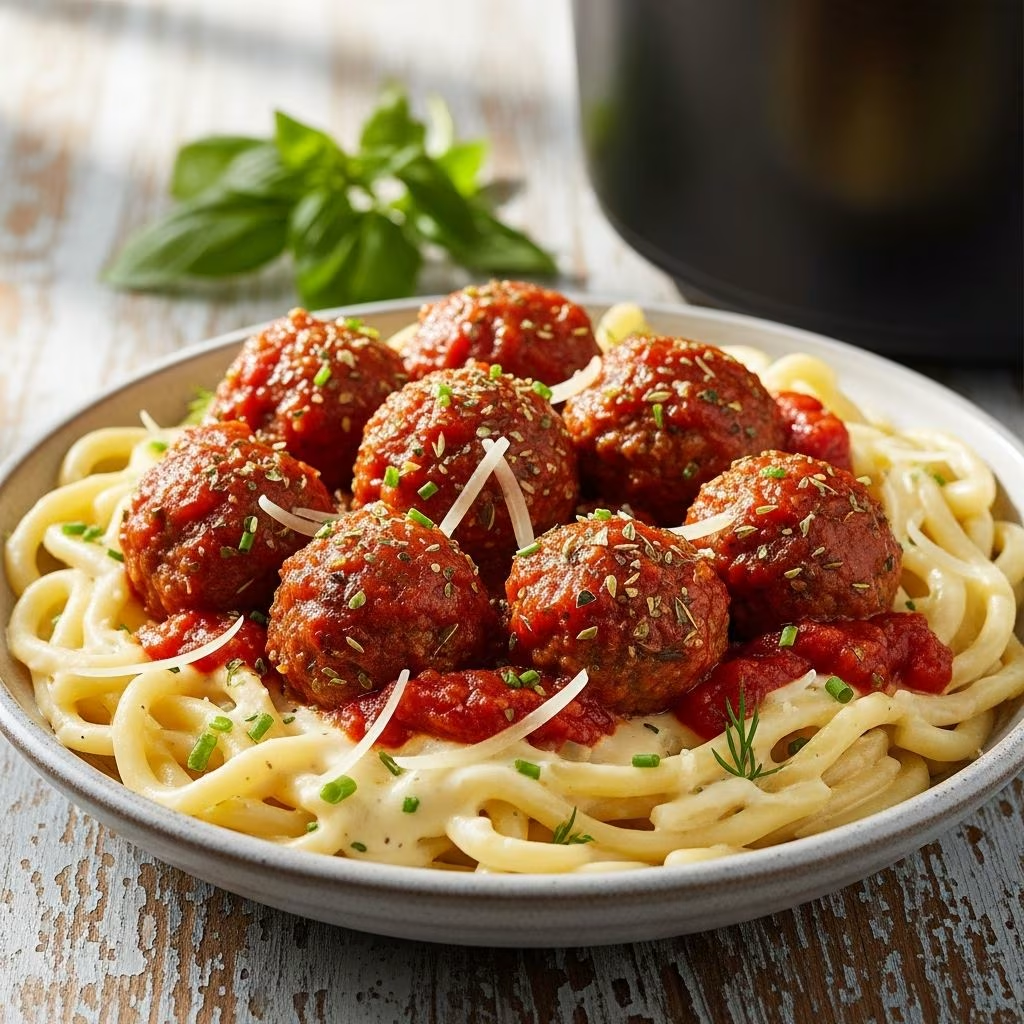
Once your meatballs have finished cooking and your noodles are prepared, assembly is straightforward. Place a portion of buttered noodles on each serving plate, then generously ladle the meatballs and their sauce over the top. The sauce should be abundant and saucy rather than sparse—this is a dish meant to be slightly wet and indulgent.
For garnishing, fresh parsley adds visual appeal and a subtle herbaceous note that brightens the rich sauce. A sprinkle of cracked black pepper enhances both appearance and flavor complexity. Some families enjoy grating fresh Parmesan cheese over the top, though this is an optional enhancement rather than a necessary component.
Scaling and Batch Cooking Considerations
This recipe scales beautifully for different group sizes and cooking scenarios. For a family of four, the standard proportions work perfectly. For larger gatherings, simply double or triple the quantities, using a larger slow cooker or preparing multiple batches sequentially. The beauty of this scaling is that cooking time remains relatively consistent since larger quantities don’t significantly increase heat penetration time in a slow cooker.
Many families prepare double batches and freeze the extra meatballs and sauce for later use. The frozen portion maintains quality for up to three months when properly stored in an airtight container. Simply thaw overnight in the refrigerator and reheat gently on a stovetop or in the slow cooker until warmed through.
Flavor Variations and Creative Modifications
While the classic version is wonderful on its own, various modifications allow you to customize this dish to your preferences. Substituting cream of mushroom soup for the celery soup creates an earthier version, while cream of chicken soup provides a lighter alternative. Some cooks add Worcestershire sauce for additional umami depth or a small amount of ketchup for subtle sweetness and acidity.
For those seeking a spicier version, adding cayenne pepper, hot sauce, or finely minced jalapeños transforms the flavor profile without overwhelming the dish. Italian seasoning, garlic powder, or fresh garlic can enhance the Mediterranean qualities of the meatballs, while adding these ingredients in the slow cooker rather than to the meatballs ensures even distribution throughout the sauce.
Nutritional Considerations and Dietary Adaptations
This recipe is naturally accommodating to various dietary needs with minimal modifications. For a lower-fat version, use reduced-fat versions of the condensed soups and sour cream, though this will slightly alter the richness of the final dish. Vegetable-based meatball alternatives work well in this sauce, absorbing flavors effectively and providing a plant-forward option.
Gluten-sensitive diners can use gluten-free egg noodles without any adjustment to the recipe. The condensed soups should be checked for gluten content, though most mainstream brands offer gluten-free options. The meatballs themselves are typically gluten-free if prepared without breadcrumb binding agents.
Troubleshooting Common Issues
If your sauce appears too thick, additional sour cream stirred in during the last thirty minutes of cooking will thin it without affecting the flavor profile. If it’s too thin, a cornstarch slurry mixed with cold water and added during the final minutes will thicken it to the desired consistency.
Meatballs that appear to be cooking unevenly can be gently stirred halfway through the cooking time to promote more consistent heating. If your meatballs are browning too quickly on the exterior while remaining cold inside, reduce the heat to low and extend the cooking time by two to three hours.
Make-Ahead and Storage Information
The sauce components can be combined in your slow cooker insert the evening before, covered, and refrigerated. In the morning, simply insert the cold insert into your slow cooker base and proceed with cooking, allowing an additional twenty to thirty minutes for the insert to reach operating temperature. Prepare your buttered noodles fresh when ready to serve for optimal texture and flavor.
Leftover meatballs and sauce store well in the refrigerator for up to four days in an airtight container. Reheating is best accomplished gently on a stovetop over low heat, stirring occasionally. Alternatively, microwave individual portions at fifty percent power to prevent the sauce from overheating and breaking.
Pairing Suggestions and Meal Planning
This comforting main dish pairs beautifully with simple side vegetables such as steamed broccoli, roasted asparagus, or a crisp green salad with vinaigrette. The richness of the meatballs and sauce means lighter accompaniments balance the meal effectively. A crusty bread for soaking up extra sauce completes the dinner experience.
This recipe works equally well for weeknight family dinners and casual entertaining. It’s the type of dish that feels special enough for guests while remaining simple enough for busy weeknights, making it a versatile addition to any home cook’s repertoire.
References
- Slow Cooker Safety Guidelines — USDA Food Safety and Inspection Service. 2024. https://www.fsis.usda.gov/food-safety/safe-food-handling-and-preparation/food-safety-basics/safe-minimum-internal-temperatures
- Meat Cookery and Meatball Preparation Standards — The Culinary Institute of America. https://www.ciachef.edu/
- Proper Food Storage and Freezing Methods — USDA FoodKeeper App. 2024. https://www.foodsafety.gov/keep-food-safe/foodkeeper-app
- Slow Cooker Cooking Time and Temperature Guidelines — Safe Food Australia. 2023. https://www.foodstandards.gov.au/