Shakshuka, also known as chakchouka, represents one of the most beloved and straightforward dishes across North African and Mediterranean cuisines. This humble yet satisfying meal combines the simplicity of poached eggs with the depth of flavor from a carefully spiced tomato base. Whether you’re seeking a nourishing breakfast option, a light lunch, or an impressive dinner that requires minimal effort, shakshuka delivers on all fronts. The beauty of this dish lies in its versatility—it can be prepared with basic pantry staples and adapted to suit individual preferences and dietary needs.
Understanding the Foundations of Shakshuka
At its core, shakshuka is a one-pan meal that celebrates the marriage of vegetables, aromatics, and gently cooked eggs in a harmonious tomato-based sauce. The dish emerged from the culinary traditions of countries including Tunisia, Egypt, and other North African regions, though variations exist throughout the Middle East and Mediterranean areas. The name itself comes from the Arabic word meaning “mixture” or “medley,” which perfectly encapsulates what makes this dish so appealing.
What distinguishes shakshuka from other egg preparations is the deliberate technique of poaching the eggs within the sauce rather than cooking them separately. This method allows the eggs to absorb the surrounding flavors while creating a unified dish where each component enhances the others. The result is a plate of food where the creamy yolk mingles with the zesty tomato sauce, creating an experience greater than the sum of its parts.
Essential Ingredients and Their Roles
Creating an authentic shakshuka begins with understanding the purpose of each ingredient and how they contribute to the final dish.
The Vegetable Foundation
The vegetable base typically consists of onions, bell peppers, and garlic. These three ingredients form what Mediterranean cooks call a sofrito—a flavor-building combination that provides the aromatic foundation. Onions contribute natural sweetness and depth when gently cooked, bell peppers offer both color and subtle sweetness, and garlic delivers pungent, savory notes that become mellow and complex when heated. Most recipes employ red or green bell peppers, though personal preference should guide your selection. Yellow onions work particularly well due to their balanced flavor profile.
Spice Selection and Flavor Building
The spice profile distinguishes shakshuka from simpler egg dishes. Traditional preparations utilize:
- Paprika — provides warm, slightly sweet undertones and visual appeal with its reddish hue
- Cumin — contributes earthy warmth and a slightly nutty character
- Coriander — adds subtle citrus notes and complexity to the flavor profile
- Chili powder or cayenne pepper — delivers heat for those who prefer spicy preparations
- Red pepper flakes — offers adjustable heat and texture
These spices work synergistically to create the distinctive North African flavor profile that makes shakshuka memorable. The combination evokes the spice markets of Cairo and other Mediterranean cities, transporting diners across continents with each bite.
Tomato Selection and Preparation
Tomatoes form the sauce’s backbone and can be sourced in multiple ways. Fresh tomatoes work beautifully when in season—selecting soft, nearly overripe specimens ensures maximum flavor development. When fresh tomatoes aren’t available or convenient, canned whole peeled tomatoes or crushed tomatoes serve as excellent alternatives. A 28-ounce can typically provides sufficient quantity for a standard six-egg shakshuka. Some recipes combine fresh and canned tomatoes or incorporate tomato sauce to achieve desired consistency and depth.
Supporting Ingredients
Extra-virgin olive oil serves as both cooking medium and flavor contributor, with its fruity notes complementing the other ingredients. Salt and freshly ground black pepper require careful adjustment throughout cooking to balance flavors. Fresh herbs including parsley, cilantro, and mint add brightness and visual appeal, traditionally sprinkled over the finished dish. Some preparations include crumbled feta cheese, which adds tanginess and textural contrast. Pita bread, challah, or crusty bread becomes the perfect vehicle for scooping up the flavorful sauce and tender eggs.
Step-by-Step Preparation Method
Initial Vegetable Preparation
Begin by heating extra-virgin olive oil in a large skillet with a fitted lid over medium heat. Dice onions and bell peppers into uniform pieces to ensure even cooking. Add these vegetables to the heated oil and cook, stirring occasionally, for approximately five to eight minutes until the onions become translucent and the peppers soften. This initial cooking phase serves to break down the vegetables’ cell structure, releasing their natural juices and sugars into the oil.
Aromatics and Spice Blooming
Once vegetables have softened, add minced garlic along with your selected spices. Cook for roughly 30 seconds to one minute, stirring constantly, until the mixture becomes fragrant. This technique, known as “blooming” spices, activates their essential oils and ensures their flavors distribute evenly throughout the dish. The kitchen will fill with an intoxicating aroma at this stage—a sign that everything is proceeding correctly.
Sauce Development
Pour in your prepared tomatoes along with any tomato sauce or tomato juice. If using fresh tomatoes, chop them roughly beforehand. Using a spatula or spoon, gently break down whole tomatoes into smaller pieces. Season the developing sauce with salt and freshly ground black pepper. Bring the mixture to a gentle simmer over low to medium-low heat. Allow the sauce to simmer for approximately 15 minutes, stirring occasionally, until it thickens and the flavors meld together. This simmering phase allows the spices to fully integrate with the tomato base while excess moisture evaporates, concentrating flavors.
Creating Wells and Adding Eggs
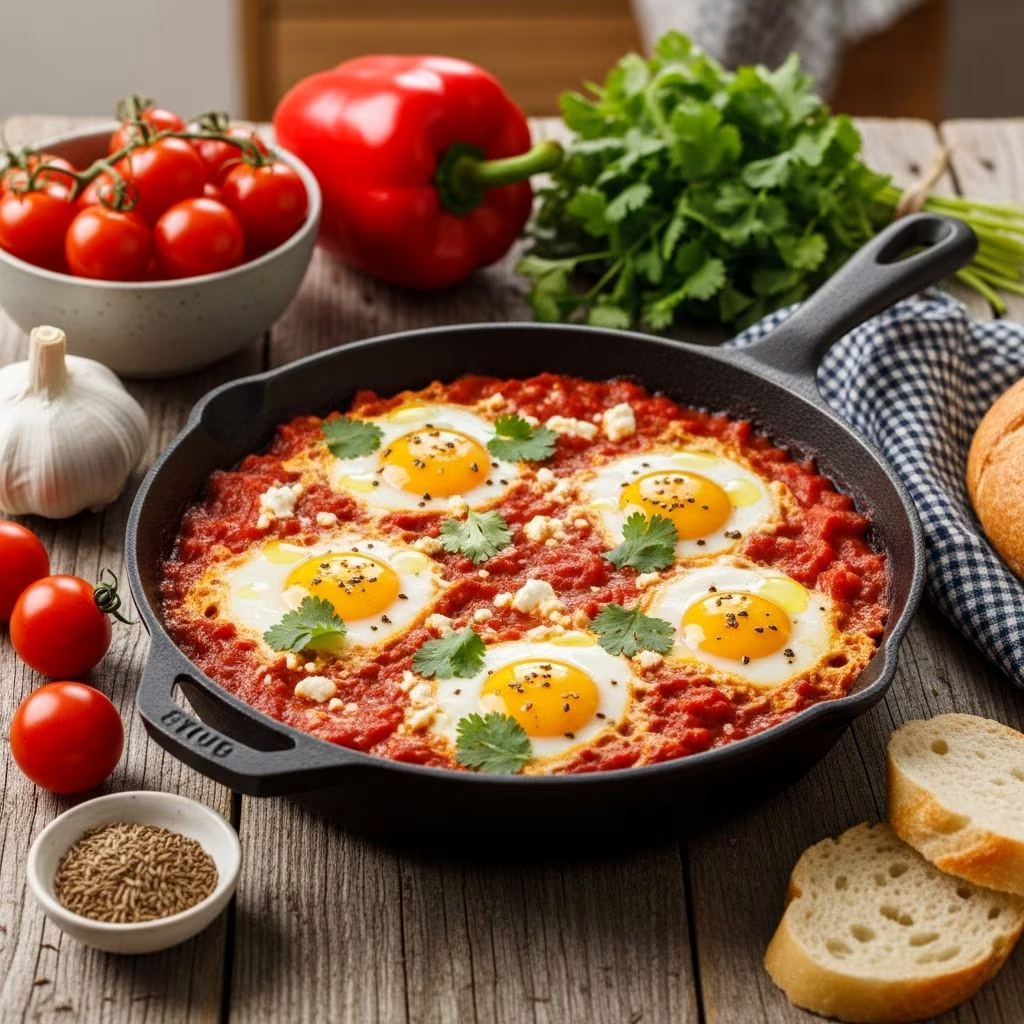
Once the sauce reaches desired consistency and flavor, use the back of your spoon to create six indentations or “wells” evenly distributed across the sauce surface. These wells provide safe harbors for the eggs, preventing them from rolling across the pan. Carefully crack one egg into each well, taking care to keep the yolks intact. Lower the heat to low and cover the skillet with its lid. Cook for five to eight minutes, monitoring progress through the lid’s transparent sections if available, until the egg whites become opaque and set while the yolks remain slightly runny or cooked according to personal preference.
Finishing Touches
Remove from heat and uncover the skillet. Taste the sauce and adjust seasoning as needed with additional salt and pepper. Garnish generously with freshly chopped parsley, cilantro, or mint. Some preparations benefit from a sprinkle of crumbled feta cheese or a drizzle of additional olive oil. Serve immediately while the eggs remain warm and the sauce retains its optimal temperature.
Ingredient Variations and Customizations
Incorporating Proteins Beyond Eggs
While traditional shakshuka focuses exclusively on eggs, numerous cooks enhance the dish with additional protein. Ground lamb or beef adds richness and substance, with each serving delivering more filling nutrition. Brown the meat separately in olive oil until fully cooked, seasoning with salt, pepper, and optionally allspice before proceeding with standard sauce preparation. Merguez sausage, a North African specialty, creates a spicier variation when incorporated in similar fashion.
Vegetable Expansions
The core vegetable trio can be expanded to include mushrooms, zucchini, eggplant, or spinach. These additions require either pre-cooking or adjusting total cooking time to ensure they soften adequately. Hearty vegetables like eggplant benefit from separate sautéing in olive oil before incorporation into the sauce.
Spice Level Adjustment
Shakshuka’s heat profile can be modified to suit individual tolerance levels. Those preferring milder versions should minimize or eliminate cayenne pepper, chili powder, and red pepper flakes. Conversely, spice enthusiasts might increase chili components or add fresh diced hot peppers to the vegetable base.
Cooking Equipment and Best Practices
A large skillet with a well-fitting lid serves as the essential tool for proper shakshuka preparation. Cast iron skillets prove particularly excellent choices, as they heat evenly and retain temperature consistently. The skillet should be large enough to accommodate six eggs with comfortable spacing, typically at least 10 to 12 inches in diameter. A sturdy lid prevents steam escape while allowing monitoring of the eggs’ cooking progress.
Using medium heat for the initial vegetable cooking prevents burning while encouraging proper softening. Transitioning to low heat for the sauce simmering phase ensures controlled flavor development. The final egg-cooking stage definitely requires low heat to prevent over-cooking the eggs or causing the sauce to bubble too vigorously.
Frequently Asked Questions About Shakshuka Preparation
How can I achieve the ideal egg consistency?
Egg consistency depends entirely on personal preference. For runny yolks with set whites, cook for approximately five to six minutes. For firmer yolks, extend cooking to seven to eight minutes. Covering the skillet with a lid accelerates the cooking process compared to leaving it uncovered. Monitor progress by occasionally peeking at the whites’ opacity.
Can I prepare shakshuka ahead of time?
The tomato sauce can be prepared up to two days in advance and refrigerated. When ready to serve, reheat the sauce gently, then create wells and add eggs for the final cooking stage. This preparation method works excellently for meal planning.
What bread pairs best with shakshuka?
Warm pita bread remains the traditional choice for scooping sauce and eggs. Crusty bread, focaccia, or even toasted baguette slices work beautifully. Some Mediterranean regions prefer challah for its slight sweetness and tender crumb.
How should I store leftover shakshuka?
The dish is best consumed immediately while eggs remain at optimal temperature. However, any remaining sauce can be refrigerated for up to three days. Reheating the sauce gently and adding fresh eggs creates a fresh final dish rather than attempting to reheat cooked eggs.
Can I double this recipe for larger gatherings?
Absolutely. Simply double all ingredient quantities and use a larger skillet or multiple skillets simultaneously. Adjust cooking times slightly if needed, as larger pans may require additional simmering minutes for sauce thickening.
Nutritional Considerations and Dietary Adaptations
Shakshuka provides excellent nutritional value, combining protein from eggs with vitamins and minerals from vegetables and spices. The use of olive oil contributes heart-healthy monounsaturated fats. This dish naturally accommodates various dietary approaches—it contains no grains unless served with bread, works perfectly within vegetarian frameworks, and can be made vegan through egg substitution with firm tofu or chickpeas.
For those monitoring sodium intake, controlling salt additions throughout cooking allows customized seasoning. The emphasis on fresh vegetables and minimal processed ingredients aligns well with whole-food and Mediterranean-style eating patterns.
Serving Suggestions and Occasions
Shakshuka’s versatility extends to timing and presentation. Breakfast enthusiasts appreciate it as a protein-rich morning meal that sustains energy through midday. For lunch, shakshuka provides satisfying substance without heaviness. Dinner preparations showcase this dish as an impressive yet effortless option for entertaining. The visual appeal of golden yolks nestled in ruby-red sauce creates Instagram-worthy presentation requiring no additional garnish beyond fresh herbs.
Shakshuka accommodates solo diners equally well as small gatherings. Its one-pan nature minimizes cleanup while maximizing flavor development, making it ideal for weeknight cooking or leisurely weekend brunch scenarios.
Conclusion: Embracing Shakshuka’s Culinary Appeal
Shakshuka represents accessible, flavorful cooking at its finest. This North African treasure transforms simple ingredients into a memorable meal through gentle cooking techniques and thoughtful spice integration. Whether preparing it for personal enjoyment or sharing with others, shakshuka delivers reliability, satisfaction, and genuine deliciousness. The dish’s adaptability ensures that every cook can tailor it to their preferences while maintaining its essential character. With basic pantry staples and roughly 30 minutes of hands-on time, anyone can create restaurant-quality shakshuka in their own kitchen.
References
- Love and Lemons Best Shakshuka Recipe — Love and Lemons. 2024. https://www.loveandlemons.com/shakshuka-recipe/
- Best Shakshuka Recipe (Easy & Traditional) — Downshiftology. 2024. https://downshiftology.com/recipes/shakshuka/
- Best Shakshuka Recipe (Easy & Authentic) — The Mediterranean Dish. 2024. https://www.themediterraneandish.com/shakshuka-recipe/