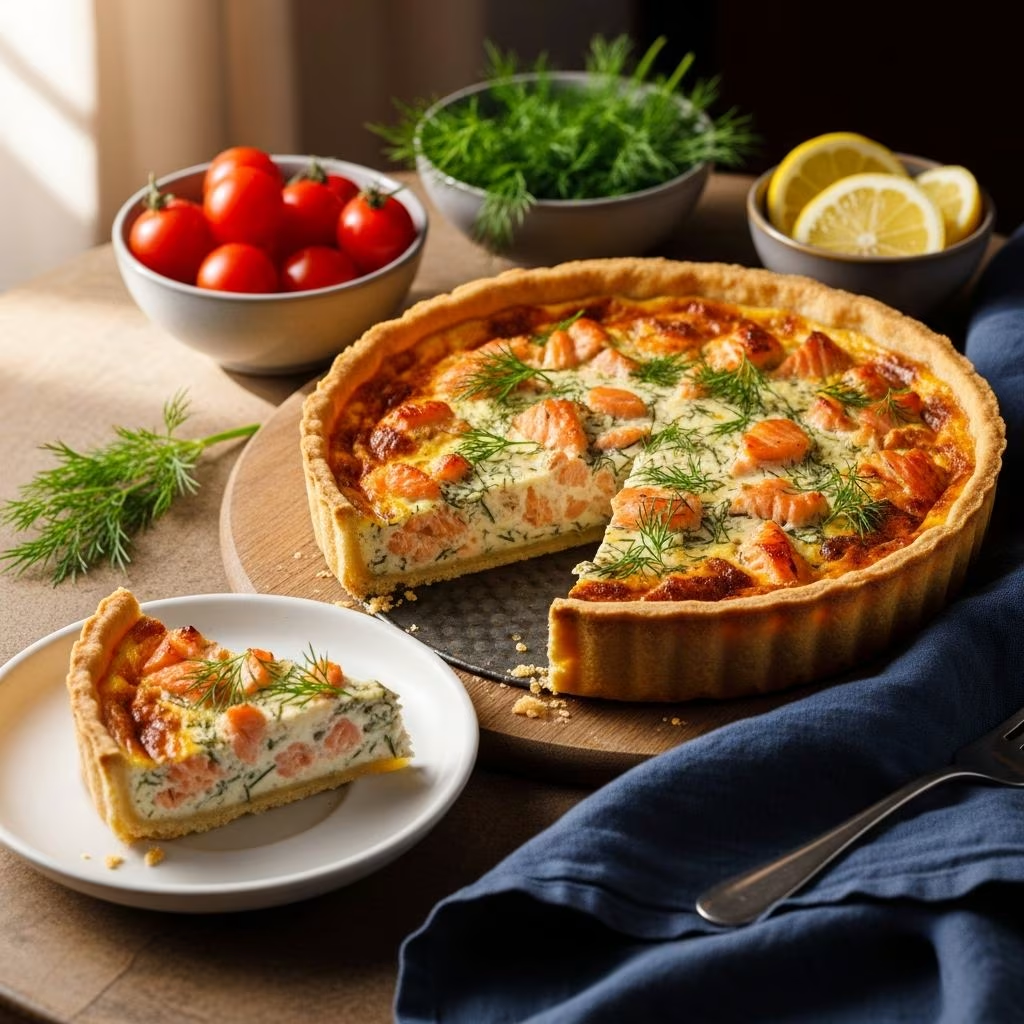
Salmon quiche represents one of the most versatile and sophisticated dishes in contemporary home cooking, combining the delicate flavors of seafood with the comfort of a savory custard base. This elegant preparation works beautifully for weekend brunches, formal luncheons, or casual family dinners. Whether you choose fresh salmon, smoked salmon, or canned varieties, this dish delivers impressive results that belie its straightforward preparation process. Understanding the fundamentals of quiche construction—from crust selection to filling composition—enables home cooks to create restaurant-quality results in their own kitchens.
Understanding Quiche Fundamentals
A quiche is fundamentally a savory custard tart, consisting of three essential components: a pastry crust, a custard filling made from eggs and cream, and flavorful additions that define the particular variety. The salmon quiche builds upon this traditional framework by incorporating seafood as its primary protein, along with complementary vegetables, herbs, and cheeses. The beauty of this dish lies in its adaptability—experienced cooks can modify nearly every element to accommodate ingredient availability, dietary preferences, or flavor preferences without compromising the final result.
The egg-based custard that forms the foundation of any quiche requires careful attention to proportions and technique. Typically, a standard quiche uses four to five eggs combined with one to one and a half cups of heavy cream, milk, or a combination thereof. This ratio produces a custard that sets properly during baking while maintaining a tender, creamy texture that distinguishes homemade quiche from inferior commercial versions.
Selecting Your Salmon Base
The choice of salmon dramatically influences both the flavor profile and texture of your finished quiche. Three primary options present themselves to the home cook, each offering distinct advantages.
Fresh salmon provides a delicate, subtle flavor that allows other ingredients to shine. When using fresh salmon, cut it into bite-sized pieces or flake it into smaller portions to distribute evenly throughout the filling. Fresh salmon’s mild character works particularly well when combined with herbs like dill, tarragon, or chives. The texture remains relatively firm during baking, adding pleasant visual variation to each slice.
Smoked salmon contributes a more pronounced, complex flavor with subtle smokiness and saltiness. This variety requires less seasoning overall, as its inherent flavor profile is more assertive. Smoked salmon pieces can be slightly larger than fresh salmon since their concentrated flavor doesn’t require maximum distribution. This option works exceptionally well with goat cheese, crème fraîche, and fresh herbs.
Canned salmon offers convenience and consistency, making it an excellent choice for weeknight preparations. Drain canned salmon thoroughly and flake it gently before incorporating it into the filling. While less impressive than fresh options, quality canned salmon delivers satisfactory flavor and texture when combined with strong complementary ingredients.
Crust Selection and Preparation
The pastry crust serves both functional and aesthetic purposes, providing structural support while contributing textural contrast and foundational flavor. Home cooks typically select from three approaches: store-bought pie shells, homemade shortcrust pastry, or frozen puff pastry.
Store-bought pie shells represent the time-conscious cook’s trusted ally, eliminating hours of preparation while delivering reliable results. Quality commercial shells bake to golden crispness and require no advance expertise. Simply remove from packaging, position in your baking vessel, and proceed to the par-baking stage.
Homemade shortcrust pastry demands more time and attention but rewards patient cooks with superior flavor and texture. A basic shortcrust combines flour, cold butter, salt, and minimal liquid to create a flaky, tender foundation. The key to excellent shortcrust lies in maintaining cold temperatures throughout preparation and resisting the temptation to overwork the dough.
Frozen puff pastry elevates the quiche experience through its characteristically flaky, layered structure. While requiring thawing before use, puff pastry demands no additional work beyond positioning in your baking vessel. The resulting texture creates impressive visual appeal when sliced.
Regardless of crust choice, the par-baking stage proves essential. This preliminary baking prevents soggy, undercooked crusts that mar otherwise excellent quiches. Pre-bake the crust at 425 degrees Fahrenheit for approximately 5-10 minutes until it begins setting but hasn’t fully cooked. This crucial step ensures the final quiche features a crispy, properly textured base.
Building Complementary Flavor Combinations
The true artistry in quiche preparation emerges through thoughtful ingredient pairing that creates harmonious flavor combinations. Rather than indiscriminately combining available ingredients, successful cooks understand flavor chemistry and build layered taste experiences.
| Salmon Type | Cheese Options | Vegetable Additions | Herb Pairings |
|---|---|---|---|
| Fresh Salmon | Gruyère, Swiss, Fontina | Asparagus, broccoli, leeks | Dill, tarragon, parsley |
| Smoked Salmon | Goat cheese, cream cheese, brie | Green onions, caramelized onions | Fresh dill, chives, capers |
| Canned Salmon | Cheddar, mozzarella, gouda | Spinach, bell peppers, mushrooms | Dill, parsley, garlic |
Vegetable incorporation adds nutritional value, textural interest, and flavor complexity. Spinach contributes earthiness and visual appeal while maintaining delicate texture. Asparagus pieces add subtle elegance and slight bitterness that complements salmon’s richness. Broccoli florets provide hearty substance and mild cabbage-like notes. Mushrooms introduce umami depth that intensifies when sautéed before incorporation.
Cheese selection profoundly impacts the final quiche character. Gruyère and Swiss provide nutty sweetness that doesn’t overpower salmon’s subtle qualities. Goat cheese brings tang and creaminess, particularly suited to smoked salmon preparations. Mozzarella creates mild creaminess and stretchy texture, while cheddar imparts sharpness that stands up to robust flavor combinations.
The Custard Foundation: Getting Proportions Right
The egg custard base requires precise technique despite appearing deceptively simple. Combine eggs and cream in a separate bowl rather than whisking directly in the baking vessel. This approach allows thorough blending and seasoning adjustment before introducing the mixture to other ingredients.
Whisk eggs and cream together gently but thoroughly, incorporating air without creating excessive foam. Vigorous beating introduces unnecessary air that creates holes in the finished quiche and compromises texture. The goal is complete homogenization rather than maximum volume.
Season the custard mixture before pouring over fillings, as post-baking seasoning adjustment becomes impossible. Salt and pepper form the essential foundation, with paprika, red pepper flakes, or Tabasco sauce adding subtle heat or smokiness depending on preference. Fresh herbs stirred into the custard distribute flavor throughout rather than concentrating it in specific spots.
Assembly and Baking Procedure
Successful assembly follows a logical sequence that ensures even ingredient distribution and optimal baking results. Begin by scattering half the cheese across the par-baked crust, creating a protective layer between the crust and liquid filling. Add vegetable components in the next layer, distributing them evenly across the crust’s surface.
Position salmon pieces strategically across the vegetable layer, folding or twisting larger pieces rather than laying them flat. This technique creates visual interest and promotes more even cooking. Pour the prepared custard mixture carefully over assembled ingredients, ensuring it flows around obstacles without displacing them.
Finish by sprinkling remaining cheese across the surface and positioning any garnish elements like fresh herbs or additional salmon pieces. These finishing touches provide visual appeal that impresses diners before they even taste the quiche.
Baking temperature and duration require careful attention. Most salmon quiches bake successfully at 425 degrees Fahrenheit for 15 minutes to set the exterior, followed by reduction to 350 degrees Fahrenheit for 35-40 minutes until the center reaches proper doneness. The quiche is properly baked when the edges appear set and light golden, while the very center retains slight jiggle when the baking dish is gently shaken.
Removing the quiche from the oven slightly before complete firmness ensures a creamy, tender center rather than an overcooked, rubbery texture. The carryover cooking from residual heat continues the setting process as the quiche cools.
Resting and Serving
Patience following baking dramatically improves the final eating experience. Allow the quiche to rest for 10-15 minutes before cutting, permitting the custard to fully set and facilitating clean slices. Attempting to cut quiche immediately after removal from the oven results in slumping portions and uneven pieces.
Salmon quiche serves beautifully warm, at room temperature, or even chilled, making it exceptionally convenient for entertaining. A light salad of mixed greens with lemon vinaigrette complements the richness perfectly, while crusty bread rounds out the meal. For brunch service, pair with fruit, pastries, and mimosas to create an impressive spread that appears more labor-intensive than it actually is.
Flavor Variations and Creative Adaptations
Once comfortable with the basic preparation, experimentation opens exciting possibilities. Adding sun-dried tomatoes brings tangy richness, while sautéed mushrooms introduce earthy umami depth. Caramelized onions contribute sweet complexity that enhances both fresh and smoked salmon varieties.
Herb variations dramatically shift the quiche’s character. Tarragon brings subtle anise notes that work beautifully with fresh salmon. Chives provide delicate onion flavor without overpowering subtlety. Dill remains the classic pairing, so ubiquitous that many cooks consider it essential rather than optional.
Adventurous cooks might substitute alternative proteins entirely, replacing salmon with smoked trout, canned tuna, lump crabmeat, or cooked shrimp. Each option creates distinctly different flavor profiles while maintaining the fundamental quiche structure. Similarly, unconventional crust options like potato or zucchini bases reduce carbohydrate content for health-conscious preparations.
Make-Ahead Strategies and Storage
The quiche’s forgiving nature makes it ideal for advance preparation. Assemble the entire quiche the evening before baking, covering it tightly and refrigerating overnight. Simply increase baking time by 5-10 minutes when baking from a cold state. This strategy eliminates morning stress when entertaining.
Leftover quiche stores excellently in the refrigerator for 3-4 days in an airtight container. Reheat gently in a 350-degree oven for 10-15 minutes, preserving the tender texture better than microwave reheating. The quiche also freezes successfully for up to two months, making it an excellent dish for planned leftovers or future entertaining.
Frequently Asked Questions
Can I use frozen salmon in my quiche?
Yes, frozen salmon works well provided it’s thoroughly thawed and excess moisture is removed before incorporation. Pat thawed salmon dry with paper towels to prevent the filling from becoming watery.
What should I do if my quiche is browning too quickly?
Cover the quiche loosely with aluminum foil once the top reaches desired golden color, protecting it from further browning while the center continues cooking.
How do I know when the quiche is properly cooked?
The edges should appear set and light golden, while the center shows slight jiggle when gently shaken. A knife inserted near the center should come out relatively clean with minimal custard residue.
Can I prepare quiche without a crust?
Yes, crustless quiches bake successfully in well-greased baking dishes, though the presentation differs from traditional preparations.
What’s the best way to serve quiche to guests?
Allow quiche to cool 10-15 minutes before slicing. Use a sharp, thin-bladed knife dipped in hot water between cuts for cleaner slices. Serve with a light salad and crusty bread for a complete meal.
References
- Salmon Quiche (Fresh or Smoked) — Vintage Kitchen Notes. https://vintagekitchennotes.com/salmon-quiche-fresh-or-smoked/
- Smoked Salmon Quiche with Puff Pastry Crust — FoodieCrush. https://www.foodiecrush.com/smoked-salmon-quick-quiche/
- Easy Salmon Quiche Recipe — Real Life Dinner. https://reallifedinner.com/easy-salmon-quiche-recipe/
- Salmon Quiche with Spinach, Dill, and Mozzarella — 31 Daily. https://www.31daily.com/salmon-quiche/
- Salmon Quiche — RecipeTin Eats. https://www.recipetineats.com/salmon-quiche/
- Salmon and Spinach Quiche (10-Minute Prep) — That Cute Dish. https://www.thatcutedish.com/salmon-and-spinach-quiche/
- Salmon Quiche — The Dizzy Cook. https://thedizzycook.com/salmon-quiche/