When hosting gatherings or seeking impressive yet effortless appetizers, salmon-based dips offer an excellent solution. These creamy, flavorful preparations transform simple ingredients into sophisticated dishes that appeal to diverse palates. Whether you’re preparing for a casual get-together or formal event, salmon dips provide versatility and elegance without demanding extensive culinary expertise.
Understanding the Foundation of Salmon Dips
Salmon dips derive their appeal from combining protein-rich fish with binding agents and complementary seasonings. The base typically relies on either fresh cooked salmon or convenient canned varieties, each offering distinct advantages. Fresh salmon provides superior flavor complexity and texture control, while canned salmon ensures year-round availability and minimal preparation time. Both options yield delicious results when properly combined with supporting ingredients.
The binding component traditionally includes cream cheese or mayonnaise, creating the characteristic creamy texture that defines these appetizers. These dairy elements serve dual purposes: they incorporate moisture necessary for optimal consistency while contributing richness that enhances the overall flavor profile. The choice between cream cheese and mayonnaise influences the final texture and taste, allowing customization based on personal preferences and dietary considerations.
Essential Components for Successful Preparation
Core Ingredients Overview
- Salmon: Either 3 cups of shredded cooked fresh salmon or one 14.75-ounce can of pink salmon, drained
- Binding agents: ½ cup mayonnaise, 3 ounces whipped cream cheese, or 8 ounces softened cream cheese depending on desired consistency
- Aromatics: 1 medium diced onion and 2 minced garlic cloves for depth
- Acidic elements: Fresh lemon juice or lime juice to brighten flavors
- Seasonings: Salt, pepper, paprika, and fresh herbs like dill or parsley
- Textural components: Optional panko breadcrumbs for topping or capers for complexity
Ingredient Selection Strategies
Choosing quality ingredients elevates the final product significantly. When selecting fresh salmon, opt for firm fillets with vibrant color and a mild oceanic aroma. Canned salmon offers convenience while delivering comparable nutritional benefits and flavor when sourced from reputable brands. For dairy components, ensure cream cheese reaches room temperature before incorporation, facilitating smooth blending and eliminating lumps.
Fresh herbs dramatically enhance salmon dips compared to their dried counterparts. Dill complements salmon’s natural flavors particularly well, while parsley adds brightness and chives contribute subtle onion notes. If fresh alternatives are unavailable, dried herbs work acceptably—simply reduce quantities by approximately one-third since drying concentrates flavors.
Preparation Techniques and Methods
The No-Cook Approach
The simplest preparation method requires no cooking whatsoever. Begin by draining canned salmon thoroughly or shredding pre-cooked fresh salmon into bite-sized pieces. In a medium mixing bowl, combine softened cream cheese with mayonnaise, stirring until smooth and lump-free. Fold in the prepared salmon, followed by diced aromatics, fresh herbs, and desired seasonings. This method demands approximately five to ten minutes from start to finish, making it ideal for last-minute entertaining or unexpected guests.
The Cooked Base Variation
Alternative preparation methods incorporate heated components, enriching flavor development through the cooking process. Sauté diced onions and minced garlic in butter until golden brown and fragrant, approximately three to four minutes. This preliminary step caramelizes the vegetables slightly, intensifying their natural sweetness and complexity. Combine these softened aromatics with salmon, mayonnaise, and seasonings in a mixing bowl, then transfer to a baking dish. Top with toasted panko breadcrumbs and warm in a 350-degree Fahrenheit oven for eight minutes until heated through and the crumb topping becomes golden.
The Food Processor Method
For those preferring exceptionally smooth, spreadable consistency, food processing combines all ingredients efficiently. Add softened cream cheese, sour cream, and liquid smoke to a food processor first, blending until completely smooth. Add drained salmon, lemon juice, Worcestershire sauce, and seasonings, processing until the desired texture emerges. Some prefer completely uniform consistency, while others appreciate maintaining slight salmon chunks for textural interest. Refrigerate the finished product for at least thirty minutes to allow flavors to meld and the mixture to firm slightly.
Flavor Profile Development and Variations
Classic Combinations
Traditional salmon dip recipes emphasize simplicity and balance. The combination of cream cheese, fresh lemon juice, and dill creates an elegant profile highlighting salmon’s inherent flavors. This conservative approach appeals to those preferring understated sophistication and works well for formal occasions or conservative audiences.
Bold Flavor Enhancements
Creative variations introduce unexpected elements while maintaining cohesion. Incorporating Worcestershire sauce adds umami depth and subtle tanginess, while smoked paprika introduces complexity and visual appeal through its reddish hue. Sriracha contributions provide heat and Asian-inspired undertones, transforming the dip into something adventurous. Capers offer briny, pickled notes reminiscent of traditional smoked salmon accompaniments, making them particularly appropriate for upscale presentations.
Textural Contrasts
Toasted panko breadcrumbs create satisfying crunch when incorporated into the dip itself or sprinkled across the surface before serving. This textural element prevents the dip from feeling monotonously creamy and adds visual dimension. Alternatively, serve breadcrumbs separately, allowing guests to customize their experience based on preference.
| Variation Type | Key Ingredients | Best For |
|---|---|---|
| Classic Herb | Dill, lemon juice, cream cheese | Formal events, traditional palates |
| Smoky Bold | Smoked paprika, Worcestershire sauce, liquid smoke | Game day, casual gatherings |
| Asian-Inspired | Soy sauce, lime juice, ginger, sriracha | Contemporary events, adventurous guests |
| Luxury Version | Fresh smoked salmon, capers, champagne vinegar | Sophisticated occasions, upscale entertaining |
Serving Strategies and Presentation
Temperature Considerations
Salmon dips can be served at multiple temperature ranges depending on preparation method and personal preference. Room-temperature versions appeal to those seeking convenient self-service options, while warm dips maintain creamy consistency and encourage consumption for extended periods. Slightly chilled dips develop firmer texture and concentrated flavors, making them appropriate for plated presentations or formal service.
Accompaniment Selection
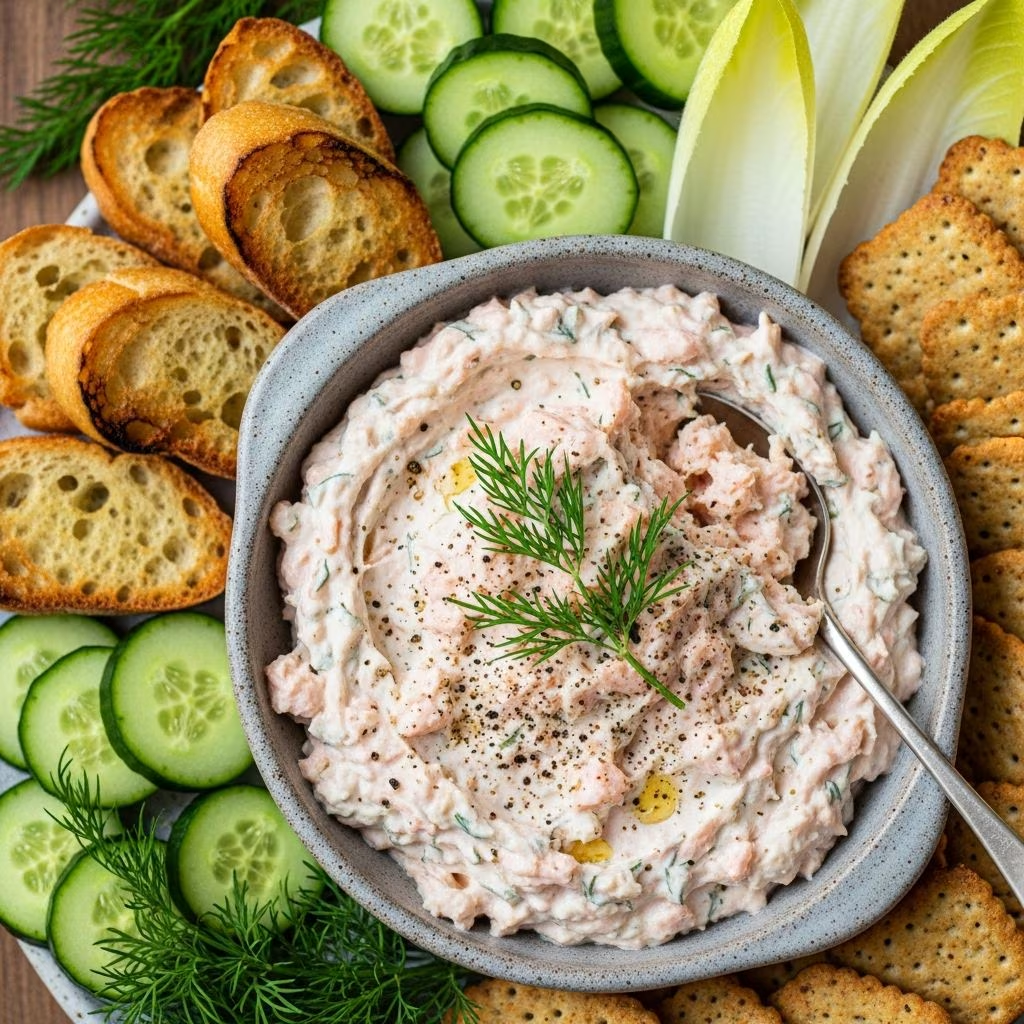
Crackers represent the classic pairing, with sturdy varieties like water crackers or wheat thins providing ideal vehicles for transporting dip without disintegrating under moisture. Crudités offer lighter, healthier alternatives—cucumber slices, celery sticks, and bell pepper strips complement salmon’s delicate flavors effectively. For contemporary presentations, consider crostini, endive leaves, or wonton crisps to elevate visual appeal and accommodate varying dietary preferences.
Garnishing Techniques
Visual appeal significantly impacts guest perception and consumption rates. Sprinkle additional fresh dill across the surface, creating a vibrant green focal point. Arrange lemon or lime zest in fine threads around the perimeter for brightness and sophistication. A light dusting of smoked paprika adds color dimension while hinting at the dip’s flavor profile. These finishing touches require minimal effort while substantially enhancing presentation quality.
Storage and Make-Ahead Guidance
Prepared salmon dips maintain quality in refrigeration for three to four days when stored in airtight containers. Make-ahead preparation suits these appetizers exceptionally well, allowing flavor development through extended refrigeration. Many cooks note that salmon dips taste superior after sitting overnight, as ingredients meld and individual flavors integrate into cohesive profiles.
Freezing works for certain variations, particularly those based on cream cheese without fresh herbs. Transfer the prepared dip to freezer-safe containers, leaving slight headspace for expansion. Thaw overnight in refrigeration before serving, adjusting seasoning if necessary. Fresh herb garnishes should be applied only after thawing to maintain optimal color and flavor.
Nutritional Considerations and Dietary Adaptations
Salmon provides exceptional nutritional value through omega-3 fatty acids, high-quality protein, and essential vitamins. A single serving of salmon dip delivers meaningful nutrient contributions, though portion sizes should remain moderate given the caloric density of cream cheese and mayonnaise. For health-conscious entertaining, serve alongside vegetable options to encourage balanced snacking patterns.
Dietary restrictions can be accommodated through strategic substitutions. Plant-based cream cheese and vegan mayonnaise enable dairy-free versions while maintaining comparable texture and richness. Gluten-free crackers and crudités serve those avoiding grains. These adaptations require no additional preparation complexity while expanding your dip’s accessibility to diverse guest populations.
Troubleshooting Common Preparation Issues
Lumpy Texture Problems
Lumpy cream cheese typically results from insufficient softening before incorporation. Always allow cream cheese to sit at room temperature for at least thirty minutes, or microwave briefly in five-second intervals until appropriately softened. If lumps persist after initial mixing, transfer the preparation to a food processor for thorough blending.
Excessive Fishiness
Overpowering salmon flavor sometimes emerges when using low-quality canned salmon or improperly stored fresh fish. Thoroughly drain canned salmon and discard any amber-colored liquid that contributes strong flavors. Incorporate additional binding agents and seasonings to dilute intensity. Acidic elements like lemon juice and fresh herbs counterbalance excessive fishiness effectively.
Thin or Watery Consistency
Excess moisture compromises texture and makes the dip difficult to serve. Drain salmon meticulously and consider blotting with paper towels. Reduce mayonnaise quantity or replace it with cream cheese, which contains less liquid. Alternatively, add a small quantity of cream cheese to firm the mixture, or incorporate finely grated vegetables that firm without introducing excessive wetness.
Frequently Asked Questions
Can I prepare salmon dip without fresh herbs?
Yes, dried herbs work acceptably though with different flavor profiles. Use approximately one-third the quantity of fresh herbs called for, as drying concentrates flavors. Dill, parsley, and chives all have acceptable dried counterparts, though the result lacks the brightness fresh versions provide.
What type of salmon works best for this dip?
Both fresh cooked and canned salmon produce excellent results. Fresh salmon offers superior texture control and complex flavor, while canned salmon provides convenience and consistency. Pink salmon specifically works well in dips due to its mild flavor and tender texture.
How long can I store prepared salmon dip?
Properly refrigerated salmon dip maintains quality for three to four days in airtight containers. Make-ahead preparation actually enhances flavor as ingredients meld overnight. Freezing works for cream cheese-based versions without fresh herbs.
Can I make this dip dairy-free?
Yes, substitute plant-based cream cheese and vegan mayonnaise for their traditional counterparts. These alternatives perform comparably in recipes and maintain similar texture and richness.
What should I serve with salmon dip?
Crackers, crudités, crostini, and endive leaves all work well. Select sturdy options that withstand moisture without disintegrating. Offering multiple accompaniment types accommodates varied preferences and dietary considerations.
References
- Salmon as a Healthy Food Choice — United States Department of Agriculture (USDA). Accessed April 2026. https://www.usda.gov
- Food Storage Guidelines — Centers for Disease Control and Prevention (CDC). Last updated 2025. https://www.cdc.gov/foodsafety
- Nutritional Profile of Canned Salmon — National Institutes of Health (NIH). Accessed April 2026. https://www.nih.gov
- Omega-3 Fatty Acids in Fish — American Heart Association. 2024. https://www.heart.org
- Food Preparation and Safety Standards — Food and Drug Administration (FDA). Last updated 2025. https://www.fda.gov