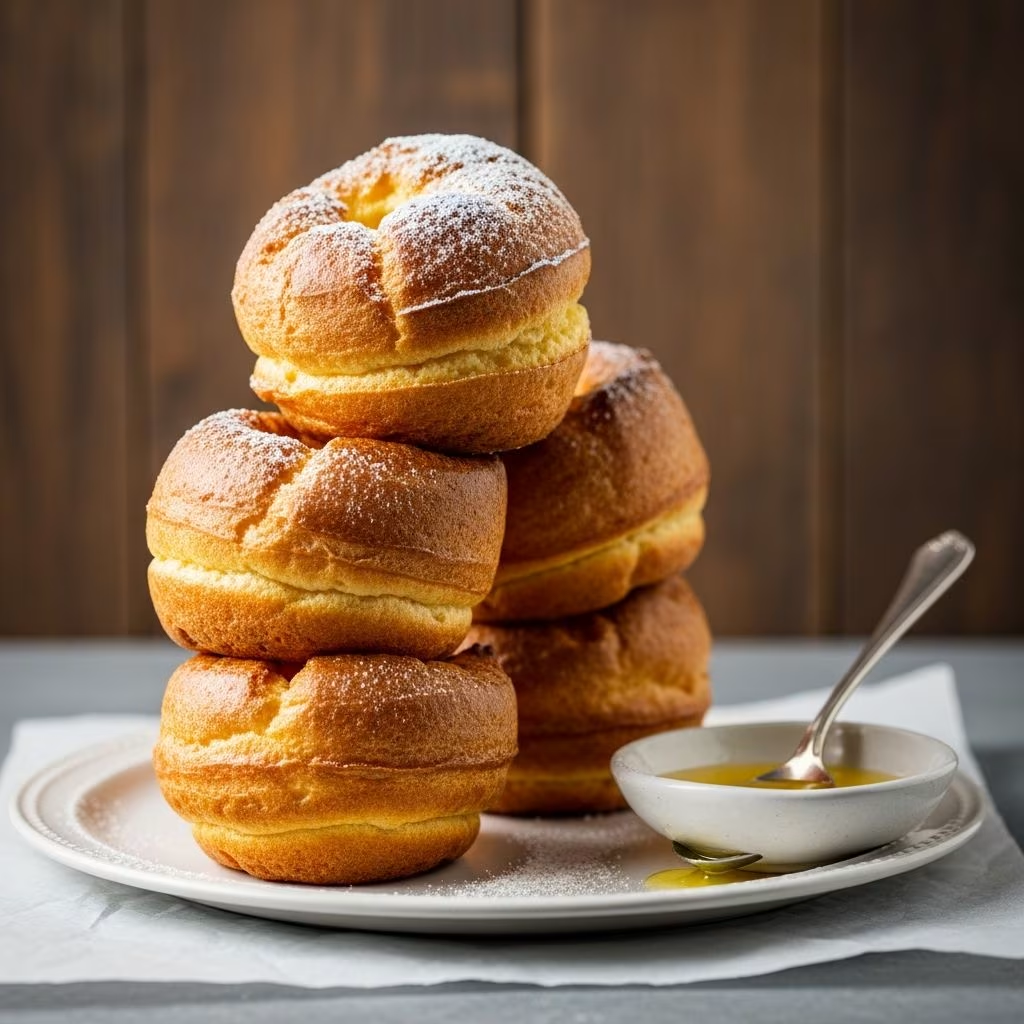
Popovers are delicate, hollow rolls that rise dramatically in the oven, offering a crisp exterior and custardy interior. These treats require only five basic ingredients and minimal effort, yet they deliver restaurant-quality results perfect for elevating any meal.
Understanding Popovers: A Baking Marvel
At their core, popovers rely on steam generated from the batter’s high liquid content to create their signature height and airy texture. Unlike yeast breads, they use no leavening agents, depending instead on intense oven heat to expand the batter rapidly. This process forms a golden crust while keeping the inside soft and eggy, reminiscent of a Yorkshire pudding but baked individually.
The magic happens when hot air trapped in the batter expands, pushing the sides outward against the pan’s walls. Success hinges on precise temperatures, proper ingredient prep, and avoiding common pitfalls like oven peeking. With practice, you’ll produce popovers that rival those from fine dining establishments.
Essential Ingredients for Success
Gathering the right components is straightforward, but quality and preparation matter greatly.
- Eggs: Use 4 large eggs at room temperature to ensure even incorporation and maximum rise.
- Milk: 1.5 cups of whole milk, warmed to about 110°F, promotes smooth batter and better steam production.
- Flour: 1.5 cups all-purpose flour, spooned and leveled to avoid dense results from overpacking.
- Salt: ¾ teaspoon enhances flavor without overpowering the delicate profile.
- Butter: 2-3 tablespoons melted and cooled, adds richness and aids in crisping the exteriors.
Room temperature ingredients prevent thermal shock, leading to lump-free batter and superior puffing. If time is short, place eggs in warm water for 10 minutes and microwave milk briefly.
Tools You’ll Need
Specialized equipment helps achieve optimal shape and height.
| Item | Purpose | Alternatives |
|---|---|---|
| Popover pan (6- or 12-cup) | Tall, narrow wells promote upward growth | Muffin tin (deep preferred) |
| Blender or whisk | Smooth batter without overmixing | Hand mixer |
| Measuring cups/spoons | Precise ratios | Digital scale for flour |
| Butter or oil spray | Non-stick coating for easy release | Shortening |
A popover pan’s design maximizes steam retention, but a muffin tin works well—fill only halfway and expect slightly shorter popovers.
Step-by-Step Baking Instructions
Follow these steps precisely for towering results.
Prepare the batter: In a blender, combine eggs, milk, and salt. Pulse until smooth. Add flour and blend 20-30 seconds until mostly lump-free. Drizzle in melted butter last and blend briefly. Let rest 15-30 minutes—this allows flour to hydrate fully.
Preheat oven and pan: Set to 450°F with rack in lower third. Grease pan generously with butter, place in oven for 2-5 minutes to heat thoroughly. Hot metal shocks the batter into immediate rising.
Fill and bake high-heat phase: Pour batter into hot wells using a ¼-cup measure, filling halfway. Bake undisturbed for 20 minutes. The intense heat creates the initial dramatic puff.
Lower temperature: Reduce to 350°F without opening door. Continue 10-15 minutes until deep golden. Total bake: 30-35 minutes.
Vent and serve: Remove from oven, pierce tops with a knife to release steam. Cool slightly on wire rack, serve warm.
Yield: 6-12 popovers depending on pan size. Prep time: 10 minutes. Bake time: 35 minutes.
Pro Tips for Flawless Popovers
- Don’t overmix: Small lumps are fine; overworking develops gluten, leading to tough textures.
- Resist peeking: Opening the door releases heat and steam, causing collapse.
- Generous greasing: Use soft butter rubbed into crevices—prevents sticking and promotes climbing sides.
- Freshness first: Use ingredients at or near room temp for best emulsion.
- Oven accuracy: Test with an thermometer; even slight variances affect rise.
Common Mistakes and Fixes
Even seasoned bakers encounter issues—here’s how to troubleshoot.
| Problem | Cause | Solution |
|---|---|---|
| Flat popovers | Cold ingredients or insufficient preheat | Warm milk/eggs; heat pan fully |
| Dense centers | Underbaking or low heat | Extend low-temp phase; check doneness |
| Sticking | Inadequate greasing | Apply extra butter/oil |
| Lopsided shape | Uneven filling or oven hot spots | Rotate pan midway (after 20 min); level batter |
| Deflated after baking | Steam release delay | Pierce immediately post-oven |
Flavor Variations to Try
Customize beyond classic for exciting twists.
- Herb-infused: Add 2 tsp chopped chives, rosemary, or thyme to batter.
- Cheesy delight: Mix in ½ cup grated Gruyère or cheddar before baking.
- Sweet version: Incorporate 2 tbsp sugar and 1 tsp vanilla; top with cinnamon sugar.
- Garlic butter: Brush warm popovers with infused butter.
- Gluten-free: Swap flour 1:1 with a GF blend; add ¼ tsp xanthan gum if needed.
Experiment sparingly to maintain structure.
Perfect Pairings and Serving Ideas
Popovers shine as versatile accompaniments.
- Slather with softened butter, honey, or fruit preserves for breakfast.
- Serve alongside soups, stews, or roasts—tear open to sop up juices.
- Fill with scrambled eggs, ham, or creamed spinach for brunch.
- Top with gravy for a Yorkshire pudding stand-in at dinner.
- Offer at holiday meals; their wow-factor impresses guests.
Best enjoyed fresh; reheat in 350°F oven for 5 minutes to revive crispness. Freeze extras in airtight bags up to 1 month.
Nutrition and Storage Facts
Per popover (based on 12 servings): ~120 calories, 5g fat, 14g carbs, 5g protein. Store cooled popovers in a paper bag at room temp for 1 day; refrigerate up to 2 days.
Frequently Asked Questions
Can I use a muffin tin instead of a popover pan?
Yes, but fill only halfway and expect shorter popovers. Grease wells thoroughly.
Why do my popovers sink after baking?
They naturally deflate slightly as steam escapes. Pierce tops immediately and serve promptly to minimize this.
Is whole milk necessary?
It yields best results for richness and steam, but 2% works; avoid skim.
How do I clean a popover pan?
Hand wash with hot soapy water; avoid dishwasher to preserve non-stick coating.
Can I make popovers ahead?
Bake fresh for peak texture, but they reheat well or freeze effectively.
References
- Popovers Recipe — Love and Lemons. 2023-05-15. https://www.loveandlemons.com/popovers-recipe/
- The Best Popovers Recipe — Belly Full. 2022-11-10. https://bellyfull.net/classic-popovers/
- Simple Popovers Recipe — BettyCrocker.com. 2024-01-20. https://www.bettycrocker.com/recipes/simple-popovers/410ce5b4-bef3-41d7-8733-c365e1ad4628
- Perfect Popovers Recipe — Alyssa Ponticello. 2023-08-05. https://alyssaponticello.com/blog/how-to-make-perfect-popovers
- Classic Popovers — Lisa’s Dinner Time Dish. 2021-12-12. https://lisasdinnertimedish.com/classic-popovers/