The desire to indulge in cookie dough straight from the mixing bowl is nearly universal, yet traditional cookie dough carries legitimate food safety concerns. Raw eggs pose salmonella risks, while untreated flour can harbor harmful bacteria. Fortunately, modern food safety practices have made it possible to enjoy this beloved treat without compromise. By understanding proper preparation techniques and ingredient selection, you can create delicious edible cookie dough that satisfies cravings while maintaining peace of mind about food safety.
Understanding the Safety Foundation
The primary concern with conventional cookie dough stems from two sources: raw eggs and untreated flour. Creating edible cookie dough requires addressing both of these hazards through deliberate preparation methods. The solution involves two key modifications: eliminating eggs entirely and rendering flour safe through heat treatment.
Heat-treating flour is the cornerstone of edible cookie dough preparation. When flour reaches an internal temperature of 160°F (71°C), it effectively eliminates pathogens that may be present, including E. coli and Salmonella. This single step transforms ordinary all-purpose flour into a safe ingredient suitable for raw consumption, opening the door to worry-free indulgence.
Essential Techniques for Heat-Treating Flour
Two primary methods exist for heat-treating flour at home, each offering distinct advantages depending on your equipment and preferences.
Oven Method
The oven approach provides consistent results and works well for larger quantities. Preheat your oven to 350°F and spread measured flour evenly across a parchment-lined baking sheet. Bake for 6-8 minutes, monitoring closely to ensure the flour reaches 160°F internally. Allow the flour to cool completely before incorporating it into your dough, as warm flour can negatively affect texture and spreadability. Note that toasting flour in the oven may introduce subtle nutty undertones to your final product.
Microwave Method
For smaller batches or quicker preparation, the microwave offers convenience. Place measured flour in a microwave-safe bowl and heat on high for approximately 45 seconds. Check the temperature with a food thermometer to confirm it has reached 160°F. This method works particularly well when preparing individual or small-batch servings.
Core Ingredient Components
Creating exceptional edible cookie dough requires understanding how each ingredient contributes to the final product’s flavor, texture, and safety profile.
Butter Selection and Preparation
Butter serves as the foundation for creamy, rich dough. Unsalted butter provides better control over total sodium content in your recipe. Temperature matters significantly: butter should reach room temperature before mixing. Leaving butter at room temperature for 1-2 hours ensures it reaches the ideal consistency. Properly softened butter incorporates smoothly with sugars, creating an emulsified base that supports the dough’s overall structure.
Sugar Composition
A combination of brown and granulated sugars creates balanced sweetness with textural complexity. Light brown sugar contributes moisture and molasses flavor, while granulated sugar adds crystalline sweetness and structure. When measuring brown sugar, pack it firmly into your measuring cup to ensure accurate proportions and consistent results across batches.
Flour Ratios
Heat-treated flour requires careful measurement since the treatment process can cause slight density changes. Most recipes call for all-purpose flour exclusively. After cooling, flour sometimes develops small clumps; sifting creates a smoother final texture.
Liquid Adjustments
Milk serves as a critical moisture component, helping bind ingredients and achieve desired consistency. Add milk gradually in one-tablespoon increments, allowing you to control thickness precisely. This approach prevents over-mixing and ensures you reach the perfect consistency for your preferences.
Step-by-Step Preparation Method
Creating edible cookie dough follows a logical progression that maximizes ingredient integration and texture development.
Creaming Phase
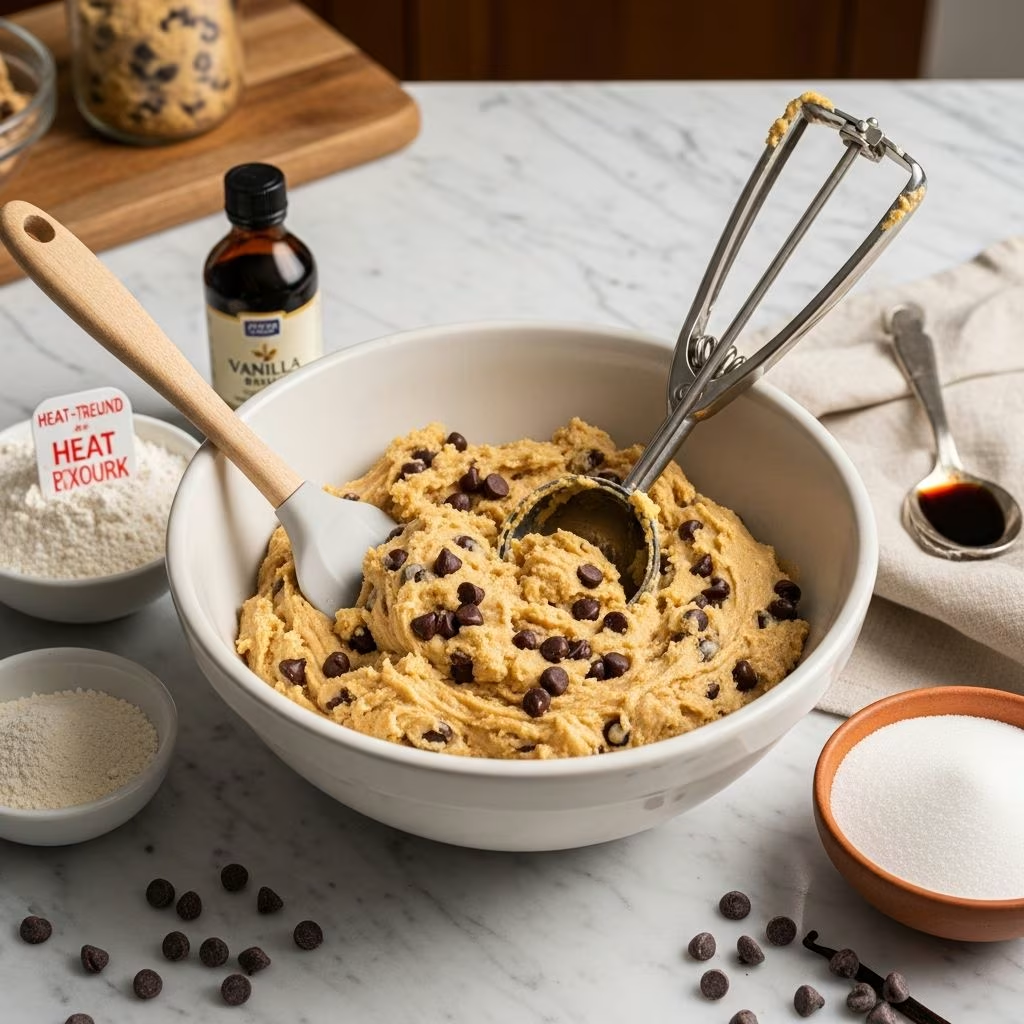
Begin by beating softened butter until creamy, then add both brown and granulated sugars. Continue beating on high speed for 2-3 minutes, watching for the mixture to become pale and visibly fluffy. This extended beating serves multiple purposes: it helps sugar dissolve partially into the butter, creating a creamier base, and incorporates air that lightens the overall texture. The transformation from dense, butter-colored mixture to pale, cloud-like cream indicates proper preparation.
Flavoring Integration
Add vanilla extract and salt to the creamed butter mixture, mixing until thoroughly combined. Vanilla should be measured precisely—one teaspoon provides sufficient depth without overwhelming other flavors. Salt enhances sweetness perception and balances the richness of butter and chocolate.
Dry Ingredient Incorporation
Reduce mixer speed to low and gradually introduce cooled, heat-treated flour and remaining salt. Mix until well combined, then add milk one tablespoon at a time as needed to reach your desired consistency. This gradual approach prevents over-working the dough and ensures even flour distribution.
Mix-In Integration
Fold chocolate chips or alternative mix-ins into the completed dough using a rubber spatula or wooden spoon. Folding rather than stirring preserves texture and prevents the mix-ins from breaking apart.
Ingredient Variations and Customization
While classic chocolate chip edible cookie dough remains the standard, numerous variations allow personal expression and dietary accommodation.
Chocolate Options
Traditional mini chocolate chips work wonderfully, but larger chopped chocolate, semi-sweet varieties, or dark chocolate provide different flavor profiles. Some recipes incorporate melted brown butter for enhanced complexity.
Alternative Mix-Ins
Consider crushed candy pieces, nuts, sprinkles, or dried fruit to create signature variations. Swirled peanut butter, cookie pieces, or marshmallow bits add textural interest and novelty to the basic formula.
Egg Substitutes
While eliminating eggs entirely works perfectly, some recipes incorporate flax eggs as binders. A flax egg consists of one tablespoon ground flaxseed mixed with three tablespoons water, providing binding properties while maintaining food safety when flour is heat-treated.
Scaling Recipes for Different Occasions
Edible cookie dough recipes scale easily from single servings to party quantities. For intimate moments, mini batches requiring one-quarter cup flour and two tablespoons butter deliver perfectly portioned indulgence. Larger quantities follow the same proportional ratios, multiplying ingredients as needed.
Storage and Shelf Life Considerations
Proper storage extends the enjoyment of homemade edible cookie dough. Room temperature storage works for immediate consumption, typically lasting 2-3 hours before separation occurs. Refrigeration in an airtight container extends life to approximately one week, though flavors remain optimal within the first few days. Freezing in portioned portions maintains quality for several months, allowing on-demand indulgence without preparation delays.
Texture and Consistency Optimization
Achieving perfect texture requires attention to multiple factors. Butter temperature directly influences dough consistency—overly warm butter creates soft, spreadable dough, while inadequately softened butter produces dense, difficult-to-mix mixtures. Milk additions should proceed gradually; too much creates runny dough, while insufficient milk produces dry, crumbly textures. Personal preference ultimately determines ideal consistency, ranging from spoonable to pipe-able.
Troubleshooting Common Issues
| Problem | Likely Cause | Solution |
|---|---|---|
| Grainy texture | Inadequate creaming or sugar crystallization | Cream butter and sugar longer (3-4 minutes); ensure sugar is completely incorporated |
| Overly soft or runny consistency | Excessive milk or warm butter | Refrigerate before serving; use less milk next time; ensure butter reaches proper firmness |
| Floury taste | Flour not fully incorporated or heat-treated inadequately | Verify flour reached 160°F; sift flour after cooling; mix longer to incorporate fully |
| Lacks flavor depth | Insufficient vanilla or salt | Increase vanilla to full teaspoon; verify salt measurement; consider brown butter for complexity |
| Crumbly texture | Insufficient milk or over-mixing | Add milk gradually; mix just until combined; don’t overwork the dough |
Equipment Recommendations
While hand mixing works adequately, electric mixers significantly improve results. Stand mixers provide consistent power and speed control for extended creaming phases, while hand mixers offer adequate performance for smaller batches. For flour heat-treating, reliable oven thermometers or instant-read food thermometers ensure accurate temperature verification, critical for food safety assurance.
Frequently Asked Questions
Is edible cookie dough completely safe?
Yes, when prepared correctly with heat-treated flour and no raw eggs, edible cookie dough poses minimal food safety risks compared to traditional cookie dough. Heat treatment to 160°F effectively eliminates pathogens present in flour.
Can I use whole wheat or alternative flours?
All-purpose flour remains the standard recommendation due to its neutral flavor and reliable performance. Alternative flours may alter texture and require different heat-treatment times; experimentation is necessary for satisfactory results.
How long does edible cookie dough last?
Refrigerated in an airtight container, edible cookie dough remains fresh for approximately one week. Freezing extends shelf life to several months without compromising quality.
Can I make this recipe dairy-free?
Yes, substitute dairy butter with plant-based alternatives and dairy milk with non-dairy options like almond, oat, or coconut milk. Texture and flavor may vary slightly depending on substitutions chosen.
Why is sifting flour important after heat-treatment?
Heat-treated flour sometimes develops small clumps as it cools. Sifting breaks apart these clumps, creating a smoother final texture and ensuring even distribution throughout the dough.
Maximizing Flavor Through Technique
Superior edible cookie dough transcends simply combining ingredients correctly. Extended creaming times develop better texture and incorporate sugar more thoroughly. Using room-temperature milk ensures smooth integration without shocking the mixture. Adding ingredients gradually allows each component to fully incorporate before introducing the next element. These seemingly minor adjustments accumulate into noticeably superior results.
Conclusion
Safe, delicious edible cookie dough represents the perfect intersection of indulgence and responsibility. Through proper heat-treatment of flour and elimination of raw eggs, the classic cookie dough experience becomes accessible without food safety compromise. By understanding ingredient roles, mastering fundamental techniques, and recognizing personal texture preferences, anyone can create exceptional edible cookie dough at home. Whether satisfying spontaneous cravings or preparing for special occasions, this approachable recipe delivers consistent results and genuine enjoyment.
References
- How to Make Edible Cookie Dough — Liv for Cake. 2024. https://livforcake.com/edible-cookie-dough-recipe/
- Edible Cookie Dough Recipe — Chelsea’s Messy Apron. 2024. https://www.chelseasmessyapron.com/edible-cookie-dough/
- Best Edible Cookie Dough Recipe — What Molly Made. 2024. https://whatmollymade.com/edible-cookie-dough/
- The BEST Edible Cookie Dough Recipe — Everything Ahnika. 2024. https://www.everythingahnika.com/the-best-edible-cookie-dough-recipe/
- Edible Cookie Dough — Broma Bakery. 2024. https://bromabakery.com/edible-cookie-dough/
- Edible Cookie Dough Recipe — Sugar Spun Run. 2024. https://sugarspunrun.com/edible-cookie-dough/