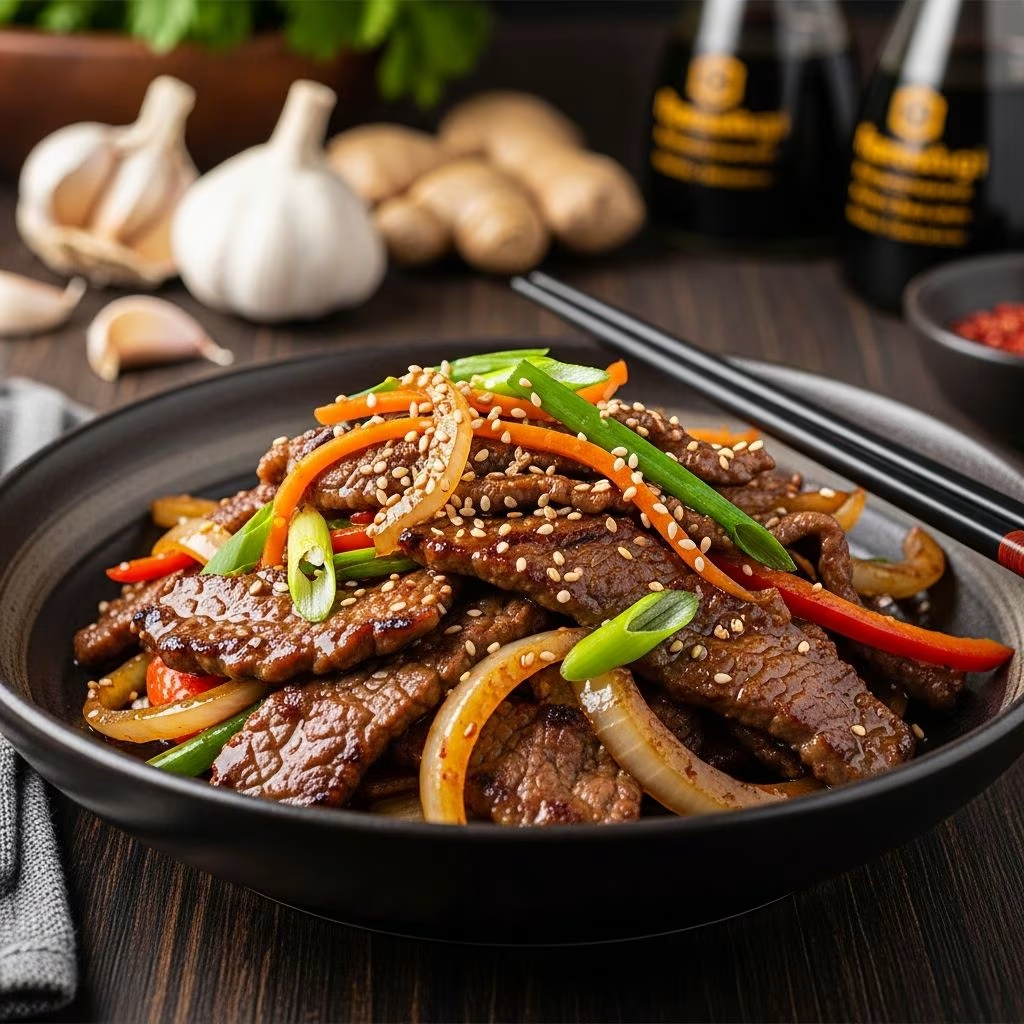
Beef bulgogi stands as one of Korea’s most cherished dishes, featuring thinly sliced beef marinated in a harmonious blend of sweet, savory, and umami flavors. This recipe guides you through creating restaurant-quality bulgogi using accessible ingredients and simple techniques, resulting in tender meat that’s perfect for wrapping in lettuce or serving over rice.
Understanding Bulgogi: A Korean Classic
Bulgogi, meaning “fire meat,” originated during the Goguryeo period and evolved into a staple of Korean barbecue culture. Traditionally grilled over charcoal, it highlights the beef’s natural tenderness when paired with a marinade that tenderizes and flavors the meat deeply. Modern home cooks appreciate its versatility, adapting it for stovetop or oven methods without losing authenticity.
The key to exceptional bulgogi lies in the marinade’s balance. Soy sauce provides saltiness, sugars like brown sugar or honey add caramelization, while Asian pear juice acts as a natural tenderizer due to its enzymes. Aromatics such as garlic, ginger, and sesame oil elevate the profile, creating a glossy, addictive coating on the beef during cooking.
Choosing the Best Beef for Bulgogi
Select high-quality cuts for optimal results. Ribeye offers rich marbling that melts into juicy bites, while sirloin provides a leaner option. Aim for paper-thin slices, about 1/8-inch thick, cut against the grain to ensure tenderness. Korean markets often sell pre-sliced “bulgogi beef,” but butchers can slice fresh cuts if frozen slightly first for easier cutting.
| Cut | Fat Content | Best For |
|---|---|---|
| Ribeye | High | Rich flavor, tenderness |
| Sirloin | Medium | Balanced, everyday meals |
| Top Round | Low | Budget-friendly |
Essential Ingredients for the Marinade
- Beef: 2 lbs thinly sliced ribeye or sirloin
- Soy sauce: 1/2 cup, low-sodium preferred
- Brown sugar: 1/4 cup, for caramelization
- Asian pear: 1, pureed (or juice substitute)
- Garlic: 6 cloves, minced
- Ginger: 1 tbsp grated
- Sesame oil: 2 tbsp
- Onion: 1 large, thinly sliced
- Green onions: 4, chopped
- Black pepper: 1 tsp
- Sesame seeds: 1 tbsp, toasted
Optional additions like gochujang for heat or mirin for subtle sweetness can customize the flavor to your preference.
Step-by-Step Preparation Guide
Prepare the marinade: Blend the pear, garlic, ginger, soy sauce, brown sugar, sesame oil, and black pepper until smooth. Strain if desired for a cleaner texture, as in some authentic methods where pulp is removed using cheesecloth.
Marinate the beef: Combine sliced beef, onions, and green onions in a bowl. Pour marinade over and mix thoroughly. Cover and refrigerate for at least 2 hours, ideally overnight, allowing flavors to penetrate.
Preheat cooking surface: Heat a cast-iron skillet, grill pan, or outdoor grill to high heat (about 450°F). Lightly oil to prevent sticking.
Cook the bulgogi: Add beef in a single layer, reserving marinade. Sear for 1-2 minutes per side until caramelized edges form. Avoid overcrowding; cook in batches. For extra sauce, simmer reserved marinade briefly to thicken.
Rest and serve: Let meat rest 2 minutes. Garnish with sesame seeds and green onions.
Perfect Cooking Techniques for Juicy Results
High heat is crucial for the signature char and caramelization. Thin slices cook rapidly, locking in juices. For stovetop, use a well-seasoned cast-iron for even searing. Grilling imparts smokiness; position grates close to coals for flare-ups that add flavor. Ground beef variations work for quicker meals, absorbing sauce fully in 6-8 minutes.
Avoid over-marinating tougher cuts beyond 24 hours to prevent mushiness. Test doneness by slicing a piece; it should be pink inside for medium-rare tenderness.
Delicious Serving Ideas and Pairings
Serve bulgogi sizzling on a hot plate for drama. Classic accompaniments include steamed rice, kimchi, and banchan like bean sprouts or cucumber salad. Assemble bowls with fluffy Calrose rice, topped with bulgogi, pickled veggies, fried egg, and gochujang drizzle for a bibimbap twist.
- Rice bowls with mung bean sprouts and quick kimchi
- Lettuce wraps with ssamjang dipping sauce
- Tacos with Asian slaw for fusion
- Stir-fry with vegetables like bell peppers
Pair with soju, Korean beer, or light wines like Riesling to complement the sweetness.
Vegetarian and Vegan Bulgogi Variations
Adapt for plant-based diets using textured vegetable protein (TVP), mushrooms, or plant-based ground meat. Marinate as usual; the sauce clings beautifully to absorbent textures. Shiitake or portobello slices mimic beef’s meatiness. Cook similarly, achieving caramelization in 6-8 minutes.
Storage, Freezing, and Reheating Tips
Store cooked bulgogi in an airtight container in the fridge for up to 3 days. Freeze marinated raw beef for 2 months; thaw overnight before cooking. Reheat in a hot skillet to restore crisp edges, or microwave with a damp paper towel for moisture.
Common Mistakes to Avoid
- Thick slices: Beef toughens; freeze briefly for thin cuts.
- Low heat: Steams instead of sears; use high heat.
- Overcrowding pan: Lowers temperature; batch cook.
- Skipping pear: Essential tenderizer; apple juice as backup.
Nutritional Profile and Health Notes
A 4-oz serving offers about 300 calories, 25g protein, rich in iron and B vitamins from beef. Balance with veggies for fiber. Use low-sodium soy and lean cuts for healthier versions.
Frequently Asked Questions (FAQs)
What is the best cut of beef for bulgogi?
Ribeye for marbling and flavor; sirloin for leanness.
How long should I marinate bulgogi?
Minimum 2 hours, best overnight up to 24 hours.
Can I make bulgogi without pear?
Yes, substitute pineapple juice or kiwi for enzymes, but pear is traditional.
Is bulgogi spicy?
Typically sweet-savory; add gochujang for heat.
How do I slice beef thinly?
Partially freeze for 30 minutes, then slice against the grain.
Expert Tips from Korean Cooking Traditions
Incorporate nashi pear for authentic tenderness, as its juices break down proteins effectively. Toast sesame seeds for nutty aroma. For glossy finish, add a cornstarch slurry to simmering sauce.
References
- Caramelized Beef Bulgogi Bowl with Tender Steak & Rice — Plays Well With Butter. 2023. https://playswellwithbutter.com/beef-bulgogi-bowl-recipe/
- Beef Bulgogi – The Modern Proper — The Modern Proper. 2022. https://themodernproper.com/korean-bbq-beef-with-cucumber-kimchi
- Korean-Inspired Ground “Beef” Bulgogi Bowls — The Foodie Takes Flight. 2023. https://thefoodietakesflight.com/korean-beef-bulgogi-bowls/
- The Best Authentic Korean Beef Bulgogi Recipe — The Savory Chopstick. 2024. https://www.thesavorychopstick.com/korean-beef-bulgogi/
- Authentic Korean Beef Bulgogi – So Easy! — CJ Eats Recipes. 2023. https://cjeatsrecipes.com/beef-bulgogi/