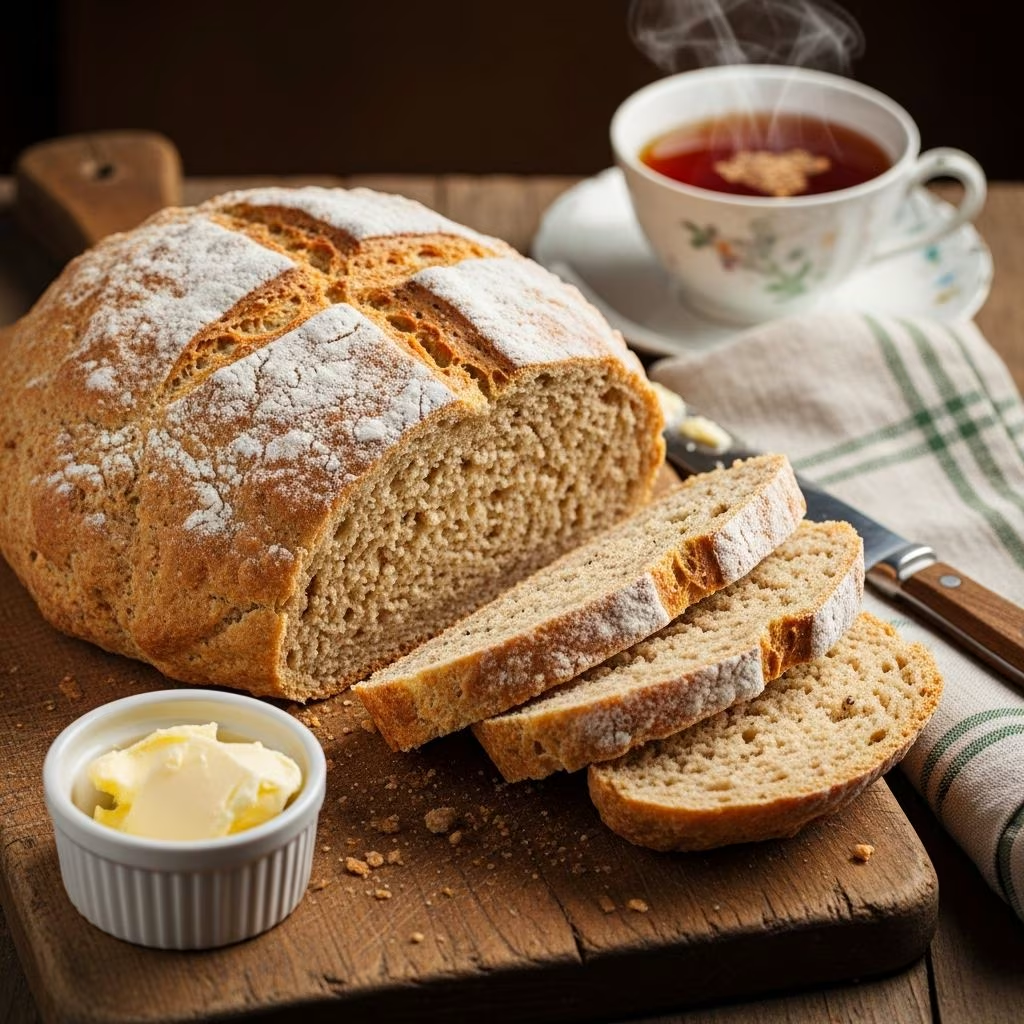
Irish soda bread stands out as one of the simplest yet most rewarding baked goods you can make at home. Relying on baking soda for leavening instead of yeast, this quick bread comes together in minutes and bakes into a loaf with a crisp exterior and soft, tender crumb. Originating from Ireland where yeast was scarce and baking soda was readily available, it has become a beloved staple worldwide, especially around St. Patrick’s Day.
The Charm of Quick Breads
Quick breads like Irish soda bread skip the long rising times of yeast doughs, making them ideal for busy home bakers. The magic happens through a chemical reaction between acidic buttermilk and alkaline baking soda, producing carbon dioxide bubbles that lift the dough. This method ensures freshness without kneading or proofing, delivering results in about an hour from start to finish.
Traditional versions stick to four core ingredients: flour, salt, baking soda, and buttermilk. Modern adaptations often incorporate butter for richness, sugar for subtle sweetness, eggs for structure, and mix-ins like dried fruits or seeds for flavor. These enhancements make the bread versatile for breakfast, tea time, or dinner alongside soups and stews.
Essential Ingredients for Success
Gathering the right components is key to achieving that signature texture and taste. Here’s a breakdown of what you’ll need and why each plays a crucial role.
- Flour: All-purpose flour provides the base structure. Spoon and level it to avoid dense results from overpacking. For a nuttier profile, substitute part with whole wheat flour.
- Baking Soda: The leavener that reacts with buttermilk’s acidity. Use fresh soda for maximum lift; test by adding a pinch to vinegar—it should fizz vigorously.
- Buttermilk: Adds tanginess and tenderness while activating the baking soda. If unavailable, make a substitute by mixing milk with vinegar or lemon juice and letting it sit for 10 minutes.
- Salt: Enhances flavors and strengthens the dough. Kosher or sea salt works best for even distribution.
- Butter: Cold and cubed, it creates flaky layers when worked into the flour, mimicking tenderness found in richer breads.
- Sugar and Egg: Optional but recommended for a softer crumb and slight sweetness. They also help bind the dough.
- Add-Ins: Currants, raisins, or caraway seeds bring tradition and texture. Use about 1 cup for a standard loaf.
Step-by-Step Baking Instructions
Follow these precise steps to bake a perfect loaf. Preheat your oven to 400°F (200°C) and position the rack in the lower third for even browning.
Prepare wet ingredients: In a measuring cup, whisk 1⅓ cups buttermilk with 1 large egg until smooth. This ensures even distribution.
Mix dry ingredients: In a large bowl, combine 3½ cups spooned and leveled all-purpose flour, 2 tablespoons sugar, 1 teaspoon baking soda, and 1 teaspoon salt. Whisk thoroughly to aerate and distribute the leavener.
Incorporate butter: Cut 3 tablespoons cold unsalted butter into small cubes. Toss with the flour mixture, then rub with your fingertips until pea-sized crumbs form. Add 1 cup currants if desired, coating them in flour to prevent sinking.
Form the dough: Create a well in the dry mix and pour in the buttermilk-egg mixture. Stir with a wooden spoon or spatula until a shaggy dough forms—do not overmix, as this toughens the bread.
Knead lightly: Turn the dough onto a floured surface. Knead 4-5 times to bring it together into a ball. It should be soft and slightly sticky; add flour sparingly if needed.
Shape and score: Place on a parchment-lined baking sheet. Pat into a 7-8 inch round, about 1½ inches thick. Use a sharp knife to cut a deep X across the top—this allows steam to escape and promotes even rising.
Bake: Oven for 40-45 minutes until golden brown and hollow-sounding when tapped on the bottom. Internal temperature should reach 200°F. Cool on a wire rack for at least 30 minutes before slicing.
Customizing Your Irish Soda Bread
Once mastered, experiment to suit your taste. Here’s a table of variations:
| Variation | Substitution/Addition | Bake Time Adjustment |
|---|---|---|
| Whole Grain | 2 cups AP flour + 1½ cups whole wheat + ½ cup wheat germ | +5 minutes |
| Sourdough Twist | 100g sourdough discard, reduce buttermilk by ¼ cup | Same |
| Savory | Omit sugar/currants, add 1 tbsp caraway seeds + ½ cup cheddar | Same |
| Sweet | Extra 1 tbsp sugar + orange zest + ¾ cup raisins | Same |
These tweaks maintain the quick-bread essence while adding variety.
Troubleshooting Common Issues
Baking soda bread can go wrong without attention to detail. Address these pitfalls:
- Dense loaf: Old baking soda or insufficient buttermilk. Always check leavener freshness.
- Gummy texture: Overmixing develops gluten. Stir just until combined.
- Flat top: Weak acid-base reaction. Ensure buttermilk is fresh or properly soured.
- Sticky dough: Humid environments may require extra flour, added 1 tablespoon at a time.
For best results, weigh ingredients: 438g flour, 320g buttermilk approximate the recipe’s ratios.
Pairing and Storage Tips
Irish soda bread shines fresh but stores well. Wrap tightly in a towel or bee’s wrap for 2 days at room temperature. Freeze slices for up to 3 months, toasting to revive crispness.
Pair with:
- Butter and jam for breakfast.
- Irish stew or chowder for dinner.
- Cheese platters with sharp cheddar or smoked salmon.
Historical Roots of Soda Bread
Developed in the 19th century amid Ireland’s potato famine, soda bread used affordable baking soda imported from America. It sustained families with minimal fuel for baking on griddles or in hearth ovens. Today, it evokes heritage while fitting modern kitchens.
Nutrition and Health Notes
A standard slice (1/12 loaf) offers about 180 calories, 4g protein, 32g carbs, with fiber boosted by whole grains. Buttermilk provides probiotics and calcium. Opt for whole grains to increase nutrients like magnesium and B vitamins.
Frequently Asked Questions
Can I make Irish soda bread without buttermilk?
Yes, substitute with milk + 2 tbsp vinegar or lemon juice per cup. Let sit 10 minutes to curdle.
Why score the top with an X?
The cut releases steam, preventing cracks and ensuring even expansion into quadrants, a nod to Irish cross superstition.
Is it gluten-free?
Traditional no, but use a 1:1 gluten-free flour blend with xanthan gum and dairy-free buttermilk.
How do I know when it’s done?
Deep golden crust, hollow tap sound, and 200°F internal temp.
Can I bake in a skillet?
Absolutely—grease a 9-10 inch cast iron for superior crust.
Advanced Techniques for Perfection
Elevate your bake with these pro tips: Chill butter for flakier texture. Use a kitchen scale for precision. For extra rise, sift dry ingredients. Bake on a preheated stone for bakery-quality bottom crust.
Scaling up? Double ingredients but bake two loaves to avoid dense centers. Sourdough discard adds tang without feeding a starter.
References
- Irish Soda Bread Recipe — Love and Lemons. 2023-03-17. https://www.loveandlemons.com/irish-soda-bread/
- Super Simple Irish Soda Bread — Alexandra’s Kitchen. 2016-03-11. https://alexandracooks.com/2016/03/11/irish-soda-bread-two-ways/
- Brennan’s Irish Soda Bread — Legacy Eats (YouTube). 2023-01-01. https://www.youtube.com/watch?v=F88oc83-VDI