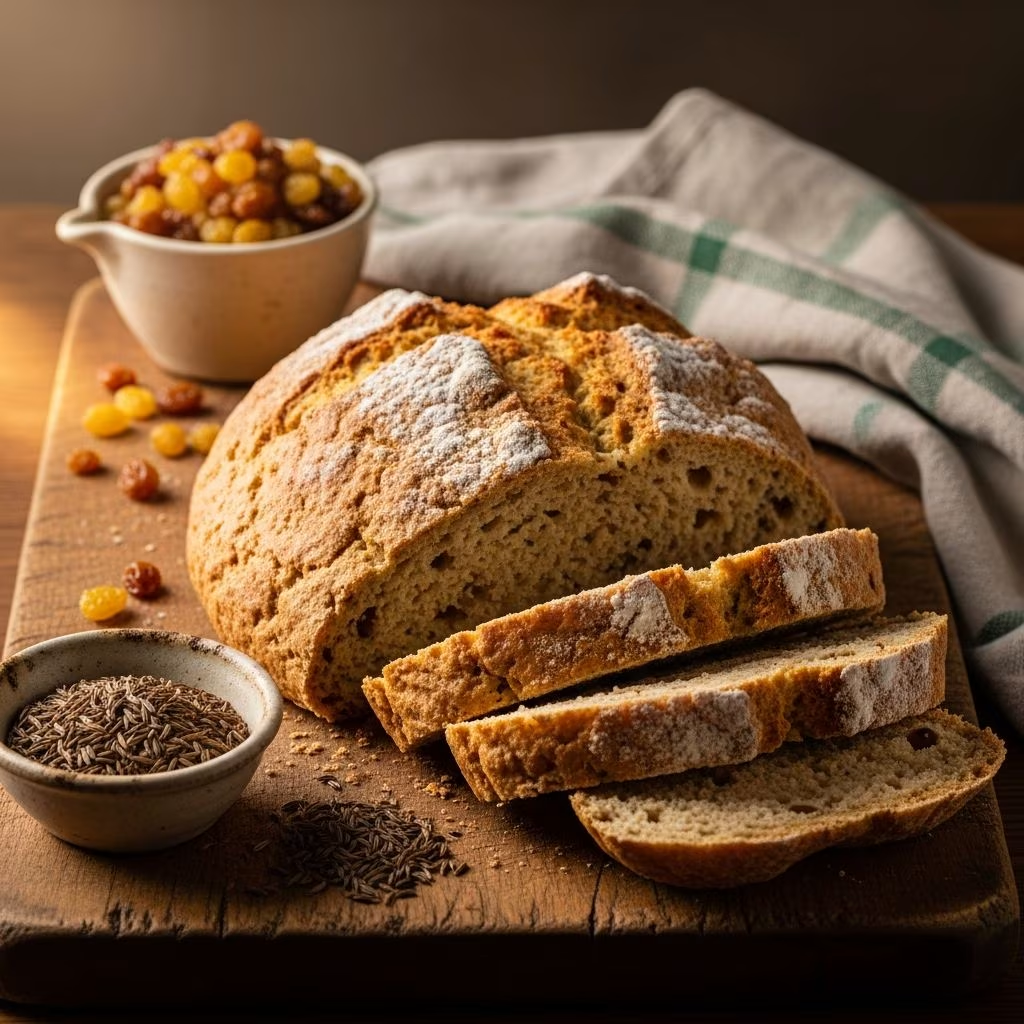
Irish soda bread stands as a cornerstone of simple, hearty baking traditions, relying on everyday pantry staples to create a loaf with a distinctive crusty shell and moist, flavorful interior. This no-yeast quick bread uses baking soda’s chemical reaction with acidic buttermilk to rise, resulting in a dense yet tender texture that’s become beloved worldwide, especially around St. Patrick’s Day celebrations.
The Origins and Appeal of Irish Soda Bread
Emerging in 19th-century Ireland, soda bread filled a practical need during times when commercial yeast was scarce or expensive. Rural households turned to baking soda, introduced around 1830, combined with sour milk or buttermilk for leavening. The cross slashed on top wasn’t just decorative; it aided even cooking in hearth ovens and carried folklore ties to warding off evil. Today, variations abound, but the core remains: flour, soda, salt, and buttermilk for authenticity.
Its appeal lies in minimalism—no kneading marathons or proofing waits. Bake it in under 90 minutes from start to slice, with add-ins like raisins or caraway seeds elevating it from rustic staple to sweet-savory treat. Families pass down recipes like heirlooms, each with personal tweaks reflecting regional tastes or available ingredients.
Essential Ingredients for Authentic Flavor
Gathering the right components ensures success. Focus on quality for the best rise and taste:
- All-purpose flour: Provides structure; about 4-6 cups forms the base.
- Baking soda and powder: Soda reacts with buttermilk for lift; powder adds extra tenderness. Typical ratios: 1 tsp soda, 2-3 tsp powder.
- Buttermilk: The acidic key, tenderizing gluten and activating leavening; 1-2 cups, full-fat preferred for richness.
- Sugar: 1/2 to 1 cup balances savoriness, making American-style versions sweeter than purist Irish ones.
- Raisins and caraway seeds: 1-1.5 cups raisins (mix golden and dark for variety); 1-2 tsp seeds for nutty anise notes.
- Eggs, butter, sour cream: Optional enrichments for moist crumb; 1-2 eggs, 1/2 cup melted butter.
- Salt: 1 tsp enhances flavors.
These draw from traditional family formulas, emphasizing sticky dough that shapes minimally to preserve tenderness.
Step-by-Step Baking Guide
Preheat your oven to 350°F (175°C) for most recipes, though some opt for 340°F to prevent over-browning. Grease a 9-inch cast iron skillet, pie dish, or loaf pan for even heat distribution and easy release.
- Mix dry ingredients: In a large bowl, whisk flour, sugar, baking soda, baking powder, salt, raisins, and caraway seeds. This even distribution prevents leavening pockets.
- Prepare wet mix: Whisk buttermilk, eggs, sour cream, and melted butter in another bowl until smooth. The acids here trigger the soda’s fizz.
- Combine gently: Pour wets into dries, stirring with a wooden spoon or spatula until just blended. Dough will be shaggy and sticky—resist overmixing to avoid toughness.
- Knead briefly: Use the spatula to fold dough against the bowl’s side 10-15 times. It firms slightly but stays tacky, akin to thick biscuit batter.
- Shape and score: Mound into the pan. Mix 2 tbsp melted butter with 2 tbsp buttermilk; brush on top. Slash a deep ‘X’ with a wet knife for expansion and even baking.
- Rest optionally: Let sit 10 minutes for better lift, but not longer to avoid deflation.
- Bake: 45-70 minutes, brushing glaze midway. Internal temp hits 195-200°F when done; toothpick test confirms cleanliness.
- Cool: 10 minutes in pan, then wire rack. Glaze with sugar-water for shine if desired.
Servings yield 12-16 slices, around 250-300 calories each depending on sweetness.
Pro Tips for Perfect Results Every Time
- Use cold butter cut in with a pastry blender for flakier layers, or melted for quicker mixing.
- Fresh baking soda is crucial—test by fizzing in vinegar; replace if dormant.
- Measure flour by spooning into cup and leveling, not scooping, to prevent density.
- Cast iron yields superior crust; line loaf pans with parchment for nonstick ease.
- Adjust sugar down for savory, up for tea-time treat.
- Humidity affects dough; add flour sparingly if too wet.
Avoid electric mixers; hand methods preserve air pockets for lightness.
Variations to Suit Your Taste
Customize freely while honoring basics:
| Variation | Key Changes | Bake Time Adjustment |
|---|---|---|
| Purist Irish | No raisins/sugar/seeds; just flour, soda, salt, buttermilk | 40-50 min |
| American Sweet | Extra sugar, more raisins, orange zest | 60-70 min |
| Whole Wheat | Half whole wheat flour, extra buttermilk | Add 5-10 min |
| Currant & Seed | Currants over raisins, double caraway | Same |
| Vegan | Plant milk + vinegar for buttermilk, flax eggs, oil | Same |
These tweaks keep the spirit alive, from spiky brown bread to fruited delights.
Storing and Freezing for Freshness
Best eaten day-of, but wrap tightly in foil or plastic; lasts 2-3 days at room temp, 1 week refrigerated. Revive by warming slices in oven. For longer, slice, freeze in bags up to 3 months; thaw and toast directly. Avoid airtight plastic long-term to prevent gumminess.
Pairing Ideas and Serving Suggestions
Slice thick for butter slathering, or thin with jam. Pairs with Irish stew, corned beef, or cheese platters. For breakfast, top with cream cheese and fruit. Dunk in soup or tea for cozy meals. St. Patrick’s spreads shine with green-flecked salads or shepherd’s pie.
Common Mistakes and Fixes
Gummy center: Underbaked—use thermometer. Flat loaf: Stale soda or overworked dough. Dense crumb: Too much flour; weigh if possible (1 cup flour = 120g). Bitter taste: Excess soda; balance acids. Test batches refine your touch.
Frequently Asked Questions
Can I make Irish soda bread without buttermilk?
Yes, substitute milk soured with 1 tbsp vinegar/lemon per cup; rest 10 minutes.
Why cut an ‘X’ on top?
Allows steam escape, promotes even rise; folklore says it blesses the bread.
Is this bread vegan-friendly?
Adapt with plant alternatives as noted in variations.
How do I know it’s done baking?
Clean toothpick, 195°F internal, hollow tap sound.
Can I bake multiple loaves?
Yes, divide dough; rotate pans midway for even browning.
Nutritional Snapshot
Per slice (1/16 loaf): ~277 calories, 45g carbs, 6g fat, 6g protein. Raisins boost fiber; buttermilk adds calcium. Moderation fits most diets.
References
- Nana’s Irish Soda Bread (Traditional, Easy No-Yeast Recipe) — The Good Hearted Woman. 2023-03-17. https://thegoodheartedwoman.com/irish-soda-bread-recipe/
- Kneading Kin – My Nana’s Irish soda bread recipe for St. Patrick’s Day — IrishCentral. 2023-03-10. https://www.irishcentral.com/opinion/others/nana-irish-soda-bread
- History of Soda Bread in Ireland — National Library of Ireland. 2022-11-15. https://www.nli.ie/en/history-soda-bread.aspx