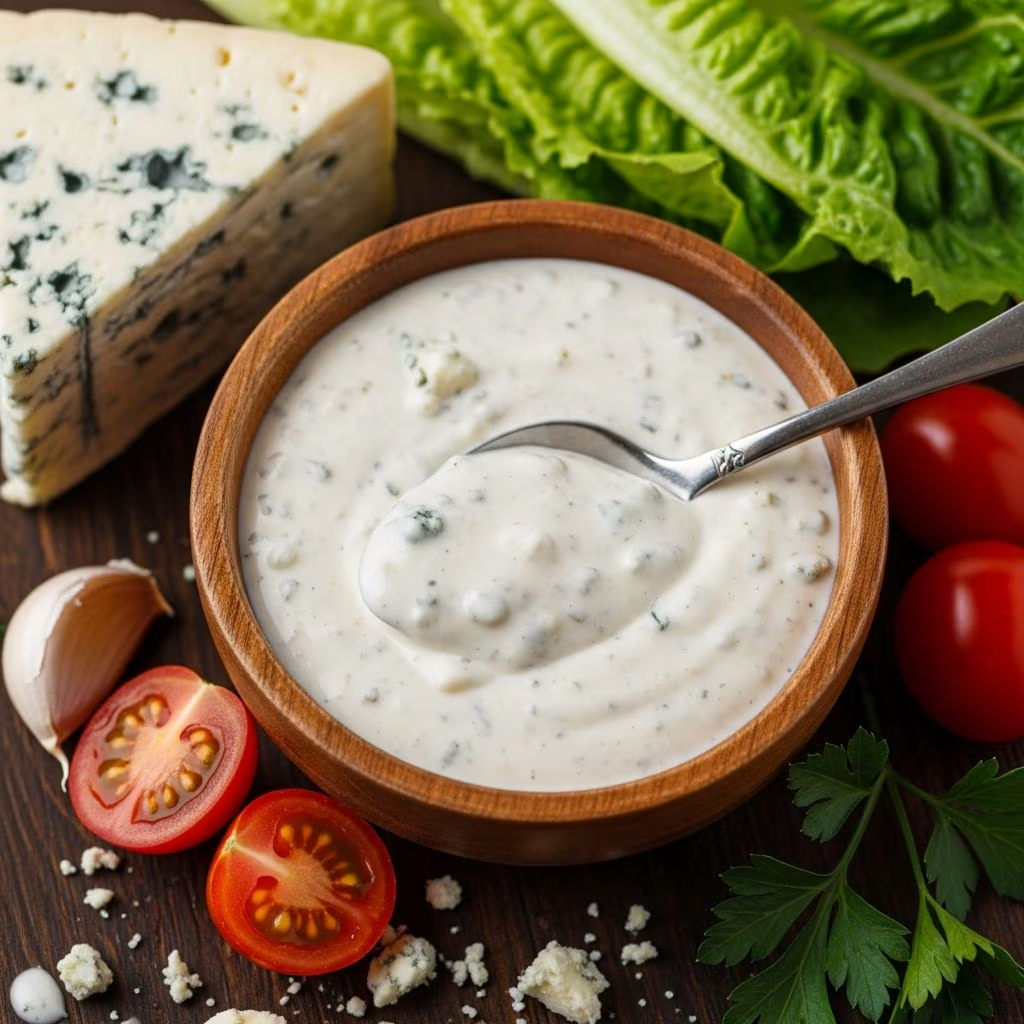
Blue cheese dressing stands as one of the most beloved condiments in American cuisine, gracing everything from garden salads to buffalo wings and vegetable crudités. Despite its sophisticated flavor profile and creamy texture, creating this restaurant-quality dressing at home requires nothing more than basic kitchen equipment and readily available ingredients. Understanding the fundamentals of this dressing opens the door to customization, allowing you to adjust the consistency, intensity, and overall character to suit your personal preferences.
Understanding Blue Cheese Dressing Fundamentals
Blue cheese dressing represents a mayonnaise-based emulsion that combines dairy products with pungent blue cheese crumbles. The dressing’s flavor profile stems from the distinctive characteristics of blue cheese itself, a type of cheese traditionally associated with bold, tangy notes. The earliest known recording of a blue cheese-style dressing appears in historical culinary documentation from 1928, originating from early hotel cuisine where chefs sought to create distinctive accompaniments for their salad offerings.
The beauty of this dressing lies in its versatility. You can manipulate the texture to range from perfectly smooth to decidedly chunky, depending on your technique and personal preference. Similarly, the intensity of the blue cheese flavor can be dialed up or down by adjusting the quantity of cheese crumbles you incorporate. This flexibility makes the recipe approachable for those hesitant about strong flavors while still satisfying cheese enthusiasts.
Essential Ingredients for Your Dressing
Creating authentic blue cheese dressing requires a focused collection of ingredients. The foundation begins with mayonnaise, which provides the creamy base and emulsifying properties necessary for achieving the desired consistency. Complementing this are dairy components including sour cream and either buttermilk or whole milk, depending on whether you prefer additional tang or a richer mouthfeel.
The flavor profile comes together through the addition of minced fresh garlic or garlic powder, which contributes depth and a subtle sharp note. Acid components such as lemon juice or distilled vinegar brighten the overall flavor and balance the richness of the mayonnaise. Seasonings including onion powder, salt, and freshly cracked black pepper round out the base, while Worcestershire sauce adds umami complexity. Finally, the star ingredient—crumbled blue cheese—delivers the distinctive character that defines this dressing.
| Ingredient | Purpose | Amount (Standard Recipe) |
|---|---|---|
| Mayonnaise | Creamy base and emulsifier | 1 cup |
| Sour Cream | Tanginess and texture | ½ cup |
| Buttermilk or Whole Milk | Creaminess and consistency | ½ cup |
| Blue Cheese | Primary flavor component | 4 ounces, crumbled |
| Garlic | Aromatic flavor depth | 2 cloves minced or 1½ tsp powder |
| Lemon Juice or Vinegar | Brightness and balance | 1 tablespoon or 2 teaspoons |
| Onion Powder | Subtle allium flavor | ⅛ to 1 teaspoon |
| Worcestershire Sauce | Umami enhancement | A few dashes to 1 teaspoon |
| Salt and Pepper | Seasoning balance | To taste |
Step-by-Step Preparation Method
The preparation process for blue cheese dressing proves remarkably straightforward, requiring minimal equipment and technique. Begin by gathering all your ingredients—a practice culinary professionals call mise en place—ensuring everything is prepared and at hand before you begin combining.
Step One: Combine Base Ingredients
Pour your mayonnaise into a large mixing bowl, then add the sour cream and buttermilk or whole milk. If using fresh garlic, mince it finely to ensure even distribution throughout the dressing. Add your minced garlic or garlic powder along with the onion powder, salt, pepper, Worcestershire sauce, and your chosen acid component—either lemon juice or vinegar.
Step Two: Achieve Smooth Consistency
Using a whisk or electric mixer, blend these ingredients thoroughly until the mixture becomes completely uniform and smooth. This initial mixing stage is crucial, as it ensures all the flavoring elements distribute evenly and the dairy components integrate properly. If you prefer an exceptionally smooth dressing, you can employ a blender or food processor at this stage, processing until completely smooth.
Step Three: Incorporate the Blue Cheese
Once your base mixture reaches the desired smoothness, gently fold in your crumbled blue cheese using a rubber spatula or by hand. The key word here is “gently”—avoid vigorous mixing, which can break the cheese into fine particles and create an overly smooth texture. For those who prefer a chunkier dressing with visible cheese pieces, simply fold the crumbles in briefly and stop. For a slightly more integrated texture, continue folding gently until the cheese distributes throughout but still maintains discernible pieces.
Step Four: Chill Before Serving
Transfer your finished dressing to a serving container and refrigerate for at least two hours before serving. This resting period allows the flavors to meld and develop more fully, resulting in a more cohesive taste profile. The dressing will thicken somewhat as it chills, creating an even more luxurious mouthfeel.
Customization Options and Variations
One of the greatest advantages of making blue cheese dressing at home involves the freedom to customize it to your exact specifications. Consider these variations:
- Consistency Adjustment: For a thicker dressing suitable for dipping, reduce the buttermilk or milk component and increase the mayonnaise. For a thinner, more pourable dressing ideal for drizzling, increase the liquid dairy components.
- Flavor Intensity: Blue cheese aficionados can increase the cheese quantity to four to six ounces for a bolder, more assertive profile. Those sensitive to strong flavors might reduce the cheese to two to three ounces while complementing with additional acid.
- Herb Additions: Fresh herbs like chives, parsley, or dill can be minced finely and folded in for additional freshness and visual appeal.
- Spice Elements: A pinch of cayenne pepper or hot sauce adds gentle heat, while a touch of honey or sugar provides subtle sweetness to balance the cheese’s pungency.
- Garlic Preferences: Those who appreciate bolder garlic notes can increase the quantity or use roasted garlic for a mellower, sweeter garlic character.
Storage and Make-Ahead Guidance
Blue cheese dressing maintains excellent quality when properly stored. Refrigerate your finished dressing in a sealed container for up to three days, and even up to five days under optimal conditions. The dressing can be prepared ahead of time—up to three days in advance—making it an excellent choice for meal planning or entertaining.
Before serving, give the dressing a gentle stir, as the ingredients may separate slightly during storage. If the dressing has thickened beyond your preference, thin it with a small amount of additional buttermilk or lemon juice, whisking until you achieve the desired consistency.
Serving Suggestions and Applications
Blue cheese dressing transcends the simple salad application. Consider these serving options:
- Drizzled over crisp iceberg lettuce salads or mixed green combinations
- As a dipping sauce for buffalo wings and other appetizers
- Served alongside fresh vegetable platters and crudités
- Dolloped on baked potatoes or used as a topping for steaks
- Mixed into composed salads featuring nuts, dried fruit, or protein components
- Used as a base for creating blue cheese-flavored dips with the addition of cream cheese
Addressing Common Questions
Can I use a blender instead of whisking by hand?
Absolutely. A blender or food processor creates an exceptionally smooth, uniform dressing. If you prefer some textural variation from the cheese pieces, pulse the ingredients rather than running the appliance continuously, allowing you to control the final texture more precisely.
What type of blue cheese works best?
Different blue cheeses offer varying flavor intensities and characteristics. Domestic blue cheeses tend to be milder, while imported varieties like Danish blue or Roquefort offer more pronounced, peppery notes. Choose based on your flavor preference and how assertive you want the dressing to taste.
Is this dressing suitable for those with dairy sensitivities?
Traditional blue cheese dressing relies heavily on dairy products and is not suitable for those with lactose intolerance or dairy allergies. Exploring dairy-free alternatives would require different base ingredients entirely.
How long does this dressing last in the refrigerator?
When properly stored in an airtight container, blue cheese dressing maintains quality for three to five days. The dressing may separate or thicken somewhat during storage—simply whisk or shake before use to recombine the ingredients.
Can I freeze this dressing?
Freezing is not recommended for blue cheese dressing, as the dairy-based emulsion tends to break down during the freeze-thaw process, resulting in a separated, grainy texture upon thawing.
Professional Tips for Optimal Results
Ensure all ingredients are at room temperature or cool before beginning, as this helps with proper emulsification. Use high-quality mayonnaise and fresh blue cheese for superior flavor. When folding in the cheese, use a gentle hand to preserve the crumbly texture. If your dressing seems too thick after mixing, thin it gradually with small amounts of buttermilk rather than adding too much at once. Taste as you go, adjusting seasonings to your preference before the final refrigeration period. Remember that flavors intensify as the dressing sits, so slightly under-season initially and adjust after tasting the chilled version.
References
- Homemade Blue Cheese Dressing Recipe — Chef Billy Parisi. https://www.billyparisi.com/homemade-blue-cheese-dressing-recipe/
- Better Than Bob’s Blue Cheese Dressing & Dip Recipe — I Want To Cook (YouTube). https://www.youtube.com/watch?v=boW1v9grWww
- Copycat Bob’s Big Boy Blue Cheese Salad Dressing — Dress My Salad. https://dressmysalad.com/copycat-bobs-big-boy-blue-cheese-salad-dressing/
- Bob’s Big Boy Blue Cheese Dressing and the Story — YesterKitchen (YouTube). https://www.youtube.com/watch?v=9-2Avh2596Y