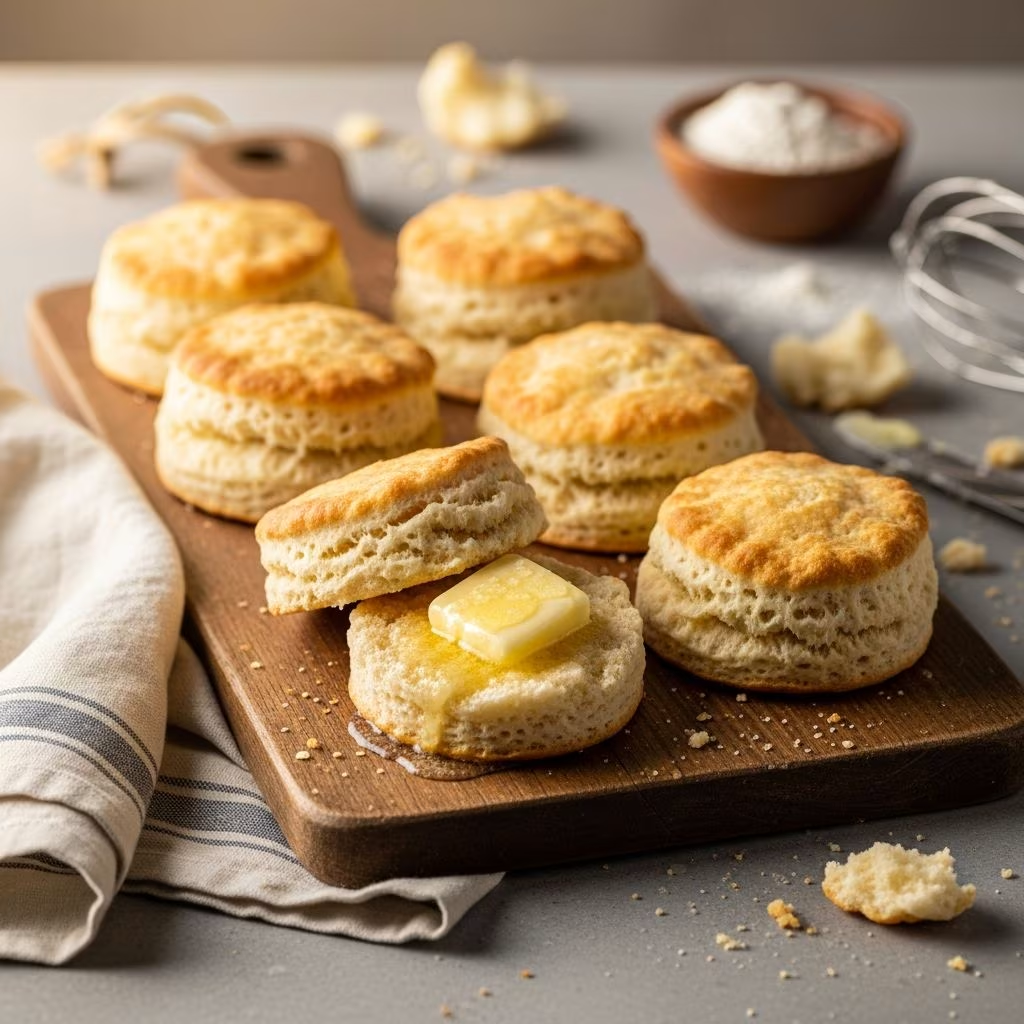
Homemade biscuits represent a cornerstone of comforting home cooking, offering a quick way to produce warm, tender treats that elevate any meal. These versatile baked goods pair seamlessly with gravy, jam, or butter, making them ideal for breakfast, brunch, or dinner sides. Unlike store-bought options, fresh biscuits boast superior texture—light and airy inside with a crisp, golden exterior—thanks to straightforward techniques that anyone can master.
Why Choose Homemade Over Store-Bought?
Opting for homemade biscuits allows full control over ingredients, ensuring no preservatives or artificial flavors. The process builds flaky layers through proper butter handling and dough folding, resulting in heights and tenderness unmatched by canned varieties. Bakers appreciate the satisfaction of watching dough transform in the oven, often rising dramatically for picture-perfect results.
Economically, these recipes use pantry staples, yielding a dozen biscuits for pennies compared to commercial packs. They also invite customization, from adding cheese to herbs, fostering creativity in the kitchen.
Essential Ingredients for Success
The beauty of biscuit making lies in its simplicity: just a handful of items combine to create magic. Core components include:
- All-purpose flour: Provides structure; spoon and level to avoid density.
- Baking powder: The leavening agent for lift; use fresh for optimal rise.
- Cold butter: Creates steam pockets for flakiness when grated or cut in.
- Milk or buttermilk: Adds moisture and tenderness; buttermilk enhances tang.
- Salt and sugar: Balance flavors; sugar aids browning.
Typical ratios: 2 cups flour, 1 tablespoon baking powder, 1 teaspoon salt, 6 tablespoons butter, and 3/4 cup milk. European-style butter, with higher fat content, yields even better results.
Step-by-Step Guide to Perfect Biscuits
Follow these precise steps for reliable outcomes. Preheat your oven to 425°F and prepare a parchment-lined baking sheet.
- Combine dry ingredients: In a large bowl, whisk 2 cups all-purpose flour, 1 tablespoon baking powder, 1 tablespoon sugar, and 1 teaspoon salt. This ensures even distribution.
- Incorporate butter: Freeze butter for 1 hour, then grate using a box grater’s large holes directly into the flour. Toss to coat, then rub with fingertips until crumbly like coarse meal. Small butter pieces are key to steam-generated layers.
- Add liquid: Pour in 3/4 cup cold milk or buttermilk. Stir with a wooden spoon until a shaggy dough forms—do not overmix to preserve tenderness.
- Knead gently: Turn dough onto a floured surface. Pat into a 1/2-inch thick rectangle, fold into thirds like a letter, rotate 90 degrees, and repeat 3-4 times. This lamination builds distinct layers without toughness.
- Shape and cut: Pat to 3/4-1 inch thick. Use a floured 2.5-3 inch round cutter, pressing straight down without twisting to maximize rise. Gather scraps gently for re-cutting.
- Bake: Arrange biscuits touching on the sheet for soft sides. Brush tops with milk or melted butter. Bake 12-15 minutes until golden. Cool slightly before serving.
Yield: 8-10 biscuits. Total time: 30 minutes.
Techniques for Maximum Flakiness
Flakiness stems from cold fats and minimal gluten development. Grating frozen butter distributes it evenly, mimicking professional methods. The folding technique, borrowed from pastry making, stacks layers that expand in the oven.
Avoid common errors: Warm butter leads to flat biscuits; overworking dough toughens it. Work quickly in a cool kitchen, chilling tools if needed. For extra height, freeze cut biscuits 15 minutes pre-baking.
| Technique | Purpose | Tip |
|---|---|---|
| Grate frozen butter | Even distribution | Freeze 1 hour; use large grater holes |
| Fold dough 3-4 times | Build layers | Rotate 90° each fold |
| Cut straight down | Prevent sealing edges | No twisting cutter |
| Touching on sheet | Soft sides, even rise | Space for crispier edges |
Flavor Variations to Try
Basic biscuits shine alone but transform with add-ins. Mix into dough before liquid:
- Cheddar herb: 1 cup shredded sharp cheddar, 2 tablespoons chopped chives or rosemary.
- Sweet cinnamon: 2 tablespoons sugar + 1 teaspoon cinnamon; top with glaze.
- Bacon cheddar: 1/2 cup crumbled cooked bacon + cheese.
- Garlic parmesan: 2 minced garlic cloves, 1/4 cup grated parmesan.
- Buttermilk swap: For tangier, softer texture.
For drop biscuits, skip folding and scoop batter straight onto the sheet—no rolling required for rustic style.
Troubleshooting Common Issues
Biscuits not rising? Check baking powder freshness—test by mixing with hot water (should bubble). Flat results often mean warm butter; chill dough 15 minutes. Dense texture signals overmixing; handle minimally.
Pale tops? Brush with milk and broil 1 minute. Dry biscuits? Add 1 tablespoon more milk. Adjust altitude: Increase flour by 1-2 tablespoons above 3,000 feet.
Pairing Ideas for Every Meal
Biscuits versatility shines in pairings:
- Breakfast: Top with sausage gravy or fried eggs.
- Brunch: Strawberry jam and clotted cream.
- Dinner: Alongside fried chicken or pot roast.
- Dessert: Shortcake with berries and whipped cream.
Store leftovers airtight up to 2 days; reheat at 350°F for crispness. Freeze unbaked biscuits up to 3 months; bake from frozen, adding 2-3 minutes.
Nutrition and Dietary Notes
Per biscuit (based on basic recipe): ~200 calories, 8g fat, 28g carbs, 4g protein. For lighter versions, substitute half butter with Greek yogurt. Gluten-free? Use 1:1 flour blend and xanthan gum. Vegan: Plant-based butter and almond milk.
Advanced Tips from Baking Pros
Seasoned bakers emphasize self-rising flour for simplicity: Mix 2 cups with 1/4 teaspoon salt, heavy cream for no-fail drop biscuits. High-fat butters like Kerrygold enhance richness. For mile-high biscuits, stack two layers before cutting.
Experiment with oven placement: Middle rack for even browning. Convection? Reduce to 400°F.
Frequently Asked Questions
Can I use shortening instead of butter?
Yes, but butter provides better flavor and flakiness via steam. Shortening yields a tender crumb.
Why grate the butter?
It incorporates faster and stays colder, creating more layers.
How do I know if my baking powder is fresh?
Mix 1 teaspoon with hot water and vinegar; active powder fizzes vigorously.
Can I make biscuits ahead?
Yes, cut and freeze; bake straight from freezer.
What milk works best?
Whole milk or buttermilk for richness; low-fat is fine but less tender.
Mastering biscuits opens doors to endless baking adventures. With practice, you’ll produce bakery-worthy results effortlessly.
References
- Easy Homemade Biscuits Recipe – Love and Lemons — Love and Lemons. 2023. https://www.loveandlemons.com/biscuits-recipe/
- The Easiest Biscuit Recipe | Best for Beginners – The Rose Homestead — The Rose Homestead. 2023. https://therosehomestead.com/easiest-biscuit-recipe/
- Easy Homemade Biscuits – Sugar Spun Run — Sugar Spun Run. 2023. https://sugarspunrun.com/easy-homemade-biscuits/
- Biscuit Recipes | King Arthur Baking — King Arthur Baking. 2024. https://www.kingarthurbaking.com/recipes/collections/biscuit-recipes