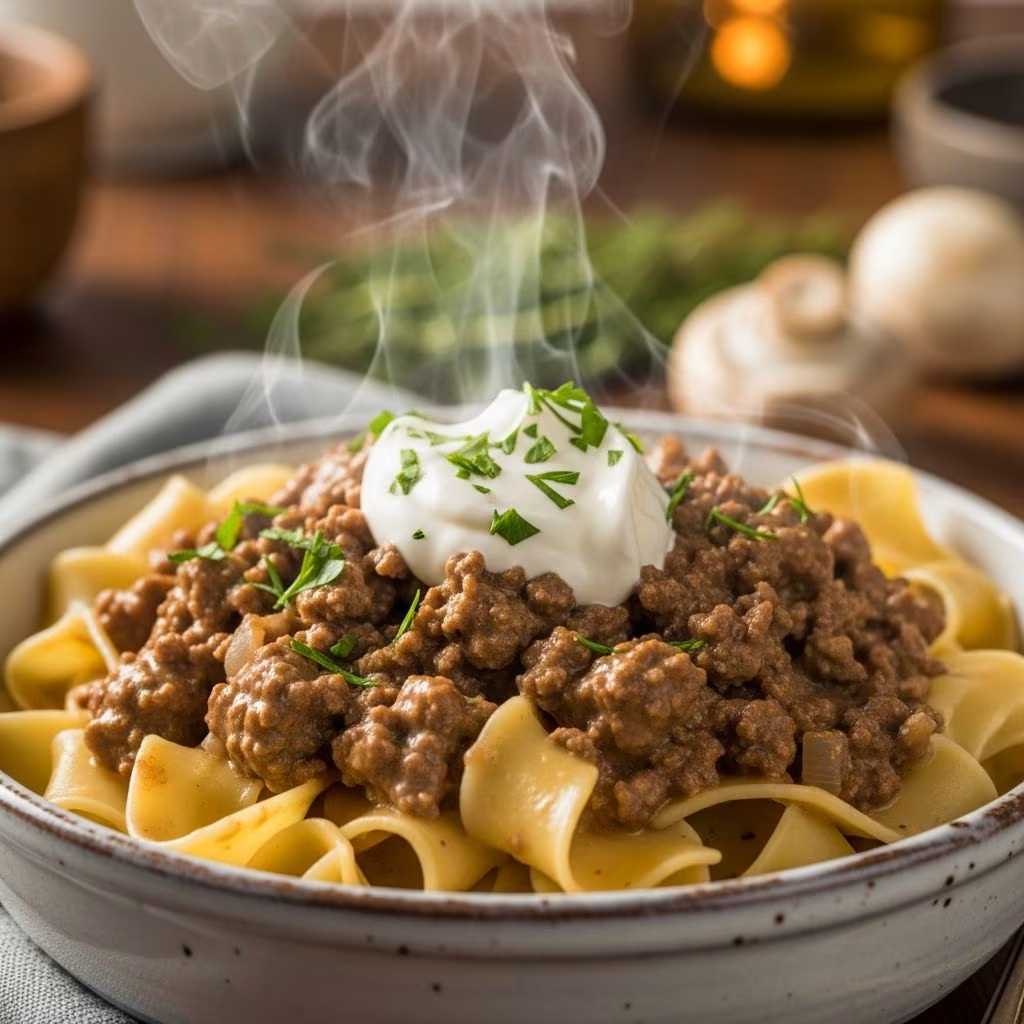
When the weekday rush leaves you scrambling for dinner ideas, few dishes deliver satisfaction as reliably as a well-executed stroganoff. This one-skillet classic transforms humble ground beef, mushrooms, and pantry staples into a restaurant-quality meal that graces your table in approximately 30 minutes. The beauty of stroganoff lies not just in its speed, but in its ability to transform simple ingredients into something genuinely craveable—a testament to the power of combining tender noodles with a velvety, savory sauce.
Understanding Stroganoff: From Russian Heritage to Modern Tables
Stroganoff originated in 19th-century Russia as an elegant dish featuring tender beef strips in a luxurious sour cream sauce. Over generations, this refined preparation evolved into numerous interpretations across different cuisines and skill levels. The ground beef adaptation emerged as a practical response to modern cooking constraints: time limitations, budget consciousness, and the desire for simplified preparation without sacrificing authentic flavors. Ground beef stroganoff maintains the essential character of its ancestor—that distinctive combination of rich, creamy sauce punctuated by umami-forward mushrooms—while eliminating the complexity traditionally associated with searing whole cuts of meat.
Essential Ingredients for Maximum Flavor Development
The foundation of exceptional stroganoff begins with understanding how each ingredient contributes to the final dish. Rather than treating this recipe as a mere assembly of components, recognize that each element plays a specific role in building layers of flavor and achieving the proper texture.
The Protein Foundation
Ground beef selection significantly impacts your results. While lean ground beef reduces overall fat content, it can produce a drier finished dish if not managed carefully. An 80/20 blend—containing 80 percent lean meat and 20 percent fat—provides optimal texture and moisture retention during cooking. The marbling in this blend ensures the stroganoff maintains a luxurious mouthfeel rather than tasting thin or overly sparse. When browning the meat, break it into uniformly small pieces rather than leaving large clumps; this increases surface area and promotes better browning while ensuring even cooking throughout the sauce.
Aromatics and Umami Builders
Yellow onions and garlic form the aromatic base that develops beneath the beef’s surface. Dice onions into quarter-inch pieces to ensure they soften within the limited cooking window without becoming mushy. Garlic requires particular attention: add it after onions have begun translucence, and cook for only one minute before introducing liquid components. This brief exposure prevents burning, which would introduce bitterness that compromises the entire sauce.
Mushrooms deserve special consideration as flavor amplifiers. Cremini or button mushrooms provide earthiness and natural umami compounds that deepen the overall taste profile. Slice them consistently at about quarter-inch thickness to ensure uniform cooking. A half-pound of mushrooms offers sufficient presence without overwhelming the dish’s balance.
The Sauce Architecture
Several approaches exist for building stroganoff sauce, each producing slightly different results. The most straightforward method combines cream of mushroom soup with sour cream, creating immediate creaminess without requiring flour-based roux preparation. For those preferring more control over texture and flavor intensity, a butter-flour roux provides superior sauce development and allows for custom seasoning adjustments. Beef broth supplies the savory backbone, with typical recipes calling for one to one and a half cups depending on desired sauce consistency.
Sour cream represents the signature ingredient that defines stroganoff character. Always add it off-heat after the sauce reaches desired thickness, preventing the lactic acids from breaking down and separating. This technique maintains the creamy texture without risking a grainy, curdled appearance.
Pasta Selection and Preparation
Wide egg noodles absorb sauce more effectively than thin pasta varieties, creating superior flavor distribution in each bite. A 16-ounce package typically serves four to six people depending on appetite and side dishes. Cook noodles according to package directions, reserving approximately one cup of cooking water before draining. This starchy water can adjust sauce consistency if needed during final plating.
Building Blocks: The Complete Ingredient Breakdown
| Ingredient | Amount | Purpose |
|---|---|---|
| Ground beef (80/20 blend) | 1 to 1.5 pounds | Primary protein; provides richness and structure |
| Butter | 2 to 3 tablespoons | Enhances flavor and aids in roux development |
| Yellow onion | 1 medium, diced | Aromatic base; adds sweetness through caramelization |
| Mushrooms | 8 ounces to 1 pound, sliced | Umami depth and textural contrast |
| Garlic cloves | 2 to 3, minced | Aromatic complexity and pungent bite |
| Beef broth | 1 to 1.5 cups | Savory liquid base for sauce development |
| Cream of mushroom soup | 10.5-ounce can or 1 cup homemade | Creaminess and additional mushroom flavor |
| Sour cream | 0.5 to 1 cup | Tangy richness and signature stroganoff character |
| All-purpose flour (optional) | 2 to 3 tablespoons | Thickening agent when combined with butter roux |
| Egg noodles | 16 ounces | Pasta base for serving and sauce absorption |
Step-by-Step Execution: The Path to Perfect Stroganoff
Phase One: Protein Development
Begin by heating a large skillet—at least 12 inches in diameter—over medium-high heat. Add the ground beef without any fat or oil, allowing the skillet’s residual heat to begin rendering the meat’s natural fats. Break the beef into quarter-inch pieces using a wooden spoon or pasta fork, maintaining constant motion to prevent large clumps from forming. This stage typically requires six to eight minutes, concluding when no pink remains visible and the meat develops a light brown crust.
Once the beef reaches doneness, carefully drain accumulated grease by tilting the pan toward a small bowl, using a spoon to contain the liquid. Return the beef to the skillet and set aside temporarily while you prepare the remaining components.
Phase Two: Building the Flavor Foundation
Add two to three tablespoons of butter to the same skillet over medium heat. Allow the butter to melt completely, then introduce the diced onion. Cook for approximately three to four minutes, stirring frequently, until the onion pieces become translucent and slightly softened. The onion should not brown at this stage; you’re seeking gentle softening that allows aromatics to release.
Add the sliced mushrooms and cook for an additional five minutes, stirring occasionally. During this time, the mushrooms release their moisture, which evaporates and concentrates their flavor. Watch for the mushroom edges to develop light browning, signaling that their starches are caramelizing and deepening the overall taste.
Add the minced garlic and cook for exactly one minute, stirring constantly. This brief exposure prevents burning while allowing the garlic’s volatile compounds to infuse the butter and mushroom mixture.
Phase Three: Sauce Development
If using a flour-based approach, sprinkle two to three tablespoons of all-purpose flour over the mixture and stir constantly for one minute. This cooking allows the flour to absorb fat and eliminates any raw flour taste. Then gradually pour in one to one and a half cups of beef broth while whisking steadily to prevent lumps from forming.
If using the simplified soup-based method, simply add the cream of mushroom soup directly to the vegetable and mushroom mixture, stirring until thoroughly combined. Pour in the beef broth and stir well to incorporate all components.
Return the browned ground beef to the skillet, stirring until evenly distributed throughout the sauce. Increase heat to medium-high and bring the mixture to a gentle simmer. Maintain this simmer for five to eight minutes, allowing the sauce to thicken as starches hydrate and the flavors meld. The sauce should coat the back of a spoon without running off immediately when ready.
Phase Four: Final Assembly
Remove the skillet from heat and gently stir in the sour cream using a whisk or fork. The off-heat application prevents the sour cream from breaking or separating due to high temperature. Mix thoroughly until the sauce achieves uniform color and consistency. Allow the stroganoff to sit in the skillet for five to ten minutes; this resting period allows the sauce to thicken further as starches continue hydrating and ingredients reach thermal equilibrium.
Meanwhile, cook the egg noodles according to package directions. Drain thoroughly and toss with a small amount of butter or olive oil to prevent sticking. Divide the noodles among serving bowls or plates, then ladle the stroganoff generously over the pasta. Garnish with fresh parsley if desired, adding color and fresh herbal notes to complement the rich, creamy sauce.
Customization and Variation Approaches
Flavor Enhancement Strategies
Worcestershire sauce adds complexity and umami depth; add one-half to one tablespoon during sauce development. Dijon mustard introduces subtle tang that brightens the overall flavor profile without creating noticeable mustard taste. Fresh thyme or bay leaves contribute herbal notes if added during simmering and removed before serving.
Dietary Accommodations
Substitute Greek yogurt for half the sour cream to increase protein content while reducing fat. Use mushroom or vegetable broth instead of beef broth for vegetarian adaptations, adding a tablespoon of soy sauce to compensate for lost umami. Heavy cream can replace some or all sour cream for ultra-luxurious texture, though this increases richness considerably.
Serving Vessel Options
While egg noodles remain traditional, stroganoff adapts beautifully to alternative starches. Wide ribbon pasta, such as fettuccine or pappardelle, provides excellent sauce adhesion. Rice—particularly long-grain white or brown varieties—offers lighter alternatives that let the sauce shine. Mashed potatoes create a comforting, rustic presentation that appeals to traditional palates.
Frequently Asked Questions
How far in advance can stroganoff be prepared?
Stroganoff sauce can be refrigerated for up to three days in an airtight container. Reheat gently over low heat, adding a splash of broth if the sauce has thickened excessively during storage. For best results, prepare noodles fresh at serving time rather than in advance, as they absorb sauce and become soft when stored together.
Can stroganoff be frozen for later consumption?
The stroganoff sauce freezes successfully for up to two months. Sour cream-based stroganoff may separate slightly when thawed, so plan to stir in additional fresh sour cream upon reheating for optimal texture. Freeze in portions for convenient future meals.
What causes stroganoff sauce to become grainy or separated?
This typically results from adding sour cream to excessively hot sauce or cooking the sour cream at high temperatures after incorporation. Always remove the skillet from heat before stirring in sour cream, and maintain low heat during any subsequent cooking.
Is stroganoff suitable for meal preparation?
Stroganoff works well for meal prep when stored in separate containers: sauce in one container, cooked noodles in another. This separation prevents noodle absorption and maintains optimal texture through the week. Combine and reheat gently at serving time.
Nutritional Considerations and Serving Guidance
A typical serving of stroganoff contains approximately 500 to 600 calories, with substantial portions derived from fat and protein. The dish pairs well with light vegetable sides: steamed green beans, roasted Brussels sprouts, or a simple arugula salad dressed with lemon vinaigrette. These additions provide textural contrast and nutritional balance without overwhelming the palate with competing flavors.
Stroganoff naturally serves four to six people depending on portion size and accompanying sides. The one-skillet cooking method minimizes cleanup while maximizing flavor development through ingredient layering.
Mastering Stroganoff: Key Takeaways
Ground beef stroganoff succeeds through attention to fundamental cooking techniques: proper browning temperature for meat development, patient vegetable softening that releases aromatics, careful sauce construction that prevents separation, and respect for sour cream’s heat sensitivity. This ~30-minute preparation delivers genuine comfort food satisfaction without requiring advanced culinary skills. Whether you approach stroganoff as a regular weeknight staple or occasional special dinner, understanding these principles ensures consistently excellent results that will satisfy family and guests alike.
References
- Ground Beef Stroganoff — Diethood. Accessed April 2026. https://diethood.com/hamburger-stroganoff-recipe/
- Easy Hamburger Stroganoff — The Farmwife Feeds. Accessed April 2026. https://www.farmwifefeeds.com/easy-hamburger-stroganoff/
- Easy Beef Stroganoff Recipe — The Real Food Dietitians. Accessed April 2026. https://therealfooddietitians.com/ground-beef-stroganoff/
- Ground Beef Stroganoff Recipe — Natasha’s Kitchen. Accessed April 2026. https://natashaskitchen.com/ground-beef-stroganoff/
- Easy Hamburger Stroganoff — Southern Bite. Accessed April 2026. https://southernbite.com/easy-hamburger-stroganoff/