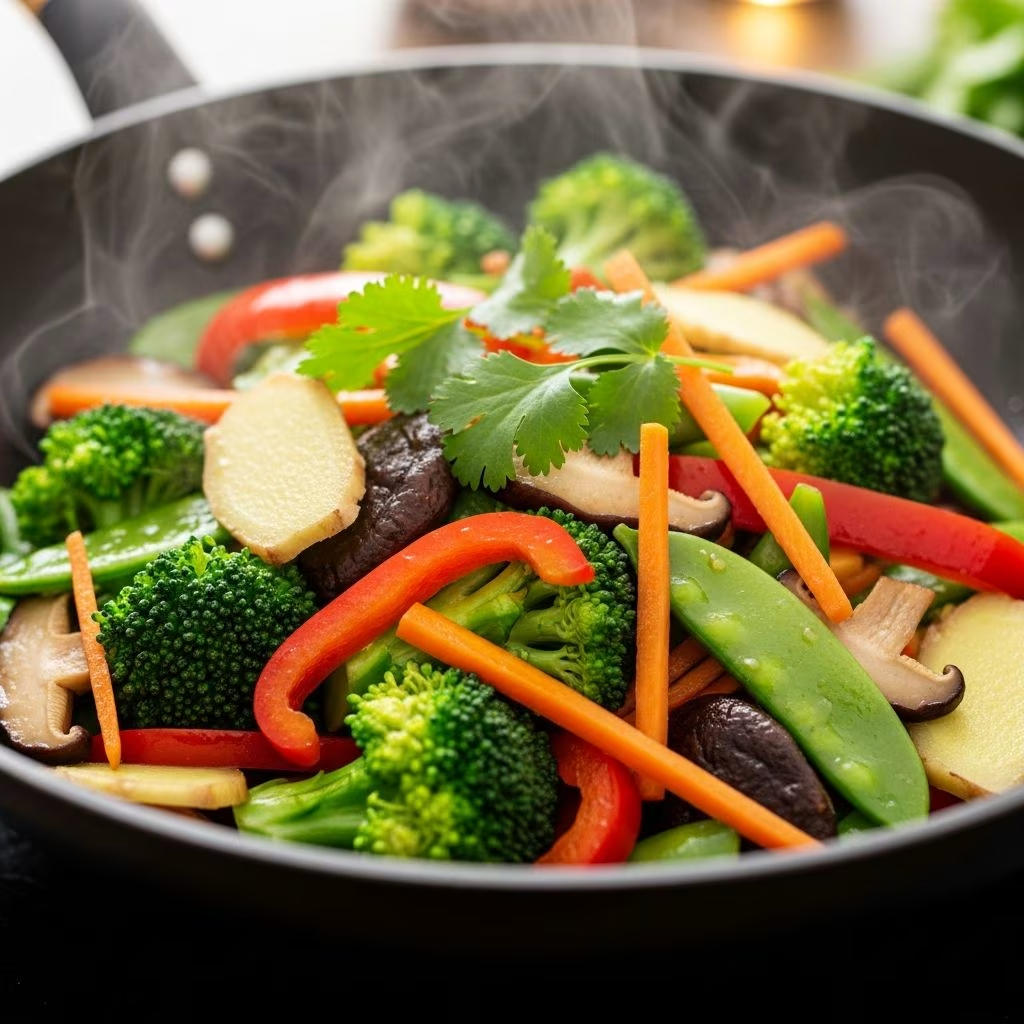
Transform everyday vegetables into a symphony of flavors with a ginger vegetable stir-fry. This dish combines crisp-tender produce with a savory sauce highlighted by fresh ginger’s aromatic punch, making it a staple for quick, nutritious meals. Whether you’re a busy professional or a home cook seeking variety, mastering this recipe opens doors to endless adaptations.
The Allure of Ginger in Stir-Fries
Ginger brings a unique warmth and spice to stir-fries, balancing sweetness from vegetables and umami from soy-based sauces. Its natural oils enhance digestion and add anti-inflammatory benefits, turning a simple meal into a health booster. Freshly grated ginger releases essential oils that infuse the dish deeply, unlike powdered versions which lack intensity.
In traditional Asian cooking, ginger acts as a foundational flavor, cutting through richness and elevating humble ingredients. For this stir-fry, it pairs seamlessly with garlic, soy, and a touch of sweetness, creating a sauce that clings perfectly to veggies without overpowering them.
Essential Ingredients for Success
Building a great ginger veggie stir-fry starts with quality components. Focus on fresh, seasonal vegetables for optimal crunch and nutrition.
- Core Vegetables: Broccoli florets, bell peppers, zucchini, carrots, green beans, snow peas, onions, mushrooms, eggplant, and water chestnuts provide color, texture, and variety.
- Aromatics: Fresh ginger (1-2 tablespoons grated), garlic (2-3 cloves minced) form the flavor base.
- Sauce Staples: Low-sodium soy sauce or tamari (1/3 to 1/2 cup), rice vinegar or mirin (1-2 tablespoons), sweetener like honey, brown sugar, or agave (1-2 tablespoons), cornstarch (1-2 tablespoons for thickening).
- Add-Ins: Sesame oil, sriracha or red pepper flakes for heat, brandy or sesame seeds for depth and garnish.
Opt for low-sodium soy to control saltiness; regular versions can overwhelm. Tamari offers a gluten-free alternative with similar richness.
| Ingredient | Quantity | Role |
|---|---|---|
| Low-sodium soy sauce | 1/2 cup | Umami base |
| Fresh grated ginger | 1 tbsp | Spice and warmth |
| Cornstarch | 2 tbsp | Thickener |
| Vegetable oil | 2 tbsp | High-heat cooking |
| Mixed veggies | 4-6 cups | Bulk and nutrition |
Step-by-Step Cooking Guide
Preparation takes about 10 minutes, cooking 15-20, for a total under 30 minutes. High heat is key to retaining veggie crispness.
Prepare the Sauce: In a jar, combine soy sauce, grated ginger, minced garlic, sweetener, cornstarch, vinegar, and optional heat like sriracha. Shake vigorously until smooth. This ensures even coating later.
Prep Veggies: Wash and chop into uniform bite-sized pieces. Firmer ones like broccoli and carrots first, softer like zucchini last. This prevents mushiness.
Heat the Wok: Use a wok or large skillet over high heat with neutral oil like vegetable or avocado. Add onions and peppers first, stir 2-3 minutes.
Add Layers: Introduce garlic briefly, then harder veggies (broccoli, carrots), cook 2 minutes. Add softer ones (zucchini, green beans), stir 1-2 more minutes until vibrant but firm.
Incorporate Sauce: Pour in sauce, toss to coat. It thickens quickly; add water if needed. Cook 1-2 minutes until glossy.
Finish and Serve: Garnish with sesame seeds, scallions. Pair with rice, noodles, quinoa, or cauliflower rice for low-carb.
Customization for Every Diet
This recipe shines in its flexibility. Make it vegan by skipping honey; use maple syrup instead. For protein boosts, add tofu, tempeh, chickpeas, chicken, or steak—about 1.5-2 cups cooked and cubed.
- Vegan/Gluten-Free: Tamari + agave + no animal products.
- Low-Carb: Cauliflower rice base, skip sweeteners.
- Spicy Kick: Extra sriracha or fresh chilies.
- Seasonal Twists: Summer: zucchini, peppers; Winter: bok choy, turnips.
Experiment with 7-vegetable medleys including turnips, baby bok choy, yellow squash for diversity.
Pro Tips for Restaurant-Quality Results
Achieve wok hei (breath of the wok) by not overcrowding—cook in batches if needed. Uniform cuts ensure even cooking. Taste sauce before adding; adjust ginger for zing or soy for salt.
- Grate ginger fresh for potency; freeze extras in portions.
- High smoke-point oils prevent burning.
- Don’t overcook; veggies should snap, not wilt.
- Rest sauce 5 minutes pre-cook for flavors to meld.
Health Benefits Packed In
Beyond taste, this stir-fry delivers fiber, vitamins A/C/K, antioxidants from colorful veggies. Ginger aids nausea relief and immunity per studies from NIH. Broccoli’s sulforaphane supports detox; bell peppers boost collagen.
Low-calorie (under 300 per serving sans rice), high-volume for satiety. A balanced plate: half veggies, quarter protein, quarter grains.
Pairing and Serving Ideas
Serve hot for best texture. Ideal with jasmine rice, soba noodles, or alone. Beverages: green tea, iced ginger ale, or light white wine like Riesling to complement spice.
Meal prep: Stores 3-4 days refrigerated; reheat gently to avoid sogginess. Freezes well up to a month.
Frequently Asked Questions
What if I don’t have a wok?
A large skillet or cast-iron pan works fine; ensure it’s preheated.
Can I make it ahead?
Prep veggies and sauce separately; cook fresh for crispness.
How spicy is it?
Mild by default; adjust sriracha to taste, start low.
Substitute for soy sauce?
Coconut aminos for soy-free, lower sodium option.
Best veggies for beginners?
Broccoli, carrots, peppers—forgiving and colorful.
Nutritional Breakdown
| Serving (1 cup veggies + sauce) | Calories | Protein | Carbs | Fiber |
|---|---|---|---|---|
| Base Recipe | 250 | 6g | 35g | 5g |
| With Tofu | 350 | 18g | 38g | 6g |
| Over Rice | 450 | 8g | 70g | 5g |
Values approximate; vary by ingredients.
References
- NIH Ginger Health Benefits — National Institutes of Health. 2023-05-15. https://www.ncbi.nlm.nih.gov/pmc/articles/PMC7019938/
- USDA Vegetable Nutrition Database — United States Department of Agriculture. 2024-02-10. https://fdc.nal.usda.gov/
- Harvard T.H. Chan School of Public Health: Stir-Fry Techniques — Harvard University. 2022-11-20. https://www.hsph.harvard.edu/nutritionsource/healthy-vegetable-side-dishes/