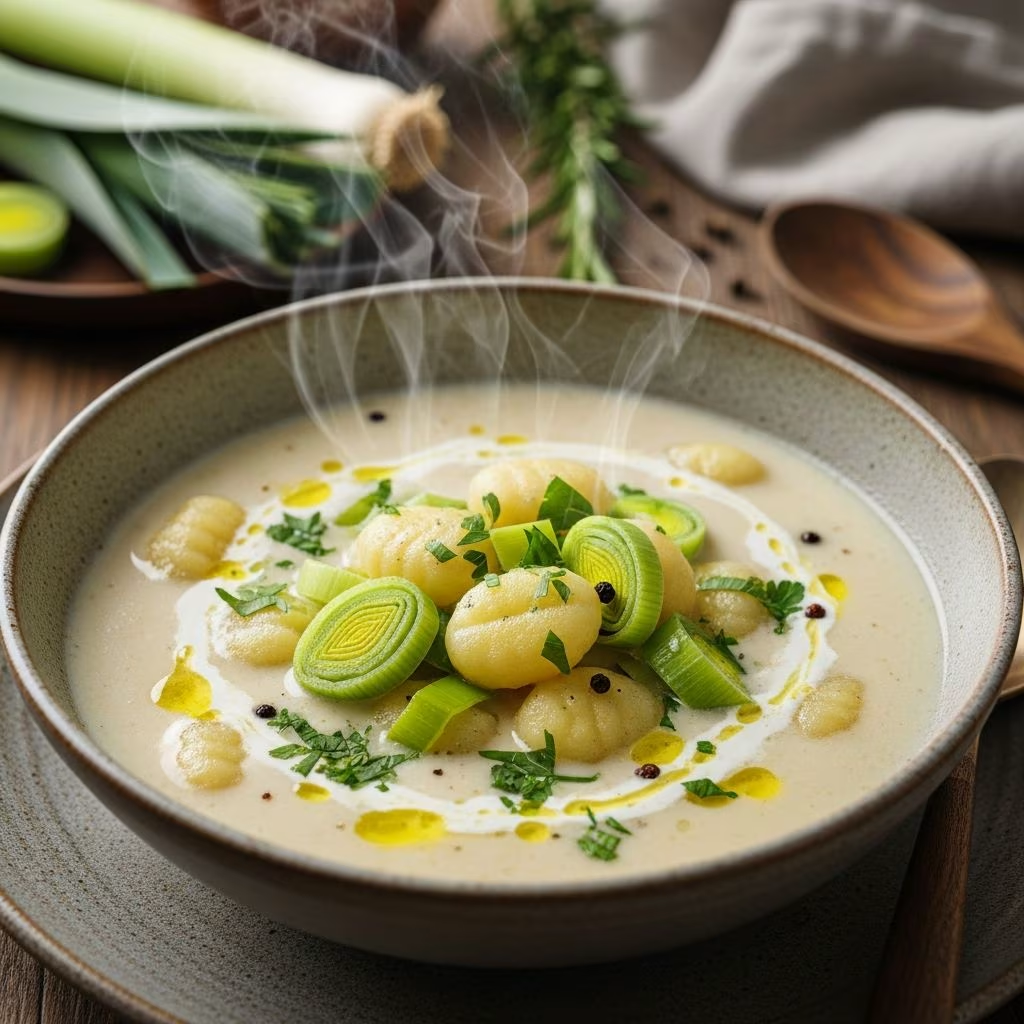
One of the most rewarding aspects of home cooking is the ability to transform humble ingredients into something truly memorable. This gnocchi and leek soup exemplifies that philosophy by combining soft pasta pillows with the subtle sweetness of caramelized alliums and the brightness of fresh citrus. The result is a bowl that feels both elegant enough for entertaining and comforting enough for quiet weeknight dinners.
Understanding the Essential Components
Every successful soup begins with understanding how its individual elements contribute to the final dish. This recipe relies on several key components that work in harmony to create layers of flavor and texture.
The Foundation: Quality Broth
The broth serves as the canvas upon which all other flavors are painted. Using low-sodium vegetable broth allows the other ingredients to shine without overpowering salt content. The broth volume—typically around six cups—provides enough liquid to cook the gnocchi while maintaining a soup-like consistency. As the soup simmers, the broth gradually absorbs flavors from the leeks, lemon, and optional Parmesan rind, developing a more complex and satisfying taste profile than it would have on its own.
Leeks: The Star Ingredient
Leeks are divided into two preparations in this recipe, each serving a distinct purpose. Large leeks with their white and pale green sections intact provide the most delicate flavor. A portion is fried until deeply golden and crispy, creating a textural contrast and concentrated leek flavor that garnishes the finished soup. The remaining leeks are gently cooked in butter until soft and sweet, infusing the broth with subtle allium notes without any harsh bite. This dual approach maximizes the ingredient’s potential within a single dish.
Gnocchi: Tender Pasta Pearls
Shelf-stable gnocchi offers convenience without sacrificing quality. These small dumplings absorb the surrounding broth while maintaining their tender interior and slight chew. They cook quickly—typically five minutes—and serve as the soup’s main protein and substance. The texture contrast between the soft gnocchi and crispy leeks creates an engaging eating experience.
Fresh Greens and Finishing Touches
Hearty greens like Tuscan kale are added at the very end, wilting slightly from the residual heat without becoming mushy. This approach preserves their nutritional value and appealing texture. Dill, fresh from the garden or dried, adds an herbaceous note, while shaved Parmesan and crispy leeks provide final flourishes of flavor and texture.
The Technique: Building Layers of Flavor
The cooking method for this soup is deliberately sequenced to maximize flavor development at each stage.
Step One: Creating Crispy Leek Garnish
Begin by heating vegetable oil in a large pot over medium-high heat. Add approximately one-quarter of the sliced leeks and cook with occasional stirring until they transform into deep golden-brown, crispy bits—a process taking six to eight minutes. This initial cooking step serves multiple purposes: it renders the leeks’ natural sugars, creates appealing texture contrast, and infuses the oil with concentrated leek flavor. Once golden, drain the crispy leeks through a fine-mesh sieve, immediately seasoning them with salt while still warm. Reserve this flavored oil for the next cooking stage, as it carries the essence of caramelized leeks and will deepen all subsequent flavors.
Step Two: Developing Citrus Depth
Using some of the reserved leek-infused oil, place lemon halves cut-side down directly on the pot’s surface. This technique, known as dry-searing, encourages browning and caramelization of the lemon flesh, typically requiring two to three minutes. This step might seem unconventional, but it fundamentally transforms the lemon’s contribution from a simple acid to a complex agent that adds depth and subtle bitterness alongside brightness. This caramelized lemon will remain in the pot throughout the simmering process, gradually releasing its juice into the broth.
Step Three: Creating the Aromatic Base
Reduce heat to medium and melt unsalted butter in the same pot. Add the remaining leeks—the bulk of them—along with a pinch of salt. Cook gently for approximately five minutes until they become soft and translucent, being careful not to allow them to brown significantly. This slow, gentle cooking method coaxes out their natural sweetness while maintaining their delicate texture. The butter carries fat-soluble flavor compounds, distributing leek essence throughout the pot.
Step Four: Building the Broth
Return the caramelized lemon to the pot, then add the optional Parmesan rind (which dissolves during cooking, adding umami depth), vegetable broth, and fresh ground black pepper. Increase heat to high and bring the mixture to a boil, then reduce to medium and allow it to simmer. Over approximately fifteen minutes, the broth reduces slightly while absorbing the combined flavors of leek, lemon, and Parmesan. You’ll recognize this stage is complete when the broth smells distinctly lemony and slightly sweet. Using tongs, carefully remove the lemon halves, gently squeezing them to release any remaining juice into the pot before discarding.
Step Five: Finishing the Soup
Add the gnocchi directly to the simmering broth and cook for approximately five minutes until they are heated through and have absorbed some of the surrounding liquid. Remove the pot from heat and stir in the fresh greens, allowing residual heat to wilt them slightly. This final step preserves the greens’ nutritional profile while incorporating their fresh, slightly bitter notes into the finished soup.
Ingredient Selection and Substitutions
While the recipe as written is elegant in its simplicity, several substitutions can accommodate different preferences or dietary needs:
- Greens Options: Tuscan kale is specified for its hearty texture, but tender spinach, arugula, or chard work equally well. Adjust cooking time based on greens’ delicacy.
- Oil Choices: While vegetable oil works well, neutral oils like canola or light olive oil produce similar results. Extra-virgin olive oil can overpower the delicate flavors.
- Gnocchi Varieties: Whole-wheat or potato-based gnocchi provide different textures and nutritional profiles while maintaining the recipe’s integrity.
- Herb Substitutions: Fresh tarragon, chervil, or parsley can replace dill for those preferring different herbaceous notes.
- Broth Alternatives: Chicken or seafood broth would create different flavor profiles, though the recipe’s vegetarian character would change accordingly.
Nutritional Considerations and Health Benefits
This soup offers several nutritional advantages beyond its satisfying flavor profile. Leeks belong to the allium family, sharing compounds with garlic and onions that research suggests support immune function and cardiovascular health. The inclusion of fresh greens provides vitamins A, K, and C, as well as minerals like iron and calcium. Gnocchi provides carbohydrates for sustained energy, while the broth-based preparation keeps the recipe relatively light despite its comforting nature. The optional Parmesan rind contributes calcium and umami depth without substantial fat content, as only a small amount dissolves during cooking.
Serving Suggestions and Pairing Ideas
This soup’s versatility extends to how it can be presented and served. As a standalone course, it provides a satisfying lunch or light dinner. For more elaborate meals, serve it as a first course in smaller portions, allowing diners to enjoy its flavors without overwhelming them before the main dish. Crusty bread, focaccia, or garlic toasts make excellent accompaniments, providing textural contrast and allowing diners to soak up every drop of flavorful broth.
Wine pairings should lean toward lighter, crisper options. A crisp white wine like Sauvignon Blanc or Pinot Grigio complements the soup’s citrus notes and delicate flavors without overwhelming them. For non-alcoholic options, sparkling water with a squeeze of fresh lemon echoes the soup’s brightness.
Make-Ahead and Storage Tips
While this soup is best enjoyed fresh, several components can be prepared in advance. The leek oil and crispy leek garnish keep refrigerated in an airtight container for three to four days. The broth with softened leeks (before adding gnocchi and greens) freezes well for up to three months. On serving day, simply reheat the broth, add fresh gnocchi and greens, and garnish with the pre-made crispy leeks and fresh herbs. This approach allows busy cooks to enjoy restaurant-quality soup with minimal last-minute effort.
Understanding Cooking Techniques at Work
This recipe demonstrates several fundamental cooking techniques that elevate it from simple to sophisticated. The Maillard reaction—the browning that occurs when leeks are fried and lemon is seared—creates complex flavors impossible to achieve through gentle cooking alone. Layering flavors by cooking different components separately before combining them allows each ingredient to develop fully. The concept of finishing with fresh elements (greens and herbs added at the end) ensures maximum flavor and nutrition. Understanding these techniques enables cooks to apply similar principles to other recipes, expanding their culinary capabilities.
Frequently Asked Questions
Can I prepare this soup in advance?
Yes, prepare the broth and leek components up to two days ahead, storing them separately. Add gnocchi and greens only when reheating and serving for the best texture and flavor.
What if I don’t have a Parmesan rind?
The rind adds subtle umami depth, but the soup remains delicious without it. Alternatively, add a pinch of nutritional yeast or increase shaved Parmesan garnish to compensate.
How can I make this soup vegan?
Omit the Parmesan rind and butter, substituting the latter with olive oil. Nutritional yeast can provide umami depth. The soup remains satisfying and delicious.
What consistency should the finished soup be?
The soup should be brothiness with tender gnocchi and soft leeks throughout, neither too thick nor too thin. If it’s too thick after cooking, add additional warm broth. If too thin, simmer uncovered for several additional minutes.
Can I use frozen gnocchi?
Yes, frozen gnocchi works well, though it may require an additional two to three minutes cooking time compared to shelf-stable varieties.
Conclusion: A Timeless Comfort Classic
This gnocchi and leek soup represents everything that makes home cooking rewarding: quality ingredients treated with respect, time-tested techniques applied thoughtfully, and a final result that nourishes both body and soul. Its apparent simplicity conceals considerable thoughtfulness in construction, with each component serving a specific purpose while contributing to a harmonious whole. Whether enjoyed on a quiet evening or shared with guests, this soup demonstrates that the most satisfying meals often require nothing more than understanding how to coax maximum flavor from fundamental ingredients.
References
- Gnocchi Leek Soup with Greens — Hangry Hannah. 2024-01-08. https://ahangryhannah.com/2024/01/08/gnocchi-leek-soup-with-greens/
- Gnocchi-Leek Soup With Greens Recipe — Umami Recipes. https://www.umami.recipes/recipe/U1VpvD8yiJEHH3n11m1V