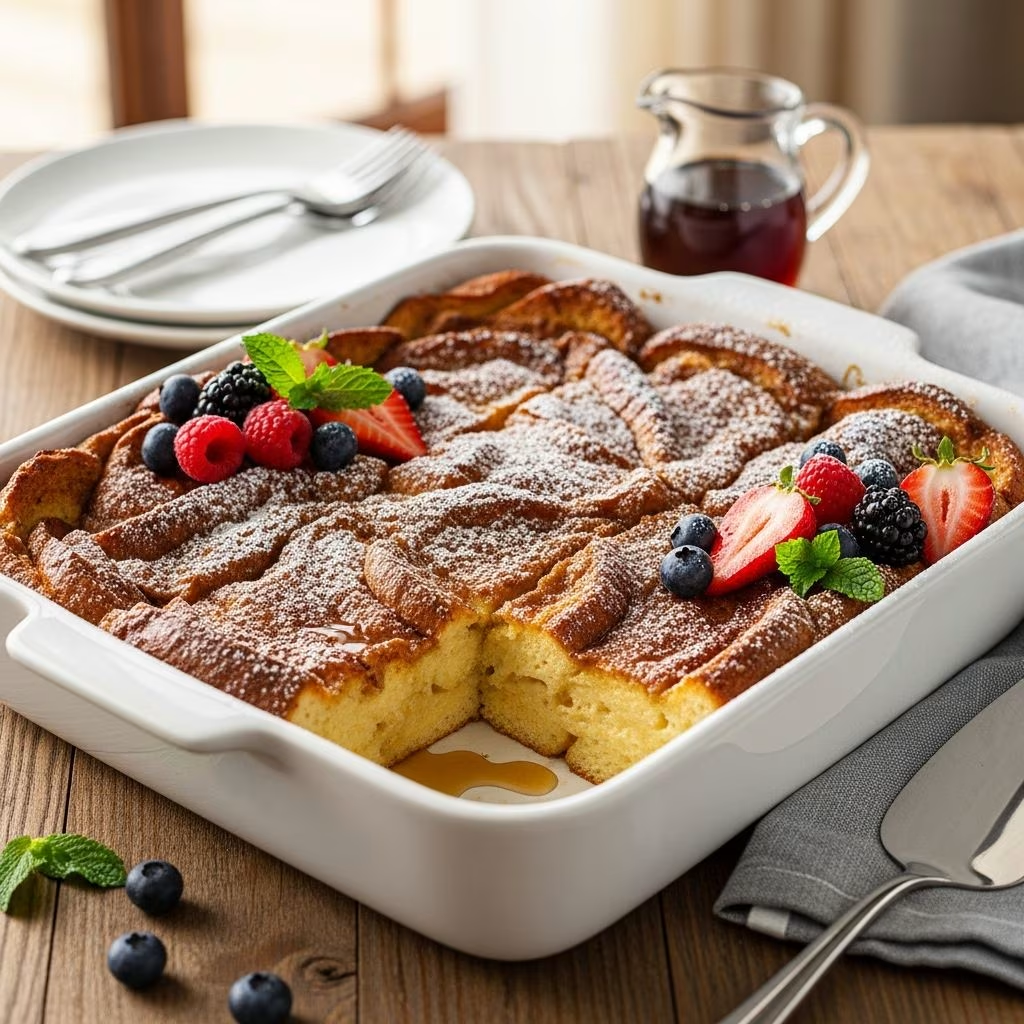
French toast casserole represents one of the most practical solutions for preparing a substantial breakfast or brunch when serving multiple guests. Unlike traditional French toast, which requires standing at the stove to cook individual slices, this casserole method allows you to prepare the dish in advance and simply bake it when ready to serve. The result is a dish with layers of custardy bread, caramelized brown sugar, and a crispy topping that satisfies even the most demanding palates.
Understanding the Foundation: Selecting Quality Ingredients
The success of your French toast casserole begins with thoughtful ingredient selection. Each component plays a specific role in creating the final texture and flavor profile.
The Bread Selection Process
The bread you choose fundamentally determines the texture of your finished casserole. Sturdy varieties such as French bread, challah, sourdough, or brioche work exceptionally well because they possess enough structural integrity to absorb the custard mixture without disintegrating into mush. White bread slices also work effectively, particularly when you select thicker cuts. The ideal bread should be at least one to two days old, allowing it to become slightly stale and better able to absorb moisture. If you have fresh bread, you can expedite the staling process by slicing it and letting it sit uncovered for several hours or toasting the slices lightly.
Avoid crusty breads with hard exteriors that don’t soften properly during baking. The bread cubes should measure approximately one inch, creating pieces large enough to maintain their shape while small enough to distribute the custard evenly throughout the casserole.
The Egg and Dairy Components
Eggs serve as the binding agent that creates the casserole’s distinctive custardy interior. Most recipes call for between five and eight large eggs, depending on the quantity of bread being used. The eggs combine with milk and cream to form a rich custard base that coats every bread cube.
The dairy ratio significantly influences the final consistency. Using only milk creates a lighter custard, while incorporating heavy cream or half-and-half produces a richer, more indulgent texture. A typical combination includes two cups of milk with half a cup to one cup of heavy cream, creating the optimal balance between moisture and richness.
Sweeteners and Spices
Brown sugar appears in multiple places throughout the recipe, serving different functions. Some recipes use brown sugar mixed with butter as a bottom layer that caramelizes during baking, creating an intensely flavored base. Other recipes incorporate brown sugar directly into the custard mixture and then reserve additional brown sugar for the streusel topping. The combination of brown sugar with cinnamon, nutmeg, and vanilla extract creates the signature warm, comforting flavor associated with French toast.
Vanilla extract contributes depth and sweetness, while cinnamon and nutmeg provide the classic spice notes. Some recipes also include salt, which balances the sweetness and enhances the overall flavor complexity.
Building Your Casserole: Step-by-Step Preparation
Understanding the assembly process helps you prepare an organized, efficient casserole that bakes evenly.
Initial Setup and Pan Preparation
Begin by preheating your oven to the specified temperature, though you won’t be baking immediately if preparing the casserole ahead. Select a 9×13-inch baking dish and butter or oil it thoroughly to prevent sticking and to help the final dish release cleanly from the pan. Some recipes suggest buttering both the bottom and sides of the pan to ensure complete coverage.
Next, cube your bread into one-inch pieces and distribute them evenly across the prepared baking dish. The bread should fill the dish roughly three-quarters full, leaving room for the custard to distribute without overflowing.
Creating the Custard Mixture
In a large mixing bowl, crack your eggs and whisk them thoroughly until well combined. Add your milk, cream, brown sugar, vanilla extract, cinnamon, nutmeg, and salt. Whisk the mixture until the sugar dissolves and all ingredients are fully incorporated. The custard should appear smooth and uniform with no visible sugar granules remaining.
Pour this custard mixture evenly over the bread cubes, ensuring the liquid reaches all portions of the casserole. If preparing the dish immediately, allow it to stand at room temperature for thirty minutes, giving the bread adequate time to absorb the custard and creating a cohesive dish. If preparing ahead, simply cover the baking dish and refrigerate overnight or for up to twenty-four hours.
The Topping Strategy
The streusel topping creates the crispy, caramelized exterior that contrasts beautifully with the soft interior. Combine all-purpose flour, brown sugar, cinnamon, and salt in a separate bowl. Cut cold, unsalted butter into small pieces and add to the dry ingredients. Using a pastry cutter or your fingertips, work the butter into the mixture until it resembles fine breadcrumbs or small pebbles. This technique ensures an even distribution of butter throughout the topping, creating that desirable crumbly texture.
For maximum convenience when preparing ahead, place this topping in a small resealable plastic bag and refrigerate alongside the casserole. This approach keeps the topping cold and maintains its texture until the moment you’re ready to bake.
| Component | Purpose | Key Consideration |
|---|---|---|
| Bread cubes | Provides structure and absorbs custard | Select day-old, sturdy varieties |
| Eggs and dairy | Creates custardy texture | Balance milk and cream ratio |
| Sweeteners | Adds flavor and browning | Brown sugar in multiple layers |
| Spices | Creates signature flavor profile | Cinnamon and nutmeg essential |
| Streusel topping | Creates crispy exterior | Keep butter cold for best texture |
Baking Instructions for Optimal Results
Proper baking technique ensures your casserole achieves the perfect balance between a set interior and a crispy top.
Temperature and Timing Considerations
Preheat your oven to 350°F before baking. If your casserole has been refrigerated, remove it from the refrigerator about fifteen minutes before baking to allow it to reach closer to room temperature. Sprinkle the reserved streusel topping evenly across the surface, distributing it in a single layer for uniform browning.
Bake, uncovered, for forty-five to sixty minutes, depending on your texture preferences and the depth of your casserole. Casseroles baked for approximately forty-five minutes will have a softer, more custardy interior with a set outer layer. Those baked for the full hour will develop a firmer, more caramelized top with the interior still remaining moist but more structured. The casserole is finished when the top turns golden brown and a toothpick inserted into the center shows no raw egg mixture.
Post-Baking Cooling and Serving
After removing the casserole from the oven, allow it to cool for at least ten minutes before serving. This cooling period allows the structure to set properly, making the casserole easier to portion and serve. The residual heat continues to cook the interior slightly, ensuring complete food safety.
Serve the casserole warm, optionally accompanied by maple syrup, homemade syrup, whipped cream, or fresh fruit. Many recipes suggest the casserole is sufficiently sweet without additional syrup, allowing diners to add condiments according to their personal preferences.
Make-Ahead Strategies and Storage Tips
One of the primary advantages of French toast casserole is its make-ahead capability, perfect for busy mornings or entertaining.
Preparing the Night Before
Assemble your casserole completely, cover it with plastic wrap or aluminum foil, and refrigerate overnight. The extended refrigeration time allows the bread to fully absorb the custard mixture, resulting in a more cohesive, evenly textured dish. You can prepare the streusel topping separately and refrigerate it in a sealed container for up to twenty-four hours.
On the morning of serving, simply remove both components from the refrigerator, add the topping to the casserole, and proceed directly to baking. This approach allows you to have a hot, impressive breakfast on the table within an hour of waking.
Storage and Reheating
Leftover casserole can be covered and refrigerated for three to four days. Reheat individual portions in the microwave for one to two minutes, or place the entire casserole in a 325°F oven for fifteen to twenty minutes, covered with foil to prevent excessive browning.
Customization and Flavor Variations
While the classic version is universally appealing, numerous variations allow you to tailor the casserole to specific preferences.
Fruit and Nut Additions
Consider incorporating thinly sliced apples, orange zest, sliced apricots, pineapple chunks, blueberries, raspberries, or chopped pecans into the casserole. These additions can be mixed into the custard before adding it to the bread or sprinkled between bread layers. Alternatively, add nuts like sliced almonds to the streusel topping just before baking for a toasty, crunchy element.
Texture Modifications
Experiment with different bread varieties to create unique flavor profiles. Sourdough provides a subtle tanginess, brioche offers sweetness and richness, and challah delivers a slightly sweet, tender crumb. Each bread type interacts differently with the custard, creating distinct textural outcomes.
Frequently Asked Questions
Can I use fresh bread instead of day-old bread?
Fresh bread tends to absorb too much custard and may become overly soft or mushy. Stale bread maintains its structure better. If fresh bread is your only option, slice it and allow it to sit uncovered for several hours, or lightly toast the slices before cubing.
What if I don’t have heavy cream?
Half-and-half serves as an excellent substitute for heavy cream. You can also use evaporated milk or additional whole milk, though the final texture will be slightly less rich.
Can I freeze the assembled casserole?
Yes, you can freeze the assembled, unbaked casserole for up to three months. Thaw it in the refrigerator overnight before baking. The streusel topping is best added after thawing, rather than freezing together with the casserole.
How far in advance can I prepare this dish?
The casserole can be assembled and refrigerated for up to twenty-four hours before baking. The streusel topping can be prepared separately and refrigerated for up to twenty-four hours. This timing allows for convenient preparation for morning entertaining.
Is this dish suitable for dietary restrictions?
You can adapt the recipe by substituting dairy-free milk alternatives, using egg substitutes, or employing gluten-free bread options. However, these substitutions may affect the final texture and flavor profile, requiring some experimentation.
Serving Suggestions and Menu Planning
French toast casserole serves as an impressive centerpiece for brunch menus. Pair it with complementary dishes such as fresh fruit salads, crispy bacon or sausage, roasted potatoes with herbs, or a simple green salad dressed with vinaigrette. The casserole’s richness pairs well with lighter side dishes and beverages like coffee, tea, or fresh-pressed juice.
For entertaining, prepare the casserole ahead and coordinate the baking time with other brunch preparations. This timing allows you to enjoy your guests rather than spending the morning in the kitchen.
French toast casserole represents an elegant, practical solution for preparing a substantial breakfast that impresses without requiring last-minute cooking. By understanding ingredient selection, mastering the assembly process, and utilizing make-ahead techniques, you can create a memorable dish that serves crowds effortlessly. Whether you prefer a custardy interior or a firmer set, with classic seasonings or creative additions, this versatile casserole adapts to your preferences and entertaining needs.
References
- French Toast Casserole — Belle of the Kitchen. Accessed April 2026. https://belleofthekitchen.com/french-toast-casserole/
- Overnight French Toast Casserole — Tastes Better From Scratch. Accessed April 2026. https://tastesbetterfromscratch.com/overnight-french-toast/
- French Toast Casserole Recipe — Love and Lemons. Accessed April 2026. https://www.loveandlemons.com/french-toast-casserole/
- Easy Baked French Toast Casserole — Gather for Bread. Accessed April 2026. https://gatherforbread.com/easy-baked-french-toast-casserole/
- The Best French Toast Casserole Recipe — Lil’ Luna. Accessed April 2026. https://lilluna.com/french-toast-bake/
- Baked French Toast Recipe — The Pioneer Woman. Accessed April 2026. https://www.thepioneerwoman.com/food-cooking/recipes/a10733/baked-french-toast/
- Best French Toast Casserole Recipe — Delish. Accessed April 2026. https://www.delish.com/cooking/recipe-ideas/a20138091/easy-french-toast-casserole-recipe/