When the holiday season arrives, the kitchen often becomes a hub of frantic activity. Home bakers and cooks find themselves juggling multiple responsibilities while trying to produce memorable desserts. Among the countless options available, one particular dessert stands out for its remarkable simplicity and authentic festive character: the eggnog dump cake. This dessert represents everything modern holiday baking should be—minimal effort combined with impressive results.
The eggnog dump cake has emerged as a beloved holiday favorite because it removes barriers to baking success. Unlike traditional cakes that demand precise measurements, careful mixing techniques, and advanced pastry skills, this dessert welcomes novice and experienced bakers alike. The philosophy underlying dump cakes centers on the principle that exceptional flavors don’t require complicated procedures.
Understanding What Makes Dump Cakes Different
Dump cakes represent a unique category of desserts that defy conventional baking wisdom. Rather than relying on standard creaming methods where butter and sugar combine before incorporating other ingredients, dump cakes follow an entirely different approach. The baker simply deposits layers of ingredients directly into the baking vessel without intermediate mixing steps.
This straightforward technique offers surprising advantages beyond mere convenience. During the baking process, the layers gradually combine through heat and moisture, creating textures that often surpass traditionally mixed cakes. The eggnog dump cake specifically benefits from this method because the eggnog saturates the dry cake mix gradually, producing a moist interior with custard-like qualities.
The transformation occurring inside the oven provides educational value for young bakers learning foundational cooking principles. Children gain understanding of how heat alters ingredients and how different components interact without direct manipulation. This makes eggnog dump cake an excellent teaching tool alongside being a practical holiday solution.
Essential Ingredients and Their Specific Roles
The beauty of eggnog dump cake lies partially in the ingredient list’s remarkable brevity. Most successful recipes utilize just three fundamental components, though optional additions can elevate the finished product. Understanding each ingredient’s function helps bakers make informed substitutions or modifications based on dietary needs or availability.
White Cake Mix as the Foundation
Commercial white cake mix serves as the structural backbone for this dessert. This ingredient provides dry components including flour, leavening agents, salt, and vanilla flavoring in carefully balanced proportions. Using white cake mix rather than chocolate or other varieties preserves the delicate eggnog flavor profile, allowing the festive ingredient to remain the star of the dessert.
The typical box of white cake mix yields approximately three cups of dry mixture. This measurement becomes crucial when calculating proper ratios of liquid to dry ingredients. Bakers should verify their specific box’s measurements, as different manufacturers may package slightly different quantities.
Eggnog: The Flavor Character
Eggnog delivers the distinctive holiday character that defines this dessert. This beverage provides both moisture necessary for cake formation and rich vanilla and nutmeg flavors that create the festive profile. One quart of eggnog typically yields approximately four cups of liquid, offering enough volume to properly saturate the dry mix.
The ratio of eggnog to cake mix typically approximates one cup of eggnog per cup of dry mixture. This proportion ensures adequate moisture distribution throughout the baking vessel. Bakers can use either homemade or store-bought eggnog interchangeably, though homemade versions offer opportunities for flavor customization.
Butter: Creating Richness and Browning
Butter serves multiple functions within the eggnog dump cake structure. Beyond contributing richness and flavor, butter promotes even browning on the cake’s surface during baking. The typical recipe calls for approximately one stick of butter, cut into small portions and scattered across the top before baking.
The size and distribution of butter pieces matter significantly. Smaller pieces melt more evenly, preventing the formation of greasy puddles in certain areas while other sections remain dry. Many experienced bakers cut butter into quarter-inch pats for optimal distribution.
Preparation Steps and Baking Fundamentals
Initial Setup Requirements
Success begins with proper preparation of the baking vessel and oven. A nine-by-thirteen-inch rectangular baking dish represents the standard size for this recipe. Thoroughly coating the interior with baking spray or butter prevents sticking and simplifies serving. Some bakers prefer parchment paper for additional assurance, though this step remains optional.
Preheating the oven to 350 degrees Fahrenheit ensures consistent baking throughout the process. While the oven reaches temperature, the baker can arrange the remaining ingredients within arm’s reach, streamlining the assembly process.
Layering Technique
The layering sequence matters for achieving the desired texture and flavor distribution. This process begins with pouring one cup of eggnog into the bottom of the prepared baking dish. This initial layer prevents the dry cake mix from adhering directly to the dish’s surface and provides moisture from below the dry ingredients.
Next, the entire box of white cake mix gets sprinkled evenly across the eggnog layer. Spreading the mix uniformly ensures consistent texture throughout the finished cake. This step requires no stirring or blending—simply distributing the dry mixture across the liquid surface.
The remaining eggnog (approximately three cups) then pours over the cake mix layer. This top layer of liquid rehydrates the dry ingredients from above, creating a two-directional moisture system that produces exceptionally moist results.
The Butter Distribution
After pouring the final eggnog layer, butter pieces scatter evenly across the top. This arrangement allows the butter to melt gradually during baking, permeating the cake while simultaneously creating a golden brown surface. Random distribution works better than precise patterns, as uniform coverage becomes impossible and unnecessary.
Optional Flavor Enhancements
Many bakers choose to garnish the unbaked mixture with freshly grated nutmeg before baking. This warming spice complements eggnog’s inherent profile and adds visual appeal to the finished dessert. Ground cloves offer an alternative or supplementary option for those enjoying bolder spice profiles.
Baking Process and Determining Doneness
The eggnog dump cake bakes at 350 degrees Fahrenheit for fifty to sixty minutes. The exact timing depends on individual oven characteristics and the baking dish’s material composition. Glass dishes conduct heat more efficiently than metal alternatives, potentially reducing required baking time by several minutes.
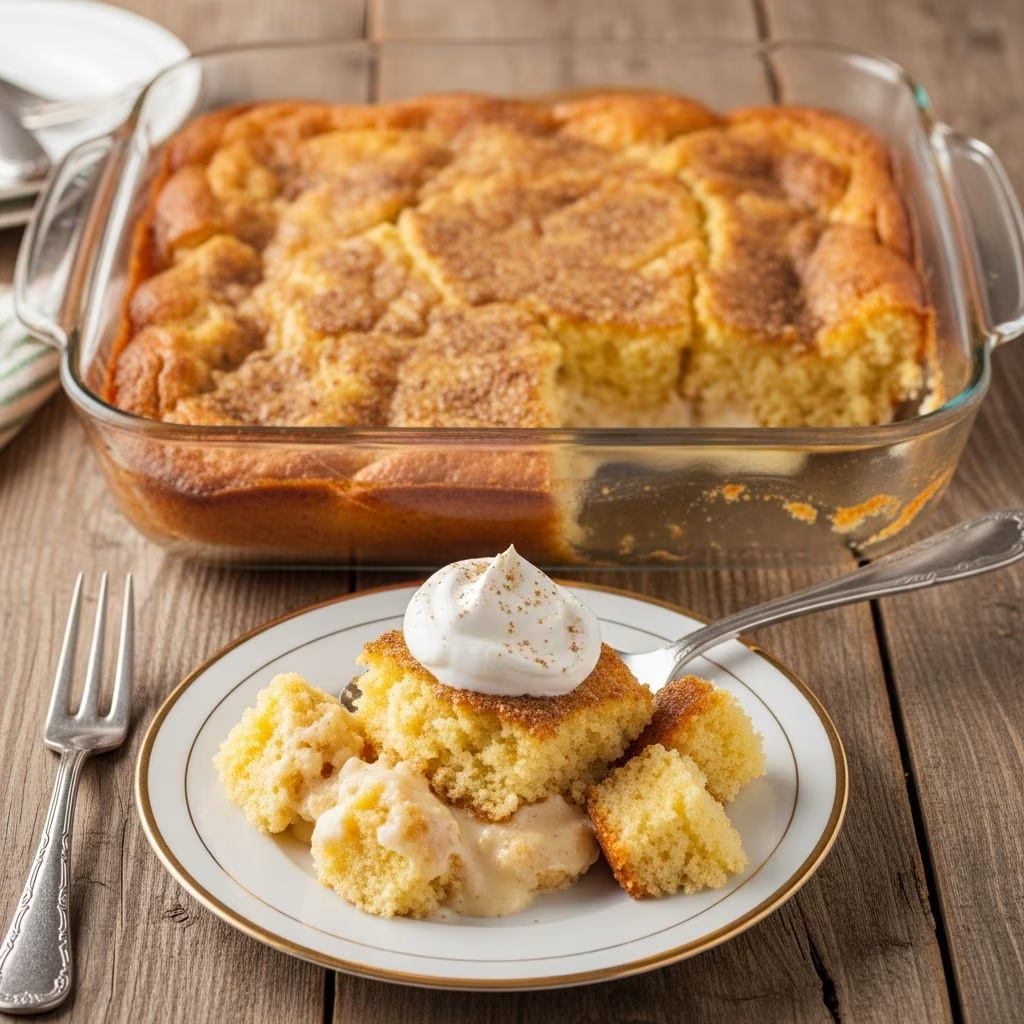
The visual cue for completion involves observing when the cake’s surface turns golden brown and the mixture sets properly. The term “set” refers to the transition from a loose, jiggly consistency to a firmer structure that holds its shape. Unlike standard cakes where a toothpick inserted into the center emerges clean, eggnog dump cake achieves doneness when it resembles custard—no longer actively quivering but still maintaining slight yield when gently pressed.
The top surface should display an even golden-brown color, indicating proper heat distribution and butter rendering. Uneven browning suggests placement inconsistencies within the oven or potential temperature variations. Rotating the baking dish halfway through cooking promotes uniform results in ovens with temperature hot spots.
Cooling and Serving Considerations
Patience during the cooling phase significantly impacts the final eating experience. Allowing the cake to cool for at least thirty minutes before serving permits the structure to set completely and flavors to meld thoroughly. Some bakers prefer chilling the cake completely before portioning, which simplifies serving and produces cleaner slices.
The finished cake can be served at room temperature or gently warmed before presenting to guests. This flexibility accommodates various serving scenarios and timing constraints during holiday entertaining.
Topping Suggestions
While the eggnog dump cake stands alone as a complete dessert, several topping options enhance the experience. Freshly whipped cream adds richness and visual appeal, while vanilla ice cream provides temperature contrast. A final sprinkle of freshly grated nutmeg adds festive presentation and aromatic enhancement.
Storage and Make-Ahead Strategies
The eggnog dump cake maintains quality when covered with plastic wrap and stored in the refrigerator for three to four days. This make-ahead capability proves invaluable during busy holiday schedules. Bakers can prepare the cake the previous day, leaving more time for final meal preparation and entertaining guests.
To reheat, place a slice in a microwave-safe container and warm at fifty percent power for thirty to forty seconds, or place covered portions in a 325-degree oven for approximately ten minutes. Both methods restore the cake’s warm, tender qualities without drying the crumb structure.
Nutritional Information and Dietary Considerations
| Nutrient | Per Serving (1/12 of cake) |
|---|---|
| Calories | 284 kcal |
| Carbohydrates | 40g |
| Protein | 5g |
| Total Fat | 12g |
| Saturated Fat | 7g |
| Sodium | 394mg |
| Sugar | 23g |
Each serving contains moderate amounts of calories and sugar, making the eggnog dump cake suitable for occasional indulgence during the holiday season. The moderate protein content provides slight nutritional substance beyond empty calories.
Troubleshooting Common Issues
Uneven Baking Results
When portions of the cake remain noticeably wetter than others, rotation during the baking process likely needed more frequent adjustment. Additionally, ensuring butter pieces distribute evenly across the surface prevents dry spots that result from uneven fat distribution.
Surface Not Browning Adequately
Insufficient browning typically indicates oven temperature inaccuracy or insufficient baking time. Using an oven thermometer confirms whether the displayed temperature matches actual internal conditions. Extending baking time by five to ten minutes allows more browning development without drying the interior structure.
Overly Dense or Heavy Texture
Excessive density suggests either insufficient eggnog or overmixing during initial preparation. Remember that the dump cake approach specifically prohibits mixing—simply layer ingredients and allow heat to perform the necessary transformations.
Frequently Asked Questions
Can I substitute the eggnog with an alternative beverage?
While other liquids could technically replace eggnog, they would eliminate the distinctive holiday flavor that defines this dessert. Milk combined with vanilla extract and nutmeg approximates eggnog characteristics, though homemade or store-bought eggnog delivers superior results.
What cake mixes work best for this recipe?
White cake mix specifically pairs with eggnog’s delicate flavors, allowing the festive ingredient to remain prominent. Chocolate or other flavored mixes compete with rather than complement eggnog’s profile.
Does the stirring prohibition apply throughout the entire process?
Yes, maintaining the “no-stir” philosophy ensures proper dump cake development. Stirring disrupts the layering process and prevents the gradual moisture absorption that creates the characteristic texture.
Can this recipe be doubled for larger gatherings?
Yes, double the ingredients and use two nine-by-thirteen-inch baking dishes. Baking time may extend slightly, so monitor for proper golden browning and set texture before removing from the oven.
How do I customize this dessert for dietary restrictions?
Gluten-free cake mixes substitute seamlessly for traditional varieties. Dairy-free eggnog alternatives and butter replacements like coconut oil adjust the recipe for specific dietary needs, though results may vary slightly.
Why This Dessert Deserves a Place in Your Holiday Menu
The eggnog dump cake represents more than simply another holiday recipe. It embodies the spirit of modern entertaining—delivering impressive results without demanding extensive culinary skills or significant time investment. This dessert welcomes new bakers while allowing experienced cooks to execute a reliable crowd-pleaser efficiently.
The minimal ingredient list reduces shopping complexity and cooking stress during busy holiday periods. The straightforward preparation method proves especially valuable when managing multiple dishes simultaneously. Most importantly, the finished cake delivers authentic holiday flavor and satisfying texture that guests consistently praise.
Whether you’re planning an intimate family gathering or hosting a larger celebration, the eggnog dump cake offers a dependable solution that bridges the gap between ambitious holiday expectations and realistic time constraints. This dessert ultimately represents the modern approach to holiday entertaining—prioritizing togetherness and enjoyment over elaborate preparation requirements.
References
- Eggnog Dump Cake — Cupcakes and Cutlery. Accessed April 2026. https://www.cupcakesandcutlery.com/eggnog-dump-cake/
- 3-Ingredient Eggnog Dump Cake — Spicy Southern Kitchen. Accessed April 2026. https://spicysouthernkitchen.com/3-ingredient-eggnog-dump-cake/