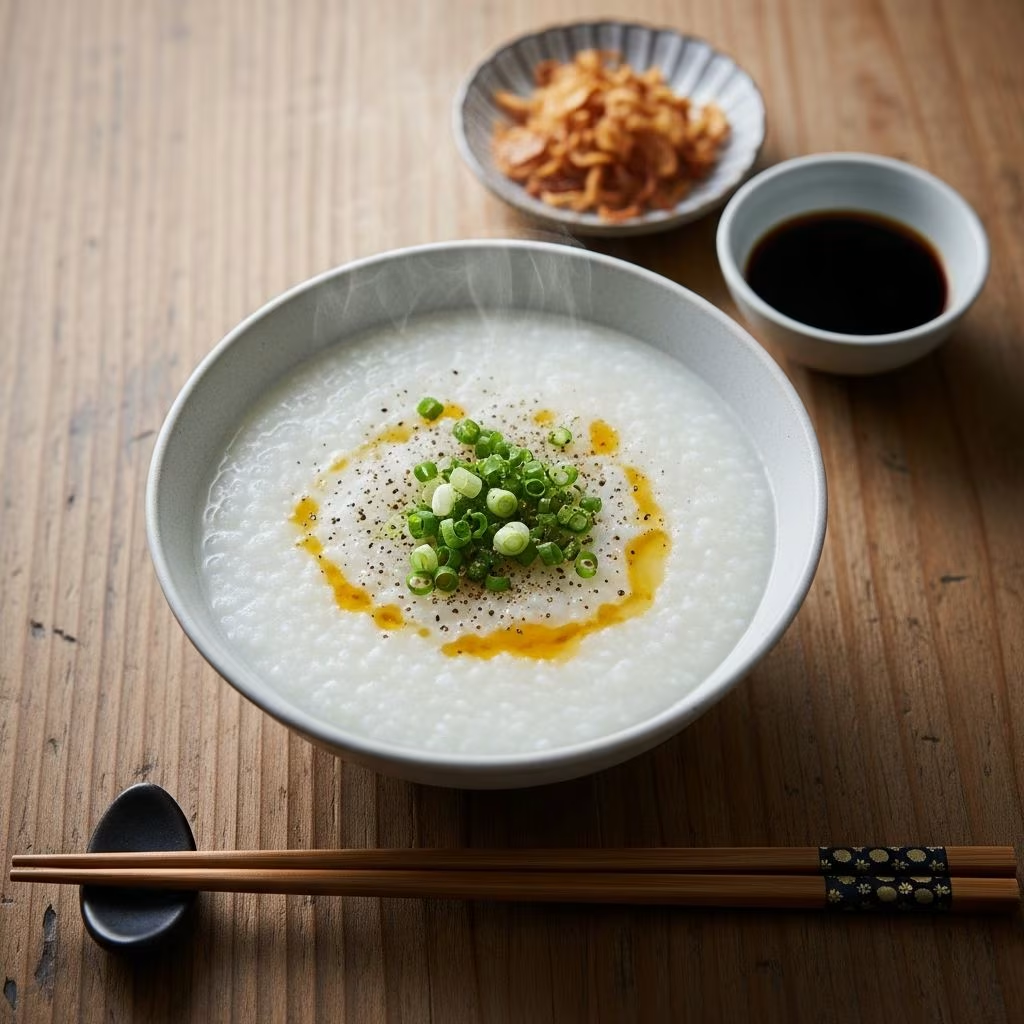
Congee, a creamy rice porridge central to Chinese cuisine, offers a soothing base for endless customizations. This straightforward stovetop version yields a velvety texture using everyday ingredients, ready in about an hour.
What Makes Congee Special?
Congee transforms simple rice into a nutrient-dense comfort food through slow simmering, where starches break down to create a glossy, porridge-like consistency. Originating from Cantonese traditions, it’s often enjoyed during illness for its easy digestibility or as a breakfast staple. The 1:8 rice-to-liquid ratio ensures the ideal balance of creaminess without heaviness.
Essential Ingredients for Perfect Congee
Gather these pantry staples for a foundational batch serving 4-6 people:
- 1 cup medium-grain white rice (like Calrose or jasmine for optimal creaminess)
- 8 cups low-sodium chicken broth or water (broth adds umami depth)
- 2-3 slices fresh ginger, peeled and thinly sliced (for aromatic warmth)
- ½ teaspoon kosher salt (adjust to taste)
- 1 teaspoon neutral oil (prevents sticking)
Pro Tip: Rinsing rice removes excess starch for cleaner flavor, while soaking softens grains for faster cooking.
Step-by-Step Stovetop Instructions
- Prep the Rice: Rinse 1 cup rice under cold water until clear, about 3-4 times. Soak in fresh water for 20-30 minutes, then drain.
- Boil the Base: In a large pot (at least 10-cup capacity), bring 8 cups broth to a rolling boil over medium-high heat. Add ginger slices, salt, and oil.
- Add Rice: Stir in soaked rice. Return to boil, then reduce to medium-low. Cover with lid slightly ajar to allow steam escape.
- Simmer Patiently: Cook 40-60 minutes, stirring every 10-15 minutes to prevent sticking. Rice will break down into a thick, glossy porridge. Add hot water if too thick.
- Rest and Adjust: Remove from heat, cover fully, and rest 10 minutes. Stir vigorously for silkiness; thin with broth if needed. Season with white pepper.
Expect small bubbles during simmering (around 200°F) for even cooking without overflow.
Instant Pot Alternative for Hands-Off Cooking
For modern convenience, use a pressure cooker:
- Add rinsed, soaked rice, broth, ginger, and salt to pot.
- High pressure for 20 minutes, natural release 30 minutes.
- Stir to emulsify; adjust consistency.
This method yields similar results with less monitoring, though stovetop offers better texture control.
Customizing Your Congee: Toppings and Mix-Ins
Congee shines with personalization. Start plain, then layer flavors.
Proteins
- Shredded chicken or pork, added midway for tenderness.
- Dried scallops or shrimp for umami (soak first).
- Sliced fish or tofu for quick-cooking options.
Vegetables and Aromatics
- Green onions, cilantro, or spinach stirred in at end.
- Carrots, peas, or mushrooms for heartiness.
Sauces and Crunch
| Category | Ideas | Flavor Profile |
|---|---|---|
| Sauces | Soy, oyster, sesame oil, chili crisp | Salty, spicy, nutty |
| Crunchy | Fried shallots, peanuts, Chinese donuts | Texture contrast |
| Rich | Century egg, pork floss, boiled egg | Umami, creamy |
Nutrition and Health Benefits
A 1-cup serving provides ~150 calories, mostly from carbs, with low fat. It’s gentle on the stomach, aiding digestion during colds. Use vegetable broth for vegan versions. Pair with proteins for balanced meals.
Common Mistakes and Fixes
- Too Thick/Thin: Adjust liquid ratio; 1:8 for thick, 1:10 for soupy. Stir in hot broth post-cook.
- Sticking: Use oil, stir frequently, lid ajar.
- Bland: Boost with ginger, salt, or toppings like mushroom powder.
- Uneven Texture: Soak rice; medium-grain varieties break down best.
Storage and Reheating Tips
Congee thickens in fridge (store up to 4 days). Reheat with added broth over low heat, stirring to restore creaminess. Freeze portions up to 1 month; thaw overnight.
Variations from Around the Kitchen
- Seafood Congee: Add shrimp or scallops in last 10 minutes.
- Veggie-Packed: Black-eyed peas, spinach for plant-based.
- Spicy Kick: Chili oil, sriracha on top.
- Minimalist White Congee: Water, salt, oil for pure baizhou style.
Frequently Asked Questions (FAQs)
Can I use brown rice?
Brown rice works but requires longer cooking (1.5-2 hours) and yields chewier texture. Stick to white for classic silkiness.
Is soaking rice necessary?
Not strictly, but it shortens cook time and improves texture. Skip and add 10-20 extra minutes.
Vegetarian or vegan options?
Yes! Use water, vegetable broth, or dashi with wakame. Top with tofu, veggies, nuts.
How do I know it’s done?
Rice grains mostly dissolved, porridge glossy and spoonable. Taste for tenderness.
Can I make it overnight?
Slow cooker on low for 6-8 hours mimics traditional methods beautifully.
Why Congee Deserves a Spot in Your Routine
Versatile, affordable, and restorative, congee adapts to any meal. Experiment with family recipes or global twists for endless variety. Its simplicity belies profound comfort.
References
- Basic Congee (Stovetop Method) — Edible Santa Barbara. 2023. https://ediblesantabarbara.com/recipes/basic-congee-stovetop-method/
- Basic Congee Recipe — Jessica Gavin. 2023-05-15. https://www.jessicagavin.com/basic-congee-recipe/
- Basic Congee Recipe — Pickled Plum. 2022-10-20. https://pickledplum.com/basic-congee-recipe/
- Basic White Congee (白粥, baizhou) — The Bittman Project. 2023. https://bittmanproject.com/recipe/basic-white-congee-%E7%99%BD%E7%B2%A5-baizhou/