Middle Eastern cuisine has captivated food enthusiasts worldwide with its sophisticated flavor profiles and accessible cooking techniques. One particularly versatile dish that embodies these qualities is the combination of seasoned ground beef with protein-rich chickpeas, topped with aromatic spice blends that transport your palate across continents. This culinary creation offers home cooks an opportunity to explore bold flavors without requiring specialized equipment or hard-to-find ingredients. Whether you’re seeking a quick weeknight dinner solution or planning to impress guests at your table, this dish adapts beautifully to various preferences and dietary modifications.
Understanding the Core Components
The foundation of this dish relies on three primary elements that work in harmony to create depth and satisfaction. The first component is ground beef, which serves as the protein anchor and delivers savory umami notes that complement the remaining ingredients. The second element comprises chickpeas, legumes that contribute both nutritional density and textural contrast. The third pillar consists of warming spices that define the regional character of this preparation.
Ground beef at a 90/10 lean-to-fat ratio provides optimal flavor without excessive greasiness, allowing the meat to absorb the spice blend thoroughly. Chickpeas, whether using canned or dried varieties, offer approximately 15 grams of protein per cooked cup, making this dish particularly appealing for those prioritizing protein intake. The aromatic spices create a flavor foundation that distinguishes this meal from standard beef preparations.
Essential Spice Profile for Authentic Flavor
The spice combination represents the soul of this dish, transforming simple ingredients into something memorable. Several key spices work synergistically to establish the Middle Eastern character:
- Cumin contributes earthy, warm notes that anchor the flavor profile
- Paprika adds subtle sweetness and a gentle smokiness
- Coriander introduces brightness and citrus-forward qualities
- Turmeric provides golden color and anti-inflammatory properties
- Ginger delivers warming spice and digestive benefits
- Cinnamon offers subtle sweetness without dominating other flavors
- Cayenne pepper introduces controlled heat that can be adjusted to preference
Za’atar, a traditional Middle Eastern spice blend combining sumac, thyme, and sesame seeds, can substitute for or complement this spice list. Creating a custom spice blend allows cooks to adjust proportions based on personal heat tolerance and flavor preferences. Many home cooks find that combining these spices in advance—before cooking—ensures even distribution throughout the dish.
Ingredient Selection and Preparation
Success begins with thoughtful ingredient selection. Ground beef should be freshly purchased rather than previously frozen when possible, as this typically yields superior texture and flavor absorption. Selecting beef with visible marbling ensures the finished dish remains moist and flavorful. For chickpeas, canned varieties offer convenience, though soaking and cooking dried chickpeas provides cost savings and superior texture control.
Fresh aromatics—garlic, ginger, and onions—should be finely minced to distribute evenly throughout the cooking process. Fresh garlic offers superior flavor compared to pre-minced alternatives, while fresh ginger root provides more nuanced heat than ground ginger powder. Yellow or white onions work equally well, though their inherent sweetness balances the spice profile beautifully.
Additional supporting ingredients include olive oil for cooking, broth for building sauce consistency, and optional tomato paste for adding depth. Fresh herbs like cilantro and parsley provide brightness and visual appeal as finishing garnishes. These elements create a complete flavor landscape that evolves throughout the cooking process.
Step-by-Step Cooking Method
Preparing the Base
Begin by heating one tablespoon of olive oil in a large skillet over medium-high heat. Once the oil shimmers, add the ground beef along with finely diced onion and minced garlic. The simultaneous cooking of these aromatics with the meat ensures flavors meld from the beginning rather than remaining separate. Break the meat into small crumbles using a wooden spoon, maintaining continuous movement to ensure even browning. This process typically requires 8-10 minutes, with complete browning indicated by the disappearance of pink coloring and evaporation of excess moisture.
Building Flavor Layers
Once the meat reaches proper browning, reduce heat to medium and add your spice blend—approximately 2.5 tablespoons of combined dry spices. Stirring continuously for 60-90 seconds allows the spices to bloom in the residual heat and fat, intensifying their flavors rather than creating a raw-spice taste. If using tomato paste, add it now and continue stirring for an additional 2-3 minutes until it darkens slightly and caramelizes against the pan bottom. This caramelization step adds concentrated depth that distinguishes restaurant-quality preparations from standard home cooking.
Creating the Sauce
Pour one cup of broth into the pan, using a wooden spoon to scrape up any browned bits clinging to the bottom—these flavorful particles contain concentrated taste compounds that should remain in the dish. The liquid should deglaze the pan completely, loosening all caramelized residue. Bring the mixture to a gentle simmer, then add your drained and rinsed chickpeas. Allow the combination to simmer for 15-20 minutes, during which the chickpeas warm through and absorb the surrounding spice flavors while the sauce reduces slightly and thickens.
Serving Suggestions and Presentation
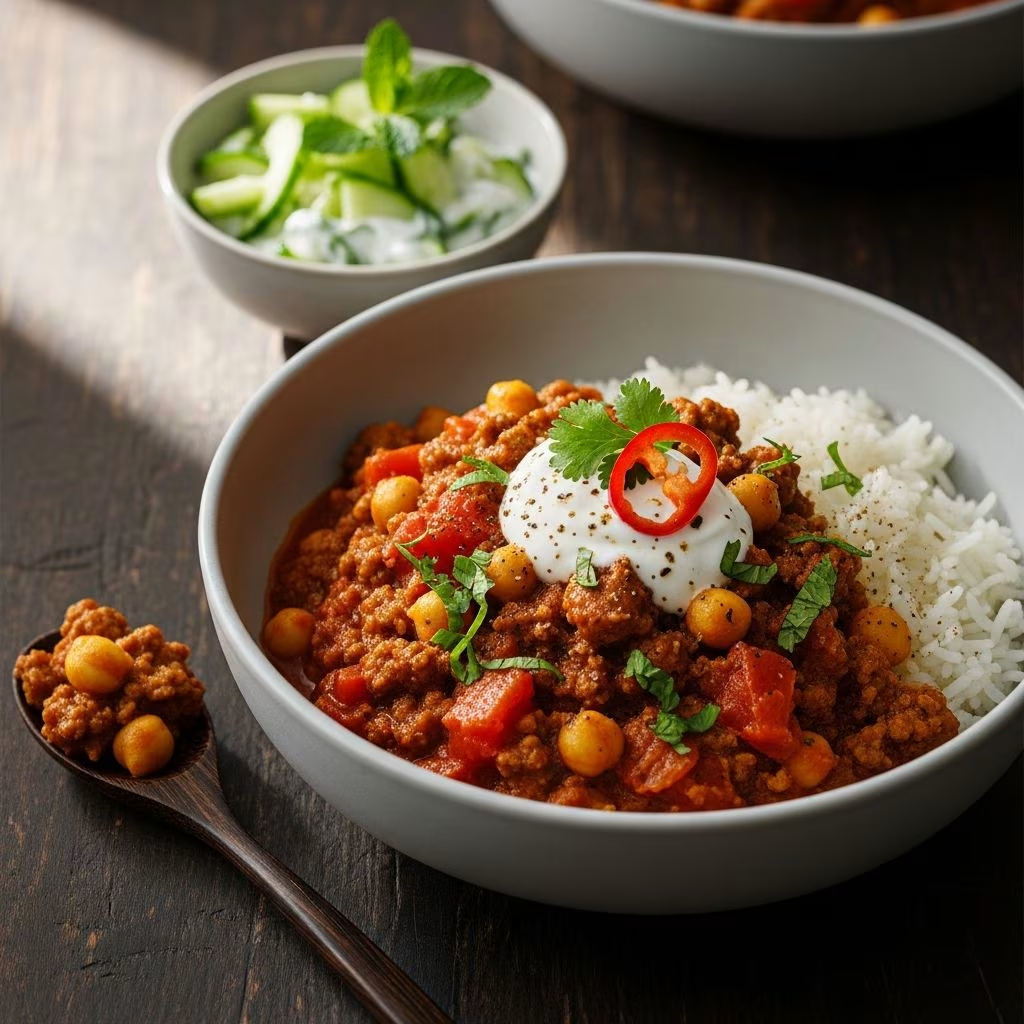
This versatile dish adapts to multiple serving styles depending on occasion and preference. The most straightforward approach involves spooning the beef and chickpea mixture over prepared rice—jasmine, basmati, or long-grain white rice all work beautifully. For a lighter option, serve over cauliflower rice or alongside roasted vegetables. Mediterranean-inspired bowls can combine the spiced beef with fresh salad components including diced tomatoes, cucumbers, red onions, and fresh herbs, topped with tahini sauce.
Fresh garnishes elevate the final presentation and add textural contrast. Chopped cilantro and parsley provide herbaceous brightness, while a light dusting of sumac adds visual interest and additional tartness. Sliced almonds or toasted pine nuts contribute welcomed crunch, and a dollop of Greek yogurt or tahini-based sauce introduces cooling creaminess that balances the warming spices.
Nutritional Profile and Health Benefits
This dish delivers substantial nutritional value beyond its satisfying flavor. Ground beef provides complete protein containing all essential amino acids, while chickpeas contribute plant-based protein and dietary fiber. A typical serving contains approximately 25-30 grams of protein, making it suitable for muscle recovery and satiety. The combination of soluble and insoluble fiber from chickpeas supports digestive health and promotes sustained energy release.
Many of the featured spices carry documented health properties. Turmeric contains curcumin, a compound studied for anti-inflammatory effects, while ginger has traditionally been used for digestive support. Cumin aids in digestion and may support nutrient absorption. The olive oil provides heart-healthy monounsaturated fats and polyphenols associated with reduced inflammation.
Customization and Dietary Modifications
Protein Alternatives
Ground lamb substitutes seamlessly for beef, offering a more traditional Middle Eastern option with deeper, more robust flavors. Ground turkey provides a leaner alternative that some cooks prefer, though it may require slightly less cooking oil to prevent drying. For plant-based adaptations, using an additional can of chickpeas or incorporating cooked lentils creates satisfying protein-forward meals without animal products.
Vegetable Inclusions
While the core recipe focuses on beef and chickpeas, incorporating vegetables enhances nutritional density and adds textural variety. Diced carrots, bell peppers, zucchini, or eggplant integrate well with the spice profile. Add heartier vegetables like carrots simultaneously with the meat, while delicate vegetables like zucchini should join during the final 5-10 minutes to maintain texture.
Heat Level Adjustment
The cayenne pepper quantity can be reduced for mild heat preferences or increased for those enjoying significant spice. Fresh diced chili peppers introduce fresh heat compared to dried spice powders. Conversely, omitting cayenne entirely creates a warming dish without aggressive heat.
Make-Ahead and Storage Considerations
This dish improves significantly when prepared in advance, as resting time allows flavors to meld and intensify. Prepare the complete recipe up to three days ahead, storing in airtight containers in the refrigerator. The flavors actually deepen through this resting period, making it an ideal candidate for meal preparation routines. Reheat gently on the stovetop with a splash of water or broth to restore proper consistency.
For freezer storage, the cooked dish maintains quality for up to three months in freezer-safe containers. Thaw overnight in the refrigerator before reheating, or reheat directly from frozen on low heat, adding extra liquid to compensate for the thawing process.
Cooking Method Variations
Pressure Cooker Adaptation
Using a pressure cooker reduces active cooking time significantly. Follow the browning and spice-blooming steps using the sauté function, then seal the lid and cook on high pressure for 8-10 minutes. The pressurized environment expedites flavor absorption while maintaining tender, properly cooked meat and chickpeas. Natural pressure release for 10 minutes ensures optimal texture.
Slow Cooker Preparation
Brown the meat and bloom the spices on the stovetop, then transfer to a slow cooker along with broth and chickpeas. Cook on low for 6-8 hours or high for 3-4 hours. This hands-off approach suits busy schedules while developing nuanced flavors through extended gentle cooking.
Frequently Asked Questions
Can this dish be made vegetarian?
Yes, omit the ground beef and increase chickpeas to two 15-ounce cans. The spice profile remains equally compelling with legumes as the primary protein. Adding mushrooms or walnuts provides textural similarity to ground meat.
How do I prevent the dish from becoming dry?
Ensure adequate broth throughout cooking, and don’t allow the mixture to simmer uncovered for extended periods. Add water in quarter-cup increments if the sauce reduces too quickly.
Can I use dried chickpeas instead of canned?
Certainly. Soak dried chickpeas overnight, cook until tender (typically 1.5-2 hours), then proceed with the recipe. This approach offers superior texture control and flavor absorption compared to canned varieties.
What rice varieties work best?
Jasmine and basmati rice complement this dish beautifully with their aromatic qualities. Long-grain white rice works equally well if you prefer neutral flavor foundations.
Is this dish naturally gluten-free?
Yes, as long as you verify that your broth and spices contain no hidden gluten. Check ingredient labels carefully, as some commercially prepared broths may contain gluten-containing additives.
Conclusion: A Versatile Culinary Solution
The combination of ground beef and chickpeas seasoned with Middle Eastern spices represents a bridge between quick weeknight cooking and more ambitious culinary exploration. The straightforward ingredient list and accessible techniques make this preparation approachable for cooks of all skill levels, while the depth of flavor satisfies even experienced palates. Whether served over rice, in bowls with fresh vegetables, or as a filling for wraps, this adaptable dish proves that memorable meals needn’t require complicated procedures or exotic ingredients. The balance of protein, fiber, and aromatic spices creates a truly satisfying eating experience that improves with time, making it an excellent addition to any home cook’s rotating meal repertoire.
References
- Moroccan Beef And Chickpeas (Harira) Recipe — Cuisine Fiend. Accessed April 2026. https://www.cuisinefiend.com/1089/moroccan-beef-and-chickpeas
- Moroccan Inspired Ground Beef Stew — My Life In An Apron. Accessed April 2026. https://mylifeinanaprn.com/moroccan-inspired-ground-beef-stew/
- Middle Eastern Bowls with Spiced Beef — Flavorful Eats. Accessed April 2026. https://flavorfuleats.com/middle-eastern-bowls-spiced-beef/
- U.S. Department of Agriculture Nutrient Database — USDA. https://fdc.nal.usda.gov/