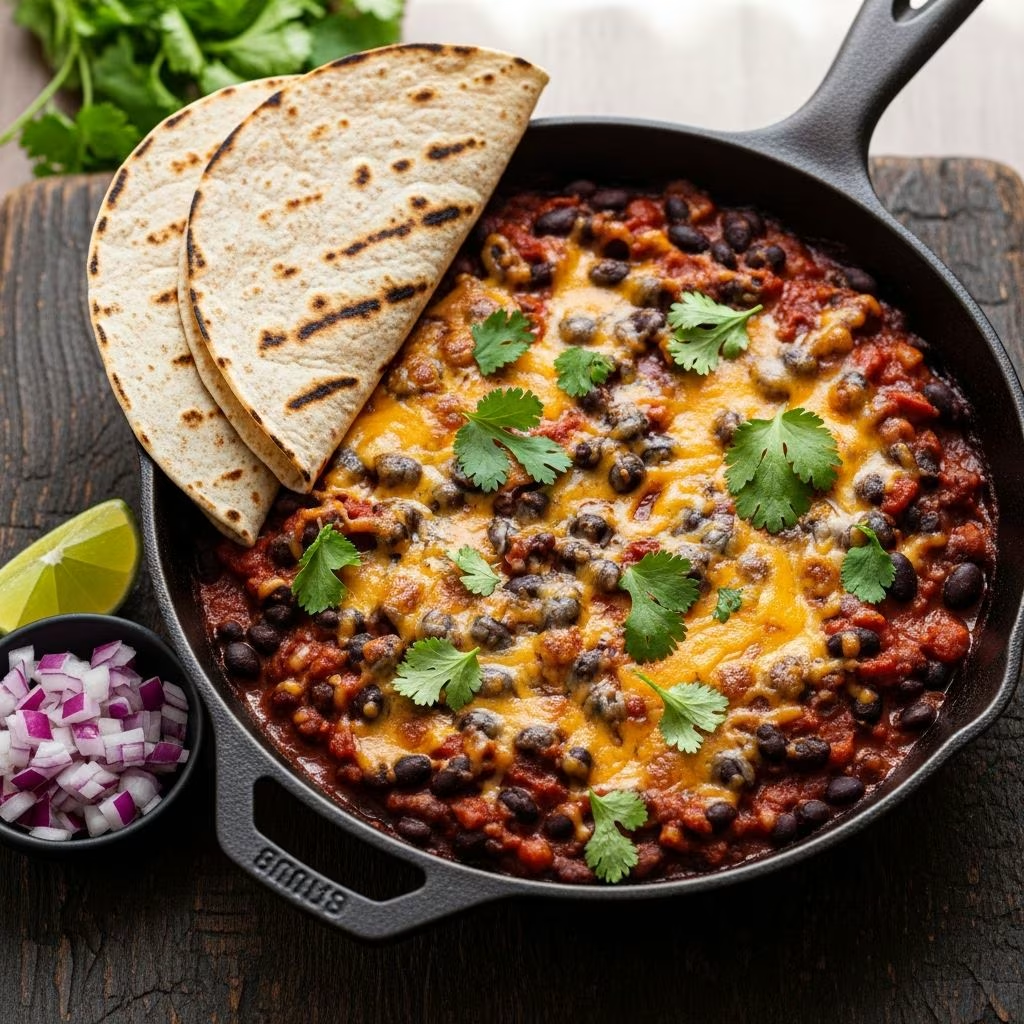
Finding nutritious meals that come together quickly while remaining deeply satisfying presents a genuine challenge for busy home cooks. The black bean and cheese skillet addresses this dilemma elegantly, combining humble pantry ingredients with aromatic spices to create a dish that feels indulgent while delivering substantial nutritional benefits. This one-pan preparation transforms canned beans, tomato paste, and melted cheese into a warming, flavorful meal that serves equally well for midweek dinners or casual entertaining.
Why This Recipe Deserves a Permanent Place in Your Rotation
Black beans stand out as nutritional powerhouses, delivering approximately 15 grams of protein and 15 grams of fiber per cooked cup, making them an exceptional choice for vegetarian and vegan meal planning. Their mild, slightly earthy flavor pairs remarkably well with robust spice profiles and melted cheeses, creating complex taste experiences without requiring extensive ingredient lists or advanced cooking techniques. The efficiency of this preparation—from ingredient assembly to table service in roughly twenty minutes—makes it particularly valuable for home cooks balancing multiple commitments.
Beyond practical advantages, this dish offers genuine nutritional depth. The combination of beans, tomato products, and aromatic vegetables creates a naturally lower-calorie meal while delivering substantial satiety through protein and fiber content. Studies demonstrate that plant-based proteins combined with whole food sources like beans support digestive health and sustained energy levels throughout the day.
Understanding the Flavor Foundation
The aromatic base of this dish relies on several key components working in concert. Olive oil carries and develops the flavor compounds present in garlic, creating a fragrant foundation that perfumes the entire skillet. Smoked paprika introduces gentle warmth and subtle complexity without overwhelming heat, while ground cumin adds earthiness and depth characteristic of Latin American cuisine. Red pepper flakes provide adjustable heat, allowing cooks to calibrate the dish’s intensity according to personal preference or dietary restrictions of those being served.
Tomato paste functions as both flavoring agent and binding element, its concentrated umami compounds enriching the overall taste profile while its natural acidity balances the richness of melted cheese. This combination of spices and aromatics creates a flavor foundation so distinctive that the dish tastes considerably more involved than its straightforward preparation actually requires.
Building the Dish: A Step-by-Step Approach
Begin by preheating your oven to 475°F, allowing it to reach optimal temperature while you prepare the remaining components. Select a 10-inch oven-safe skillet—cast iron works particularly well here, distributing heat evenly and contributing subtle mineral notes to the finished dish. The skillet’s size matters more than material; it should be large enough to distribute ingredients in an even layer while remaining manageable for stovetop manipulation.
Heat three tablespoons of extra-virgin olive oil over medium-high heat until it shimmers slightly. Add five peeled and sliced garlic cloves, stirring frequently to ensure even browning. This crucial minute of cooking allows the garlic’s raw sharpness to mellow into sweet, toasted notes. Watch carefully—garlic transitions rapidly from golden to burnt, and scorched garlic introduces unpleasant bitterness that’s difficult to mask.
Once garlic achieves light golden coloration, introduce a quarter cup of tomato paste along with one and one-half teaspoons of smoked paprika, one teaspoon of ground cumin, and one-quarter teaspoon of red pepper flakes. Stir this mixture continuously for approximately thirty seconds, allowing the spices to bloom in the hot oil. This brief cooking time activates essential oils within the spices, dramatically intensifying their aromatic presence without allowing them to scorch.
Add two drained and rinsed 14-ounce cans of black beans along with one-half cup of boiling water, stirring well to combine all components. Season generously with kosher salt and fresh black pepper, tasting as you go to ensure proper seasoning. The beans and water should create a slightly saucy mixture—neither thick paste nor thin soup, but rather a cohesive preparation that coats the beans evenly.
Top this mixture with one and one-half cups of grated cheese, distributing it as evenly as possible across the surface. Transfer the skillet to the preheated oven and bake for five to ten minutes, until the cheese melts completely and begins showing light browning at the edges. Some prefer additional browning for textural contrast; simply transfer the skillet under the broiler for one to two minutes if desired, watching carefully to prevent burning.
Cheese Selection and Substitution Strategies
Traditional recipes call for sharp Cheddar, which provides excellent melting properties and assertive flavor that complements the dish’s spice profile. Manchego offers a worthy alternative, delivering slightly nuttier undertones while maintaining reliable melting characteristics. Monterey Jack brings subtle creaminess without challenging the existing flavor balance, while Pepper Jack introduces additional heat—appropriate if you prefer amplified spiciness but potentially overwhelming in other contexts.
Consider combining multiple cheeses to create layered complexity: pairing sharp Cheddar with creamy Monterey Jack, for instance, delivers both bite and smoothness. Avoid ultra-soft cheeses like fresh mozzarella or goat cheese, which won’t achieve the desired melted consistency. Similarly, hard aged cheeses like Parmesan contribute unpleasant graininess unless specifically crumbled over the finished dish rather than incorporated throughout.
Cheese Comparison Table
| Cheese Type | Melting Quality | Flavor Profile | Best Use |
|---|---|---|---|
| Sharp Cheddar | Excellent | Bold, tangy | Primary cheese |
| Manchego | Very Good | Nutty, slightly sweet | Primary cheese |
| Monterey Jack | Excellent | Mild, creamy | Blend with sharper cheeses |
| Pepper Jack | Excellent | Mild with heat | For spice-lovers |
Customization and Flavor Amplification
While the basic formula creates an excellent dish, intelligent modifications allow personalization according to available ingredients and taste preferences. Sautéed onions and jalapeños add textural contrast and fresh heat that complements the deeper spice notes. Chipotles in adobo sauce—roughly two tablespoons stirred in with the other spices—introduce smoky complexity and gentle heat that distinguishes the dish from standard preparations.
Fresh cilantro scattered over the finished dish immediately before serving brightens the overall impression, though those with genetic aversions to cilantro’s soapy flavor should certainly omit it. A squeeze of fresh lime juice just before eating adds necessary acidity and cuts through the richness of melted cheese. Diced jalapeños positioned on top after cheese melts provide textural interest and adjustable heat.
For those preferring reduced spiciness, simply omit the red pepper flakes entirely or reduce them to one-eighth teaspoon. The smoked paprika can similarly be reduced if its intensity seems overwhelming. Conversely, hot sauce drizzled over individual portions allows diners to self-regulate heat levels without compromising the underlying dish.
Serving Suggestions and Meal Composition
While entirely satisfying on its own, this skillet achieves greater versatility when paired thoughtfully with complementary components. Steamed white or cilantro-lime rice provides neutral backdrop that soaks up the bean mixture’s flavors while adding textural variety. Warm flour or corn tortillas offer another dimension, allowing diners to build custom combinations according to preference.
Fresh accompaniments amplify the dish’s appeal considerably. A crisp green salad dressed with lime vinaigrette provides textural contrast and bright acidity that cuts through richness. Sliced radishes offer peppery crunch, while crispy tortilla chips scattered over individual portions add satisfying textural elements. Pickled jalapeño slices contribute sharp acidity and adjustable heat without requiring additional cooking.
For complete meal service, consider arranging accompaniments in small bowls, allowing diners to customize their portions. Sour cream or Mexican crema offers cooling richness, while fresh salsa fresca adds bright freshness. Avocado slices or guacamole introduce healthy fats and creamy texture that contrast beautifully with the warm, spiced bean mixture.
Nutritional Considerations and Health Benefits
Black beans deliver comprehensive nutritional profiles supporting various health objectives. Their substantial fiber content promotes digestive health and supports stable blood glucose management, making them particularly valuable for those monitoring metabolic function. The protein content makes them excellent alternatives to meat-based preparations, especially for vegetarians and vegans seeking complete amino acid profiles when combined with whole grains or legume-based side dishes.
Tomato products contribute lycopene, a powerful antioxidant compound whose bioavailability actually increases through cooking and fat exposure—exactly the processing occurring in this recipe. The olive oil provides heart-healthy monounsaturated fats while enhancing nutrient absorption, particularly of fat-soluble vitamins and beneficial phytonutrients present throughout the dish.
While cheese adds saturated fat and sodium, moderate portions contribute calcium and protein while their inclusion increases meal satisfaction and palatability compared to bean preparations without dairy. This balance between nutritional benefits and realistic enjoyment creates sustainable eating patterns more likely to persist than austere, unpalatable alternatives.
Storage and Make-Ahead Strategies
The bean mixture (before adding cheese and baking) stores beautifully in refrigeration for up to four days, making this recipe ideal for batch preparation. Simply assemble components through the bean-adding stage, cool completely, then refrigerate in airtight containers. When ready to serve, transfer to your baking skillet, add fresh cheese, and bake as directed—adding approximately two minutes to the cooking time to account for the cold starting temperature.
This make-ahead flexibility transforms the recipe into an efficient meal-prep strategy for busy weeks. Prepare double batches when time permits, portioning cooled mixture into individual baking dishes or a large shallow pan. Guests appreciate quick, personalized portions while the main cooking labor occurs during less busy periods.
Frequently Asked Questions
Can this recipe be prepared on the stovetop without an oven?
While the baked version creates superior melting and browning, you may finish melting cheese over low heat without baking. The textural contrast and visual appeal diminish somewhat, but the fundamental flavors remain exceptional. Cover the skillet partially to trap heat and prevent over-evaporation while the cheese melts completely.
What if I don’t have an oven-safe skillet?
Transfer the bean mixture to a baking dish after completing the stovetop steps, then distribute cheese evenly and proceed with baking as directed. Slightly increase oven time by approximately two minutes to account for the different heat distribution characteristics of ceramic or glass baking vessels.
How can I make this dish vegan?
Substitute nutritional yeast mixed with bread crumbs for traditional cheese, or select from commercially available vegan cheeses specifically formulated for melting. The fundamental spice composition and bean base remain entirely plant-based already, making this adaptation straightforward.
Does this recipe freeze well?
The cooled bean mixture (pre-cheese) freezes successfully for up to three months. Thaw in refrigeration overnight before baking with fresh cheese. Pre-baked and cheese-topped portions freeze less successfully, as cheese textures deteriorate through freezing and reheating cycles.
References
- Composition of Foods Raw, Processed, Prepared USDA Food Data Central — U.S. Department of Agriculture. 2021. https://fdc.nal.usda.gov/
- Lycopene and Human Health — National Library of Medicine, National Center for Biotechnology Information. 2015. https://pubmed.ncbi.nlm.nih.gov/