Introduction to Pecan-Based Pesto
Traditional pesto recipes have graced tables around the world for centuries, particularly in Mediterranean cuisine. However, regional variations have given rise to unique interpretations that celebrate local ingredients and culinary traditions. One such variation involves substituting the conventional pine nuts with pecans, a staple ingredient in Southern American cooking. This adaptation not only provides a more accessible and budget-friendly alternative but also introduces a distinctive depth of flavor that transforms the classic sauce into something entirely new.
The beauty of pecan-based pesto lies in its versatility and approachability. Whether you’re a seasoned cook or a kitchen novice, this straightforward recipe can be mastered in mere minutes. The resulting sauce offers a robust, earthy character that complements countless dishes while maintaining the fresh, herbaceous qualities that make pesto so beloved.
Understanding the Core Components
Every successful pesto begins with understanding its fundamental building blocks. Each ingredient plays a critical role in developing the final flavor profile and texture of the sauce. By selecting quality components and understanding how they interact, you can elevate your homemade pesto to restaurant-quality results.
Fresh Basil: The Foundation
Fresh basil serves as the primary flavor driver in this sauce. Unlike dried basil, which becomes muted and bitter when processed, fresh basil leaves deliver a vibrant, peppery complexity with subtle anise notes. The ideal quantity ranges from two to five cups depending on how densely packed the leaves are and your personal preference for basil intensity.
Proper basil selection and preparation significantly impact your final product. Choose leaves that are bright green without any browning or wilting. Before processing, wash the basil gently and pat it thoroughly dry with paper towels or a clean kitchen cloth. Remove any particularly thick, woody stems while leaving tender smaller stems intact, as they contribute valuable flavor and won’t be noticeable once blended.
Pecans: The Nutty Foundation
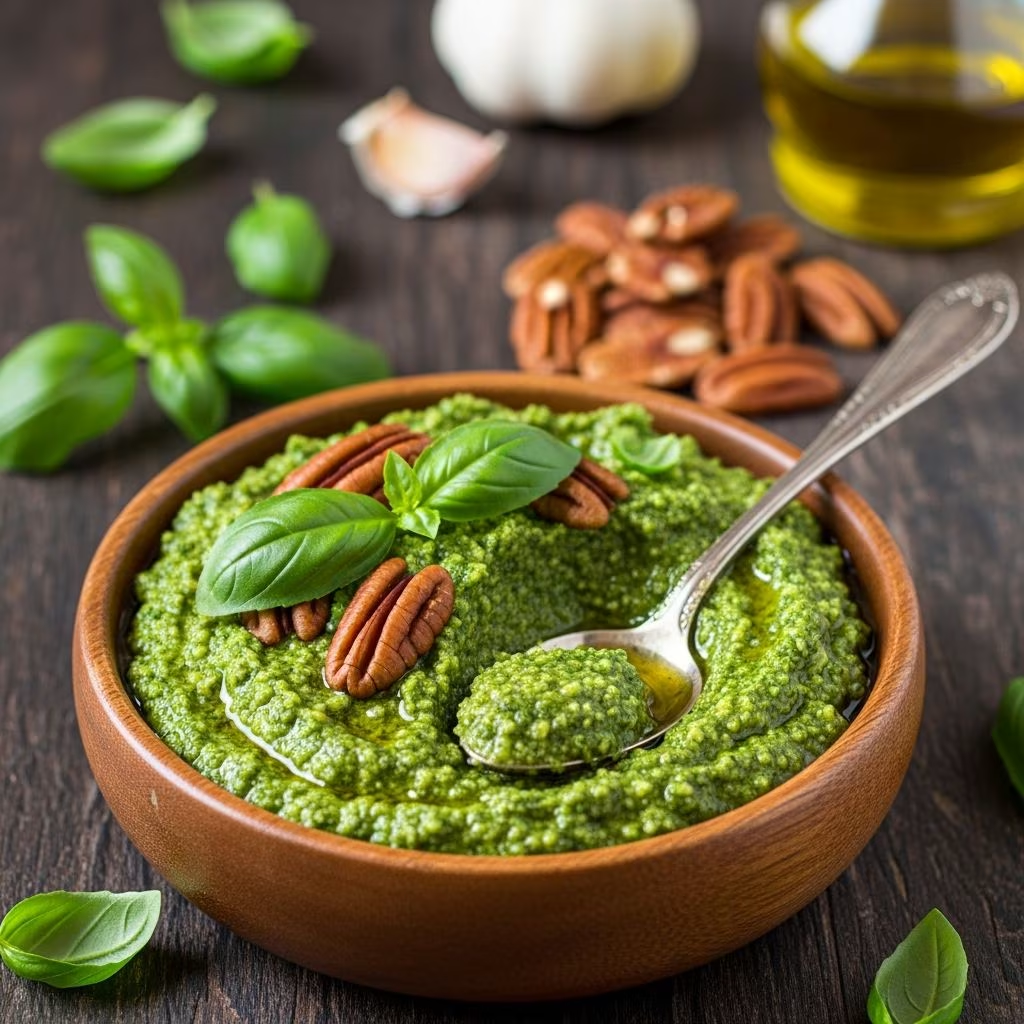
Pecans replace the traditionally used pine nuts in this Southern-inspired variation. These native American tree nuts provide a rich, buttery flavor with subtle sweetness that complements basil beautifully. A typical recipe calls for one-half to one full cup of pecan pieces.
The preparation method for pecans matters significantly. Lightly toasting them before use develops their natural oils and intensifies their flavor profile. Spread pecans in a single layer on a baking sheet and roast at 350 degrees Fahrenheit for seven to nine minutes until fragrant but not burned. This brief toasting transforms the nuts from mild to remarkably aromatic and flavorful.
Cheese: Building Richness and Umami
Hard Italian cheeses contribute savory depth and a pleasant granular texture to pesto. Both Parmesan-Reggiano and Romano cheese work effectively, though Parmesan remains more traditional. Plan to use approximately one-half cup of freshly grated cheese. The distinction matters: freshly grated cheese melts smoothly into the sauce, while pre-packaged grated varieties often contain anti-caking agents that create a grainy, undesirable texture.
Olive Oil: The Binding Agent
Extra virgin olive oil serves a dual purpose: it acts as a binder that pulls all ingredients together while contributing its own subtle fruity or peppery notes. The oil quantity typically ranges from one-half to one and one-half cups, depending on desired consistency. Higher-quality olive oil stored in opaque containers away from heat preserves its fresh, herbaceous character better than lower-grade alternatives.
Supporting Cast: Garlic, Salt, and Pepper
Garlic cloves add pungent, savory notes that balance the basil’s sweetness. One to three cloves typically suffice; fresh cloves surpass pre-minced varieties. Kosher or sea salt enhances all flavors while black pepper adds subtle heat. Some recipes incorporate monosodium glutamate (MSG) to amplify savory dimensions, though this remains optional based on personal preference.
Step-by-Step Preparation Method
Creating exceptional pesto requires attention to technique as much as ingredient quality. The process involves specific sequencing designed to achieve optimal texture and flavor distribution.
Preparation Phase
Begin by toasting your pecans as described previously, allowing them to cool slightly before use. Simultaneously, wash and thoroughly dry your fresh basil leaves, removing any thick stems that might create woody texture in the final product. Gather all remaining ingredients and arrange them near your food processor for efficient assembly.
Initial Processing
Add shelled pecans, minced garlic cloves, and grated cheese to your food processor bowl. Pulse the mixture several times until it achieves a crumbly, uniform consistency. This preliminary step breaks down the harder ingredients before introducing the delicate basil, preventing over-processing that might damage the basil’s fresh character.
Incorporating Basil and Seasonings
Add the prepared basil leaves along with your chosen salt measurement and freshly ground black pepper to the processor. Pulse briefly to incorporate the basil without creating a uniform paste. At this stage, the mixture should appear somewhat chunky with visible basil pieces distributed throughout.
Olive Oil Integration
With the food processor running at low speed, slowly pour the olive oil through the feed tube in a thin, steady stream. This gradual addition prevents the oil from overwhelming the other ingredients and helps create an emulsion. Pause occasionally to scrape the processor bowl’s sides with a soft spatula, ensuring even blending.
Texture Achievement
The ideal pesto maintains some graininess and visible separation rather than becoming a completely smooth paste. This textural quality indicates proper preparation and ensures interesting mouthfeel when the sauce coats pasta or other foods. Taste and adjust salt and pepper as desired, adding more olive oil if the consistency seems too thick.
Ingredient Substitution and Adaptation
While the basic formula remains consistent, creative cooks often adapt recipes based on ingredient availability or dietary preferences.
| Original Ingredient | Alternative Options | Ratio Consideration |
|---|---|---|
| Pecans | Walnuts, almonds, or sunflower seeds | Use equal quantities; adjust toasting time as needed |
| Fresh Basil | Half basil and half fresh spinach | Maintains color while reducing basil cost |
| Parmesan Cheese | Romano, aged cheddar, or nutritional yeast | Maintains umami while accommodating dietary needs |
| Olive Oil | Grapeseed or avocado oil | Use same quantity; slightly different flavor profile |
Storage and Preservation Techniques
Properly storing homemade pesto extends its usefulness and maintains its quality. Refrigeration in an airtight container preserves the sauce for up to two weeks. However, freezing offers a more extended storage solution, allowing you to preserve batches for several months.
For freezing, portion the pesto into ice cube trays, then transfer the frozen cubes to labeled freezer bags. This method allows you to thaw only the quantity needed for individual meals. Alternatively, freeze the pesto in small jars, leaving adequate headspace for expansion. Some cooks prefer adding slightly more olive oil before freezing, creating a protective layer that prevents oxidation and discoloration.
Culinary Applications and Serving Suggestions
The versatility of basil pecan pesto extends far beyond traditional pasta dishes. This flavorful sauce enhances numerous preparations across various cuisines.
- Toss with hot or cold pasta, allowing the heat to slightly warm and slightly meld the pesto into the noodles
- Spread on toasted bread slices and top with fresh tomatoes for a sophisticated appetizer
- Dollop onto grilled chicken breast to add moisture and herbaceous flavor
- Mix into cream cheese for a unique sandwich or cracker spread
- Swirl into soups just before serving for color and flavor contrast
- Use as a marinade base for vegetables before grilling
- Combine with mayonnaise or Greek yogurt to create a flavorful salad dressing
- Top crispy flatbreads or focaccia alongside cheese and cured meats
- Stir into grain bowls as a finishing element
- Use as a dipping sauce for roasted vegetables or breadsticks
Flavor Development and Customization
While the classic formula provides an excellent starting point, understanding flavor balance allows for personal customization. The interplay between basil’s peppery notes, pecans’ buttery richness, cheese’s savory umami, and garlic’s pungency creates a complex flavor landscape.
Those preferring less aggressive garlic notes can reduce the quantity to a single clove or even use roasted garlic for milder sweetness. Conversely, garlic enthusiasts might increase to three or four cloves. Adding optional red pepper flakes introduces gentle heat that complements the other components without overwhelming them.
Frequently Asked Questions
How can I prevent my pesto from becoming too smooth?
Avoid over-processing by using the pulse function rather than continuous blending. Stop when the mixture still shows visible texture and separation. Remember that pesto should maintain some graininess for optimal mouthfeel.
Why did my basil turn brown?
Oxidation causes browning, typically resulting from excessive processing or exposure to air. Use the pulse function sparingly, and enjoy your pesto relatively soon after preparation. Adding a squeeze of lemon juice can help prevent oxidation.
Can I make pesto without a food processor?
Yes, though the process requires more effort. Use a mortar and pestle, working in batches to break down ingredients gradually. Alternatively, finely mince ingredients by hand and combine thoroughly, though the texture will differ from food processor versions.
What’s the best way to thaw frozen pesto?
Transfer frozen pesto to the refrigerator several hours before use, allowing it to thaw gradually. Alternatively, add frozen pesto directly to hot pasta, where residual heat will gently warm it throughout.
How does pecan pesto compare nutritionally to pine nut pesto?
Both contain similar caloric and fat content, though pecans offer slightly different micronutrient profiles. Pecans provide manganese and copper, supporting bone health and antioxidant function. Both varieties offer healthy monounsaturated fats and satisfy as part of balanced meals.
Conclusion: Embracing Regional Variations
Basil pecan pesto represents the evolution of culinary traditions, honoring classical techniques while embracing regional ingredients. This Southern adaptation transforms a familiar sauce into something distinctly personal while remaining accessible to home cooks of all skill levels. With quality ingredients and proper technique, you can create restaurant-quality pesto in your own kitchen, ready to elevate simple ingredients into memorable meals.
References
- Pecan Basil Pesto Recipe — The Kitchen Paper. 2024. https://thekitchenpaper.com/pecan-basil-pesto/
- Homemade Basil Pecan Pesto — Sarah’s Cucina Bella. 2019. https://sarahscucinabella.com/2019/07/24/homemade-basil-pecan-pesto/
- Easy Pecan Pesto (Pesto without Pine Nuts) — Street Smart Nutrition. 2024. https://streetsmartnutrition.com/homemade-basil-pecan-pesto-without-pine-nuts/
- Basil Pecan Pesto — VegWeb.com. 2024. https://vegweb.com/recipes/basil-pecan-pesto
- Pecan Pesto — In the Curious Kitchen. 2024. https://inthecuriouskitchen.com/blogs/recipes/pecan-pesto