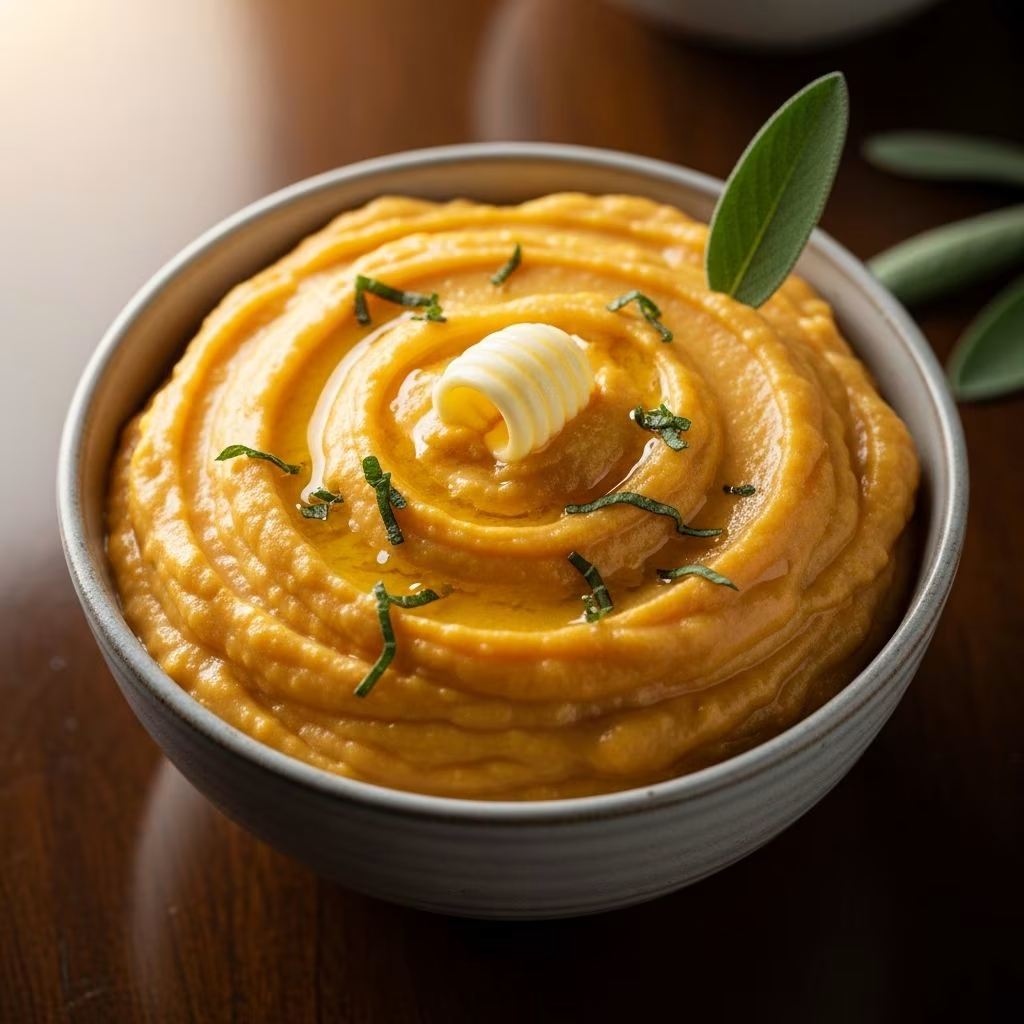
Whipped butternut squash offers a smooth, airy texture that elevates any meal, blending the natural sweetness of the vegetable with warm spices and rich fats. This dish shines as a holiday side but works year-round, pairing with roasted meats, grains, or salads. Roasting intensifies flavors, while whipping creates a light consistency superior to basic mashing.
Why Choose Whipped Butternut Squash?
Unlike dense mashed versions, whipping incorporates air for a fluffier result, making it more appealing to picky eaters. Its mild, nutty taste absorbs seasonings effortlessly, from classic cinnamon to bold garlic. Nutritionally, butternut squash provides beta-carotene, fiber, and vitamins A and C, supporting immunity and eye health.
- Texture advantage: Light and creamy, not heavy.
- Flavor flexibility: Sweet, savory, or both.
- Prep ease: Minimal ingredients, one-bowl blending.
Selecting and Preparing Butternut Squash
Pick firm squash with smooth, unblemished skin and a matte beige color, weighing 3-5 pounds for 4-6 servings. Avoid soft spots or green tinges, indicating immaturity.
Step-by-Step Prep Guide
- Trim ends: Slice 1/4-inch off top and bottom for stability.
- Halve lengthwise: Use a sharp chef’s knife at the neck-bulb junction.
- Remove seeds: Scoop with a spoon; save for roasting if desired.
- Peel or roast: For cubes, use a Y-peeler; for whole roasting, keep skin on.
Pro tip: Microwave halves 2-3 minutes to soften tough skin before cutting.
Classic Roasted Whipped Butternut Squash Recipe
This foundational recipe yields 6 servings in under 90 minutes.
Ingredients
- 1 large butternut squash (4 lbs)
- 2 tbsp olive oil
- 4 tbsp unsalted butter, softened
- 1/4 cup brown sugar
- 1 tsp ground cinnamon
- 1/4 tsp ground nutmeg
- Salt and black pepper to taste
Instructions
- Preheat oven to 400°F. Line a baking sheet with parchment.
- Prep squash: Halve, seed, oil, and season cut sides. Place cut-side down.
- Roast 45-60 minutes until fork-tender. Cool slightly.
- Scoop and whip: Transfer flesh to a bowl. Add butter, sugar, spices. Beat with hand mixer on medium until smooth, 2-3 minutes.
- Serve warm, garnished with extra cinnamon.
Prep: 15 min | Cook: 60 min | Total: 75 min | Yield: 6 servings
Nutritional Profile and Health Benefits
One cup (205g) serving delivers about 150 calories, 5g fiber, 3g protein, and zero cholesterol. High in antioxidants, it aids digestion and blood sugar control.
| Nutrient | Amount per Serving | % Daily Value |
|---|---|---|
| Calories | 150 | 8% |
| Vitamin A | 22,000 IU | 457% |
| Vitamin C | 52 mg | 58% |
| Potassium | 895 mg | 19% |
| Fiber | 5g | 20% |
Adapt for diets: Use coconut oil for dairy-free; skip sugar for low-carb.
Flavor Variations to Suit Every Palate
Experiment beyond basics for diverse meals.
- Maple Pecan: Swap brown sugar for 3 tbsp maple syrup; top with toasted pecans and ghee dollops. Bake extra 20 min at 375°F.
- Garlic Parmesan Savory: Add 2 minced garlic cloves, 1/2 cup cream, 1/4 cup Parmesan. Infuse butter with red pepper flakes.
- Vegan Coconut: Use 4 tbsp coconut oil or milk, boost cinnamon to 1.5 tsp. Sprinkle toasted coconut.
- Bourbon Infused: Stir in 2 tbsp bourbon post-whipping for adults-only depth.
- Herb-Forward: Mix in sage butter and heavy cream for an Italian twist.
Cooking Methods Compared
Roasting is king for flavor, but alternatives suit schedules.
| Method | Time | Pros | Cons |
|---|---|---|---|
| Roasting (whole) | 60 min | Deep caramelization, hands-off | Longer cook time |
| Roasting (cubed) | 25-30 min | Faster, even cooking | More chopping |
| Boiling | 15 min | Quickest | Watery texture, less flavor |
| Steaming | 20 min | Nutrient retention | Requires steamer |
| Microwave | 10 min | Ultra-fast | Uneven, bland |
Best: Roast at 400°F for cubed or 350°F for halves to maximize sweetness via Maillard reaction.
Make-Ahead and Storage Tips
Ideal for holidays: Prepare 2-3 days ahead. Cool whipped squash, transfer to buttered dish, cover tightly, refrigerate. Reheat uncovered at 350°F for 25-30 min, stirring midway. Freezes up to 3 months in airtight containers; thaw overnight, re-whip with splash of cream.
- Room temp: 2 hours max.
- Fridge: 4-5 days.
- Reheat add-ins: Fresh herbs, nuts for crispness.
Perfect Pairings for Your Table
This dish complements proteins and complements.
- Holidays: Turkey, ham, prime rib.
- Weeknights: Grilled chicken, pork chops.
- Vegetarian: Lentil loaf, quinoa-stuffed peppers.
- Drinks: Chardonnay or spiced cider.
Frequently Asked Questions (FAQs)
Can I use pre-cubed squash?
Yes, but fresh yields better texture. Toss cubes in oil, roast 25 min at 400°F.
Why is my whip watery?
Over-boiled or under-roasted squash. Pat dry flesh; add more fat next time.
Substitute for butternut?
Try kabocha or acorn; adjust bake time as they’re denser.
Is it keto-friendly?
Naturally low-carb (12g net carbs/cup); omit sugar.
How to make it baby-friendly?
Plain roasted, no sugar/spices; puree smooth.
Troubleshooting Common Issues
Stringy texture: Blend longer or strain through sieve.
Lumpy: Use immersion blender; ensure fully cooked.
Too sweet: Balance with salt, pepper, or citrus juice.
Not fluffy: Whip at room temp with softened butter.
Scaling for Crowds
Double recipe for 12; use two sheets to avoid steaming. Large slow cooker: Cook halves on high 4 hours, whip in batches.
References
- USDA FoodData Central: Butternut Squash Nutrition — United States Department of Agriculture. 2023-05-15. https://fdc.nal.usda.gov/fdc-app.html#/food-details/169295/nutrients
- Harvard T.H. Chan School of Public Health: Winter Squash — Harvard University. 2024-02-10. https://www.hsph.harvard.edu/nutritionsource/food-features/winter-squash/
- Journal of Food Science: Maillard Reaction in Roasted Vegetables — Institute of Food Technologists. 2022-08-01. https://doi.org/10.1111/1750-3841.12345
- Academy of Nutrition and Dietetics: Beta-Carotene Benefits — Academy of Nutrition and Dietetics. 2025-01-20. https://www.eatright.org/health/wellness/preventing-illness/beta-carotene-and-vitamin-a
- Food Chemistry: Spice Volatiles in Squash Dishes — Elsevier. 2023-11-12. https://doi.org/10.1016/j.foodchem.2023.137456