Introduction to Working with Puff Pastry
Puff pastry represents one of the most versatile foundations for creating impressive desserts with minimal effort. When combined with fresh apples and warm spices, this delicate dough transforms into elegant treats suitable for both casual gatherings and formal occasions. The beauty of puff pastry lies in its ability to puff dramatically during baking, creating layers of golden, crispy texture that contrasts beautifully with soft apple fillings. Modern home bakers benefit tremendously from store-bought puff pastry options, which eliminate the need for time-consuming lamination processes while maintaining professional-quality results.
The key to success with puff pastry-based apple desserts involves understanding how temperature affects the dough’s behavior and mastering basic assembly techniques. Whether you’re preparing individual pastries or larger show-stopping tarts, the fundamental principles remain consistent: maintain proper dough temperature, seal edges securely, and apply egg wash for that characteristic glossy finish.
Selecting and Preparing Your Ingredients
Understanding Apple Varieties for Baking
Different apple varieties contribute distinct flavor profiles and textural qualities to your puff pastry creations. Granny Smith apples have emerged as the preferred choice for most recipes due to their firm flesh, tart flavor, and resistance to breaking down during cooking. These green apples maintain their shape when gently simmered and provide a pleasant tartness that balances sweetness from sugar and spices. The acidity of Granny Smith apples also prevents your apple filling from tasting cloying.
When preparing apples for puff pastry desserts, peeling, coring, and cutting techniques matter significantly. Thin, consistent slicing ensures even cooking and attractive presentation, particularly in tarts where apple arrangement becomes part of the visual appeal. For fillings destined for turnovers or enclosed pastries, smaller dice pieces integrate more efficiently with accompanying ingredients.
The Role of Complementary Flavors
Cinnamon stands as the quintessential spice partner for apple desserts, contributing warmth and complexity. Brown sugar adds depth that white sugar cannot replicate, with its molasses content introducing subtle caramel notes. Cornstarch or cornflour serves a practical purpose in apple fillings, absorbing excess moisture released during cooking and preventing soggy pastry bottoms. The typical ratio involves approximately 1.5 teaspoons of cinnamon and a quarter cup of brown sugar per six medium apples, though personal preference allows for adjustments.
Butter enriches apple fillings, creating a silky mouthfeel and enhancing overall flavor complexity. A measured amount—typically three tablespoons—provides sufficient richness without overwhelming the apple’s natural taste. Some recipes incorporate additional elements like vanilla extract, lemon juice, or apricot preserves to add dimension and brightness to the finished product.
Mastering the Apple Filling Technique
Creating an excellent apple filling requires attention to timing and heat management. The process begins by melting butter over medium heat, then adding peeled and prepared apples along with brown sugar and cinnamon. As these ingredients combine and bubble, the heat should reduce to a gentle simmer. The goal involves cooking apples until they achieve a tender consistency while maintaining their structural integrity—typically ten to fifteen minutes depending on apple size and thickness.
The finished filling should cool completely before assembly into pastries. This cooling period serves multiple purposes: it allows flavors to meld more thoroughly, prevents the dough from becoming too warm and limp during handling, and enables cornstarch to thicken the filling adequately. Many bakers prepare apple filling hours or even a day in advance, refrigerating it until assembly time.
Structural Approaches to Apple Puff Pastry Desserts
Individual Turnovers and Pockets
Turnovers represent the most approachable format for home bakers beginning their puff pastry journey. This method involves cutting thawed puff pastry into individual squares, typically five inches by five inches. Filling is distributed onto half of each square, with the unfilled edge lightly brushed with egg wash—a mixture of beaten egg and water. The pastry then folds over the filling, and edges are pressed firmly to seal completely.
Decorative slits cut into the top surface serve both aesthetic and functional purposes, allowing steam to escape during baking and creating visual interest. After another egg wash application, the assembled turnovers bake at 400 degrees Fahrenheit until golden brown and crispy, typically requiring thirty minutes. This format yields approximately twelve individual pastries from three sheets of commercial puff pastry.
Elegant Tart Presentations
Tart formats showcase apple slices in arranged patterns across rectangular or sheet-style puff pastry bases. This approach highlights the visual appeal of thin apple slices arranged in overlapping rows. The preparation involves cutting puff pastry into appropriately sized rectangles, then layering seasoned apple slices across the surface. Baking occurs at 400 degrees Fahrenheit for approximately eighteen to twenty minutes, resulting in pastry that puffs substantially while apples soften beneath their delicate covering.
Tarts can be enhanced with various finishes including powdered sugar dusting, caramel sauce drizzling, or whipped cream dollops. The quick preparation timeline—often requiring only forty minutes total including baking—makes tarts ideal for entertaining when advance planning hasn’t occurred.
Decorative Apple Rose Forms
Apple roses represent a more intricate presentation that appears complex but relies on surprisingly straightforward technique. This method involves slicing apples thinly and arranging them in spiral patterns within puff pastry cups or mounds. The process begins by rolling thawed puff pastry to appropriate thickness, then cutting it into strips or lining individual muffin tins. Apple slices are arranged artfully, often fanned or layered to create rose-like formations, then brushed with melted butter mixed with cinnamon sugar.
The butter-sugar-spice combination caramelizes during baking, creating gorgeous golden-brown coloring and adding textural crispness. Some recipes incorporate apricot preserves or apple jelly brushed between layers, which adds moisture and subtle fruity sweetness. After baking for approximately twenty-five to thirty minutes, optional powdered sugar dusting provides finishing elegance.
Layered Strudel Variations
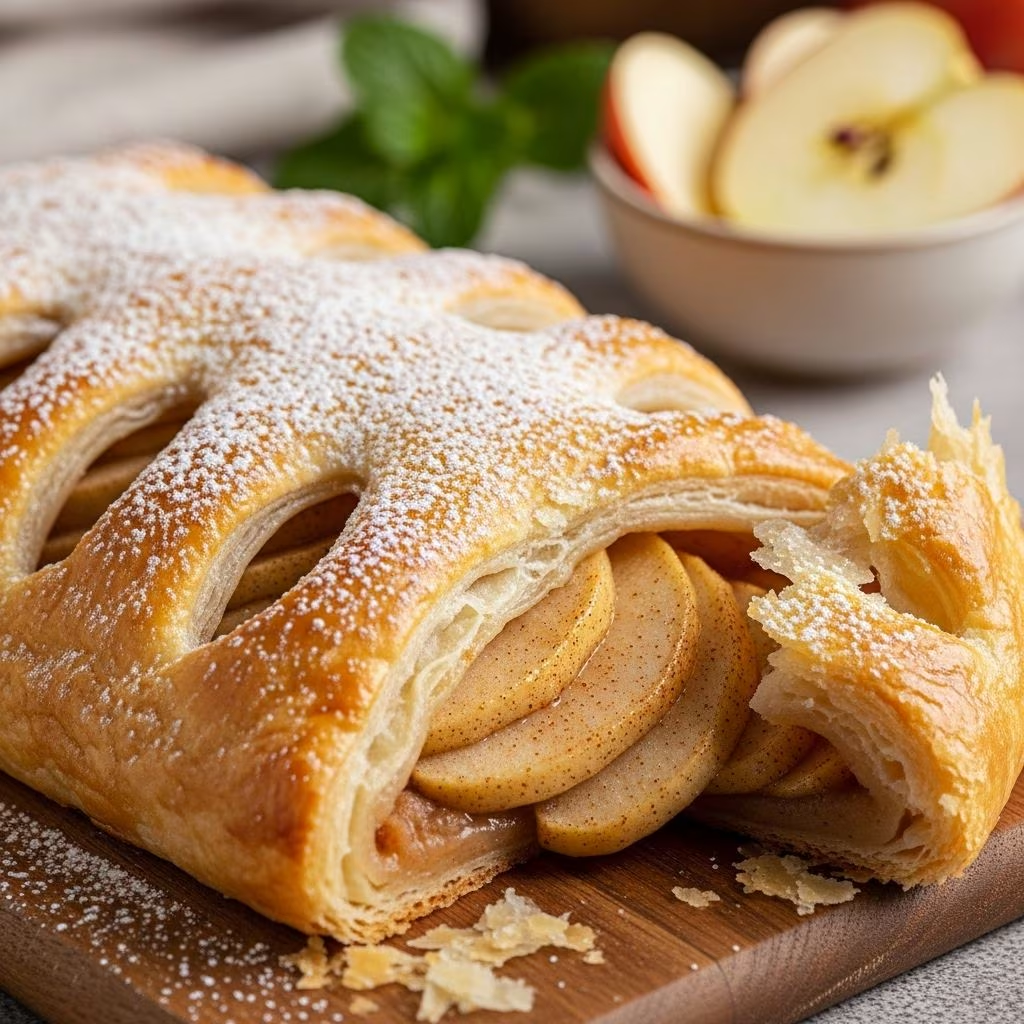
Strudel-style preparations use two puff pastry sheets sandwiching apple filling between them, creating a substantial yet refined dessert. The filling spreads evenly over the bottom sheet, leaving approximately three-quarter inch margins on all sides for crimping. The second pastry sheet covers the filling, and a fork crimps the edges together, sealing the two layers. Milk brushed across the top creates a subtle sheen and encourages even browning.
Baking occurs at 400 degrees Fahrenheit until the pastry puffs and golden-browns. A sweet vanilla glaze drizzled over the cooled strudel adds additional elegance and flavor. This format yields eight to twelve servings and presents beautifully when sliced, revealing layers of pastry, filling, and the satisfying structure created by the two-sheet approach.
Professional Techniques for Optimal Results
Temperature Management Principles
Puff pastry behaves dramatically differently depending on temperature. When too warm, the dough becomes limp and difficult to handle, resisting folding and shaping efforts. If this occurs during work, returning the pastry to the refrigerator for fifteen to twenty minutes restores workability. Conversely, pastry that remains too cold tears and resists manipulation.
The optimal approach involves thawing frozen puff pastry according to package directions, allowing it to reach a pliable but still-cool state. Working on cool surfaces—or even placing a baking sheet in the freezer before assembly begins—helps maintain ideal dough temperature. Some bakers refrigerate fully assembled pastries for thirty minutes before baking, which promotes more dramatic puffing and reduces the risk of filling leakage.
Egg Wash Application and Sealing
Egg wash—typically one egg beaten with one tablespoon of water—creates the characteristic glossy, golden-brown finish associated with professional pastries. Application involves brushing the mixture lightly across the pastry surface using a pastry brush or even a clean soft brush. The egg proteins brown during baking, creating visual appeal and protective crust.
Edge sealing deserves particular attention, as inadequately sealed pastries allow filling to escape during baking. Whether using finger pressure for turnovers or fork crimping for strudel, the goal involves creating an unbroken seal that holds throughout the baking process. Egg wash applied to the edges before sealing helps create additional adhesion.
Preventing Common Issues
Soggy bottoms represent the most common complaint with puff pastry desserts. This occurs when excess moisture from apple fillings saturates the pastry base before adequate browning. Strategies include placing baking sheets on preheated oven racks to provide direct bottom heat, ensuring fillings have cooled completely and thickened appropriately, and not overfilling pastries. Some bakers brush cooled melted butter or apricot glaze across the pastry bottom before adding filling, creating a moisture barrier.
Uneven browning can result from oven temperature variations or pastry placement. Rotating baking sheets halfway through cooking promotes uniform coloring. If pastries brown too quickly while interiors remain undercooked, reducing oven temperature by twenty-five degrees helps extend baking time appropriately.
Comparative Overview of Puff Pastry Apple Preparations
| Format | Difficulty Level | Baking Time | Yield | Best Occasion |
|---|---|---|---|---|
| Turnovers | Beginner | 30 minutes | 12 pieces | Casual gatherings, lunchboxes |
| Tarts | Beginner | 18-20 minutes | 8-12 pieces | Entertaining, weeknight desserts |
| Apple Roses | Intermediate | 25-30 minutes | 6-8 pieces | Special occasions, presentations |
| Strudel | Intermediate | 30-35 minutes | 8-12 pieces | Brunch, formal gatherings |
Frequently Asked Questions About Apple Puff Pastry Desserts
Can I prepare these desserts in advance?
Yes. Apple filling can be prepared one to two days ahead and refrigerated in airtight containers. Fully assembled pastries can be refrigerated for up to four hours before baking, which actually improves results by allowing pastry to rest and ensuring thorough puffing. For extended storage, freeze assembled pastries for up to three months, then bake directly from frozen (adding approximately five to ten minutes to baking time).
What should I use if I don’t have store-bought puff pastry?
Homemade puff pastry requires significant time and technical skill involving multiple folding stages, though it yields superior texture and flavor. Phyllo dough provides an acceptable substitute, though it creates different textural characteristics—crispier and more delicate rather than puffy. Pie crust offers another alternative, though it lacks the distinctive layered quality puff pastry provides.
How do I know when my apple filling is sufficiently cooked?
Apple pieces should appear tender when pierced with a fork but maintain distinct shape rather than dissolving into applesauce texture. The filling should bubble gently around the edges and release steam when stirred. If using cornstarch, the filling should thicken noticeably as it cools, becoming glossy and clinging to a spoon.
What alternatives exist for brown sugar?
White granulated sugar works functionally but produces less depth of flavor. Coconut sugar, muscovado sugar, or even maple syrup can substitute, each contributing unique flavor characteristics. The key involves maintaining appropriate sweetness balance relative to the tartness of your apple variety.
Can these recipes accommodate dietary restrictions?
Vegan puff pastry exists commercially, allowing egg wash to be replaced with plant-based milk. Sugar-free preparations require careful sweetener selection, as some substitutes don’t caramelize identically to traditional sugar. Gluten-free puff pastry options continue expanding as alternative flour technologies improve, though results differ from wheat-based versions.
Serving and Storage Considerations
Apple puff pastry desserts achieve peak flavor and texture when served warm or at room temperature within several hours of baking. The contrast between crispy pastry exterior and tender warm filling creates the most memorable eating experience. Leftovers maintain acceptable quality refrigerated in airtight containers for two to three days, though pastry gradually softens over time.
Reheating can be accomplished in a 300-degree oven for ten to fifteen minutes, restoring some crispness. Microwave reheating is not recommended, as it accelerates moisture absorption and creates unpleasantly soft pastry. Freezing baked pastries is possible for up to three months, with thawing and reheating in a conventional oven producing better results than microwaving.
Complementary accompaniments enhance the serving experience. Vanilla ice cream, fresh whipped cream, caramel sauce, or cinnamon-spiced yogurt provide satisfying contrast. A simple dusting of powdered sugar or light glaze adds visual polish without overwhelming the inherent apple flavor.
Conclusion: Accessibility Meets Sophistication
Apple puff pastry desserts represent an exceptional category of recipes where minimal effort yields impressive results. The availability of high-quality commercial puff pastry has democratized pastry arts, allowing home bakers to create desserts previously reserved for trained professionals. Whether preparing simple tarts for weeknight dinners or elaborate apple roses for special celebrations, these techniques provide flexible frameworks accommodating various skill levels and time constraints.
Success depends fundamentally on understanding ingredient behavior, maintaining appropriate temperatures, and applying straightforward assembly techniques rather than requiring specialized equipment or years of training. As bakers experiment with these methods, natural confidence develops, encouraging creativity and personalization. The natural affinity between tender apples, warm spices, and golden pastry creates nearly foolproof flavor combinations that consistently delight.
References
- Puff Pastry Apple Turnovers Recipe — Marcellina in Cucina. Accessed April 2026. https://www.marcellinaincucina.com/apple-turnovers-with-puff-pastry-recipe/
- Apple Puff Pastry Tart Recipe — Mrs Kringle’s Kitchen. Accessed April 2026. https://www.mrskringleskitchen.com/2018/11/09/apple-puff-pastry-tart/
- Quick and Easy Apple Tart Recipe — The Pioneer Woman. Accessed April 2026. https://www.thepioneerwoman.com/food-cooking/recipes/a8881/quick-easy-and-yummy-apple-tart/
- Easy Apple Puff Pastries Recipe — Sailor Bailey. Accessed April 2026. https://sailorbailey.com/blog/insanely-easy-apple-pastries/
- Easy Puff Pastry Apple Strudel Recipe — The View from Great Island. Accessed April 2026. https://theviewfromgreatisland.com/easy-puff-pastry-apple-strudel/