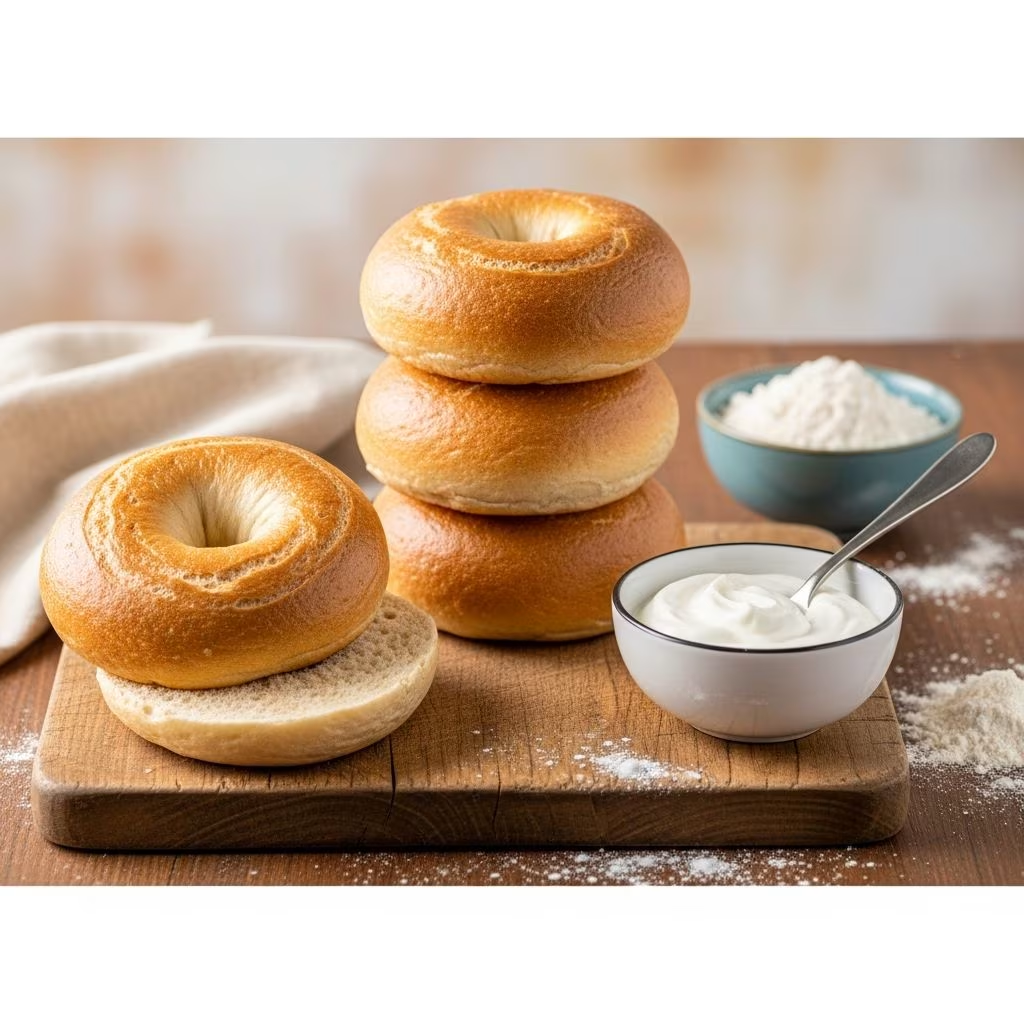
Creating fresh, warm bagels at home no longer requires extensive baking knowledge or specialized equipment. The revolutionary approach of combining just Greek yogurt and self-rising flour has transformed bagel baking into an accessible kitchen task that takes less than 30 minutes from start to finish. This technique eliminates the need for yeast, lengthy proofing times, and complicated boiling procedures that intimidate many home bakers.
Understanding the Science Behind This Simple Formula
The magic of this recipe lies in understanding how each ingredient contributes to the final product. Greek yogurt serves as both a moisture provider and a leavening agent, containing natural acids that react with the baking soda present in self-rising flour. This chemical reaction creates the lift and texture typically associated with traditional yeast-based bagels. Self-rising flour already contains the necessary leavening agents, eliminating the step of measuring and mixing separate components.
The ratio of these two ingredients creates a dough that achieves the perfect balance between structure and elasticity. The yogurt’s thick consistency ensures the dough doesn’t become overly wet, while the flour provides stability and the characteristic chew that bagel enthusiasts appreciate. This combination produces results that rival bagels made through conventional methods, despite the dramatic simplification of the process.
Gathering Your Ingredients and Equipment
The beauty of this recipe extends to its minimal ingredient list and lack of specialized kitchen tools. You’ll need exactly two primary ingredients:
- Self-rising flour (typically 2 cups or about 300 grams)
- Greek yogurt, preferably full-fat varieties (approximately 1 cup to 1¼ cups or 280-320 grams)
Optional additions to enhance your bagels include salt, egg wash for a glossy finish, and various toppings such as everything bagel seasoning, sesame seeds, or poppy seeds.
Equipment requirements are equally straightforward. You’ll need a large mixing bowl for combining ingredients, a clean work surface for kneading, a baking sheet lined with parchment paper, and a standard home oven. If you want to create the characteristic bagel hole, a round cookie cutter or your thumb works equally well. No stand mixers, specialized bagel pans, or other complicated gadgets are necessary.
Step-by-Step Instructions for Success
Preparing Your Workspace
Begin by preheating your oven to 350-400°F (175-200°C), depending on whether you plan to boil your bagels or bake them directly. This preparation ensures your oven reaches the correct temperature before the dough is ready. Line your baking sheet with parchment paper to prevent sticking and simplify cleanup. If desired, lightly oil the parchment paper with cooking spray for additional insurance against adherence.
Combining and Kneading the Dough
In your large mixing bowl, combine the self-rising flour and Greek yogurt. Start with a wooden spoon or silicone spatula, stirring vigorously until the mixture begins to come together. As the ingredients integrate, switch to hand-kneading for better control and feel. Oil your hands lightly with olive oil or spray to prevent sticking while maintaining a non-greasy dough.
Continue kneading for 2-3 minutes until the dough becomes smooth, elastic, and cohesive. If the dough appears too dry and refuses to combine, add yogurt one tablespoon at a time. Conversely, if excessive moisture causes stickiness, incorporate additional self-rising flour gradually. The final dough should hold together firmly without being tacky.
Shaping Individual Bagels
Once your dough reaches the correct consistency, divide it into equal portions. Most recipes suggest 4-6 bagels depending on desired size. For each portion, you have two shaping options:
- Roll the dough into a rope approximately 8 inches long, then connect the ends to form a ring shape
- Roll into a ball, flatten into a disc, then use a cookie cutter to remove the center hole
The first method creates a more uniform bagel shape, while the second produces a neater hole. Both techniques yield equally delicious results. Place shaped bagels on your prepared baking sheet, spacing them 2 inches apart to allow for expansion during cooking.
Baking Your Bagels
At this stage, you have flexibility in your cooking method. Some recipes recommend boiling bagels for 30-40 seconds per side in salted water before baking, which creates the traditional chewy exterior and soft interior. However, many variations skip boiling entirely and proceed directly to baking, which still produces excellent results with a slightly different texture.
If skipping the boiling step, apply an egg wash by whisking a beaten egg and brushing it over each bagel top. This creates a beautiful golden-brown finish and provides an ideal surface for toppings. Sprinkle your chosen toppings generously before baking.
Bake at your preheated temperature for 12-18 minutes until the bagels achieve a light golden-brown color. They should sound slightly hollow when tapped on the bottom and feel firm to the touch. Avoid overbaking, as the bagels continue cooking slightly after removal from the oven due to residual heat.
Flavor Variations and Creative Toppings
While the basic recipe produces delicious plain bagels, numerous customization opportunities exist for adventurous bakers:
- Everything bagel seasoning offers a classic combination of sesame, poppy, and caraway seeds with garlic and onion flavors
- Garlic and parmesan variations require folding 2 tablespoons grated parmesan and 1 teaspoon garlic powder into the raw dough, then topping with coarse sea salt and additional parmesan
- Sweet versions incorporate cinnamon and sugar into the dough, creating breakfast bagels reminiscent of cinnamon rolls
- Herb-forward bagels benefit from fresh or dried herbs like dill, chives, or Italian seasoning mixed directly into the dough
- Savory cream cheese and herb combinations work beautifully when brushed onto warm bagels immediately after baking
Storage, Serving, and Make-Ahead Options
Freshly baked bagels taste best within a few hours of completion, but proper storage extends their enjoyment. Cool bagels completely on a wire rack before storing in an airtight container at room temperature for up to two days. For longer storage, wrap individual bagels in plastic wrap and freeze them for up to three months.
Reheating frozen bagels requires only placing them in a 350°F oven for 8-10 minutes or splitting and toasting them in your toaster oven. Microwave reheating is possible but produces less desirable texture compared to oven methods. Allow frozen bagels to thaw at room temperature for 30 minutes before reheating for best results.
The dough can be prepared ahead of time and refrigerated for up to 24 hours before shaping and baking. This makes the recipe ideal for meal planning or preparing breakfast components in advance. Simply remove the dough from refrigeration 15 minutes before shaping to allow it to warm slightly for easier handling.
Troubleshooting Common Challenges
Dough Consistency Issues
If your dough emerges too sticky after initial mixing, gradually incorporate additional self-rising flour by the tablespoon while kneading. Conversely, excessively dry dough that resists coming together benefits from small additions of Greek yogurt. The ambient humidity in your kitchen influences moisture levels, so adjustments vary by location and season.
Bagel Hole Closure
The bagel hole often shrinks or closes entirely during baking due to dough expansion. Prevent this by maintaining a larger initial hole than desired—approximately 1.5 inches in diameter—or by inserting a small ball of aluminum foil or a piping bag tip into the center before baking. Remove these spacers during the final 2 minutes of baking.
Uneven Browning
If bagels brown unevenly, rotate the baking sheet halfway through cooking. Ensure your oven racks are positioned in the center of the oven rather than near the top or bottom, which can cause uneven heat distribution. Oven temperature variations make investing in an oven thermometer worthwhile for consistent results.
Nutritional Considerations and Dietary Adaptations
The basic recipe yields bagels containing approximately 220-230 calories per unit, with significant protein content from the Greek yogurt component. Each bagel provides roughly 11 grams of protein, making these bagels a satisfying breakfast option that sustains energy levels through the morning.
For gluten-free diets, substitute all-purpose gluten-free flour combined with appropriate leavening agents in place of self-rising flour. Bob’s Red Mill 1-to-1 Baking Flour works particularly well in this recipe, maintaining the texture and rise characteristics of traditional versions. Vegan adaptations require replacing Greek yogurt with dairy-free alternatives like cashew cream or silken tofu, though results may vary slightly in texture.
Frequently Asked Questions
Can I use regular yogurt instead of Greek yogurt?
While regular yogurt technically works, Greek yogurt’s higher protein and lower moisture content produce superior results. If substituting, use approximately one-third more Greek yogurt by volume since regular yogurt contains more water and will require compensatory flour adjustments.
What if I don’t have self-rising flour?
Create your own by combining 2 cups all-purpose flour with 3 teaspoons baking powder and ½ teaspoon salt. Mix these dry ingredients thoroughly before combining with yogurt to ensure even distribution of leavening agents.
Is boiling necessary for authentic bagels?
Boiling creates traditional bagel characteristics but isn’t strictly necessary. Skipped boiling produces slightly less chewy bagels but still delivers delicious results in a faster timeframe.
How many servings does this recipe yield?
The recipe typically produces 4-6 bagels depending on desired size. One bagel generally constitutes a single serving, though some people enjoy eating multiple bagels at once.
Can I add mix-ins like chocolate chips or berries?
Yes, fold these additions gently into the dough after initial mixing. Use approximately ½ cup of mix-ins per batch to avoid overwhelming the dough structure. Avoid extremely wet add-ins that might compromise the dough consistency.
Why This Recipe Has Transformed Home Bagel Baking
The two-ingredient bagel formula democratizes bagel production by removing technical barriers that previously discouraged home bakers. Traditional bagel recipes demand precision with yeast measurements, multiple proofing periods, specialized boiling equipment, and extensive time commitments. This simplified approach maintains quality while eliminating complexity, making fresh bagels accessible to busy individuals and beginning bakers.
The recipe’s success stems from honoring bagel fundamentals—achieving the characteristic chew, creating proper structure, and allowing for desired toppings—while employing modern ingredient understanding. By leveraging Greek yogurt’s chemical properties and self-rising flour’s built-in leavening, bakers achieve professional-quality results through an intuitive process requiring minimal prior experience.
References
- The Big Man’s World: 2 Ingredient Bagels Recipe — The Big Man’s World. Accessed April 2026. https://thebigmansworld.com/2-ingredient-bagels-recipe/
- The Conscious Plant Kitchen: 2-Ingredient Bagels — The Conscious Plant Kitchen. Accessed April 2026. https://www.theconsciousplantkitchen.com/2-ingredient-bagels/
- Bigger Bolder Baking: 2 Ingredient Bagels Recipe — Bigger Bolder Baking. Accessed April 2026. https://www.biggerbolderbaking.com/2-ingredient-bagels/
- Lolo Home Kitchen: Two Ingredient Bagels — Lolo Home Kitchen. Accessed April 2026. https://lolohomekitchen.com/two-ingredient-bagel-recipe/
- Dished by Kate: 2 Ingredient Greek Yogurt Bagels — Dished by Kate. Accessed April 2026. https://dishedbykate.com/2-ingredient-greek-yogurt-bagels/