Deviled eggs have long served as a cornerstone of festive tables, offering both sophistication and accessibility to home cooks of all skill levels. During Easter celebrations, these protein-rich appetizers become opportunities for creative expression, combining culinary technique with artistic presentation. This comprehensive guide explores the fundamentals of egg preparation, filling composition, and decorative embellishment to help you create show-stopping centerpieces that impress guests while remaining manageable within typical holiday timelines.
Understanding the Foundation: Egg Selection and Preparation
The foundation of exceptional deviled eggs begins with choosing the right eggs and mastering the cooking technique. Large eggs provide optimal surface area for filling and decoration, though jumbo and standard sizes work with adjusted ingredient proportions. The cooking method significantly influences shell removal difficulty and yolk texture.
To achieve perfectly cooked eggs, bring a large pot of water to a rolling boil over high heat. Gently place eggs into the boiling water and maintain the temperature for approximately 13 minutes. This timing produces yolks with a slightly creamy texture while ensuring the whites firm completely. After the cooking period expires, immediately transfer eggs to an ice water bath and allow them to cool until they can be handled comfortably.
The cooling step serves multiple purposes: it stops the cooking process, prevents the gray-green discoloration that occurs around overcooked yolks, and facilitates easier shell removal. Once cooled, gently crack the shells and peel under cool running water, working from the wider end where the air pocket naturally separates the membrane from the white.
Crafting the Ideal Filling Base
The filling represents the flavor foundation that distinguishes memorable deviled eggs from ordinary preparations. Mayonnaise serves as the primary binder, creating the creamy texture that defines this dish. Most recipes incorporate between 1/3 to 1/2 cup mayonnaise for a dozen eggs, though consistency preferences vary among cooks.
Dijon mustard provides essential brightness and complexity, with 1 to 1.5 teaspoons offering balanced flavor without overwhelming the egg yolks. This ingredient prevents the filling from becoming one-dimensional and adds a sophisticated edge. For cooks avoiding traditional mustard, white wine vinegar serves as an effective substitute, contributing acidity in similar proportions.
The preparation method influences the final texture considerably. Combine cooked yolks in a medium bowl and mash thoroughly with a fork until achieving very small crumbles rather than large chunks. This texture allows for even distribution of other ingredients and creates a smoother, more refined consistency when piped.
Add mayonnaise, mustard, and additional seasonings to the mashed yolks, stirring until completely combined. Salt and pepper provide essential balance, while optional additions like garlic powder (1/4 teaspoon) or kosher salt (1/8 teaspoon) enhance complexity. For those seeking additional flavor dimensions, pickle brine contributes tangy undertones in 2-teaspoon quantities.
Presentation Techniques: From Classic to Creative
Once filling is prepared, the presentation phase determines whether your deviled eggs appear simple or spectacular. Transfer the mixture to a pastry bag or zip-top bag with the corner cut for piping, allowing for controlled, attractive application.
Several presentation approaches cater to different skill levels and time constraints:
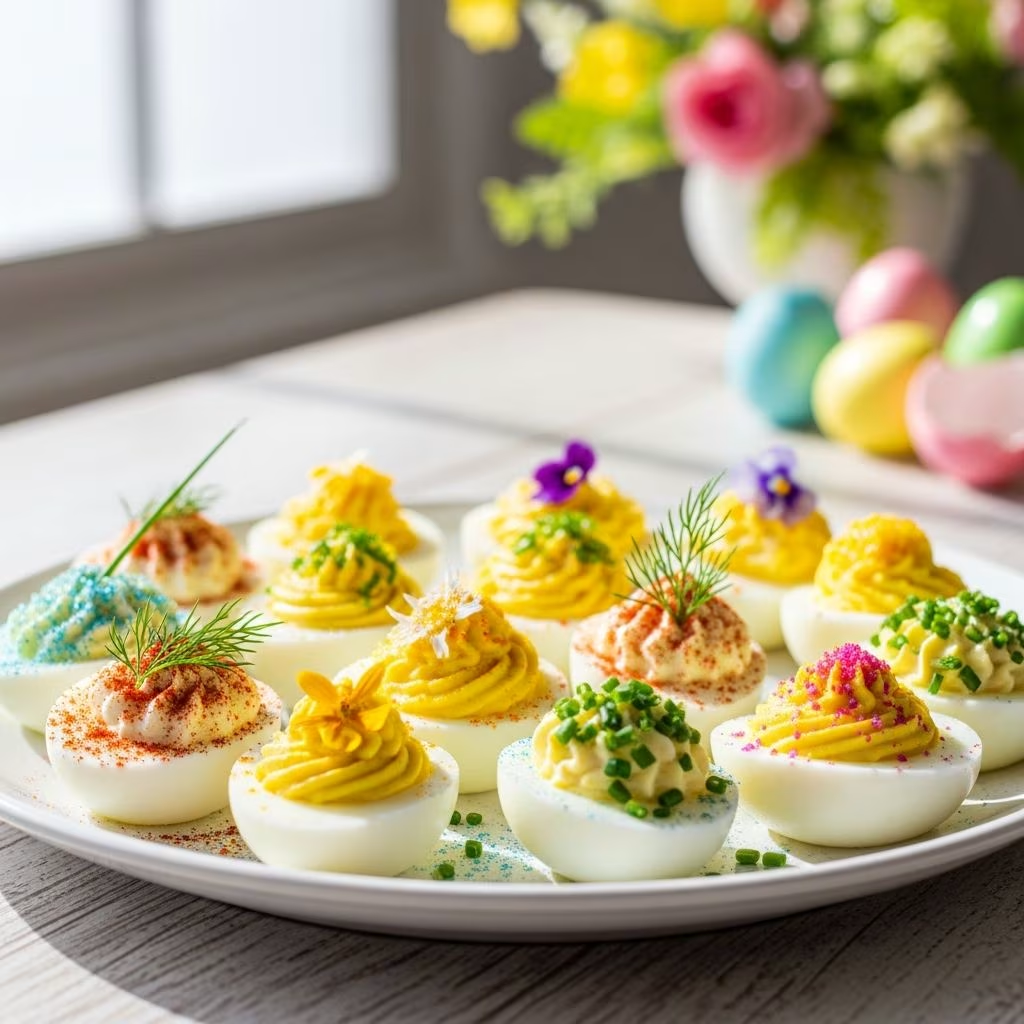
- Colored Egg Whites: Incorporate liquid food coloring into the cooking or cooling water to achieve pastel-hued bases before filling. This technique creates visual impact with minimal additional effort.
- Character Representations: Transform eggs into themed creatures using simple ingredients like black olives for eyes, carrot slices fashioned into ears, and fresh chives cut into whisker lengths. These recognizable forms delight guests and work especially well for family gatherings.
- Gourmet Garnishes: Top filled eggs with paprika, fresh herbs, crispy bacon bits, or microgreens for elegant, refined presentations suitable for formal occasions.
Creating Character-Based Designs
Character designs elevate deviled eggs from simple appetizers to conversation-starting table features. The bunny design offers sophisticated simplicity: arrange black olives cut into small pieces for eyes, position thin carrot slices as ears, and use fresh chives as delicate whiskers. Spread curly parsley on the serving platter to create a grass-like foundation, anchoring your bunny figures in a natural setting.
Chicken designs require additional components but reward effort with undeniable charm. Use olive slices positioned with a plastic straw technique: poke through an olive multiple times, then gently squeeze down the straw to create perfect circular pieces for eyes. Thinly sliced carrot rings cut into sixths become beaks when positioned at the front of the egg.
These character designs work particularly well for tables where children will be present, transforming the appetizer course into entertainment. The designs also photograph exceptionally well, making them ideal for social media documentation or holiday cards.
Flavor Variations and Ingredient Flexibility
While the classic formula of eggs, mayonnaise, mustard, salt, and pepper provides reliable results, creative cooks can develop signature variations by adjusting supporting ingredients. Consider these approaches:
| Variation Type | Key Additions | Flavor Profile |
|---|---|---|
| Smoky | Smoked paprika, crispy bacon, a touch of liquid smoke | Rich, complex, warm |
| Tangy | Extra pickle brine, white vinegar, or diced pickles | Bright, zesty, refreshing |
| Herbaceous | Fresh dill, chives, parsley, or tarragon | Fresh, garden-like, sophisticated |
| Spicy | Sriracha, cayenne pepper, or jalapeño pieces | Bold, heat-forward, contemporary |
Light mayonnaise substitutes regular mayonnaise in recipes calling for reduced-fat preparations, though this adjustment slightly affects richness and requires minor texture recalibration. Experiment with proportions to find your household’s preferred consistency and flavor balance.
Practical Preparation and Timing Strategies
Successfully executing deviled eggs for Easter requires thoughtful timing and organization. Begin egg preparation the day before your event, allowing them to cool completely and rest in the refrigerator overnight. This advance work eliminates time pressure on the morning of your celebration and allows flavors to develop.
Fill the eggs 2-3 hours before serving, then refrigerate in a covered container to maintain freshness and prevent discoloration. This timing window balances appearance with flavor integrity, ensuring the filling remains creamy while preventing the filling and whites from becoming overly integrated.
Decorative elements can be applied moments before serving, preserving the visual appeal of fresh components like herbs and vegetable garnishes. If applying decorations significantly in advance, store completed eggs in single layers on parchment-lined trays to prevent smudging.
Equipment Essentials and Helpful Tools
Basic kitchen equipment serves most deviled egg preparations effectively. A paring knife enables precise cutting of egg halves and careful yolk removal without damaging delicate whites. A sharp knife prevents crushing and maintains structural integrity throughout the process.
Additional helpful tools include a food processor for combining filling ingredients smoothly, though hand-mixing with a fork produces equally acceptable results. Pastry bags or zip-top bags facilitate even filling distribution, while small spoons work for manual application when piping equipment isn’t available. Plastic straws assist in creating perfect decorative circles from olives and other round ingredients.
Storage and Make-Ahead Considerations
Properly stored deviled eggs maintain quality for 3-4 days when refrigerated in covered containers. The protein-rich filling and mayonnaise-based preparation allow for comfortable advance preparation, accommodating busy holiday schedules. Avoid freezing completed deviled eggs, as the filling texture changes undesirably upon thawing, though unfilled egg whites freeze successfully for up to one month.
If preparing multiple batches or recipes for substantial gatherings, organize your workspace with filling prepared in advance, egg whites arrayed on serving trays, and decorative components pre-cut and arranged in small bowls. This assembly-line approach maximizes efficiency during the final preparation phase.
Frequently Asked Questions About Easter Deviled Eggs
Can I adjust ingredient quantities for different egg sizes?
Yes, scaling recipes accommodates various egg sizes effectively. Jumbo eggs require increased mayonnaise, mustard, and pickle brine proportionally, while smaller eggs need corresponding reductions. Monitor consistency as you combine ingredients, adjusting to achieve your preferred texture.
What causes gray-green discoloration around egg yolks?
This reaction occurs when yolks overcook, allowing iron and sulfur compounds to interact. Preventing overcooking through precise timing and immediate ice water cooling eliminates this issue entirely. The discoloration is harmless but aesthetically undesirable.
How long in advance can I prepare deviled eggs?
Eggs can be cooked and cooled 1-2 days ahead, remaining covered in the refrigerator. Fill eggs 2-3 hours before serving for optimal appearance and texture. Apply decorative elements immediately before serving when using fresh components.
What alternatives exist for mayonnaise-based fillings?
Sour cream, Greek yogurt, or cream cheese bases offer variations, though these alter the traditional flavor profile and require adjusted seasoning. Most classic preparations rely on mayonnaise for its distinctive taste and texture contribution.
Can I use brown eggs instead of white eggs?
Brown and white eggs are nutritionally equivalent and perform identically in cooking, though brown shells create visual variation when presenting colored egg dishes. Shell color doesn’t affect interior quality or taste.
Conclusion: Elevating Your Easter Table
Deviled eggs represent accessible sophistication, offering opportunities for both culinary precision and creative expression. By mastering fundamental preparation techniques, understanding filling composition, and exploring presentation possibilities, you transform simple ingredients into memorable components of your Easter celebration. Whether you choose classic elegance or whimsical character designs, these versatile appetizers bring joy to guests while remaining manageable within typical holiday preparations. Begin with fundamental recipes, taste as you season, and gradually develop your signature approach that reflects your household’s preferences and creativity.
References
- Easter Deviled Eggs Recipe — Low Carb Hoser. Accessed 2026. https://lowcarbhoser.com/easter-deviled-eggs/
- Easter Egg Recipe – Deviled Egg Chicks — Natasha’s Kitchen. Accessed 2026. https://natashaskitchen.com/easter-egg-recipe-deviled-egg-chicks/
- Easter Bunny Deviled Eggs — Cookin Canuck. Accessed 2026. https://www.cookincanuck.com/easter-bunny-deviled-eggs/
- From Easter to Deviled Eggs: Our Favorite Recipes for Leftover Hard Boiled Eggs — Edible Communities. Accessed 2026. https://ediblecommunities.com/recipes/from-easter-to-deviled-eggs-our-favorite-recipes-for-leftover-hard-boiled-eggs/