Tostadas represent one of the most versatile platforms for creative culinary expression within Mexican cuisine. When paired with carefully prepared deviled shrimp—a preparation method that infuses crustaceans with bold spices and a distinctive heat profile—the result becomes an impressive dish suitable for both casual weeknight dinners and more formal entertaining occasions. This comprehensive guide explores the nuances of creating authentic deviled shrimp tostadas, from foundational techniques to sophisticated flavor layering.
Understanding Deviled Shrimp: Origins and Preparation Philosophy
The term “deviled” refers to a cooking technique that combines heat, spice, and bold seasonings to create intensely flavored proteins. This method transforms ordinary shrimp into a distinctive culinary experience. Deviled preparations historically emerged from European cooking traditions but have evolved significantly across global cuisines, particularly within American and Latin American food cultures. The technique emphasizes the balance between heat levels, aromatic spices, and complementary flavor profiles that enhance rather than mask the natural sweetness of quality seafood.
The preparation method begins with selecting premium raw shrimp, preferably with shells and tails removed for convenience. The shrimp undergoes a preliminary searing process—a brief exposure to high heat lasting approximately thirty seconds per side. This technique serves multiple purposes: it develops a subtle caramelized exterior, enhances the natural umami characteristics of the protein, and creates structural firmness that facilitates subsequent cutting and assembly processes. After cooling to a manageable temperature, the partially cooked shrimp becomes receptive to the signature spice blends that define the deviled preparation.
Building Your Spice Foundation: The Heart of Deviled Flavor
Creating the distinctive taste profile of deviled shrimp requires understanding how individual spices interact and complement one another. The foundation begins with a generous quantity of ground chipotle—this ingredient provides both heat intensity and subtle smokiness that characterizes authentic deviled preparations. Ground cumin follows, contributing warm, earthy undertones that deepen the overall flavor complexity. Paprika, selected for its non-spicy profile, adds color and a gentle, slightly sweet dimension.
Cayenne pepper enters the mixture to amplify the heat level according to personal preference. Fresh lime juice serves as the binding agent and flavor unifier, its acidity cutting through richness while brightening all other components. This combination creates a marinade that transforms raw or briefly seared shrimp into a boldly flavored protein component. The interplay between acidic, spicy, warm, and smoky elements creates complexity that appeals to sophisticated palates while remaining approachable for casual dining contexts.
Spice Blend Composition
- Ground chipotle pepper for smokiness and primary heat
- Ground cumin for warm, earthy depth
- Paprika for color and subtle sweetness
- Cayenne pepper for additional heat intensity
- Fresh lime juice for acidity and brightness
- Sea salt for seasoning enhancement
The Foundation: Creating Perfectly Crispy Tostada Bases
The tostada base provides structural support and textural contrast to the preparation. Traditional approaches involve deep-frying corn tortillas, though contemporary health-conscious methods employ oven-baking with minimal oil application. The baking method begins by preheating your oven to four hundred twenty-five degrees Fahrenheit. Individual corn tortillas receive generous coating with avocado oil or similar high-quality cooking oil applied via spray mechanism. This ensures even distribution while minimizing excess fat accumulation.
Seasoning with kosher salt occurs immediately after oiling. Tortillas are arranged in a single layer across a large baking sheet, maintaining separation to facilitate uniform crisping. The initial baking phase lasts six minutes, after which careful flipping allows the second side to achieve equivalent crispness over an additional three to five minutes. The tortillas should transition from pliable to audibly crispy, achieving a texture capable of supporting toppings without structural compromise. Timing precision matters significantly—under-baking results in soft, inadequate bases, while excessive baking produces brittle shells prone to breaking during assembly.
Shrimp Selection and Preliminary Processing
Quality shrimp selection fundamentally impacts the final dish’s success. Raw shrimp with shells and tails already removed provides convenient starting material. Before incorporating into the deviled preparation, shrimp should be thoroughly patted dry using paper towels. This moisture removal prevents oil splattering during cooking and promotes superior browning. Typically, one pound of shrimp provides sufficient quantity to create four fully laden tostadas with generous protein distribution.
The preliminary searing step, while brief, significantly enhances flavor development. Using a large skillet heated to medium-high temperature, a small quantity of avocado oil or olive oil creates an appropriately hot cooking surface. Shrimp are carefully placed into the hot pan and briefly seared—approximately thirty seconds per side. This expedited cooking doesn’t fully cook the protein but rather initiates Maillard reactions that deepen flavor complexity. After searing, the shrimp cool for approximately five minutes before receiving the deviled spice treatment.
Assembling Your Tostada: Layering Technique and Component Placement
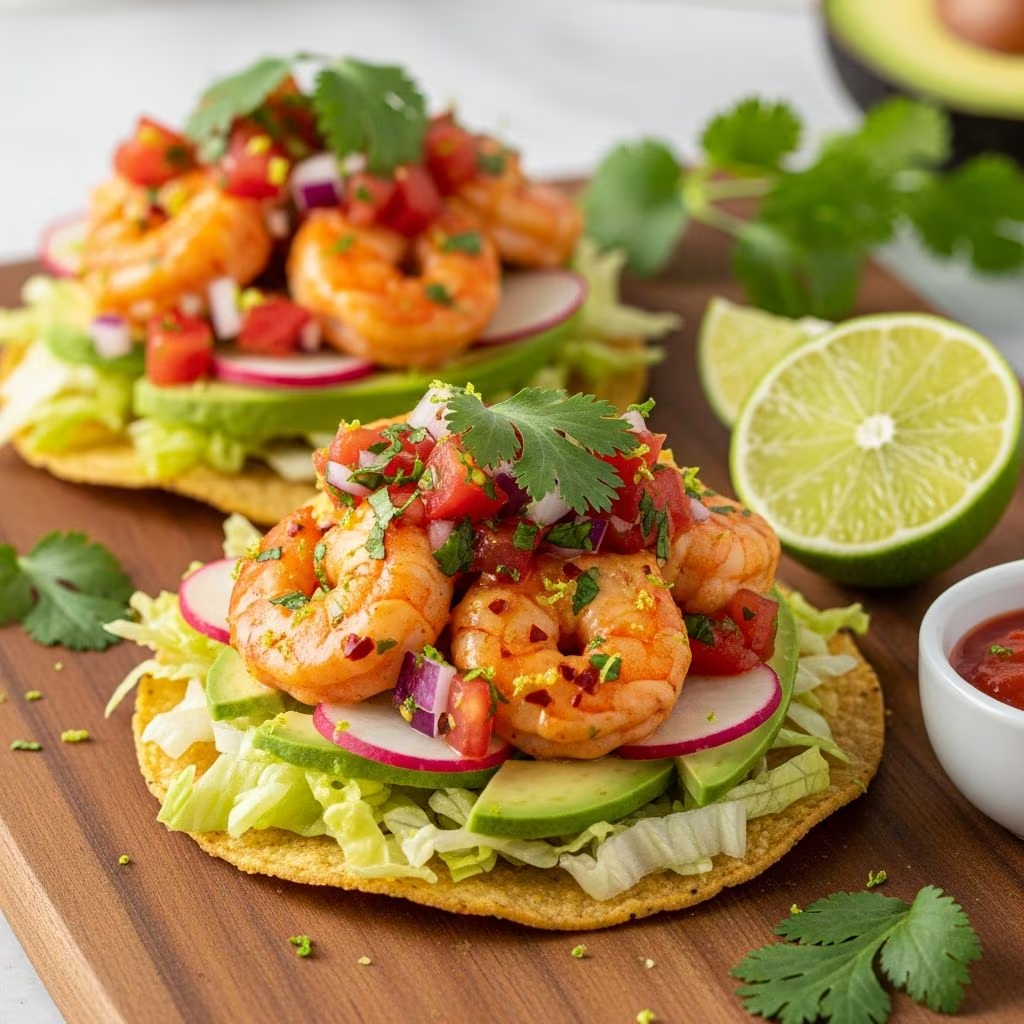
Successful tostada assembly follows a specific sequence that maximizes structural integrity and flavor harmony. The process begins by spreading a foundation layer across each crispy tortilla base. Avocado provides this crucial spreading element—ripe avocados are mashed with a fork until achieving an almost-smooth consistency with slight texture remaining. This spread layer simultaneously protects the tortilla from moisture penetration that could compromise crispness and provides luxurious, creamy flavor contrast to the spiced shrimp.
Deviled shrimp occupies the secondary layer, distributed generously across the avocado foundation. The spice coating should be visible and aromatic, signaling the bold flavor profile contained within. Fresh complementary vegetables follow, with shredded cabbage providing cooling crunch and textural contrast. Pickled red onions contribute sharp, tangy notes that balance the richness of avocado and the heat intensity of the deviled preparation.
Fresh cilantro contributes herbaceous brightness, while cotija cheese—with its characteristic crumbly texture and mild saltiness—adds complexity without overwhelming other components. A final drizzle of jalapeño ranch dressing unifies all elements while introducing additional creaminess and herbaceous notes. The completed tostada should present a balanced composition featuring multiple textures, temperatures, flavor profiles, and visual elements.
Ingredient Quality Considerations and Sourcing
The deceptive simplicity of tostada preparation belies the importance of ingredient quality. Shrimp sourcing deserves particular attention—frozen shrimp of premium quality often surpasses fresh shrimp that has endured extended distribution timelines. Prioritize shrimp labeled as “wild-caught” when possible, as these typically possess more developed flavor profiles compared to farm-raised alternatives. The spice selection impacts the final result profoundly; ground chipotle sourced from specialized retailers typically offers superior quality and potency compared to mass-market supermarket varieties.
Avocado selection requires judgment regarding ripeness—fruit should yield slightly to pressure without mushy regions suggesting over-maturation. Lime juice should derive from fresh fruit rather than bottled concentrates, as the brightness and complexity of fresh citrus significantly elevates the finished dish. Corn tortillas merit consideration regarding sourcing; artisanal producers typically deliver superior flavor and texture compared to mass-produced alternatives. Even seemingly minor ingredients like sea salt and paprika contribute meaningfully to the overall experience when selected with intention.
Timing and Service Considerations
The complete preparation process, from beginning to plate, typically requires approximately thirty minutes—a duration that positions this dish advantageously for weeknight preparation. Strategic timing ensures all components achieve optimal temperature and texture simultaneously. Tortillas should be crisped no more than fifteen minutes before assembly, preserving their structural integrity while preventing them from becoming excessively brittle. Deviled shrimp should remain at room temperature or slightly warm, maintaining the aromatic qualities of the spice blend. Fresh components like avocado and cilantro should not be prepared until immediately before assembly, preventing oxidation or moisture loss.
Service should occur immediately following assembly. Tostadas represent one of few dishes that actually improve slightly if consumed within minutes of construction—the interplay between crispy tortilla, soft avocado, warm spiced shrimp, and cool fresh vegetables creates a sensory experience that diminishes as components gradually soften and flavors homogenize. Arrange finished tostadas on a serving platter and present to guests or diners without delay for optimal enjoyment.
Scaling and Entertaining Applications
The recipe structure facilitates straightforward scaling for entertaining larger groups. Four tostadas typically serve two people as a substantial main course or four people as an appetizer portion. For parties, all components can be prepared in advance—tostada bases cooled and stored in airtight containers, deviled shrimp held at room temperature, and fresh components held separately with protective coverings. Assembly occurs moments before service, transforming advance preparation into a streamlined final step. This approach permits hosting with minimal last-minute pressure while ensuring guests receive optimally constructed, freshly assembled tostadas.
Flavor Variations and Personalization
While the classic deviled shrimp tostada formula delivers exceptional results, numerous variations accommodate different taste preferences and ingredient availability. The spice profile can be intensified through additional cayenne or supplementary chipotle, or mellowed through cumin increases or paprika substitution. Those preferring milder preparations might reduce heat components entirely while maintaining the smoky chipotle element. Alternative toppings like pico de gallo, mango salsa, or cucumber provide freshness variations. Cheese options extend beyond cotija to include queso fresco, crumbled feta, or fresh mozzarella, each contributing distinct flavor profiles.
Frequently Asked Questions
Can I prepare deviled shrimp tostadas in advance?
Yes, advance preparation streamlines service significantly. Tostada bases can be prepared hours ahead and stored in airtight containers. Deviled shrimp develops flavor complexity over several hours at room temperature. Fresh vegetables and avocado should remain unprepared until immediately before assembly to preserve quality and prevent oxidation.
What substitutes work for cotija cheese?
Queso fresco provides nearly identical textural and flavor characteristics. Feta cheese offers similar crumbly texture with distinct tanginess. Fresh mozzarella provides creaminess without saltiness. Select based on desired flavor profile and personal preference.
How do I store leftover deviled shrimp?
Refrigerate deviled shrimp in an airtight container for up to two days. Reheat gently in a skillet at low temperature, or consume cold as salad components. Do not freeze, as the delicate shrimp texture deteriorates significantly during the freezing process.
Can frozen shrimp replace fresh shrimp?
Absolutely. Premium frozen shrimp often delivers superior quality compared to fresh shrimp subjected to extended distribution timelines. Thaw completely and pat dry before proceeding with the searing process.
What oil works best for crisping tortillas?
Avocado oil offers high smoke point and neutral flavor. Olive oil provides Mediterranean notes that complement the preparation. Vegetable or canola oil offers budget-friendly alternatives. Select based on desired flavor profile and smoke point suitability.
Nutritional Considerations and Dietary Adaptations
Deviled shrimp tostadas balance nutritional density with sensory satisfaction. Shrimp provides lean protein, essential minerals, and omega-3 fatty acids. Avocado contributes healthy monounsaturated fats and micronutrient density. Fresh vegetables provide fiber, vitamins, and minerals. Corn tortillas offer whole grain benefits when sourced from quality producers. The overall nutritional profile creates a dish that satisfies nutritional requirements while delivering genuine culinary pleasure.
Dietary modifications accommodate various restrictions. Gluten-free diners benefit from confirmed corn tortilla sourcing, as some commercial products contain unexpected gluten contamination. Dairy-free preparations omit cotija cheese without significantly compromising the dish’s integrity. Low-fat versions replace avocado with Greek yogurt-based dressing while maintaining creamy textural elements.
Conclusion
Deviled shrimp tostadas represent an accessible entry point into sophisticated home cooking, requiring minimal specialized equipment while delivering restaurant-caliber results. The balance between heat-driven spice profiles, textural contrast, fresh components, and thoughtful assembly creates a dish that satisfies both casual appetites and refined palates. Whether preparing for weeknight family dinner or sophisticated entertaining, this preparation method delivers consistent excellence through attention to ingredient quality, precise technique, and intentional seasoning decisions. The thirty-minute preparation window positions this dish advantageously within contemporary busy lifestyles, proving that exceptional food need not demand extensive time commitments.
References
- Nutritional Benefits of Shrimp and Seafood — U.S. National Library of Medicine. 2023. https://pubmed.ncbi.nlm.nih.gov/
- Guide to Cooking with Corn Tortillas — USDA Food Safety and Inspection Service. 2024. https://www.fsis.usda.gov/food-safety/safe-food-handling-and-preparation/food-safety-basics
- Maillard Reaction in Protein Cooking — Institute of Food Technologists. 2024. https://www.ift.org/
- Health Properties of Avocados — American Heart Association. 2024. https://www.heart.org/
- Guide to Selecting Fresh Seafood — FDA Seafood HACCP Alliance. 2024. https://www.fda.gov/food/seafood-haccp-alliance