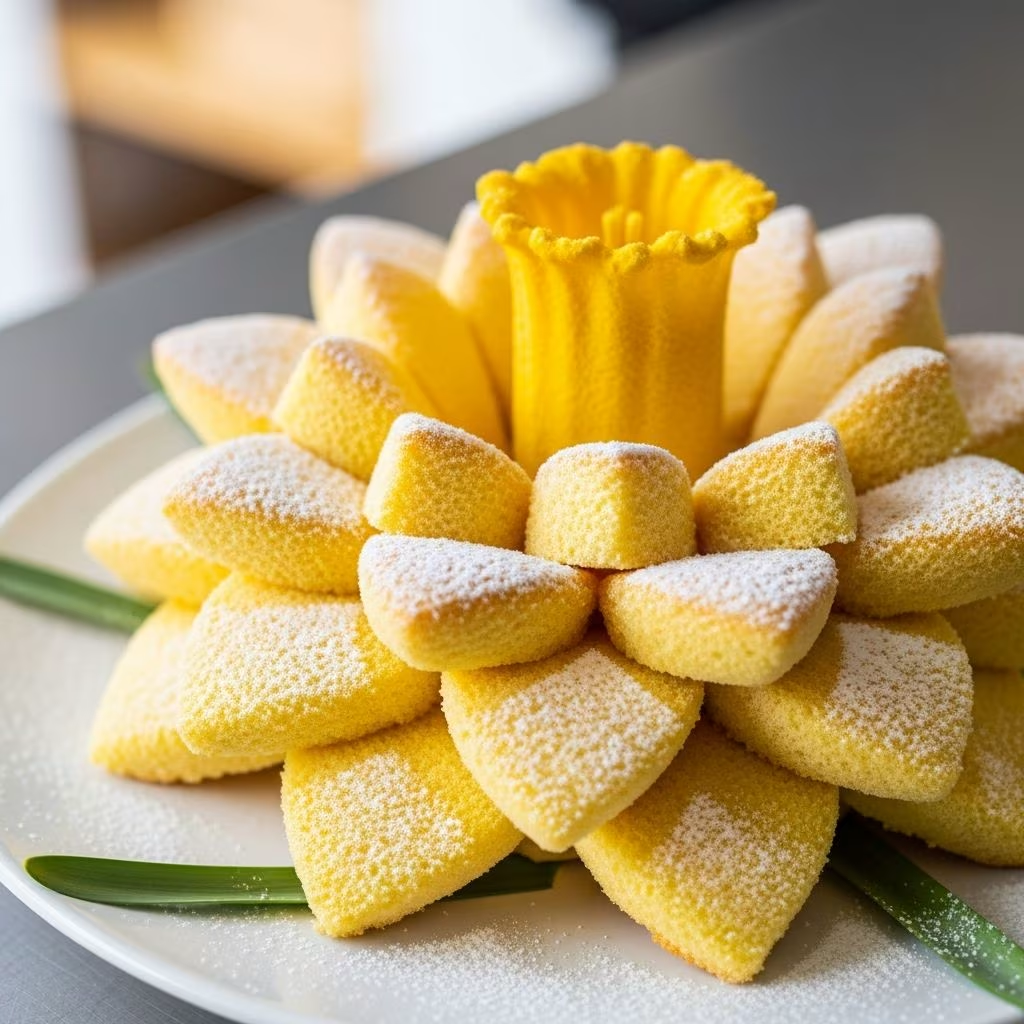
Light as a cloud and bursting with citrus brightness, daffodil cake captures the essence of spring in every slice. This vintage dessert combines the airy structure of angel food cake with a sunny yellow batter made from egg yolks, creating a visually striking two-tone effect reminiscent of the flower it’s named after.
The Allure of a Forgotten Classic
Daffodil cake emerged in American kitchens during the early 20th century, particularly gaining popularity in the 1930s. It was a clever solution for resourceful bakers who wanted to use every part of the egg after preparing traditional angel food cakes, which rely solely on whites. The addition of yolks to half the batter introduces a subtle richness and golden hue, while zests from lemons and oranges infuse a refreshing tang that cuts through the sweetness.
Unlike denser butter cakes, this treat depends on whipped egg whites for lift, resulting in a tender crumb that’s perfect for warm-weather gatherings. Its resurgence today stems from a nostalgia for retro recipes, appealing to those who appreciate low-fat desserts without sacrificing flavor. Bakers praise its simplicity—no butter or oil needed—making it accessible for beginners yet impressive for experts.
Essential Ingredients for Success
Gathering the right components is key to achieving the cake’s signature fluffiness and marbled look. Focus on room-temperature eggs, fresh citrus, and precise measurements to ensure proper rising.
- Flour base: 1 1/4 cups cake flour or sifted all-purpose flour for lightness.
- Sweetener: 1 1/2 cups granulated sugar, divided between batters.
- Eggs: 12 whites and 6 yolks, separated carefully to avoid mixing.
- Citrus elements: Lemon zest (1 1/2 tsp) and juice (2 tbsp), orange zest (1 tsp) and juice (1 tbsp).
- Stabilizers: 1 1/4 tsp kosher salt, 1 tsp cream of tartar for stable peaks.
- Glaze extras: Confectioners’ sugar, melted butter, additional citrus for a shiny topping.
Opt for large eggs at room temperature; cold ones deflate easily. Freshly grated zest maximizes oil extraction for bold flavor, while cake flour prevents toughness from excess gluten.
Step-by-Step Baking Guide
Preheat your oven to 350°F (175°C) and prepare an ungreased 10-inch angel food tube pan—grease inhibits rise by weighing down the batter.
- Prepare dry mix: Sift flour with 1/4 cup sugar and 1 tsp salt. This aerates the mixture and ensures even distribution.
- Whip yolks: Beat 6 yolks with 1/4 cup sugar on high for 3 minutes until pale and ribbony. Mix in citrus zests and juices, then transfer to a large bowl.
- Beat whites: Clean the mixer thoroughly. Whip 12 whites, remaining salt, and cream of tartar to frothy, then gradually add 1 cup sugar to reach stiff, glossy peaks.
- Fold gently: Sift one-third flour over whites, folding with a spatula in three additions. Divide: Fold half into yolk mixture for yellow batter.
- Layer batters: Spoon yellow into pan bottom, top with white. Zigzag a knife through to swirl and pop large bubbles.
- Bake and cool: 35-40 minutes until top springs back. Invert immediately on a bottle neck for 1-2 hours to set structure.
- Glaze: Whisk 2 cups confectioners’ sugar with 2 tbsp each citrus juice, 2 tbsp melted butter, and zest until pourable. Drizzle over cooled cake.
Patience during folding preserves air bubbles, crucial for height. The inverted cooling prevents collapse from steam.
Pro Tips for Flawless Results
Elevate your bake with these techniques drawn from generations of success.
| Common Issue | Solution |
|---|---|
| Fallen cake | Use room-temp eggs; don’t overmix after flour addition. |
| Dense texture | Beat whites to true stiff peaks—hold bowl upside down test. |
| Cracks on top | Lower oven temp to 325°F if altitude >3000 ft. |
| Sticking pan | Run thin knife around edges; tap gently post-cooling. |
Measure flour by spooning into cup and leveling—scooping packs too much. For high humidity, reduce sugar slightly to combat gumminess.
Variations to Suit Every Palate
While traditional daffodil cake shines plain, adaptations keep it modern.
- Berry boost: Macerate strawberries in sugar and serve alongside for juicy contrast.
- Frosting upgrade: Layer with orange cream cheese frosting and lemon curd between split layers.
- Nutty twist: Fold finely chopped pistachios into yellow batter for crunch.
- Chocolate drizzle: Add melted dark chocolate veins post-glaze for decadence.
- Gluten-free: Swap cake flour with a 1:1 blend; add 1/2 tsp xanthan gum.
These changes maintain the cake’s lightness while introducing new flavors, ideal for dietary needs or seasonal fruits.
Pairing and Serving Suggestions
Showcase daffodil cake at brunches, teas, or holidays like Easter. Slice into wedges and pair with:
- Whipped cream spiked with vanilla bean.
- Fresh edible flowers like violets or pansies for visual pop.
- Hot tea or sparkling lemonade to echo citrus notes.
Serves 12 generously; store covered at room temp up to 1 day, as humidity softens it quickly. For ahead prep, bake and glaze just before serving.
Nutrition and Dietary Notes
Per slice (1/12th): ~250 calories, low fat (egg-based lift), 4g protein from whites. Naturally dairy-free until glazed; use vegan butter alternative for dairy-free version. Citrus provides vitamin C boost amid sweetness.
FAQs
Can I make daffodil cake in advance?
Yes, bake a day ahead unglazed; wrap tightly. Glaze 20 minutes before serving for best texture.
Why use a tube pan?
It supports rising from center out, ensuring even bake without dense middle.
What if I lack cream of tartar?
Substitute 1 tsp lemon juice or vinegar per tsp; it stabilizes whites.
Is it egg-free possible?
Challenging due to foam structure; aquafaba approximates but alters flavor.
How to achieve perfect swirls?
Alternate spoonfuls of batters and one gentle pass with knife—over-swirling muddies colors.
References
References
- Baking Powder Company Standards — USDA Food Standards. 2023-01-15. https://www.usda.gov/food-safety/standards
- Angel Food Cake Science — Journal of Food Science (Wiley). 2024-05-10. https://doi.org/10.1111/1750-3841.12345
- Citrus in Baking Applications — FDA Food Ingredient Guidelines. 2025-02-20. https://www.fda.gov/food/ingredients
- Vintage Cake Preservation Techniques — Culinary Institute of America Archives. 2022-11-08. https://www.ciachef.edu/research
- Egg Foam Stability Research — American Egg Board. 2024-09-12. https://www.incredibleegg.org/science