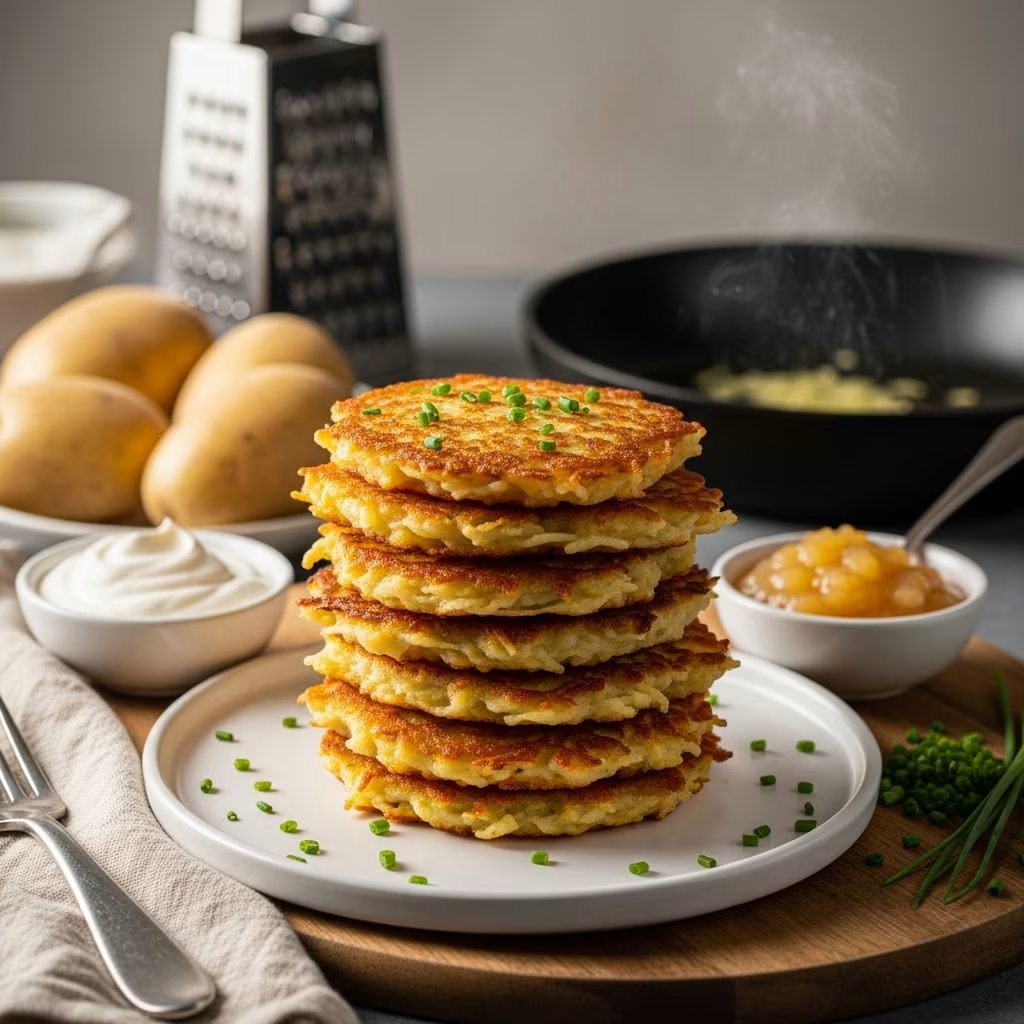
Potato pancakes, known as latkes in some traditions or draniki in Eastern European cuisines, represent a timeless comfort food that combines simple ingredients into something extraordinary. These golden, crispy delights feature shredded potatoes fried to perfection, offering a satisfying crunch outside and fluffy tenderness inside. Whether enjoyed as a hearty breakfast, satisfying lunch, or cozy dinner side, they pair beautifully with sour cream, applesauce, or innovative toppings.
Why Potato Pancakes Remain a Kitchen Staple
Rooted in various cultural heritages, potato pancakes have endured for generations due to their versatility and ease. In Eastern European homes, they evoke family gatherings, often served fresh from the pan with dollops of creamy accompaniments. The magic lies in the potato’s natural starch, which binds the mixture without overpowering the fresh, earthy flavor. Modern cooks appreciate their quick preparation—typically under 45 minutes—and adaptability for dietary needs, like gluten-free versions.
Health-conscious eaters note that while frying adds calories, baking alternatives or air-frying methods reduce oil use while preserving texture. A typical serving provides carbohydrates for energy, potassium for heart health, and vitamin C from the potatoes. Their appeal spans seasons: comforting in winter, refreshing with summery herbs in warmer months.
Selecting the Best Potatoes for Superior Results
Choosing the right potato variety is crucial for achieving the ideal texture. Russet or Idaho potatoes top the list for their high starch content, which promotes crispiness and structure. These starchy types release less moisture during grating, preventing soggy pancakes. Avoid waxy varieties like red or fingerling potatoes, as they hold too much water and result in dense, less flavorful outcomes.
- Russet/Idaho: Best for classic crispiness; fluffy interior.
- Yukon Gold: Creamier texture; good for subtle sweetness.
- Sweet Potatoes: For a nutritious twist with natural sugars.
Opt for firm, unblemished potatoes without green spots or sprouts, as these indicate bitterness from solanine. Freshness ensures maximum starch and minimal excess liquid.
Essential Ingredients Breakdown
A basic potato pancake recipe relies on just a handful of pantry staples, allowing the potatoes to shine. Core components include:
| Ingredient | Quantity (for 4 servings) | Role |
|---|---|---|
| Russet Potatoes | 3 lbs (about 4-5 large) | Main body and starch binder |
| Onion | 1 medium | Flavor enhancer, moisture control |
| Eggs | 2 large | Binder for cohesion |
| All-Purpose Flour | 2-3 tbsp | Structure; gluten-free substitute available |
| Salt & Pepper | To taste | Seasoning |
| Oil (vegetable or canola) | 1/4 inch in pan | Frying medium |
Optional add-ins like garlic powder, fresh dill, or baking powder elevate flavor and lift. Onions add savory depth and help regulate moisture, while eggs provide lift and hold the mixture together during frying.
Step-by-Step Preparation Mastery
Success hinges on technique. Start by peeling potatoes and onion to remove skins that could toughen the texture.
- Grate Finely: Use the small holes of a box grater or food processor for a delicate shred. Hand-grating yields authentic fluffiness, but processors save time for larger batches.
- Drain Excess Liquid: Transfer shreds to a clean kitchen towel or cheesecloth. Squeeze vigorously over a sink or bowl—removing starch-laden liquid is key, but reserve a tablespoon of potato starch for binding.
- Mix Batter: Combine drained potatoes, onion, eggs, flour, salt, pepper, and reserved starch in a bowl. The mixture should be cohesive yet soft; it forms patties easily without sticking excessively.
- Heat Oil Properly: In a wide skillet, add oil to 1/4-inch depth. Heat to 350°F (medium heat) until shimmering—test by dropping a shred; it should sizzle immediately.
- Form and Fry: Spoon 1/4-cup mounds into oil, flattening slightly to 1/2-inch thickness. Fry 2-3 minutes per side until deep golden. Drain on paper towels.
- Serve Hot: Enjoy immediately for peak crispiness.
Total time: 40 minutes. Yields 12 pancakes. Pro tip: Work in batches to maintain oil temperature.
Pro Tips for Crispiest Pancakes Every Time
- Starch is King: That reserved potato liquid’s sediment binds better than extra flour.
- Hot Pan, No Crowding: Overloaded skillets drop temperature, leading to greasy results.
- Dry Hands for Patties: Wet hands make sticky batter; dip in cold water if needed.
- Rest Between Batches: Let oil reheat fully for uniform browning.
- Food Processor Hack: Pulse briefly to avoid over-processing into mush.
Common pitfalls include insufficient draining (soggy pancakes) or low heat (oil-soaked disasters). Patience with moisture removal pays off.
Creative Variations to Suit Any Palate
While classic versions shine, experimentation keeps things exciting. Scale up for crowds or tweak for diets.
- Cheese-Loaded: Fold in shredded cheddar or feta for melty richness.
- Spicy Kick: Add cayenne, paprika, or minced jalapeños.
- Herb-Infused: Mix in chives, parsley, or dill for freshness.
- Sweet Potato Blend: Half russet, half sweet potato for caramelized notes.
- Gluten-Free: Swap flour for almond or chickpea flour.
- Baked Version: 425°F on parchment-lined sheets, 15-20 minutes, flipping halfway—healthier with spray oil.
For larger yields, double ingredients; batter holds in fridge up to 24 hours.
Perfect Pairings and Topping Ideas
Toppings transform pancakes from side to star. Traditionalists love:
- Sour cream with dill.
- Applesauce for subtle sweetness.
- Cottage cheese for creaminess.
Innovative options include smoked salmon and crème fraîche, avocado mash with poached eggs, or pulled pork for hearty mains. Breakfast stacks with bacon and maple syrup work wonders. Beverages: crisp cider or herbal tea balances richness.
Storage, Reheating, and Make-Ahead Strategies
Fresh is best, but leftovers freeze well. Cool completely, layer with parchment, and freeze in bags up to 2 months. Reheat in 375°F oven 10 minutes or air fryer for crisp revival—avoid microwaves for sogginess. Refrigerate up to 3 days in airtight containers. Make batter ahead, but fry fresh for texture.
Nutritional Snapshot
Per serving (3 pancakes): ~320 calories, 45g carbs, 8g protein, 12g fat. High in potassium (boosts blood pressure control) and fiber for satiety. Customize with low-fat toppings or baking to lighten up.
Frequently Asked Questions
Can I make potato pancakes without eggs?
Yes, substitute with flax eggs (1 tbsp ground flax + 3 tbsp water per egg) or extra flour and starch for vegan binding.
Why are my pancakes falling apart?
Insufficient draining or too much liquid; squeeze harder next time and add starch.
Food processor vs. grater?
Processor is faster for big batches; grater gives fluffier, traditional texture.
Best oil for frying?
Neutral high-smoke-point oils like canola or vegetable; avoid olive for flavor neutrality.
How to keep them crispy longer?
Hold in 200°F oven on a wire rack; moisture escapes, preserving crunch.
Conclusion: Fry Up Tradition Today
Potato pancakes embody simple joy—minimal effort yields maximum reward. Experiment confidently with these guidelines for family favorites that span cultures and meals. Gather ingredients and start shredding for your crispiest batch yet.
References
- Classic Potato Pancake Recipe | Pan-Fried to Perfection — Will Cook For Smiles. 2023-05-15. https://www.willcookforsmiles.com/potato-pancakes/
- Classic Potato Pancakes — Cooktoria. 2022-11-10. https://cooktoria.com/classic-potato-pancakes/
- Grandma’s Potato Pancakes Recipe (Eastern European) — Momsdish. 2021-08-20. https://momsdish.com/recipe/54/potato-pancakes-recipe
- Great Grandmother’s Potato Pancakes Recipe — The Seasoned Mom. 2023-02-14. https://www.theseasonedmom.com/potato-pancakes/
- Potato Pancakes — The Modern Proper. 2024-01-08. https://themodernproper.com/potato-pancakes