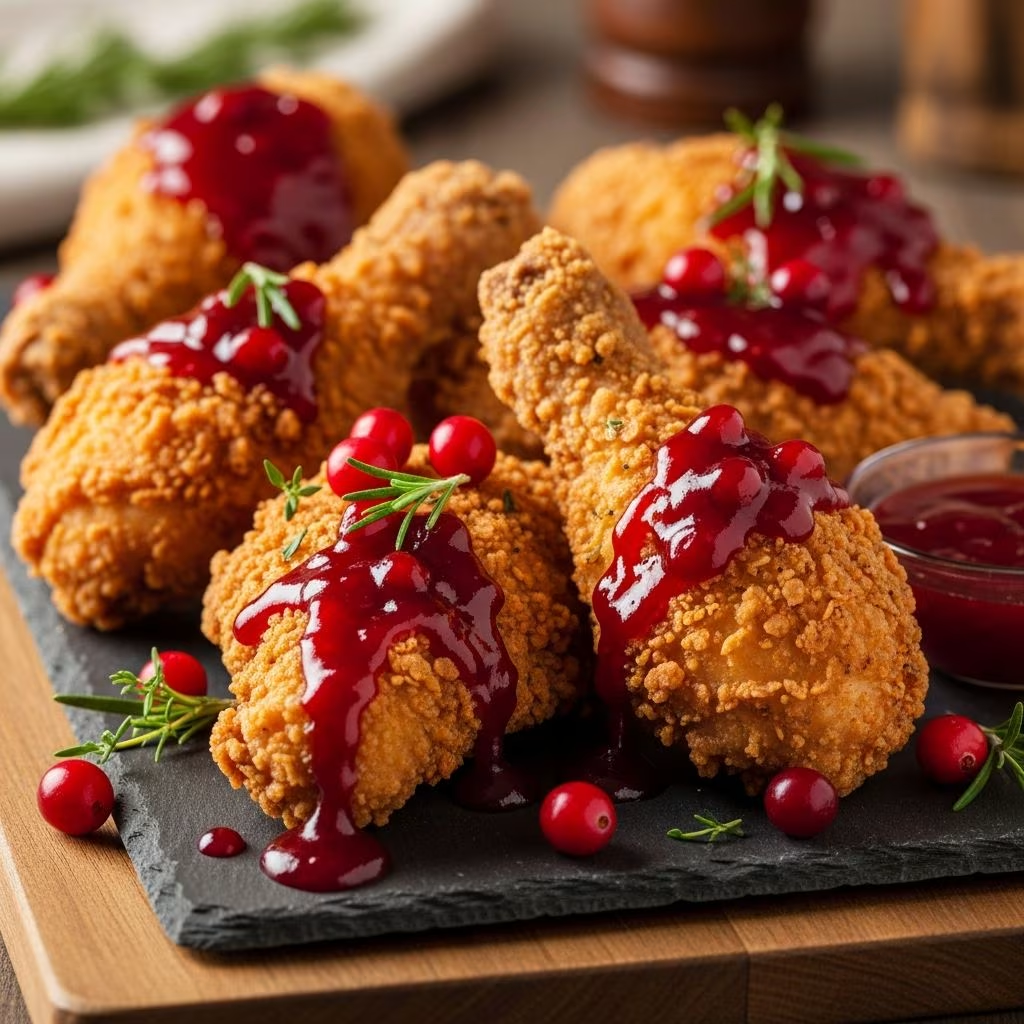
There’s something undeniably satisfying about perfectly executed fried chicken—the shattering crunch of the exterior giving way to juicy, tender meat within. While traditional preparations certainly have their merit, elevating this beloved comfort food with unexpected flavor combinations can transform an ordinary meal into something truly memorable. The combination of bright, tart cranberries paired with the subtle heat and complexity of whole grain mustard creates a sophisticated counterpoint to crispy, golden-brown poultry. This recipe demonstrates how thoughtful ingredient selection and proper technique can yield restaurant-quality results in a home kitchen.
Understanding the Flavor Profile
The foundation of this dish rests on a fundamental culinary principle: balancing richness with acidity and brightness. Fried chicken, by its very nature, is indulgent—deep-fried until the exterior reaches optimal crispness creates a luxuriously fatty exterior. Without a complementary element, this richness can become one-dimensional. The cranberry-mustard sauce addresses this through layered flavors that work in concert.
Cranberries contribute natural tartness and subtle sweetness when cooked down with sugar, creating a complex base that isn’t merely sour or saccharine. Whole grain mustard adds another dimension entirely—the visible seeds provide textural interest, while the mustard itself introduces a sharp, slightly peppery undertone that cuts through the richness of the fried chicken without overwhelming the palate. This interplay of flavors creates a more nuanced eating experience than simple condiments alone could provide.
Essential Ingredients and Their Roles
The Cranberry Sauce Component
The sauce begins with fresh or frozen cranberries as the primary ingredient. Both work equally well—frozen cranberries are convenient year-round alternatives that perform identically to their fresh counterparts when cooked. Unsalted butter enriches the sauce while adding glossy texture, while granulated sugar balances the berries’ natural tartness. Kosher salt enhances overall flavor development, and whole grain mustard—distinguished by its visible seeds and milder profile compared to yellow varieties—provides the spicy element that ties everything together.
The Marinade Foundation
Buttermilk serves as the marinade’s base, offering both flavor and a tenderizing effect due to its mild acidity. The addition of hot sauce contributes both heat and additional acidic components that help break down muscle fibers, promoting tenderness. Kosher salt and garlic powder in the marinade layer seasoning throughout the meat, ensuring flavor penetrates beyond the surface.
The Breading System
All-purpose flour provides structure for the coating, while potato starch or cornstarch creates additional crispness. The inclusion of finely chopped fresh sage and dried thyme introduces herbaceous notes that complement both the poultry and the cranberry-mustard pairing. Black pepper adds warmth and subtle spice.
Preparation Timeline and Strategy
Sauce Advancement
One significant advantage of this recipe is its make-ahead flexibility. The cranberry-mustard sauce can be prepared up to three days in advance, allowing you to manage your time efficiently. This forward planning proves invaluable when entertaining or preparing weeknight dinners. Simply store the cooled sauce in a covered container in the refrigerator, and it develops flavor complexity during storage as the ingredients continue melding.
Marinade Timing
The chicken requires at least twelve hours of marinating time, with the option to extend to a full day. This extended timeframe isn’t arbitrary—it allows the acidic buttermilk and salt to penetrate the meat, ensuring seasoning reaches the interior while simultaneously beginning the tenderizing process. Many home cooks rush this step, resulting in underseasoned, less tender final products.
Step-by-Step Marinade Preparation
Begin by selecting your chicken pieces—wings, thighs, and drumsticks work best for even cooking. Skin-on, bone-in selections provide superior flavor compared to boneless varieties. Divide the chicken between two gallon-sized resealable plastic bags.
In a measuring glass or small bowl, whisk together buttermilk, hot sauce, kosher salt, and garlic powder until fully combined. Divide this mixture evenly between the bags containing the chicken, seal thoroughly, and manipulate the bags to coat every piece. Place the bags in the refrigerator, turning them occasionally throughout the marinating period to ensure consistent exposure to the marinade.
Creating the Optimal Breading Mixture
The breading serves multiple purposes—it protects the meat from excessive oil absorption, provides textural contrast, and creates the desirable craggy exterior that catches light and appeals visually. In a large bowl, whisk together all-purpose flour, potato starch or cornstarch, finely chopped sage, kosher salt, and remaining garlic powder. Add the dried thyme, crushing it between your fingers to break up larger pieces and release essential oils. Season generously with freshly ground black pepper.
A crucial step often overlooked involves drizzling two tablespoons of the reserved marinade into the dry breading mixture and working it in with a fork. This creates intentional clumps in the flour mixture, which yields those prized crispy, craggy exterior bits that distinguish excellent fried chicken from merely acceptable preparations. The slight moisture helps breading adhere more effectively while creating textural variation.
The Frying Process
Oil Selection and Temperature Control
Vegetable oil serves as the frying medium due to its high smoke point and neutral flavor profile. Approximately eleven cups are required, creating a depth of two inches within your pot. Using a reliable thermometer proves essential—temperature fluctuations dramatically impact the final result. Initial oil temperature should reach 350 degrees Fahrenheit.
When chicken enters the oil, temperature drops; maintaining heat between 300 and 325 degrees Fahrenheit during cooking ensures the interior cooks through while the exterior achieves optimal browning and crispness without burning. This requires attentive heat adjustment throughout the process.
Cooking Process
Working with individual pieces, remove chicken from the buttermilk marinade, allowing excess liquid to drip back into the bag. This prevents excess moisture from causing oil splatter. Transfer each piece to the breading mixture and toss thoroughly to ensure complete coverage, then tap off any excess flour. Place breaded chicken on a rimmed baking sheet as you prepare all pieces.
Carefully lower four pieces of chicken into the heated oil. Resist the urge to crowd the pot—this practice lowers oil temperature excessively and results in oil-logged rather than crispy chicken. Turn pieces occasionally and monitor the thermometer carefully, adjusting heat as needed. After ten to fourteen minutes, when chicken is deeply browned and crispy, use tongs to transfer pieces to a wire rack set inside another rimmed baking sheet. Season immediately with additional salt, which adheres best to the hot surface.
Garnish Preparation
In two batches, carefully add sage leaves directly to the hot oil. These will crisp within thirty to sixty seconds. Using a spider or slotted spoon, transfer crispy sage leaves to the wire rack alongside the chicken. Season lightly with salt. These provide both visual appeal and additional herbaceous notes.
Sauce Preparation Details
To prepare the cranberry-mustard sauce, combine fresh or frozen cranberries, unsalted butter, sugar, and kosher salt in a medium saucepan over medium-high heat. Bring the mixture to a simmer, stirring occasionally and gently smashing some cranberries as they soften. The cooking process typically requires twelve to fifteen minutes, during which time the berries burst, juices become syrupy, and the mixture thickens noticeably. You’ll recognize completion when dragging a wooden spoon through the sauce leaves a distinct trail that slowly fills in.
Remove from heat and allow the sauce to cool to room temperature. Once cooled, whisk in the whole grain mustard until completely incorporated. The finished sauce should have a pleasant texture—chunky with berry pieces yet smooth and pourable, with visible mustard seeds distributed throughout.
Assembly and Presentation
Transfer the finished fried chicken to a serving platter. Distribute the crispy sage leaves across the chicken pieces. Serve the cranberry-mustard sauce alongside in a bowl or small pitcher, allowing diners to apply it according to preference. The sauce works both as a dipping medium and as a drizzle across the chicken.
Variations and Adaptations
While this recipe stands beautifully as written, thoughtful adaptations can customize it to available ingredients or personal preferences. Those preferring less heat might reduce or eliminate the hot sauce from the marinade. Individuals seeking deeper sage flavor could increase the fresh herb content. The cranberry-mustard sauce tolerates substitution of Dijon mustard for whole grain versions, though the result will be smoother and less textured.
Storage and Make-Ahead Considerations
Fried chicken loses its optimal crispness as it cools, though it remains delicious at room temperature. For best results, consume immediately after cooking. Leftover chicken can be refrigerated for up to three days and reheats adequately in a 350-degree oven for approximately ten minutes, though the exterior won’t regain full crispness. The cranberry-mustard sauce, conversely, improves with time and stores reliably for several days.
Frequently Asked Questions
Can I use boneless chicken instead of bone-in pieces?
While boneless chicken technically works, bone-in varieties provide superior flavor and texture. The bones conduct heat more efficiently and protect the surrounding meat, resulting in juicier interiors. Additionally, the bones themselves contribute collagen that enriches the sauce if drippings are incorporated.
What oil temperature is too high or too low?
Oil below 300 degrees produces greasy, oil-logged chicken. Above 325 degrees, the exterior burns before the interior cooks through. The target range of 300-325 degrees ensures balanced cooking and optimal texture.
Is buttermilk truly necessary?
Buttermilk’s acidity provides tenderizing properties that plain milk cannot match. Those without buttermilk can create an acceptable substitute by adding one tablespoon of lemon juice or vinegar to regular milk and allowing it to sit for five minutes.
Can I make this sauce without fresh cranberries?
Canned cranberry sauce works in an abbreviated preparation—simply whisk it directly with mustard in a bowl. However, making sauce from fresh or frozen berries yields superior flavor complexity and control over sweetness levels.
References
- Fried Chicken With Cranberry-Mustard Sauce — Bon Appétit, written by Kendra Vaculin. 2024. https://www.thewarcry.org/articles/fried-chicken-with-cranberry-mustard-sauce/