A well-prepared vegetable dip serves as the foundation for countless gatherings, from casual family dinners to formal entertaining occasions. This creamy condiment transforms simple raw vegetables into an irresistible appetizer that guests consistently return to throughout any event. The beauty of this classic preparation lies in its simplicity—requiring only a handful of common ingredients that most home cooks already have on hand—combined with its remarkable versatility and ability to complement virtually any fresh produce selection.
Understanding the Core Components of an Exceptional Dip
The foundation of a superior vegetable dip rests upon understanding how each ingredient contributes to the final product’s texture, flavor profile, and shelf stability. The primary base ingredients work in concert to create a smooth, luxurious consistency that clings perfectly to vegetable pieces without being overly thick or runny.
The Creamy Base Elements
- Sour cream: This ingredient provides a tangy foundation and contributes significantly to the dip’s luxurious texture. Sour cream, derived from regular cream that has been fermented with lactic acid bacteria, adds richness and a subtle tartness that balances other flavors beautifully. The thickness of sour cream varies by brand, with some offering Greek-style versions that are considerably heavier.
- Mayonnaise: Acting as both a flavor enhancer and texture modifier, mayonnaise binds ingredients while creating a smooth, spreadable consistency. This emulsion of oil, egg yolks, and acid provides stability and helps the dip maintain its desired consistency over time.
Flavor Builders and Seasonings
- Dried dill: This herb delivers a distinctive, slightly sweet flavor with subtle anise undertones. Dried dill proves more concentrated than fresh varieties, so recipes typically call for smaller quantities. Fresh dill can substitute if preferred, though approximately three times the volume is needed to achieve equivalent flavor intensity.
- Fresh parsley: Offering a mild, slightly peppery taste, fresh parsley adds brightness without overpowering other components. The flat-leaf variety, also known as Italian parsley, provides more robust flavor compared to its curly counterpart.
- Seasoned salt blends: These pre-mixed combinations typically contain salt, various herbs, and sometimes garlic powder or other seasonings. They streamline the recipe while ensuring balanced seasoning throughout the mixture.
- Grated onion: Fresh onion, finely grated directly into the dip, provides sharp, pungent notes that enhance depth without creating visible chunks. The grating process releases onion juices, allowing the flavor to distribute evenly throughout the mixture.
Step-by-Step Preparation Method
Creating this dip requires minimal equipment and straightforward technique. The assembly process typically takes fewer than ten minutes from start to finish, making it an ideal option for last-minute entertaining needs.
Gathering and Preparing Ingredients
Begin by measuring all components according to your chosen recipe proportions. Having everything assembled before mixing ensures a smooth, efficient preparation process. Room-temperature ingredients blend more thoroughly than cold ones, so consider removing the sour cream and mayonnaise from refrigeration approximately fifteen minutes before preparation.
Combining and Whisking
Pour the measured mayonnaise and sour cream into a medium-sized mixing bowl. Using a whisk or fork, combine these two components until they achieve a uniform consistency without visible streaks. The mixture should be smooth and homogeneous before adding remaining ingredients.
Add the dried dill, fresh parsley, and seasoned salt to the combined base. Whisk thoroughly, incorporating all ingredients evenly throughout. The grated onion should be added last, stirred in completely to distribute its flavor uniformly. At this stage, taste the mixture and adjust seasonings as preferred. The dip benefits from a brief resting period of five to ten minutes, allowing flavors to meld and develop more complex notes.
Texture Customization and Consistency Adjustment
The initial mixture typically reaches a relatively thick consistency suitable for dipping. However, personal preferences vary regarding ideal dip thickness, and adjustments are easily made using common dairy products.
| Desired Consistency | Adjustment Method | Quantity to Add |
|---|---|---|
| Thinner consistency | Whisk in buttermilk or regular milk gradually | 1-2 tablespoons at a time |
| Extra-thick version | Add additional sour cream or Greek yogurt | 2-3 tablespoons increments |
| Lighter texture | Fold in whipped cream or sour cream | 3-4 tablespoons |
Vegetable Pairing Recommendations
The mild, herbaceous flavor profile of this dip complements an extensive array of raw vegetables, making it exceptionally versatile for vegetable platters and crudité arrangements.
Classic Vegetable Selections
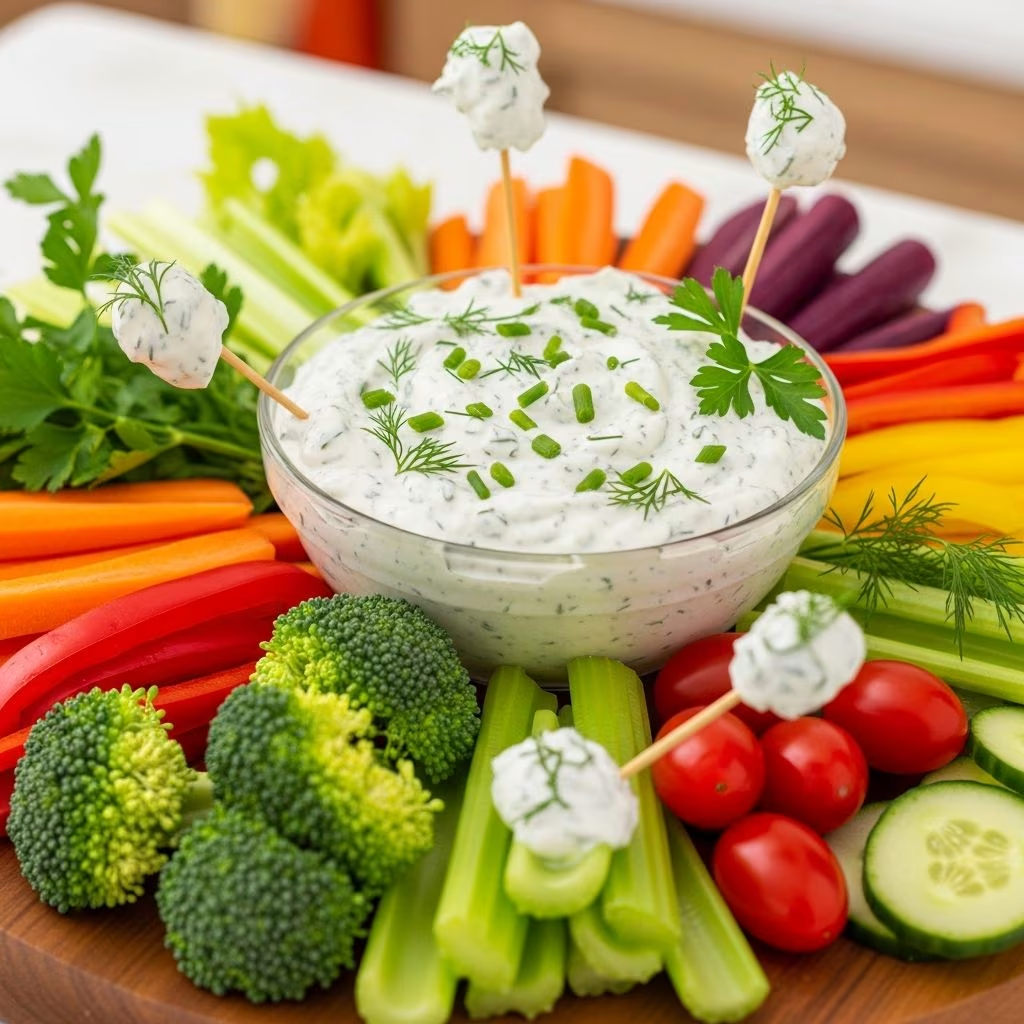
- Carrot sticks and baby carrots—their natural sweetness pairs beautifully with the dip’s herbal notes
- Celery pieces—the crisp texture provides excellent contrast to the creamy dip
- Bell pepper strips in various colors—add visual appeal and subtle sweet flavors
- Cherry tomatoes—offer juicy bursts of acidity that balance the rich dip
- Broccoli and cauliflower florets—their neutral flavor allows the dip to shine
- Cucumber slices—deliver refreshing crispness and pair excellently with herb-forward dips
- Asparagus spears—provide elegant presentation for formal gatherings
- Snap peas—offer satisfying crunch and delicate sweetness
The combination of textures, colors, and flavors creates visually appealing presentations while ensuring varied tastes throughout the eating experience. Arrange vegetables in a circular pattern around a central bowl containing the dip for maximum visual impact.
Storage, Make-Ahead Options, and Shelf Life
One of this dip’s greatest advantages is its remarkable longevity when properly stored. The combination of mayonnaise and sour cream, both naturally preservative-rich ingredients, extends the prepared dip’s refrigerated lifespan considerably.
Refrigeration Guidelines
Store the completed dip in an airtight container positioned on a refrigerator shelf rather than the door, where temperature fluctuations occur more frequently. Properly stored dip maintains excellent quality for three to four days, with flavors actually intensifying during the storage period as ingredients continue to meld and develop deeper complexity. Many experienced cooks prepare their dip several days in advance specifically to benefit from this flavor-development advantage.
Make-Ahead Strategy
For entertaining purposes, prepare the dip up to four days before the event. This approach allows you to dedicate event-day time to other preparations while ensuring the dip reaches peak flavor. Simply remove from refrigeration approximately fifteen minutes before serving to allow the dip to reach an ideal serving temperature, though it remains perfectly acceptable when served directly from the refrigerator.
Variations and Creative Adaptations
While the classic preparation stands alone as an exceptional dip, thoughtful modifications allow customization based on personal preferences or dietary considerations.
Flavor Enhancement Ideas
- Include minced fresh garlic for increased pungency and depth
- Add finely chopped fresh chives for subtle onion notes with reduced harshness
- Incorporate lemon zest for brightness and subtle acidity
- Mix in crispy bacon bits for textural contrast and savory richness
- Blend in finely grated cheddar cheese for tang and complexity
Dietary Modifications
Greek yogurt can successfully replace a portion of the sour cream, creating a lighter option while maintaining creamy texture and tangy flavor. For plant-based versions, dairy-free sour cream and mayonnaise alternatives produce surprisingly comparable results, though slightly different flavor profiles may emerge.
Serving Beyond Vegetable Accompaniments
Though traditionally paired with fresh vegetables, this dip’s versatility extends to numerous other serving applications. Crispy baked tortilla chips, kettle-cooked potato chips, pita chips, and vegetable chips all benefit from the dip’s creamy, herbaceous character. Spread the dip on sandwiches and wraps, use it as a base for composed salads, or dollop it alongside grilled proteins for added flavor dimension.
Frequently Asked Questions
Can I prepare this dip without fresh onion?
Yes. If fresh grated onion is unavailable, substitute one-half to one teaspoon of onion powder, adjusting to taste. The flavor profile will differ slightly, but the dip remains delicious and functional.
How far in advance can the dip be prepared?
The dip can be prepared up to four days before serving without quality degradation. Extended refrigeration may cause slight separation; simply stir before serving if necessary.
What consistency works best for chip dipping versus vegetable dipping?
A slightly thinner consistency works better for chip dipping, as the creamier base allows chips to be fully coated while maintaining structural integrity. A thicker version suits vegetable dipping, clinging more readily to vegetable surfaces.
Are there sodium reduction options?
Yes. Reduce or eliminate the seasoned salt, instead using unseasoned salt in smaller quantities while adjusting herbs upward. This approach allows greater control over sodium intake without sacrificing flavor.
Conclusion: Mastering This Essential Entertaining Staple
This creamy vegetable dip represents far more than a simple condiment—it embodies the intersection of simplicity, versatility, and dependable deliciousness that characterizes successful entertaining. With mere minutes of preparation time, commonly available ingredients, and flexibility for personal customization, this recipe serves as a foundation for countless gatherings and occasions. Whether preparing for formal events or casual family meals, mastering this dip ensures you possess an always-reliable option that consistently impresses while requiring minimal effort.
References
- Sour Cream: Nutrition, Preparation, and Culinary Uses — United States Department of Agriculture (USDA). 2024. https://www.usda.gov/