When it comes to beloved comfort food side dishes, few options rival the appeal of a well-crafted potato salad. However, there’s a lesser-known variation that deserves more attention: mashed potato salad. This innovative twist on the traditional recipe delivers a luxurious, velvety texture that sets it apart from its chunky counterpart. By combining prepared mashed potatoes with a carefully balanced selection of creamy ingredients and flavorful additions, you create a dish that’s both sophisticated and nostalgic.
The beauty of mashed potato salad lies in its simplicity and versatility. Whether you’re working with leftover mashed potatoes from last night’s dinner, store-bought varieties, or freshly prepared batches, this recipe adapts beautifully to whatever you have on hand. The result is a rich, satisfying side dish that pairs wonderfully with grilled meats, sandwiches, and warm weather gatherings.
Understanding the Foundation: Why Mashed Potatoes?
Traditional potato salad relies on cubed or chunked potatoes as its base, creating distinct layers of flavor and texture. Mashed potato salad takes a different approach by starting with already-processed potatoes, which immediately establishes a creamier, more cohesive foundation. This preparation method offers several practical advantages for home cooks.
The texture of mashed potatoes allows the sauce to integrate more thoroughly throughout the dish, creating uniform flavor distribution with every spoonful. Additionally, using prepared mashed potatoes dramatically reduces preparation time. You eliminate the need to boil, cool, peel, and cut whole potatoes, making this recipe ideal for busy weeknights or last-minute entertaining situations.
The starchy nature of mashed potatoes acts as a natural thickening agent, absorbing the creamy dressing over time. This characteristic means your salad actually improves as it sits in the refrigerator, allowing flavors to meld and the texture to become even more luxurious.
Essential Ingredients for Maximum Creaminess
Creating the ideal mashed potato salad requires understanding how different creamy components work together. The combination of multiple dairy and egg-based ingredients creates a sauce that’s both rich and well-balanced.
The Creamy Base
- Mayonnaise: The primary emulsifier that creates richness and binding power. Standard store-brand mayonnaise works perfectly; specialty versions aren’t necessary.
- Sour Cream or Greek Yogurt: Adds tangy depth while contributing to the creamy texture. Greek yogurt provides a lighter alternative with similar flavor benefits.
- Prepared Mashed Potatoes: Your foundation, ideally chilled before mixing to maintain better texture control.
Flavor-Building Additions
- Yellow Mustard: Provides acidity and subtle tang without overwhelming other flavors.
- Sweet Pickle Relish or Diced Pickles: Contributes sweetness, acidity, and textural contrast.
- White Vinegar: Enhances the tangy profile while brightening overall flavor.
- Hard-Boiled Eggs: Adds protein, richness, and creates pockets of slightly different texture.
Aromatics and Finishing Touches
- Fresh Green Onions or Red Onions: Provides subtle onion flavor; soaking diced raw onions briefly tames their intensity.
- Celery: Delivers mild vegetable notes and slight crunch.
- Garlic Powder: Adds savory depth without the texture of fresh garlic.
- Salt, Black Pepper, and Paprika: Essential seasonings for balance and visual appeal.
Step-by-Step Preparation Method
Building the Creamy Foundation
Begin by placing your chilled mashed potatoes into a large mixing bowl. Add approximately one-quarter cup of mayonnaise and one-half cup of sour cream (or Greek yogurt). Using either a hand mixer or a sturdy wooden spoon, blend these components together thoroughly. Your goal is to achieve a smooth, silky consistency that resembles thick pudding rather than stiff mashed potatoes.
The mixing process is crucial—take time to ensure the mayonnaise and sour cream are fully incorporated without any streaks of unmixed potato visible. This base preparation determines the overall texture quality of your finished dish.
Incorporating Seasonings
With your creamy base established, add one teaspoon of yellow mustard, one-half teaspoon of salt, one-quarter teaspoon of cracked black pepper, one-half teaspoon of granulated garlic, and approximately one and one-half teaspoons of white vinegar. Mix thoroughly until the seasonings are evenly distributed and the mixture takes on a subtle golden hue from the mustard.
Taste the mixture at this stage and adjust seasonings according to your preference. Remember that the salad will continue to develop flavor as it chills, so you might prefer slightly bolder seasoning now.
Adding Texture and Structure
Fold in one-half cup of chopped celery, one-quarter cup of sliced green onions, one-half cup of sweet relish, and four hard-boiled eggs that have been finely chopped or sliced. Mix gently but thoroughly to distribute these ingredients evenly throughout the salad.
The gentle folding technique preserves the creamy texture while ensuring proper ingredient distribution. Avoid vigorous mixing at this stage, which can make the salad appear less appealing.
Final Presentation and Chilling
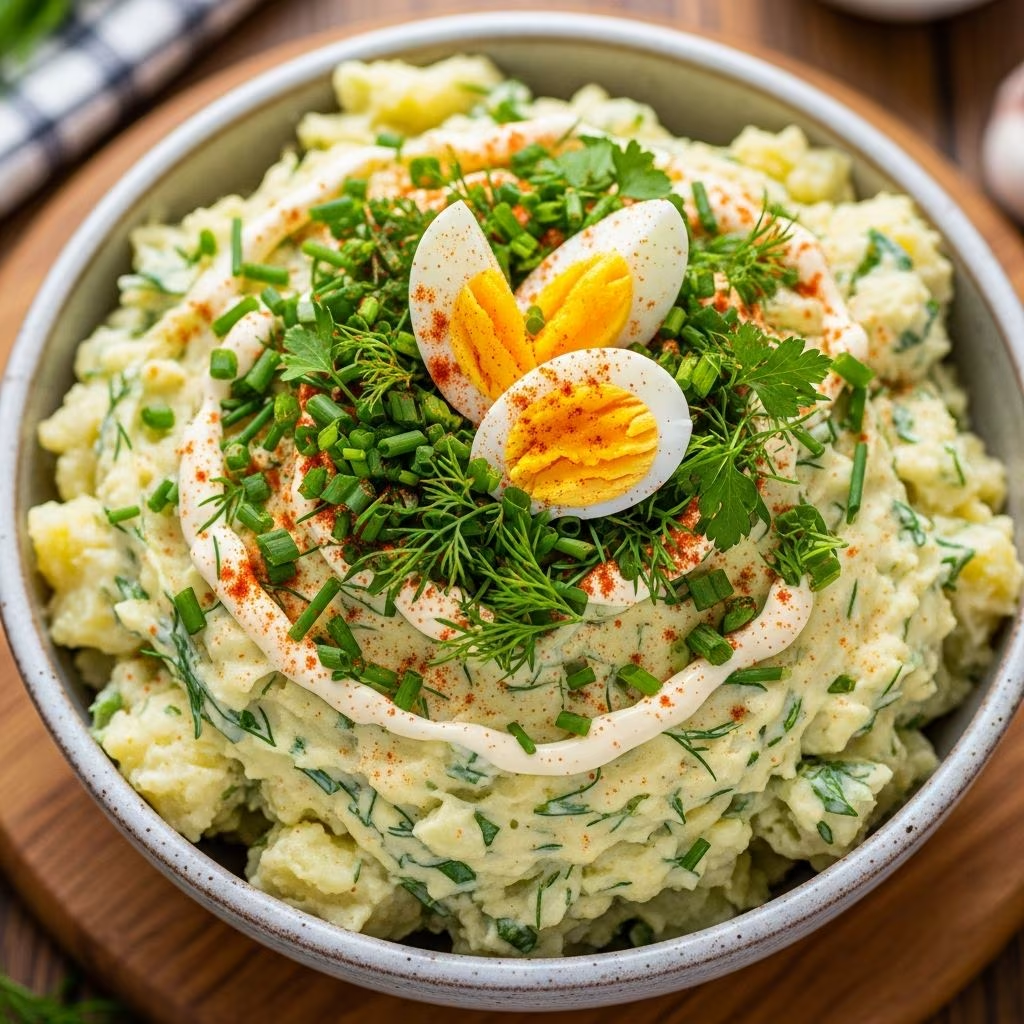
Transfer your mashed potato salad to a serving dish or storage container. Sprinkle the top with paprika for visual color and garnish with additional sliced hard-boiled eggs or fresh parsley if desired. Cover the dish with plastic wrap and refrigerate for at least thirty minutes before serving.
This resting period allows flavors to meld and the sauce to be absorbed by the potatoes, resulting in improved texture and taste. The salad actually tastes better after four to six hours of chilling, making it an excellent do-ahead dish for entertaining.
Key Techniques for Perfect Results
Choosing Quality Mashed Potatoes
While prepared mashed potatoes from grocery stores offer convenience, homemade or restaurant-quality versions often provide superior taste and texture. If making your own, use russet or Yukon gold potatoes and avoid over-processing, which creates a gluey texture. Prepare them the day before and refrigerate to develop better structure.
The Importance of Temperature Control
Always use chilled mashed potatoes rather than warm ones. Cold potatoes hold their shape better during mixing and create a more pleasant final texture. If your prepared potatoes are warm, spread them on a baking sheet and refrigerate for at least one hour before proceeding.
Balancing Creaminess with Structure
The ratio of creamy ingredients to potatoes determines your final texture. Start with the suggested proportions, then adjust based on your preference. If the mixture seems too stiff after chilling, stir in additional mayonnaise or pickle juice one tablespoon at a time until you achieve the desired consistency.
Flavor Development Through Patience
Resist the temptation to serve immediately. Mashed potato salad truly shines after chilling for several hours, when flavors have had time to integrate and the potatoes have absorbed the surrounding sauce. Many home cooks find that day-old potato salad surpasses the freshly prepared version.
Practical Variations and Customizations
While the classic recipe provides excellent results, several variations allow you to tailor this dish to specific preferences or dietary requirements.
| Variation | Key Changes | Best For |
|---|---|---|
| Light and Tangy | Substitute Greek yogurt for sour cream; reduce mayo to 3 tablespoons | Health-conscious diners |
| Herb-Forward | Add fresh dill, chives, and parsley; reduce relish amount | Summer gatherings |
| Bacon and Cheddar | Include crumbled bacon and shredded sharp cheddar cheese | Meat and cheese lovers |
| Roasted Garlic | Replace garlic powder with roasted garlic paste; increase amount | Sophisticated palates |
| Vegetable-Rich | Add diced bell peppers, corn, or peas | Vegetable-focused meals |
Storage and Make-Ahead Strategies
Mashed potato salad stores exceptionally well when properly handled. Transfer leftover portions to an airtight container and refrigerate for up to four days. The salad remains safe to eat slightly longer, but flavor and texture begin to diminish after the four-day mark.
Before serving refrigerated salad, stir thoroughly and assess the consistency. Over time, the potatoes absorb the sauce, which can make the salad appear too stiff. If this occurs, add a tablespoon of mayonnaise or pickle juice and mix well to restore the desired creamy texture.
For entertaining purposes, prepare the salad the morning of your event or even the day before. This advance preparation actually benefits the dish by allowing flavors to develop fully. Simply store it in a covered bowl in the refrigerator and give it a gentle stir before serving.
Serving Suggestions and Pairing Ideas
Mashed potato salad complements virtually any protein-based main course. It pairs beautifully with grilled chicken, barbecued ribs, smoked brisket, and charred burgers. The creamy texture and tangy flavor cut through rich, smoky meat dishes while providing a refreshing contrast.
For sandwich platters, mashed potato salad serves as an elegant alternative to traditional coleslaw or chips. Its creamy nature makes it particularly appealing alongside deli sandwiches or pulled pork presentations.
Cold buffet settings showcase this salad well, where its visual appeal and sophisticated texture distinguish it from ordinary side dishes. Arrange it in a decorative serving bowl with paprika sprinkled across the top and garnish with hard-boiled egg slices for maximum visual impact.
Frequently Asked Questions
Can I use instant mashed potatoes?
While instant potatoes work in a pinch, the texture tends toward gluey and less refined. Fresh or store-prepared mashed potatoes deliver superior results. If using instant potatoes, whip them well after preparation to minimize graininess.
What if I don’t have sour cream?
Greek yogurt, regular yogurt, or even cottage cheese blended smooth can substitute for sour cream. Each provides tanginess and creaminess, though with slightly different flavor profiles. You might also use additional mayonnaise, though this increases richness at the expense of tang.
Is it necessary to use hard-boiled eggs?
Hard-boiled eggs add protein and visual appeal but aren’t strictly necessary. If you prefer to omit them, increase the mayonnaise slightly to maintain creaminess and adjust salt accordingly since eggs provide subtle saltiness.
How far in advance can I prepare this dish?
Prepare mashed potato salad up to twenty-four hours in advance. While it technically stays safe for up to four days, flavor peaks around the twenty-four-hour mark. Prepare earlier only if you’re comfortable with slightly less vibrant flavors.
Can I freeze mashed potato salad?
Freezing isn’t recommended as the mayonnaise-based sauce separates upon thawing, creating an unpleasant texture and appearance. Stick to refrigeration for storage.
What adjustments work for dietary restrictions?
For reduced-fat versions, substitute Greek yogurt for sour cream and use light mayonnaise. Dairy-free diets can use vegan mayonnaise and coconut yogurt, though flavor will shift slightly. Gluten-conscious diners should verify that all condiments, particularly relish and mustard, are certified gluten-free.
Troubleshooting Common Issues
If your finished salad appears too stiff, the potatoes have absorbed excess sauce during chilling. Add mayonnaise or pickle juice in small increments while stirring until the desired creamy consistency returns.
Should the salad taste too bland, increase mustard incrementally—its presence dramatically affects overall flavor perception. Alternatively, add additional salt and black pepper in small amounts, tasting between additions.
If the mixture seems too wet or runny, allow it to chill longer, giving the potatoes time to absorb the liquid. If this doesn’t solve the problem, fold in additional chilled mashed potatoes.
Separation or graininess indicates that mixing was either too vigorous or that warm potatoes were used. Next time, use chilled potatoes and employ gentle folding techniques for vegetable additions.
Conclusion: Why Mashed Potato Salad Deserves Your Attention
Mashed potato salad represents a elegant and practical evolution of the classic picnic staple. By starting with prepared mashed potatoes rather than whole potatoes, you simplify preparation while actually improving the final product’s texture and flavor absorption capability. The creamy base combined with tangy condiments and textural additions creates a dish that satisfies both comfort-food cravings and more refined culinary preferences.
Whether you’re feeding a crowd at a summer gathering, preparing a weeknight side dish, or filling your own dinner plate, mashed potato salad delivers consistent, impressive results. Its make-ahead nature makes it perfect for entertaining, while its adaptability means you can customize it endlessly to match your personal taste preferences or dietary requirements.
The next time you have leftover mashed potatoes or want to create an impressive side dish, consider this creamy variation. It may not be a traditional approach, but its superior texture, ease of preparation, and undeniable deliciousness make it worthy of regular rotation through your cooking repertoire.
References
- Creamy Mashed Potato Salad — Laughing Spatula. 2024. https://laughingspatula.com/mashed-potato-salad/
- Easy Mashed Potato Salad — SoupAddict. 2023. https://soupaddict.com/easy-mashed-potato-salad/
- Mom’s Famous Potato Salad — The Menu Maid. 2024. https://themenumaid.com/moms-famous-potato-salad/
- Mashed Potato Salad — Superman Cooks. 2023. https://supermancooks.com/hillbilly-potato-salad/