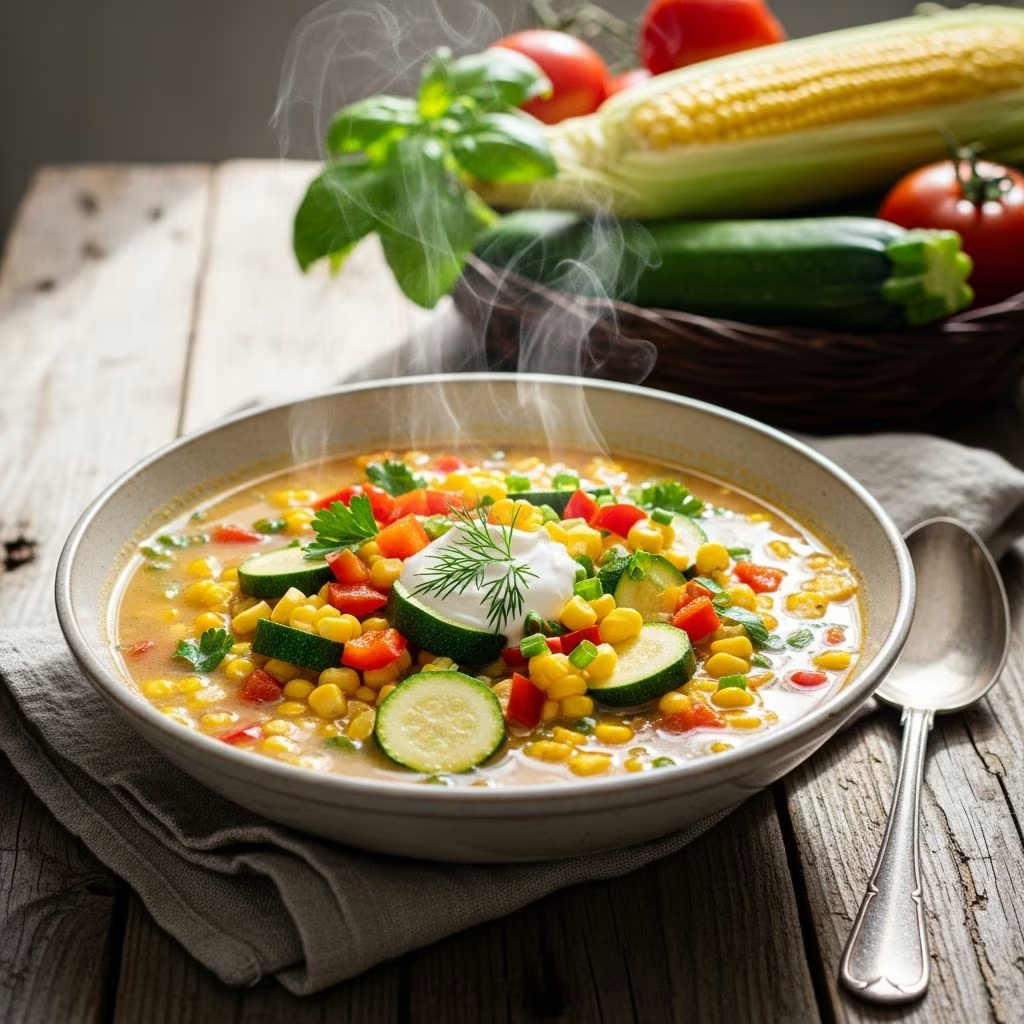
When the summer season reaches its peak, home cooks have access to an abundance of fresh produce that deserves to be showcased in memorable dishes. Among the most versatile and approachable options is a creamy chowder that combines two garden staples: sweet corn and tender zucchini. This comforting soup captures the essence of warm-weather cooking while remaining simple enough for weeknight preparation.
Understanding the Appeal of Seasonal Vegetable Chowders
Chowders have long held a special place in culinary traditions across North America, representing comfort, nourishment, and the bounty of seasonal harvests. Unlike lighter broths or consommés, chowders are characterized by their creamy, hearty nature and substantial vegetable content. The combination of corn and zucchini creates a particularly appealing summer variant because both vegetables reach peak flavor during the warmest months, when lighter meals are often preferred.
The beauty of this particular chowder lies in its adaptability. Whether you prefer a lighter broth-based version or a richer, more substantial soup, the fundamental components remain constant: quality seasonal vegetables, aromatic base ingredients, and careful attention to cooking technique. The result is a dish that works equally well as a light lunch, elegant dinner starter, or main course when paired with crusty bread and a fresh salad.
Building Flavor Through Proper Ingredient Selection
Creating an exceptional corn and zucchini chowder begins with understanding each ingredient’s role in the final dish. Success depends not merely on following measurements precisely, but on selecting quality components and understanding how they contribute to overall flavor development.
The Foundation Aromatics
Every great chowder begins with a flavorful base built from aromatic vegetables. Yellow onions provide natural sweetness that develops and intensifies through cooking, creating a subtle caramelized undertone. Garlic adds complexity and depth, though care must be taken to prevent burning, which would introduce bitter notes. Some preparations include additional aromatics such as celery or carrots, which contribute their own flavor dimensions and nutritional value. These vegetables should be diced uniformly to ensure even cooking and consistent texture throughout the finished chowder.
Fresh Corn Selection and Preparation
Fresh corn provides the chowder with natural sweetness and textural interest. When corn is in season, purchasing ears still in their husks and removing kernels immediately before cooking yields superior results compared to pre-cut alternatives. The kernels should be plump and milky when cut from the cob. For those unable to access fresh corn, high-quality frozen corn kernels represent an acceptable alternative, as freezing captures the vegetable at peak ripeness. Canned corn, while convenient, often contains added sodium and lacks the delicate texture of fresh or properly frozen options.
Zucchini Quality and Preparation
Summer zucchini at its prime—typically six to eight inches in length—offers tender flesh and mild flavor that complements rather than dominates. Larger zucchini develop woody seeds and thicker skins that can create an unpleasant texture in chowder. Proper preparation involves washing, trimming the ends, and dicing into consistent quarter-inch cubes. This uniform size ensures the zucchini pieces maintain their structure during cooking rather than becoming mushy or disintegrating into the broth.
Broth Considerations
The liquid base for chowder significantly influences the final product’s character. Low-sodium vegetable or chicken broth allows the natural flavors of corn and zucchini to emerge without competing with excessive salt. The choice between vegetable and chicken broth depends on dietary preferences and desired flavor profile—vegetable broth maintains the dish’s vegetable-forward nature, while chicken broth adds subtle savory depth. Water may be substituted if broth is unavailable, though this results in a milder, less flavorful final product.
Essential Cooking Techniques for Optimal Results
The Sauté Stage
Most corn and zucchini chowders benefit from an initial sauté phase where aromatic vegetables are cooked in butter or oil over medium heat. This step, typically lasting five to eight minutes, softens the vegetables and allows their natural sugars to begin caramelizing, creating a flavorful foundation for the remaining ingredients. The onions should become translucent and slightly golden; garlic should be fragrant but not browned. Stirring frequently prevents sticking and ensures even cooking.
Layering Ingredients for Even Cooking
After aromatics have softened, additional ingredients are added in stages based on their cooking time requirements. Potatoes, which take longer to become tender, typically enter first, followed by broth and any dried herbs. This mixture is brought to a boil, then reduced to a simmer where potatoes cook until partially tender—usually ten to fifteen minutes depending on cube size. Only after potatoes have begun softening are the more delicate corn and zucchini added, ensuring they don’t overcook into mushiness while waiting for potatoes to finish.
Achieving Desired Consistency
Chowder consistency falls along a spectrum from broth-like to very thick and creamy. Several methods achieve desired thickness without added flour or cornstarch. The natural starch in potatoes gradually releases into the liquid, naturally thickening the chowder as it simmers. For additional creaminess, some recipes incorporate heavy cream, half-and-half, or milk stirred in during the final minutes of cooking. Others transfer a portion of the cooked chowder to a blender, puree it until smooth, and return it to the pot, creating a naturally thickened consistency from the vegetables themselves. This technique, called partial puréeing, creates a creamy texture without adding dairy products.
Flavor Enhancement and Seasoning Strategy
Proper seasoning transforms a simple vegetable chowder into a memorable dish. Rather than adding all salt and pepper at the beginning, seasoning is best applied gradually throughout cooking, with final adjustments made just before serving. Fresh herbs such as basil, thyme, or parsley contribute brightness and aromatic complexity. Dried herbs can be added during the simmering stage so their flavors fully infuse the broth. Some preparations incorporate spice elements such as smoked paprika, cayenne pepper, or cumin to add subtle warmth and depth. Garlic powder or onion powder may enhance the aromatic profile for those unable to use fresh versions.
Traditional Preparation Method
A straightforward approach to preparing corn and zucchini chowder follows this general progression:
- Heat butter in a large pot and sauté diced onions until softened, approximately three to five minutes
- Add minced garlic and cook for an additional thirty seconds until fragrant
- Stir in diced potatoes and broth, bringing the mixture to a boil
- Reduce heat and simmer until potatoes are nearly tender, about ten to twelve minutes
- Add corn kernels and diced zucchini, cooking until all vegetables are fork-tender, approximately five to eight minutes
- Stir in cream or milk if desired, heating through without boiling
- Season to taste with salt, pepper, and additional herbs
- Simmer for an additional two to three minutes to allow flavors to meld
Customization and Variation Possibilities
The fundamental structure of corn and zucchini chowder provides an excellent canvas for personalization based on available ingredients and taste preferences. Many preparations incorporate bacon, which adds smoky richness and textural contrast through its crispness. Others include shredded chicken for additional protein content. Additional vegetables such as bell peppers, jalapeños, or summer squash varieties like pattypan or yellow straightneck squash can be incorporated, provided they’re added according to their cooking time requirements. Cheese additions range from tangy crumbled feta to smooth gouda, each contributing distinct flavor dimensions. Some recipes feature southwestern-inspired seasonings including cumin and chili powder, while others maintain a more classic American approach.
Garnishing and Serving Suggestions
Thoughtful garnishes elevate the visual appeal and eating experience of finished chowder. Fresh herbs such as torn basil, chopped parsley, or chive snippets add color and fresh flavor notes. Toasted nuts including pine nuts or sunflower seeds provide textural contrast and subtle richness. Crispy bacon pieces, whether incorporated into the soup or scattered on top, add smoky depth. A drizzle of quality olive oil or a dollop of sour cream provides visual interest and contributes additional richness. For those enjoying the chowder as a main course, serving it alongside crusty bread or over rice transforms the dish into a more substantial meal.
Storage and Make-Ahead Considerations
Corn and zucchini chowder stores well in covered containers in the refrigerator for up to four days, making it an excellent choice for meal preparation. The flavors often improve slightly after a day as ingredients continue melding. Reheating should occur slowly over medium heat on the stovetop, with stirring to ensure even warming. The chowder can be frozen for up to three months, though the texture of zucchini may become slightly softer upon thawing. For best results when freezing, slightly undercook vegetables to account for additional cooking that occurs during reheating. Soups containing cream-based elements may separate slightly upon thawing; whisking gently during reheating helps restore smooth consistency.
Nutritional Considerations
Corn provides complex carbohydrates and dietary fiber, along with vitamins B and C. Zucchini contributes minimal calories while offering hydration through its high water content and providing potassium and manganese. Potatoes add satisfying starch and nutritional value including vitamin B6 and potassium. When prepared with vegetable broth and minimal added fat, this chowder serves as a nutrient-dense meal. Those seeking lighter preparations can reduce or eliminate cream additions, achieving a satisfying texture through the natural thickening from starch content alone. The vegetable-forward composition makes this chowder an approachable way to increase daily produce consumption.
Frequently Asked Questions
Can this chowder be made vegetarian?
Absolutely. Using vegetable broth instead of chicken broth and omitting bacon creates a fully vegetarian preparation. The soup remains hearty and flavorful through the natural sweetness of corn and richness provided by cream additions.
What if I don’t have fresh corn?
Frozen corn kernels work excellently and are often picked at peak ripeness and frozen within hours, preserving nutritional value and flavor. Canned corn is acceptable but should be drained and rinsed to reduce sodium content.
How can I make this chowder dairy-free?
Substitute dairy milk with unsweetened plant-based alternatives such as coconut milk, oat milk, or almond milk. These maintain creaminess while accommodating dietary restrictions.
Is this recipe suitable for freezing?
Yes, though vegetables may soften further upon thawing. Slightly undercooking vegetables before freezing helps preserve texture.
What herbs pair well with this chowder?
Basil, thyme, and parsley are classic choices. Dill, chives, and tarragon also complement the sweet vegetable flavors well.
References
- Nutritional Properties of Corn and Zucchini — United States Department of Agriculture. 2024. https://fdc.nal.usda.gov/
- Food Storage Guidelines: Refrigeration and Freezing — U.S. Food and Drug Administration. 2024. https://www.fda.gov/food/foodsafety/foodsafetychart
- Culinary Techniques in Soup Preparation — The Culinary Institute of America, Hyde Park, NY. 2023.
- Seasonal Produce Selection and Storage — University of California Cooperative Extension. 2024. https://cenh.ucanr.edu/