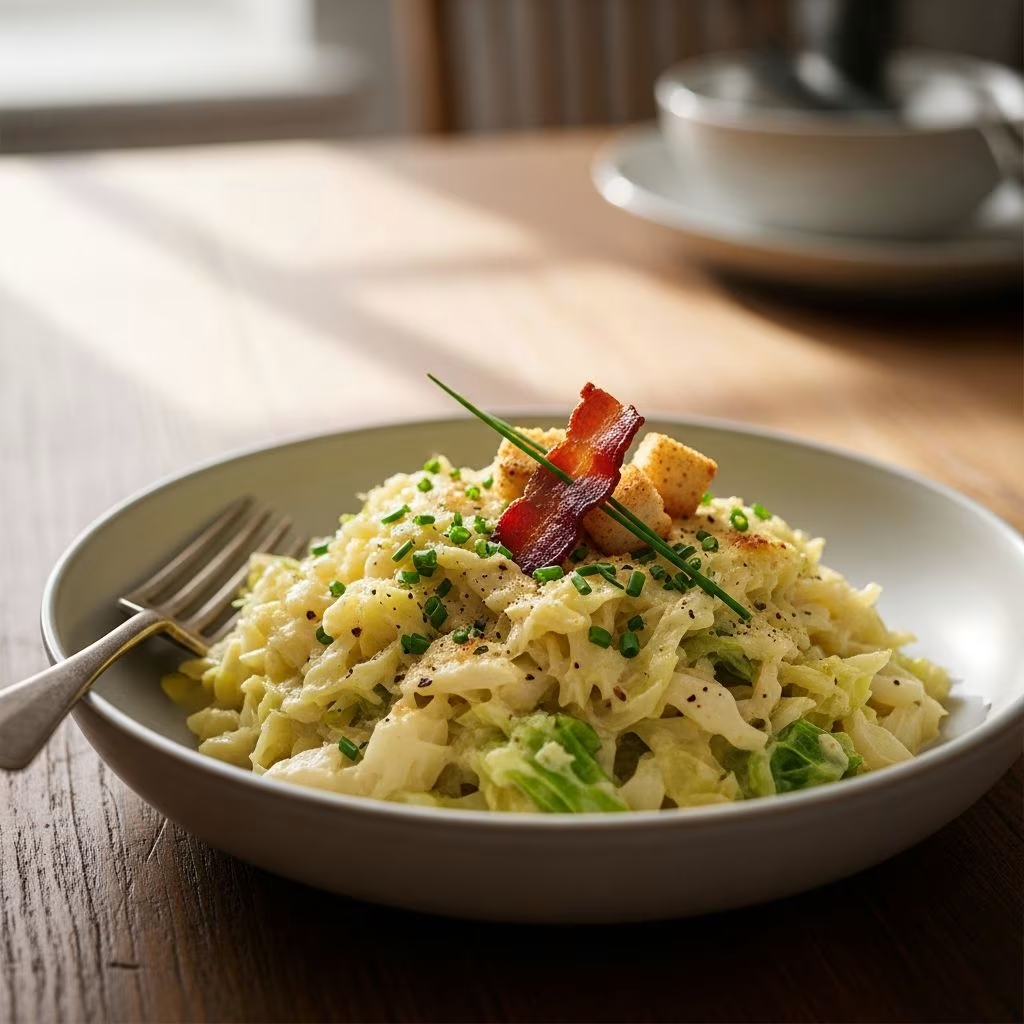
Indulge in the comforting embrace of **creamed cabbage**, a timeless side dish that transforms humble cabbage into a luxurious treat. This recipe combines tender cabbage with a silky sauce, offering a perfect balance of creaminess and subtle crunch. Ideal for family dinners, holiday feasts, or everyday meals, it’s versatile enough to complement roasts, poultry, or plant-based mains.
Why Creamed Cabbage Deserves a Spot on Your Table
Cabbage, often overlooked, shines in this preparation. Its mild flavor absorbs creamy sauces beautifully, creating a dish that’s both nutritious and satisfying. Packed with vitamins C and K, fiber, and antioxidants, it supports digestion and immunity. Unlike heavier starches, creamed cabbage is light yet indulgent, making it a smart choice for balanced eating.
Historically rooted in European cuisines, especially German and Irish traditions, this dish evokes nostalgia. It’s budget-friendly—using one affordable head of cabbage serves six—and quick, ready in about 25 minutes. Whether you’re aiming for keto-friendly low-carb options or hearty family sides, creamed cabbage adapts seamlessly.
Essential Ingredients for Perfect Creamed Cabbage
Gather these staples for a foolproof result:
- 1 medium head green cabbage (about 8 cups shredded): Crisp and fresh for best texture.
- 3 tablespoons butter: Unsalted for rich flavor base.
- 2 tablespoons all-purpose flour: Thickens the sauce (use cornstarch for gluten-free).
- 2 cups milk or heavy cream: Whole milk for creaminess; cream for decadence.
- 1 teaspoon salt and ½ teaspoon black pepper: Season to taste.
- Optional add-ins: Garlic, onion, bacon, herbs like thyme or nutmeg.
Pro tip: Choose firm, heavy cabbage heads with vibrant leaves. Shred finely for even cooking.
Step-by-Step Guide to Making Creamed Cabbage
Prep time: 10 minutes | Cook time: 15 minutes | Serves: 6
Prepare the cabbage: Remove outer leaves, quarter the head, and shred thinly (5mm strips). A mandoline or food processor speeds this up.
Make the roux: In a large skillet over medium heat, melt 2 tablespoons butter. Whisk in flour and cook 1-2 minutes until bubbly, not browned.
Add liquid: Gradually pour in milk while whisking to prevent lumps. Simmer 5 minutes until thickened, stirring constantly.
Season and combine: Stir in salt, pepper, and optional flavors like minced garlic or nutmeg. Add shredded cabbage, toss to coat.
Cook cabbage: Cover and simmer 5-7 minutes until tender-crisp. Uncover, stir in remaining butter, and cook 2 more minutes for glossy sauce.
Serve hot: Garnish with fresh herbs or crumbled bacon.
This method yields a sauce that clings perfectly without sogginess. Adjust cooking time for your preferred tenderness.
Flavor Boosters and Custom Twists
Elevate the basics with these ideas:
- Bacon-infused: Cook 4 slices bacon first, use fat for roux, crumble on top.
- Cheesy version: Stir in ½ cup shredded cheddar or cream cheese at the end.
- Herbaceous: Add thyme, parsley, or marjoram for aroma.
- Spicy kick: Dash of cayenne or mustard powder.
- Vegan swap: Use plant-based butter, oat milk, and nutritional yeast.
| Variation | Key Ingredients | Dietary Fit |
|---|---|---|
| Classic | Milk, flour, butter | Vegetarian |
| Keto | Heavy cream, no flour | Low-carb |
| Baked | Pre-cooked cabbage + cracker topping | Family-style |
| Savoy style | Savoy cabbage, garlic, double cream | European |
Nutritional Profile and Health Benefits
Per serving (1 cup): ~150 calories, 10g fat, 12g carbs (8g net for keto), 4g protein, 5g fiber. Cabbage’s sulforaphane aids detoxification; cream adds satisfying fats. It’s naturally gluten-free adaptable and low-glycemic.
For weight management, pair with lean proteins. Recent studies highlight cruciferous veggies like cabbage reducing inflammation—opt for organic to minimize pesticides.
Pairing Suggestions for Every Occasion
Holiday feasts: Alongside corned beef or turkey.
Weeknight dinners: With grilled chicken or pork chops.
Vegetarian mains: Next to lentil loaf or stuffed peppers.
Global twists: German-style with sausages; Irish with soda bread.
Store leftovers in an airtight container up to 3 days. Reheat gently with a splash of milk to revive creaminess. Freezes well for 2 months.
Common Mistakes and Pro Tips
- Avoid overcooking: Cabbage turns mushy—aim for al dente.
- Prevent lumps: Whisk roux vigorously; add milk slowly.
- Balance flavors: Taste before serving; nutmeg enhances subtly.
- Skillet size: Use wide pan for even cooking.
For crispier results, blanch cabbage 2 minutes first, then cream.
Frequently Asked Questions (FAQs)
Can I make creamed cabbage ahead?
Yes! Prepare up to step 4, refrigerate, then reheat and finish cooking. Great for potlucks.
Is it keto-friendly?
Absolutely—skip flour, use heavy cream. Under 10g net carbs per serving.
What if I don’t have fresh cabbage?
Frozen works; thaw and drain excess water to avoid watery sauce.
How to make it dairy-free?
Coconut milk and oil mimic creaminess effectively.
Can I bake it?
Yes, transfer to casserole, top with breadcrumbs/butter, bake 20 minutes at 350°F.
Exploring Regional Variations
From Irish St. Patrick’s Day staples with sour cream to German Rahmwirsing with bacon, creamed cabbage varies worldwide. English versions bake with cracker crumbs for crunch; modern twists incorporate cheese or mustard.
Experiment with red cabbage for color or Savoy for frillier leaves and nuttier taste.
References
- USDA FoodData Central: Cabbage, raw — United States Department of Agriculture. 2023-05-15. https://fdc.nal.usda.gov/fdc-app.html#/food-details/169975/nutrients
- Cruciferous Vegetables and Cancer Prevention — National Cancer Institute. 2024-02-10. https://www.cancer.gov/about-cancer/causes-prevention/risk/diet/cruciferous-vegetables-fact-sheet
- Dietary Guidelines for Americans, 2020-2025 — U.S. Department of Health and Human Services. 2020-12-01. https://www.dietaryguidelines.gov/sites/default/files/2020-12/Dietary_Guidelines_for_Americans_2020-2025.pdf
- Harvard T.H. Chan School of Public Health: Vegetables and Fruits — Harvard University. 2023-11-20. https://www.hsph.harvard.edu/nutritionsource/what-should-you-eat/vegetables-and-fruits/