Flounder represents one of the most versatile and delicate white fish options available for home cooks seeking to prepare restaurant-quality meals. When paired with sweet, succulent crab meat, this combination transforms into an impressive centerpiece that appears far more complicated to prepare than it actually is. Whether you’re planning a special dinner celebration or simply wanting to elevate your weeknight cuisine, understanding the fundamentals of this classic preparation will enable you to create consistently outstanding results.
Understanding Your Primary Ingredients
Success with crab-stuffed flounder begins with selecting high-quality ingredients that complement each other beautifully. The foundation of this dish relies on two essential components: fresh flounder fillets and premium crab meat.
Flounder Fillets: Selection and Preparation
Flounder fillets should be relatively uniform in thickness, ideally between 4 to 6 ounces per fillet, to ensure even cooking throughout the preparation process. When shopping, look for fillets that appear moist and translucent rather than dull or discolored. The flesh should smell clean and oceanic without any ammonia-like odors that might indicate age or improper storage. If purchasing frozen fillets, allow them to thaw completely in the refrigerator before beginning your preparation, as this prevents uneven cooking and helps maintain the delicate texture of the fish.
Crab Meat Selection and Quality
The type of crab meat you choose will significantly impact the final flavor profile of your dish. Lump crab meat, which consists of larger chunks from the swimming fins of the crab, provides a more luxurious texture and sweeter flavor compared to other varieties. Jumbo lump represents the premium option, offering the largest, most visually impressive pieces. For a more budget-conscious approach, backfin crab meat delivers excellent flavor while containing smaller, more manageable pieces that blend seamlessly into stuffing mixtures. Always inspect canned or packaged crab meat for any remaining shell fragments before incorporating it into your filling, as these can create unpleasant dining experiences.
Building Your Crab Filling
The stuffing transforms simple flounder into an extraordinary dish through the careful combination of complementary flavors and textures.
Core Filling Components
The foundation of most crab fillings begins with:
- Breadcrumbs or crushed crackers – These provide structural integrity to the filling and help bind the mixture together during cooking
- Egg binder – Acts as the adhesive that holds all components together, typically one large egg per pound of crab meat
- Mayonnaise – Contributes moisture and richness while helping bind ingredients
- Seasonings – Old Bay seasoning represents the classic choice for crab preparations, though experimentation with other profiles is encouraged
- Fresh herbs – Parsley, dill, or chives add brightness and sophistication to the filling
- Aromatic vegetables – Finely diced bell peppers, green onions, or celery introduce textural contrast and subtle vegetable notes
Preparation Methodology
Combine wet ingredients first—egg, mayonnaise, and lemon zest—whisking them together until well integrated. This creates a cohesive base for binding all other components. Add your seasonings to this mixture, then gently fold in the crab meat using a spatula rather than a spoon, which helps preserve the larger crab chunks and prevents the filling from becoming mushy. Finally, incorporate breadcrumbs gradually, mixing just until the filling achieves a consistency that holds together without becoming dense or compact. The goal is a filling that maintains its structure during cooking while remaining tender and succulent.
Assembling Your Flounder Packages
Proper assembly technique directly influences how attractively your finished dish presents and how evenly it cooks.
Preparation Steps
Begin by laying your flounder fillets on a clean work surface with the prettiest side facing downward. This presentation choice means the more visually appealing surface will face upward in your final plated dish. Lightly sprinkle each fillet with salt and pepper, establishing baseline seasoning that complements the crab filling. Position approximately ¼ cup of crab filling toward the tail end of each fillet, creating a mound that leaves sufficient fish on all sides for rolling.
Rolling Technique
Starting from the tail end where your filling sits, tightly roll the flounder fillet toward the head end, ensuring the seam remains on the bottom when placed in your baking vessel. This positioning prevents the filling from escaping during cooking and creates an attractive appearance when plated. The rolled flounder should resemble a compact spiral or cylinder, with no visible crab mixture protruding from the ends.
Cooking Methods and Temperature Guidelines
Multiple cooking approaches yield excellent results, each with distinct advantages depending on your preferences and available equipment.
Oven Baking Approach
Preheat your oven to either 350°F or 375°F depending on your desired cooking speed and level of browning. Place assembled flounder rolls into a lightly greased baking dish, positioning them seam-side down to maintain structural integrity throughout cooking. Brush the tops with melted butter and season with additional Old Bay seasoning or paprika for enhanced visual appeal. Bake for 20 to 30 minutes, monitoring the fish until it flakes easily when tested with a fork at the thickest point. Cooking time varies based on the thickness of your fillets and the precise oven temperature, so checking after 20 minutes prevents overcooking.
Whole Flounder Preparation
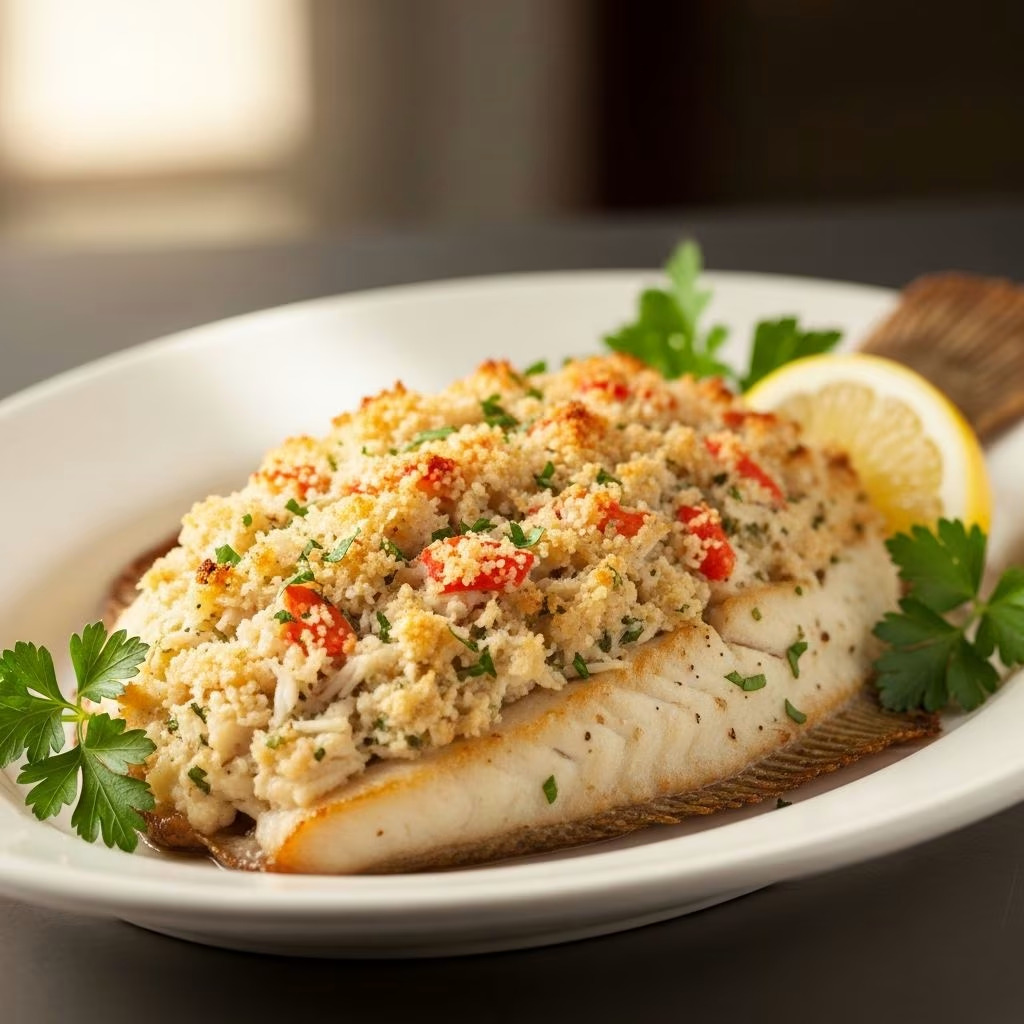
For those preferring to work with whole flounder rather than fillets, select specimens in the 16 to 20-inch range and have your fishmonger clean the fish, removing any innards and gills. Create a pocket between the top and bottom fillets by carefully folding open the cleaned fish. Fill this cavity generously with your crab stuffing mixture, mounding it attractively and patting it gently to create a dome shape. Bake whole flounder at 350°F for 45 to 60 minutes, monitoring for golden-brown coloring on the visible crab meat and ensuring the crab filling reaches proper doneness. This method creates an impressive presentation suitable for special occasions.
Complementary Sauces and Accompaniments
While the crab-stuffed flounder stands beautifully on its own, carefully chosen accompaniments elevate the entire dining experience.
Lemon-Based Preparations
Fresh lemon juice combined with high-quality olive oil, salt, and pepper creates a bright, acidic sauce that cuts through the richness of the crab filling and complements the delicate flounder. Prepare this dressing by whisking together fresh lemon juice, extra-virgin olive oil in a 1:3 ratio, and your preferred seasonings. Drizzle this sauce over plated flounder just before serving to maintain the fish’s appealing texture.
Caper and Lemon Sauce
For a more complex flavor profile, combine lemon juice and zest with brined capers, which introduce subtle briny, tangy notes that enhance the seafood elements. This sauce particularly complements flounder fillets due to its sophisticated flavor combination that doesn’t overpower the delicate fish.
Essential Tips for Success
- Don’t overwork the crab mixture – Gentle folding preserves the tender crab chunks that provide textural interest and premium appearance in your finished dish
- Allow fillets to reach room temperature – Fish taken directly from refrigeration cooks unevenly, resulting in some portions being overdone while others remain undercooked
- Use a meat thermometer – Insert the thermometer into the thickest part of the filling to confirm it reaches a safe internal temperature of 145°F
- Don’t skip the butter – This ingredient keeps the flounder moist during cooking and prevents the delicate fish from drying out
- Prepare components in advance – Mix your crab filling hours ahead of cooking, allowing flavors to meld while you handle assembly closer to mealtime
Serving Suggestions and Presentation
Plating plays a crucial role in the overall dining experience. Place your crab-stuffed flounder roll slightly off-center on a warmed plate, garnishing with fresh lemon wedges and perhaps a light scattering of fresh herbs. Include simple, elegant sides such as roasted asparagus, steamed broccoli, or a fresh garden salad to create visual balance and complement the richness of the crab filling. Serve immediately while the flounder retains its warmth and the filling remains at its most flavorful.
Nutritional Considerations
Both flounder and crab meat provide excellent sources of lean protein while remaining relatively low in calories. Flounder contains omega-3 fatty acids, which support heart health and brain function. Crab meat offers similar nutritional benefits while contributing selenium and other essential minerals. For health-conscious preparations, substitute full-fat mayonnaise with Greek yogurt or fat-free alternatives, use whole wheat breadcrumbs, and employ cooking spray rather than butter to reduce overall fat content without significantly compromising flavor or texture.
Frequently Asked Questions
Can I prepare crab-stuffed flounder ahead of time?
Yes, you can assemble the rolls several hours before cooking and refrigerate them covered until you’re ready to bake. This advance preparation actually allows the flavors to develop and meld together, potentially enhancing the final result.
What if I can’t find fresh crab meat?
High-quality canned or frozen crab meat works excellently as a substitute. Thaw frozen crab meat in the refrigerator beforehand and ensure canned varieties are well-drained before incorporating into your filling.
Can flounder be replaced with another fish?
Absolutely. Sole, halibut, cod, or other delicate white fish respond beautifully to the same preparation method. Adjust cooking times based on fillet thickness to ensure proper doneness.
How should I store leftovers?
Place cooled crab-stuffed flounder in an airtight container and refrigerate for up to three days. Reheat gently in a 300°F oven to prevent drying out the delicate fish.
Can this dish be frozen?
Assemble uncooked rolls, wrap individually in plastic wrap and aluminum foil, and freeze for up to three months. Cook directly from frozen, adding 10 to 15 minutes to the standard baking time.
References
- Crab-Stuffed Whole Flounder Recipe — Realtree Outdoor Media. Accessed April 2026. https://realtree.com/timber-2-table-wild-game-recipes/crab-stuffed-whole-flounder
- Crab-Stuffed Flounder with Zucchini and Corn — Skinnytaste. Accessed April 2026. https://www.skinnytaste.com/crab-stuffed-flounder/
- Crab Stuffed Flounder Recipe with Lemon Caper Sauce — Sip + Sanity. Accessed April 2026. https://www.sipandsanity.com/crab-stuffed-flounder-recipe/
- Crab Imperial Stuffed Flounder — Phillips Foods. Accessed April 2026. https://www.phillipsfoods.com/recipes/crab-imperial-stuffed-flounder/
- Seafood of the Month: Crab Stuffed Flounder Roll-ups — Holden Beach NC. Accessed April 2026. https://holdenbeachnc.com/seafood-of-the-month-flounder/