The Origins of a Regional Barbecue Classic
Cornell chicken represents more than just a recipe—it embodies a piece of American culinary innovation rooted in agricultural promotion and scientific advancement. The dish emerged in the 1950s when Dr. Robert C. Baker, a poultry science and food science professor, sought to develop a cooking method that would increase demand for locally-raised chicken from New York State farmers. While Baker originally conceived the marinade during his tenure at Penn State University, the recipe gained widespread recognition and popularity after he joined the faculty at Cornell University, where his mission centered on bolstering the regional poultry industry.
This visionary approach to regional food promotion demonstrates how academic research and culinary innovation can intersect to create lasting cultural dishes. Baker’s work extended beyond this single recipe—his contributions to poultry science included the development of chicken nuggets, turkey ham, and poultry hot dogs, making him a transformative figure in processed meat innovation. The Cornell chicken marinade, however, remains his most celebrated legacy in the grilling world, capturing the essence of mid-century American barbecue culture while serving a practical agricultural purpose.
Understanding the Science Behind the Signature Marinade
What distinguishes Cornell chicken from standard barbecued poultry lies in its unique marinade composition, specifically the inclusion of raw egg as a key ingredient. This addition serves multiple culinary functions beyond simple flavoring. The egg creates a protective custard-like coating on the chicken’s surface during cooking, which locks in moisture while allowing the exterior to develop a desirable crispy texture. This dual benefit—enhanced juiciness inside combined with crackling skin outside—represents the cornerstone of the recipe’s success.
The marinade also relies on a precise balance of acidic and fatty components. Apple cider vinegar provides the acidic base, delivering both flavor depth and a tenderizing action that breaks down connective tissues in the meat. Vegetable oil counterbalances the vinegar’s acidity, creating an emulsified coating that adheres evenly to the chicken’s surface. This oil-vinegar combination ensures consistent browning and prevents excessive drying during the grilling process.
Poultry seasoning forms the aromatic foundation of the marinade, blending complementary herbs and spices that enhance rather than overshadow the natural chicken flavor. Salt plays a dual role—enhancing taste while also helping the marinade penetrate the meat through osmotic action. The result is chicken that absorbs flavor throughout rather than merely on the surface.
Essential Ingredients for Authentic Preparation
Recreating traditional Cornell chicken requires gathering specific components that work synergistically to achieve the characteristic taste and texture profile. Understanding the purpose of each ingredient allows for informed adjustments based on personal preference or dietary considerations.
- Raw Egg: Typically one whole egg per standard batch, the raw egg emulsifies the oil and vinegar while creating the signature coating that produces both crispy exterior and moist interior
- Apple Cider Vinegar: Generally two cups per batch, this provides the acidic backbone and slight fruity undertones that distinguish the marinade from other vinegar-based preparations
- Vegetable Oil: Approximately one cup, this fatty component balances acidity and allows for even marinade distribution across all poultry surfaces
- Salt: Usually one to three tablespoons depending on batch size, this enhances flavor penetration and taste development
- Poultry Seasoning: One to two tablespoons of this pre-blended mixture delivers the herbaceous character essential to the recipe
- Black Pepper: A half teaspoon of freshly ground pepper adds subtle heat and complexity
- Bone-In, Skin-On Chicken Pieces: Quarters, thighs, drumsticks, or breasts all work, though the original recipe favored quarters for optimal marinade absorption and cooking consistency
Poultry Selection and Preparation Considerations
The choice of chicken significantly impacts the final result. Bone-in, skin-on cuts perform exceptionally well because the bones conduct heat evenly, ensuring consistent cooking throughout, while the skin crisps beautifully under the marinade’s protective layer. Traditionally, the recipe calls for chicken quarters, which represent a balanced combination of white and dark meat that cooks at similar rates when properly managed.
While variations accommodate different preferences, skinless chicken or boneless cuts absorb the marinade differently and may not achieve the same textural contrast that defines Cornell chicken. Some contemporary adaptations incorporate boneless thighs or breasts for convenience, though purists argue these modifications diminish the authentic experience.
Preparation begins with carefully piercing the chicken pieces multiple times with a fork, creating pathways for the marinade to penetrate beyond the surface. This simple step dramatically improves flavor distribution and the emulsifying action of the egg-based marinade throughout the meat.
Marinade Preparation and Application Techniques
Combining the marinade components requires attention to blending methodology. Whisking the egg, oil, and vinegar thoroughly ensures an emulsified mixture rather than separated layers. This emulsion provides the optimal coating consistency and helps distribute flavoring agents uniformly. Some variations incorporate mayonnaise as an additional emulsifier, creating an even creamier base that adheres exceptionally well to poultry surfaces.
Once prepared, the marinade should completely submerge the prepared chicken pieces. Marinating times vary from several hours to overnight, with longer marinating periods allowing deeper flavor penetration. For convenience, marinating can occur directly on the grill using a specialized container, or in a large bowl in the refrigerator before grilling commences.
The marinade functions simultaneously as both a flavor vehicle and a basting sauce during cooking. Reserve a portion before adding raw poultry if planning to use it as a finishing sauce on the cooked chicken, or maintain separate batches for safety.
Grilling Methodology for Optimal Results
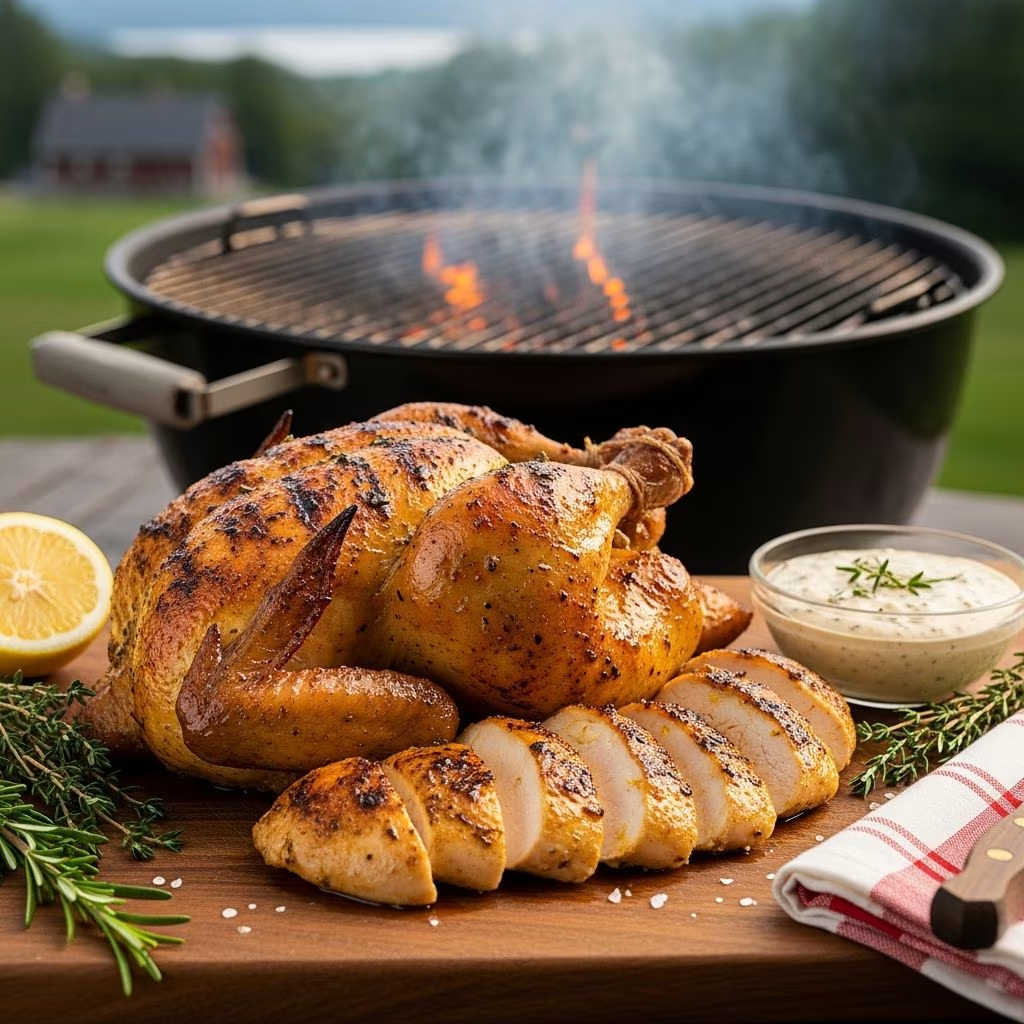
Charcoal grilling represents the traditional and preferred method for Cornell chicken preparation. Charcoal’s superior heat regulation and smoky contributions create the characteristic depth and complexity that gas grills cannot replicate. The direct heat from charcoal, combined with the protective marinade coating, produces the signature crispy exterior while maintaining an exceptionally juicy interior.
Temperature management proves critical throughout the cooking process. Medium heat allows the chicken to cook through without burning the exterior. The marinade’s high sugar content from the vinegar and egg can caramelize quickly, so monitoring the grill prevents charring. Turning pieces occasionally ensures even cooking and browning on all sides.
Cooking time varies based on piece size and grill temperature but typically ranges from thirty to forty-five minutes for standard quarters. Dark meat portions require longer cooking than breasts to reach safe internal temperatures while maintaining the desired texture.
Complementary Serving Suggestions and Flavor Pairings
Cornell chicken’s bold, tangy character pairs beautifully with several classic side dishes and beverages. Traditional corn on the cob, coleslaw, and baked beans complement the main course without overwhelming its distinctive flavor profile. The vinegar-forward marinade also works well alongside sweeter accompaniments, creating pleasant flavor contrast.
For those preferring additional sauce options, traditional barbecue sauces can be served on the side rather than applied during cooking, preserving the marinade’s original character while offering guests customization flexibility. Root beer, lemonade, and iced tea serve as ideal beverage pairings, with the acidic components echoing the marinade’s vinegar base.
Variations and Modern Adaptations
Contemporary cooks have developed several interpretations of the classic recipe, sometimes referred to as “Fireman Chicken” in certain regions. These adaptations may include garlic powder, paprika, or additional seasonings beyond the traditional poultry seasoning. Some versions incorporate mayonnaise more substantially, creating a creamier marinade base that appeals to different taste preferences.
The versatility of the marinade extends to alternative proteins as well. Pork chops, pork ribs, and even turkey respond well to the same marinade composition, allowing the flavor profile to enhance proteins beyond chicken while maintaining the original scientific foundation of moisture retention and flavor development.
Frequently Asked Questions About Cornell Chicken
Can I use boneless, skinless chicken with this marinade? While technically possible, boneless, skinless pieces do not achieve the textural complexity of bone-in, skin-on poultry. The skin develops the characteristic crispy exterior, while bones conduct heat more evenly. Traditional preparations recommend skin-on cuts.
Is the raw egg in the marinade safe? The raw egg becomes fully cooked during the grilling process as the marinade coating reaches safe temperatures. However, individuals concerned about raw egg consumption can explore pasteurized egg products as substitutes, though this may slightly alter the marinade’s binding properties.
How long should I marinate the chicken? Marinating for at least four hours allows adequate flavor absorption, though overnight marinating produces even deeper seasoning penetration. Extended marinating beyond twenty-four hours does not significantly improve results.
What if I don’t have a charcoal grill? Gas grills can accommodate Cornell chicken, though the results may differ slightly. Charcoal creates superior heat characteristics and smoky undertones that define the authentic experience, but gas grilling remains a viable alternative.
Can I prepare this recipe in an oven instead of grilling? Oven-baked preparations do not develop the same exterior crust and smoky flavor. A conventional oven at 400°F can cook Cornell chicken, but the signature textural elements remain diminished compared to grilled versions.
References
- Cornell Chicken Barbecue Sauce History — Fountain Avenue Kitchen. Accessed April 10, 2026. https://fountainavenuekitchen.com/cornell-chicken/
- Cornell Chicken Barbecue – Classic Recipe Guide — Platter Talk. Accessed April 10, 2026. https://www.plattertalk.com/cornell-chicken-barbecue/
- Easy Cornell Chicken Recipe (Fireman Chicken) — Savory Experiments. Accessed April 10, 2026. https://www.savoryexperiments.com/fireman-chicken/