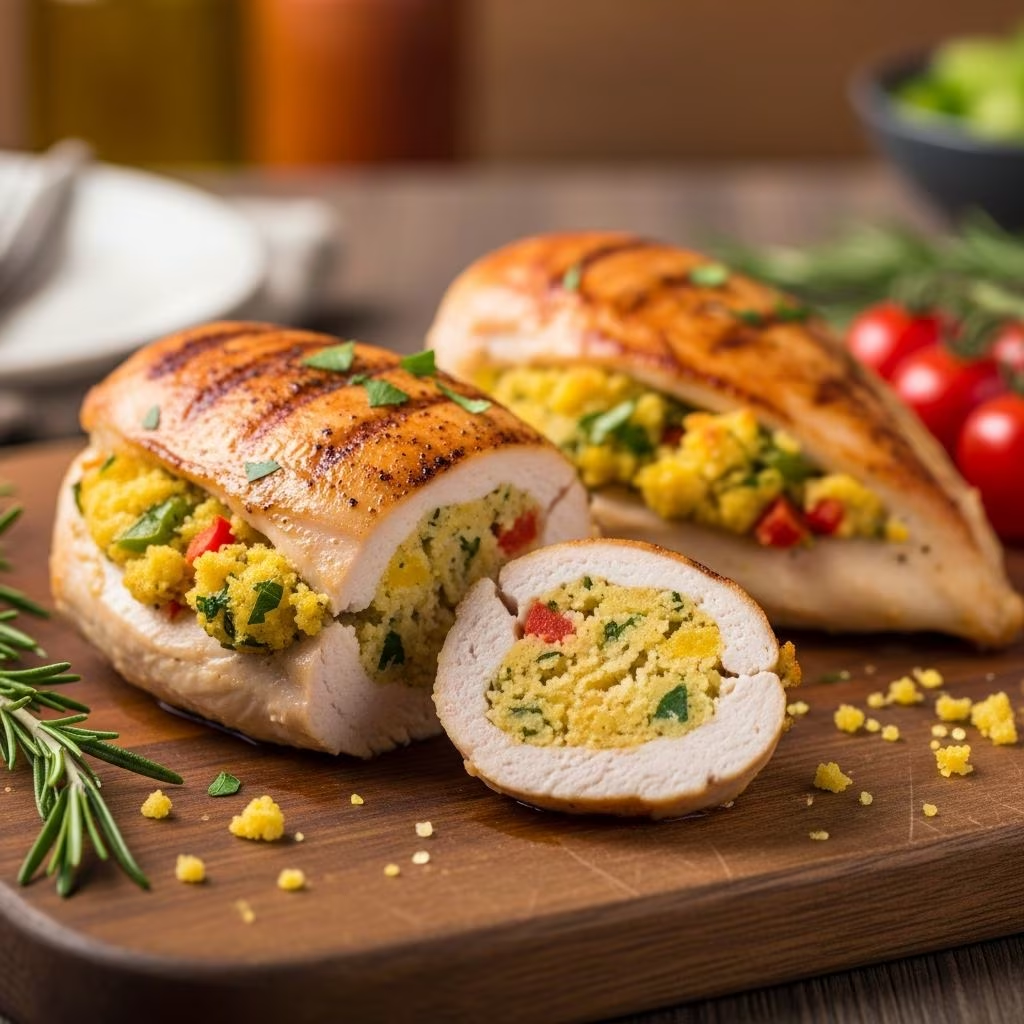
Cornbread-stuffed chicken breasts represent a beloved staple of American home cooking, combining tender poultry with the warm, hearty flavors of traditional cornbread dressing. This dish brings together simple ingredients to create something truly satisfying, making it an ideal choice for both casual family meals and more formal dinner occasions. The beauty of this recipe lies in its straightforward preparation combined with impressive presentation, allowing even novice cooks to achieve restaurant-quality results in their own kitchens.
The appeal of cornbread-stuffed chicken extends beyond mere taste. When boneless chicken breasts are paired with a flavorful stuffing mixture and topped with a savory cream sauce, the result is a complete meal that feels both comforting and elegant. This versatile dish adapts well to various cooking methods and ingredient variations, making it perfect for accommodating different dietary preferences and pantry staples.
Understanding the Components of This Classic Dish
Creating cornbread-stuffed chicken breasts requires understanding how each component contributes to the overall flavor profile and texture. The chicken provides a lean protein base, while the cornbread stuffing adds moisture and substance. The sauce brings everything together with its creamy richness, creating a cohesive dish that appeals to multiple senses.
The Chicken Foundation
Boneless, skinless chicken breast halves serve as the primary component of this dish, offering a neutral canvas for the stuffing flavors. The lean nature of chicken breast makes it an excellent choice for health-conscious cooking, while its mild flavor allows the cornbread stuffing and accompanying sauce to shine. Using consistently sized breasts ensures even cooking throughout the dish, preventing some pieces from drying out while others remain undercooked.
Cornbread Stuffing Mixture
The stuffing layer combines prepared cornbread mix with corn kernels and butter, creating a moist, flavorful bed atop the chicken. This mixture serves multiple purposes: it adds textural contrast, introduces additional flavor dimensions, and helps keep the chicken moist during baking. The corn kernels add sweetness and visual interest, while the butter ensures the stuffing remains tender rather than becoming dry.
The Cream Sauce
A simple sauce made from cream of celery soup, milk, and fresh parsley binds the ingredients together while adding moisture and richness to the entire dish. This element transforms what could be a simple casserole into something more sophisticated, creating a cohesive dining experience rather than separate components on a plate.
Ingredient Selection and Preparation
Success with cornbread-stuffed chicken begins with thoughtful ingredient selection and proper preparation techniques. Quality ingredients don’t necessarily mean expensive items; rather, they should be fresh and appropriate for the cooking method employed.
Essential Ingredients
- Chicken breasts: Six boneless, skinless halves, approximately 1½ pounds total weight, provide the protein foundation
- Cornbread stuffing mix: An 8-ounce package of prepared stuffing mix offers convenience without sacrificing flavor
- Whole kernel corn: An 8-ounce can, drained, adds sweetness and texture to the stuffing layer
- Butter: ¼ cup melted butter enriches the stuffing mixture and promotes even cooking
- Chicken or vegetable broth: One cup of boiling liquid helps the stuffing absorb moisture and develop proper texture
- Cream of celery soup: A 10¾-ounce can provides the sauce base with subtle vegetable flavors
- Milk: ⅓ cup lightens the sauce and increases its volume for even distribution
- Fresh parsley: One teaspoon of chopped parsley adds brightness and visual appeal
- Garlic powder, salt, and pepper: These seasonings enhance the chicken’s inherent flavors
Optional Enhancement Ingredients
While the base recipe works beautifully, various ingredients can personalize this dish to match your preferences. Sage and thyme complement cornbread flavors naturally. Sautéed onions and celery add complexity to the stuffing mixture. A small amount of fresh herbs like rosemary or basil can elevate the sauce. Some cooks prefer adding a tablespoon of lemon juice to the cream sauce for brightness, or incorporating crumbled sausage into the stuffing for additional protein and flavor.
Preparation and Cooking Techniques
The preparation process for cornbread-stuffed chicken is remarkably straightforward, requiring minimal active cooking time while delivering maximum flavor impact.
Preparing Your Workspace
Begin by preheating your oven to 375 degrees Fahrenheit, allowing it adequate time to reach the proper temperature before the chicken enters. Spray a 9 by 13-inch baking dish with nonstick cooking spray, creating an easy-release surface that prevents sticking and simplifies cleanup afterward. Proper preparation of your baking vessel sets the stage for success throughout the cooking process.
Seasoning the Chicken
Pat the chicken breasts dry using paper towels before seasoning. This removes excess surface moisture that could prevent proper browning and seasoning adherence. Sprinkle each breast evenly with garlic powder, salt, and pepper on both sides. Arrange the seasoned breasts in a single layer within the prepared baking dish, ensuring they don’t overlap. This arrangement promotes even heat circulation and consistent cooking throughout the dish.
Assembling the Stuffing Layer
In a separate mixing bowl, combine the cornbread stuffing mix with the drained corn kernels. Pour one cup of boiling water over the mixture, then add the melted butter. Stir thoroughly until the mixture reaches a consistent, moist texture that holds together when spooned. This crucial step hydrates the stuffing, allowing it to cook properly and develop the desired tender texture. Spoon this mixture evenly over each chicken breast, distributing it to cover the entire surface of the poultry.
Creating and Adding the Sauce
In another bowl, whisk together the cream of celery soup, milk, and chopped fresh parsley until well combined. This sauce should achieve a pourable consistency; if it seems too thick, add a small amount of additional milk to reach the desired consistency. Carefully pour this mixture over the stuffing layer and chicken, ensuring even distribution across the entire baking dish.
Baking Process and Timing
Proper baking technique ensures the chicken cooks through completely while the stuffing develops its optimal texture and the sauce reduces to the perfect consistency.
Initial Covered Baking Phase
Cover the baking dish tightly with aluminum foil or a baking lid, creating a sealed environment that traps steam and promotes even cooking. Place the covered dish in the preheated 375-degree oven and bake for 35 minutes. This covered phase allows the chicken to cook through gently while the stuffing absorbs moisture and flavors from both the sauce and the chicken drippings.
Finishing Uncovered Phase
After 35 minutes, carefully remove the foil covering the dish. Return the uncovered dish to the oven and bake for an additional 8 to 10 minutes, until the stuffing develops a golden-brown color on its exposed surface. This uncovered phase allows some of the liquid to evaporate, concentrating flavors and creating the desirable textural contrast between the moist interior and the slightly crispy top layer.
Determining Doneness
The dish reaches completion when the chicken’s internal temperature registers 165 degrees Fahrenheit when measured with an instant-read meat thermometer inserted into the thickest part of the largest breast. The stuffing should appear golden brown on top, and the sauce should be hot throughout, with bubbles appearing around the dish’s edges. These visual and temperature cues confirm that the dish has completed cooking and is ready for serving.
Serving Suggestions and Accompaniments
Cornbread-stuffed chicken presents beautifully on the plate and pairs well with numerous side dishes that complement its flavors without overwhelming them.
Vegetable Pairings
Steamed or roasted green vegetables provide a nutritional balance and color contrast to the dish. Broccoli, green beans, or asparagus work particularly well. Roasted root vegetables like carrots, Brussels sprouts, or sweet potatoes add earthiness and sweetness that harmonize with the cornbread flavors. A simple green salad with vinaigrette offers refreshing lightness to offset the richness of the cream sauce.
Starch Accompaniments
While the cornbread stuffing provides substantial carbohydrates, some diners appreciate additional starches. Buttered egg noodles or egg pasta complements the cream sauce beautifully. Mashed potatoes or cauliflower mash offer comfort-food appeal. Steamed rice provides a lighter alternative that doesn’t compete with the main dish’s rich flavors.
Bread Considerations
Despite the cornbread component within the stuffing, many people enjoy serving crusty bread on the side for soaking up excess sauce. Dinner rolls or a simple baguette serve this purpose well without creating redundancy in the cornbread flavors already present in the dish.
Storage and Make-Ahead Strategies
Cornbread-stuffed chicken lends itself well to advance preparation and storage, making it practical for busy households.
Refrigeration Guidelines
Store leftover cornbread-stuffed chicken in an airtight container within the refrigerator for up to three days. The chicken and stuffing keep well together with the sauce, actually improving as flavors meld overnight. Reheat gently in a 350-degree oven, covered with foil, until warmed through completely, approximately 15 to 20 minutes depending on portion size.
Freezing Considerations
The assembled but unbaked dish freezes successfully for up to two months when properly wrapped. Assemble everything according to recipe directions, then cover the baking dish tightly with plastic wrap followed by aluminum foil, clearly labeling the contents and date. Thaw overnight in the refrigerator before baking according to the original recipe instructions, adding approximately five to ten minutes to the initial covered baking time to account for the cold starting temperature.
Troubleshooting Common Issues
Understanding potential challenges helps ensure consistent success with this recipe across multiple preparations.
Dry Chicken Breasts
If chicken turns out dry, the baking temperature may have been too high or the chicken may have remained in the oven too long. Ensure accurate oven temperature using an oven thermometer. Using a meat thermometer confirms doneness without guessing. Consider pounding chicken breasts to uniform thickness before cooking, promoting even heat penetration.
Soggy or Overly Moist Stuffing
Excessive moisture results from too much liquid in the initial stuffing mixture. Reduce the boiling water by approximately ¼ cup and add it gradually while mixing, checking texture before adding the complete amount. Alternatively, extend the uncovered baking time by a few minutes to allow additional moisture to evaporate.
Sauce That’s Too Thick
A sauce that doesn’t pour easily needs additional liquid. Whisk in milk, one tablespoon at a time, until achieving the desired pourable consistency. Thin sauces are preferable to thick ones, as they distribute more evenly and keep all components moist during serving.
Nutritional Considerations
Understanding the nutritional profile of cornbread-stuffed chicken helps with meal planning and dietary accommodation.
Each serving provides substantial protein from the chicken breast, supporting muscle maintenance and satiety. The cornbread stuffing contributes carbohydrates and B vitamins from the cornmeal. The cream sauce adds dairy-based calcium and fat-soluble vitamins. The corn kernels provide fiber, antioxidants, and additional micronutrients. While not an extremely low-calorie dish, the balanced macronutrient composition makes it appropriate for most dietary approaches when served with generous vegetable accompaniments.
Variations and Adaptations
The basic cornbread-stuffed chicken recipe adapts to numerous variations while maintaining its essential character.
Protein Modifications
Using ground sausage or diced ham mixed into the stuffing adds smoky, savory depth. Crumbled bacon stirred into the stuffing contributes salty richness. Turkey breasts substitute for chicken if preferred, though cooking time may require slight adjustment based on piece size.
Stuffing Flavor Variations
Adding fresh sage, thyme, or rosemary to the basic stuffing creates herbaceous versions. Diced sautéed mushrooms and onions introduce umami and aromatic qualities. Shredded cheese mixed into the stuffing adds richness and complexity. Diced jalapeños or cayenne pepper create spiced versions for those who enjoy heat.
Sauce Alternatives
Cream of mushroom or cream of chicken soup replaces celery soup for different flavor profiles. Adding sour cream to the sauce creates tanginess. Fresh lemon juice brightens the sauce. Wine or dry vermouth adds sophistication.
Frequently Asked Questions
Can I prepare this dish ahead of time?
Yes, the assembled but unbaked dish freezes for up to two months. Thaw overnight in the refrigerator before baking as directed in the recipe.
Is it necessary to use canned stuffing mix?
While convenient, homemade cornbread dressing can replace the packaged mix. Prepare cornbread according to your recipe, allow it to cool completely, crumble it, and proceed with the recipe.
What if I don’t have boneless chicken breasts?
Bone-in, skin-on breasts work, though cooking time increases to approximately 45 to 50 minutes covered and 10 to 15 minutes uncovered. Remove skin before serving if preferred.
Can I use fresh corn instead of canned?
Fresh corn kernels work excellently. Use approximately one cup of fresh corn, which is equivalent to the canned measurement.
How do I prevent the stuffing from becoming too moist?
Drain the canned corn thoroughly before adding it to the mixture. Use the boiling water measurement as a maximum rather than a minimum, adding gradually while mixing to achieve the proper consistency.
Is this recipe suitable for meal prep?
Absolutely. Prepare multiple dishes on a weekend and freeze them for quick weeknight dinners. The dish reheats beautifully in a covered baking dish at 350 degrees for approximately 20 to 25 minutes.
References
- Food Safety Guidelines for Poultry — United States Department of Agriculture (USDA) Food Safety and Inspection Service. 2024. https://www.fsis.usda.gov/food-safety/safe-food-handling-and-preparation/food-safety-basics/safe-temperature-chart
- Chicken Breast Cooking Methods and Techniques — King Arthur Baking Company. 2023. https://www.kingarthurbaking.com/learn/articles/cooking-methods
- Vegetable Preservation and Freezing Guidelines — National Center for Home Food Preservation at University of Georgia. 2024. https://www.nchfp.uga.edu/