Coconut products come in various forms, each with distinct textures, moisture levels, and ideal culinary roles. From fine desiccated coconut ideal for blending into batters to larger flakes and chips perfect for snacking, understanding these differences elevates baking, cooking, and healthy eating. This guide breaks down key types, how to select and make them at home, storage tips, and recipe ideas.
Understanding Coconut Product Basics
Coconut is processed from mature coconuts by removing the meat, peeling the skin, and drying it to different degrees. Fresh coconut meat is grated, shredded, flaked, or chipped before dehydration, resulting in products ranging from powdery fine to crisp large pieces. Moisture content defines usability: finer grinds like desiccated absorb liquids easily, while chips retain crunch.
Key factors include sweetness (added sugar or natural), size (fine to large), and processing (toasted or raw). Unsweetened versions suit savory dishes and health-focused diets, while sweetened ones shine in desserts. Always check labels for additives like preservatives or sulfites.
Desiccated Coconut: The Fine Powder
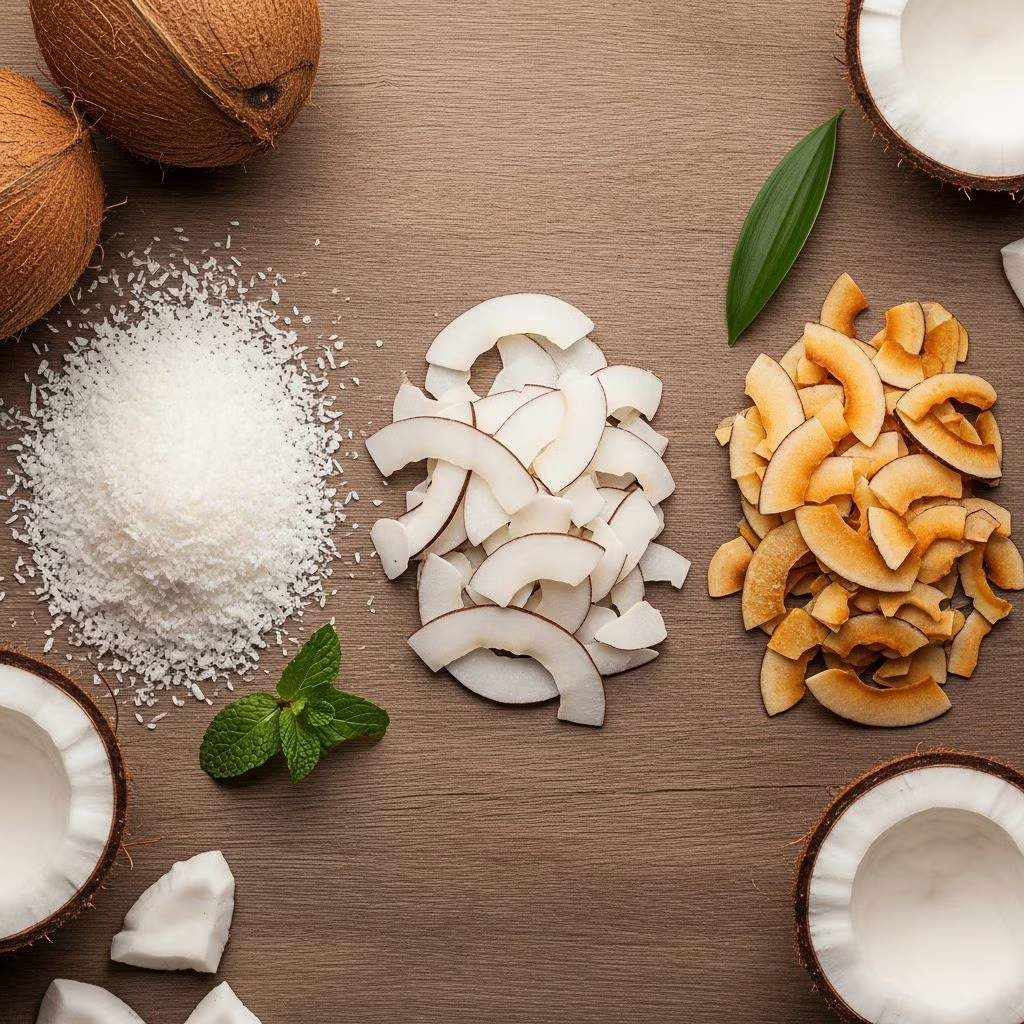
Desiccated coconut is the most finely ground form, resembling a coarse powder or very small shreds. It’s intensely dried, with minimal moisture (under 3%), making it shelf-stable and versatile for recipes needing even distribution.
Best uses:
- Incorporate into cake batters, cookies, and muffins for subtle coconut flavor without chewiness.
- Blend into smoothies, energy balls, or curries as a thickener.
- Coat fried foods or mix into breadcrumb alternatives for gluten-free crunch.
To make at home, crack a fresh coconut, peel the meat, grate using the finest holes, and dry in an oven at 200°F for 2-4 hours or use a dehydrator.
Shredded Coconut: Medium Texture for Versatility
Shredded coconut features longer, string-like pieces, about 1/4-inch long, with moderate moisture. Available sweetened or unsweetened, it’s a staple in baking for visible flecks and chew.
| Type | Moisture Level | Common Applications |
|---|---|---|
| Sweetened Shredded | Medium (10-15%) | Macaroons, pies, fruit salads |
| Unsweetened Shredded | Low (3-5%) | Granola, trail mix, savory rice |
Homemade shredded: Grate coconut meat with medium holes, optionally toss with sugar syrup (1/4 cup water + 4 tsp sugar per cup), and dry at low heat.
Coconut Flakes: Light and Airy Layers
Coconut flakes are thin, wide strips peeled directly from the meat, dried to a light, airy texture. Larger than shreds but smaller than chips, they offer a balance of chew and crispness.
Preparation tips:
- Peel mature coconut with a vegetable peeler after removing brown skin.
- Dehydrate at 150°F for 4-6 hours or bake at 300°F for 10-15 minutes, stirring often.
- For sweetened flakes, coat with powdered sugar, oil, and water mixture; let absorb before drying.
Flakes excel in toppings for yogurt, oatmeal, or as a cereal base, adding natural sweetness and fiber.
Coconut Chips: Crunchy Snack Stars
The largest form, coconut chips are thick, curved pieces that toast to a caramelized crunch. Unsweetened chips are naturally nutty; sweetened versions mimic commercial snacks like toasted coconut treats.
Recipe for caramelized chips: Mix 6 cups large unsweetened flakes with 1/3 cup maple syrup, 1 tbsp vanilla, and 1 tsp sea salt. Bake at 325°F for 12-15 minutes, stirring midway, then cool in oven for extra crisp.
Quick toasted version: Toss 1 1/3 cups flakes with sugar-water-salt syrup, bake 5-10 minutes at 325°F.
Sweetened vs. Unsweetened: Choosing Wisely
Sweetened coconut has added sugar (up to 40% by weight), making it moist and sticky, ideal for no-bake treats and confections. Unsweetened is drier, healthier (lower calories, no added sugars), and better for cooking where control over sweetness is key.
- Sweetened pros: Enhanced flavor, binds in recipes.
- Unsweetened pros: Versatile, keto/paleo-friendly, longer shelf life.
Substitution: Use unsweetened + extra sugar; reduce liquids in recipes.
Homemade Coconut Products: Step-by-Step
Start with a mature coconut (shake for water slosh). Drain, crack with hammer, pry out meat, peel skin.
- Grate/Shred: Use box grater for shreds/desiccated.
- Flake/Chip: Peeler or mandolin for strips/chips.
- Dry: Oven (lowest temp), dehydrator, or air-dry.
- Sweeten (optional): Simple syrup soak, drain, re-dry.
- Toast: Medium heat pan or oven for golden color.
Fresh vs. desiccated: Fresh cooks faster but spoils quicker; desiccated is drier, toasts evenly.
Storage and Shelf Life
Store in airtight containers in cool, dark places. Unsweetened lasts 6-12 months; sweetened 2-4 months due to moisture. Refrigerate for longer life, freeze up to 2 years. Check for rancid smell or mold.
Recipe Ideas Across Forms
Desserts
- Desiccated in coconut macaroons: Mix with egg whites, sugar; bake.
- Shredded in German chocolate cake frosting.
- Flakes on cheesecake toppings.
Snacks
- Chips: Season with sea salt, chili for savory crunch.
- Mix flakes into trail mix or chocolate clusters.
Savory Dishes
- Unsweetened shreds in coconut rice or curries.
- Chips as salad toppers or fish taco crunch.
Nutrition and Health Benefits
Coconut products are rich in medium-chain triglycerides (MCTs) for energy, fiber for digestion, and minerals like manganese. Unsweetened flakes offer about 100 calories per ounce, mostly healthy fats. Opt for organic to avoid pesticides.
Frequently Asked Questions
Can I substitute desiccated for shredded coconut?
Yes, but desiccated is finer and drier; add moisture if needed. Texture will be less chewy.
How do I toast coconut without burning?
Low heat (300°F), stir every 2-3 minutes, watch closely as it browns fast.
Is sweetened coconut bad for you?
In moderation, no; but high sugar content limits use in low-sugar diets. Choose unsweetened for health.
What’s the difference between flakes and chips?
Flakes are thinner, lighter; chips thicker, crunchier for snacking.
Can fresh coconut make desiccated?
Yes, grate finely and dry thoroughly.
Advanced Tips for Bakers and Cooks
Toast shreds for nuttier flavor in pies. Pulse flakes in food processor for custom sizes. Use chips in brittle or bark for texture contrast. Experiment with infusions like lime zest on chips for unique snacks.
Incorporate into vegan recipes: Coconut shreds bind burgers; flakes top acai bowls. For gluten-free baking, desiccated adds structure to flour blends.
References
- Homemade Shredded Coconut and Coconut Flakes — Whole New Mom. 2023-01-15. https://wholenewmom.com/homemade-shredded-coconut-homemade-coconut-chips/
- How To Make Coconut Flakes (Coconut Chips) — Alphafoodie. 2022-05-10. https://www.alphafoodie.com/how-to-make-coconut-flakes-coconut-chips/
- Coconut Chips (Dang copycat!) — Get Inspired Everyday. 2021-11-20. https://getinspiredeveryday.com/food/caramelized-coconut-chips/
- Toasted Coconut Chips in Under 10 Minutes — Cupcake Project. 2023-03-05. https://www.cupcakeproject.com/how-to-make-toasted-coconut-chips-with-sea-salt-and-caramel/
- Toasted Coconut Flakes — Chef Lola’s Kitchen. 2022-08-12. https://cheflolaskitchen.com/coconut-flakes/
- The Ultimate Guide to Coconut: From Shredded to Desiccated — Vietsun Holdings. 2024-02-28. https://vietsunholdings.com/news-detail/43/the-ultimate-guide-to-coconut–from-shredded-to-desiccated.htm
- HOW TO MAKE DESICCATED COCONUT AT HOME — YouTube (VietSun Holdings channel). 2023-06-15. https://www.youtube.com/watch?v=SeSlXKyjWe0