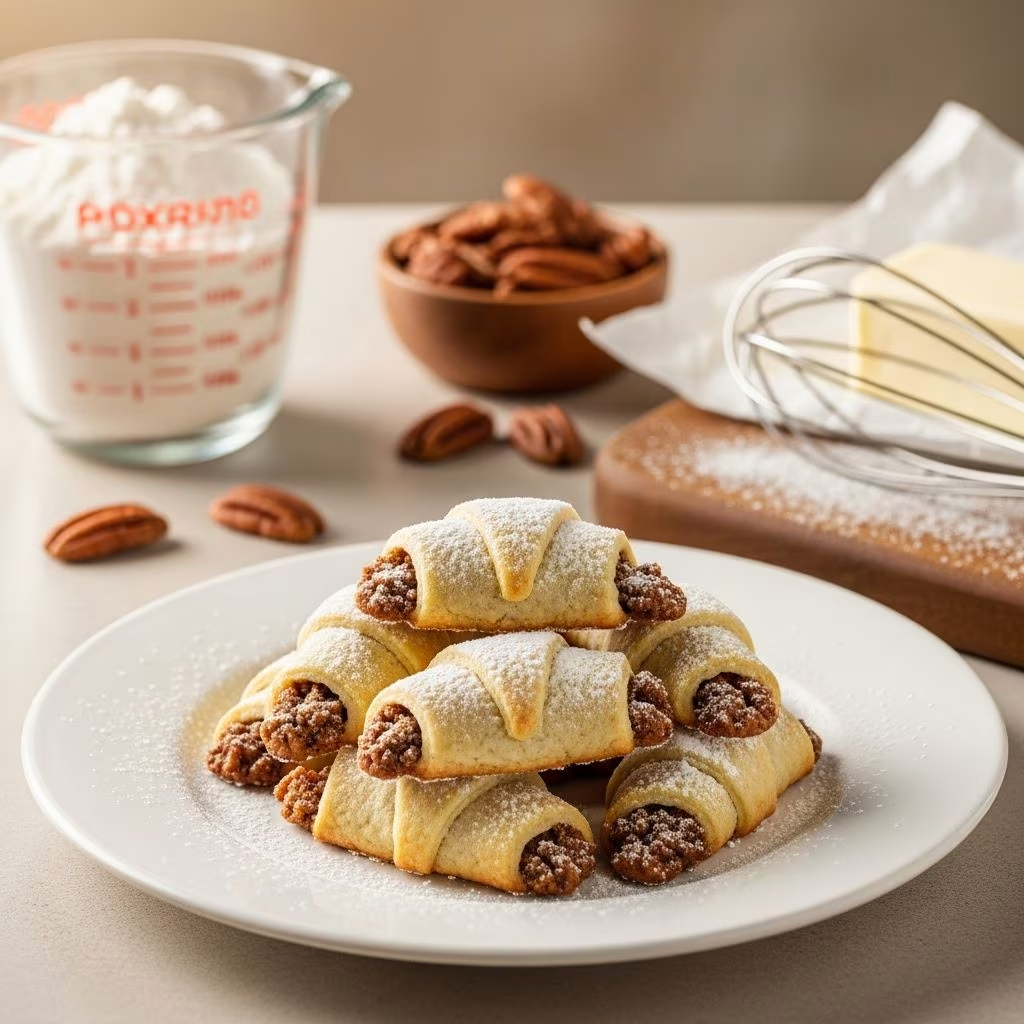
Pecan crescent cookies represent a timeless addition to any baker’s repertoire, combining simple ingredients with elegant presentation. These delicate, crescent-shaped treats showcase the natural richness of toasted pecans within a tender, buttery dough. Whether you’re preparing for a holiday celebration or seeking an afternoon treat, pecan crescents offer a sophisticated option that impresses both experienced bakers and novices alike. The beauty of this recipe lies in its straightforward methodology and the professional results it consistently delivers.
Understanding the Foundation: Essential Ingredients
Creating exceptional pecan crescents begins with understanding each ingredient’s role in the final product. The foundation of any quality pecan crescent relies on premium components that work in harmony to produce the desired texture and flavor profile.
The Role of Butter
Butter serves as the primary structural component and flavor base for pecan crescents. Using unsalted butter allows you to control the salt content throughout the recipe and provides a clean canvas for the nutty flavors of the pecans. The butter should be softened to room temperature before mixing, ensuring even distribution throughout the dough. This temperature consistency prevents lumps and promotes a uniform, creamy texture when combined with sugar.
Sugar and Sweetness Balance
The combination of granulated sugar during the initial mixing phase creates the structural framework for your cookies, while powdered sugar—applied after baking—adds a delicate, snowy finish. The powdered sugar coating serves multiple purposes: it provides aesthetic appeal, adds subtle sweetness to the finished product, and creates a tender mouthfeel as it dissolves on the palate. For those preferring less sweetness, the initial sugar measurement can be slightly reduced without compromising the cookie’s integrity.
Flour Selection and Measurement
All-purpose flour remains the standard choice for pecan crescents, offering the optimal balance between structure and tenderness. Accurate flour measurement proves essential—use a scale when possible or employ the spoon-and-level method to avoid packing too much flour into your measuring cup. Excess flour creates dense, tough cookies rather than the desired delicate crumb structure.
Pecans: Selection and Preparation
Toasted pecans provide superior flavor intensity compared to raw nuts. The toasting process releases volatile compounds and oils that deepen the nutty profile. Chop the pecans finely but not to powder consistency—medium-fine pieces allow distinct nut flavor while contributing to the cookie’s structure. Approximately one to two cups of finely chopped pecans creates the ideal ratio to other ingredients, providing noticeable pecan presence without overwhelming the delicate butter cookie base.
Mastering the Mixing Method
The mixing sequence directly influences texture development and the final product’s success. Understanding each step ensures consistent results across multiple batches.
Initial Butter and Sugar Combination
Begin by beating softened butter with granulated sugar at medium speed for approximately two to three minutes. This creaming process incorporates air into the butter, creating a pale, fluffy mixture. Scrape the bowl frequently to ensure all butter incorporates evenly, preventing pockets of unmixed ingredients that can result in uneven texture.
Incorporating Dry Ingredients
After achieving a creamy butter-sugar mixture, gradually introduce the flour, toasted pecans, and salt. Use low speed to prevent overdeveloping gluten, which would result in tough cookies. Mix only until the dry ingredients fully incorporate and the dough reaches a cohesive consistency. Some recipes employ a two-stage approach: first adding half the flour, then the pecans and remaining flour, which prevents the nuts from scattering.
Dough Temperature Management
Depending on your kitchen’s ambient temperature, the dough may require chilling before shaping. If the dough feels too soft or sticky to handle, refrigerate for fifteen to thirty minutes. This temperature adjustment prevents the crescents from spreading excessively during baking and maintains their defined crescent shape.
Shaping Techniques for Professional Results
The distinctive crescent shape distinguishes these cookies from other butter cookie varieties. Proper shaping technique ensures consistent sizing and even baking throughout your batch.
Rolling the Initial Form
Begin by rolling approximately one inch of dough into a ball between your palms. This initial ball serves as the foundation for the crescent shape. Consistent ball sizing—roughly equivalent to a small marble or pea—ensures uniform baking times across all cookies.
Creating the Crescent Shape
Once you’ve formed the initial ball, roll it between your palms, gradually extending it into a log approximately two-and-a-half inches long with tapered ends. The tapered ends are crucial—they prevent a bulky appearance and ensure the finished crescent has refined, elegant lines. After forming the log, gently curve it into a crescent shape, positioning it on your prepared baking sheet. Space the crescents approximately one inch apart to allow for minimal expansion during baking.
Parchment Paper Preparation
Using parchment paper or silicone baking mats prevents sticking and promotes even browning. These liners also facilitate easy cookie removal without damaging the delicate crescents, particularly important when applying the powdered sugar coating.
Baking Parameters and Temperature Control
Precise oven temperature and baking duration prevent both underbaking and excessive browning, which can compromise the cookies’ delicate texture.
Optimal Oven Temperature
Most pecan crescent recipes specify a 350°F oven temperature. This moderate temperature allows the cookies to bake through completely while developing a light golden brown color around the edges. Lower temperatures—around 300°C or approximately 150°F—require extended baking times but produce exceptionally tender cookies that truly melt in the mouth. Conversely, higher temperatures risk burning the exterior before the interior fully bakes.
Baking Duration and Visual Cues
At 350°F, pecan crescents typically require eleven to fourteen minutes for complete baking. The cookies are finished when the bottoms turn light golden brown and the edges show subtle color development. The tops often remain pale or very slightly golden—avoid the temptation to bake longer simply because the tops lack color. Overbaked crescents become hard and lose their desirable tender quality.
Cooling Procedures
Allow the cookies to cool on the baking sheet for approximately five minutes after removal from the oven. This brief resting period allows the structure to set without becoming brittle. The residual heat from the baking sheet gently firms the exterior while the interior remains tender. After this initial cooling, transfer the crescents to a wire rack for complete cooling.
The Powdered Sugar Finishing Technique
The application of powdered sugar transforms the basic butter cookie into an elegant finished product while adding a delicate sweetness and distinctive texture.
Double-Coating Method
Traditional preparation employs a double-coating technique. First, roll the warm cookies—while still slightly warm but cool enough to handle—in powdered sugar. The residual heat from the cookies helps the powdered sugar adhere and partially dissolve, creating a cohesive coating. Allow the cookies to cool completely on the wire rack, then gently roll them once more in fresh powdered sugar. This double coating ensures thorough coverage and creates a snowy, attractive appearance.
Powdered Sugar Measurement and Application
Prepare approximately one to two cups of powdered sugar in a shallow bowl for rolling. The bowl should be wide enough to accommodate rolling the crescent cookies comfortably. Use a gentle rolling motion rather than aggressive agitation to prevent damaging the delicate cookies.
Recipe Variations and Customization Options
While the classic pecan crescent recipe remains timeless, numerous variations accommodate different preferences and dietary requirements.
Glazed Versions
Some bakers prefer a drizzled glaze instead of or in addition to powdered sugar coating. Combine powdered sugar with liquid—water, milk, or for an adult variation, bourbon—stirring until reaching thin glazing consistency. Allow the baked and cooled crescents to dry completely, then drizzle with glaze. If desired, top the glaze with finely chopped pecans before it sets.
Flavor Enhancements
Vanilla extract amplifies the butter flavor and provides subtle complexity. For adventurous bakers, almond extract—approximately one-half teaspoon—adds complementary nutty notes without overwhelming the pecan flavor. Some traditional recipes incorporate rose water or other extracts for regional variations.
Alternative Nut Variations
While pecans provide the traditional base, walnuts, almonds, or hazelnuts offer interesting alternatives. Maintain the same quantity measurements but adjust toasting times based on the nut variety, as different nuts brown at varying rates.
Storage and Make-Ahead Strategies
Proper storage techniques preserve the cookies’ quality and allow for convenient preparation ahead of gatherings.
Short-Term Storage
Store completely cooled pecan crescents in an airtight container at room temperature for up to one week. Layer cookies between parchment paper to prevent powdered sugar from transferring between pieces and to protect the delicate crescents from breaking.
Freezer Preparation and Extended Storage
Shaped crescent dough can be frozen before baking, allowing bakers to prepare multiple batches ahead. Arrange the shaped crescents on a parchment-lined baking sheet and freeze for thirty to forty minutes until solid. Transfer the frozen crescents to a freezer-safe container and store for up to six weeks. When ready to bake, place the frozen crescents on a parchment-lined baking sheet and bake from frozen without defrosting, adding two to three additional minutes to the standard baking time.
Troubleshooting Common Baking Challenges
Even experienced bakers occasionally encounter issues. Understanding common problems and their solutions promotes success.
| Challenge | Potential Cause | Solution |
|---|---|---|
| Cookies spread excessively | Dough too warm; oven temperature too low | Refrigerate dough before shaping; verify oven temperature with oven thermometer |
| Hard, brittle texture | Overbaked; excess flour in dough | Reduce baking time; use scale for accurate flour measurement |
| Cookies stick to baking sheet | Insufficient parchment paper; cookies still warm | Use parchment paper or silicone mats; allow initial five-minute cooling |
| Uneven browning | Oven hot spots; inconsistent sizing | Rotate baking sheet halfway through; maintain consistent ball/log sizes |
| Powdered sugar coating won’t stick | Cookies too cool; insufficient moisture | Roll in powdered sugar while still warm; lightly brush with water if needed |
Frequently Asked Questions
Can I use salted butter instead of unsalted?
While possible, unsalted butter is recommended because it allows precise control over total salt content. If using salted butter, reduce the recipe’s salt measurement by one-quarter teaspoon.
How do I know when the cookies are perfectly baked?
Look for light golden brown edges and pale golden bottoms. The tops should remain relatively pale. Cookies continue cooking slightly after removal from the oven, so slight underbaking is preferable to overbaking.
What’s the best way to toast pecans?
Spread pecans on a baking sheet and toast at 350°F for five to eight minutes, stirring occasionally, until fragrant. Cool completely before chopping and incorporating into the dough.
Can I make these cookies dairy-free?
Dairy-free butter substitutes can replace traditional butter in most recipes. Results may vary slightly in texture, so test a small batch before preparing larger quantities.
How far in advance can I prepare pecan crescents?
Baked cookies keep refrigerated for up to one week or frozen for up to three months in airtight containers. Shaped dough freezes for up to six weeks. Apply powdered sugar coating just before serving for optimal appearance.
Conclusion: Elevating Your Baking Experience
Pecan crescents represent more than simply a recipe—they exemplify the satisfaction of combining quality ingredients with proper technique to create memorable treats. Whether preparing for holiday gatherings, special occasions, or everyday enjoyment, mastering this classic cookie recipe adds a valuable skill to your baking knowledge. The elegant crescent shape, buttery texture, and distinctive pecan flavor create an impression of professional bakery quality while remaining accessible to home bakers of varying experience levels. By understanding ingredient roles, perfecting shaping techniques, and respecting baking fundamentals, you’ll consistently produce pecan crescents that delight family and guests alike.
References
- Bourbon Glazed Pecan Crescents Recipe — Land O’Lakes. Accessed April 2026. https://www.landolakes.com/recipe/6195/bourbon-glazed-pecan-crescents/
- Easy Pecan Crescent Cookies Recipe — Momsdish. Accessed April 2026. https://momsdish.com/recipe/pecan-crescent-cookies
- Pecan Pie Crescents Recipe — Steph’s Stove. Accessed April 2026. https://www.youtube.com/watch?v=1QBOnLlBybM
- Great-Grandma Rose Schade’s Pecan Crescent Cookies — Bungalow Chef. Accessed April 2026. https://www.bungalowchef.com/post/pecan-crescent-cookies
- Pecan Shortbread Crescents — Linen and Gray. Accessed April 2026. https://linenandgray.com/pecan-shortbread-crescents-snowballs-and-slice-bake-too/
- Crescent Pecan Cookies Recipe — My Sweet Ambitions. Accessed April 2026. https://www.youtube.com/watch?v=e8GsiO5x_mc