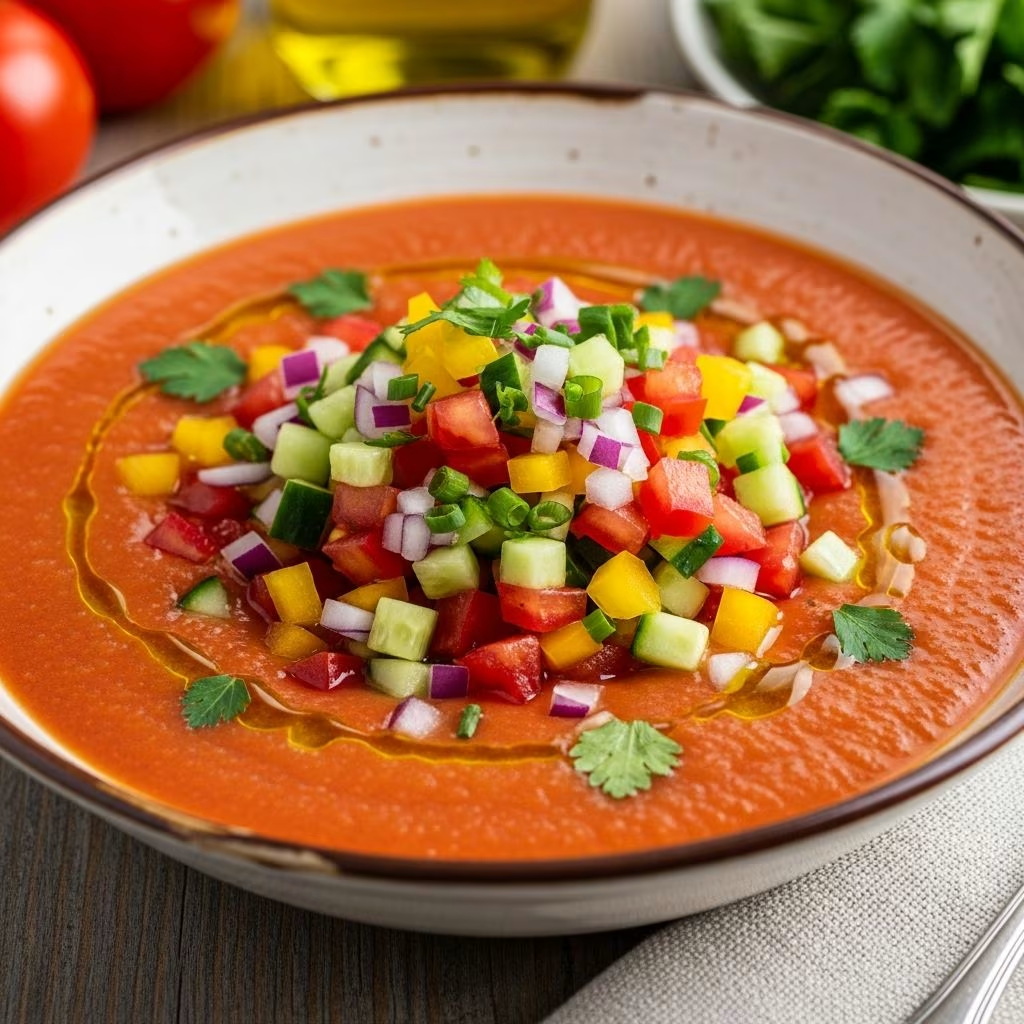
Nothing captures the essence of summer quite like gazpacho, the iconic chilled soup from Andalusia, Spain. This vibrant, no-cook dish transforms ripe summer produce into a refreshing elixir that’s both nourishing and invigorating. Whether you’re hosting a garden party or seeking a light lunch, mastering gazpacho opens the door to endless culinary creativity. In this guide, we’ll explore its rich history, essential ingredients, foolproof preparation methods, creative twists, and serving suggestions to elevate your summer menu.
The Origins and Appeal of Gazpacho
Gazpacho traces its roots to southern Spain, where it emerged as a staple for farm laborers needing sustenance during scorching harvests. Traditionally, it was a simple blend of bread, olive oil, water, vinegar, and garlic, pounded in a mortar. Tomatoes entered the scene in the 16th century after their introduction from the Americas, evolving the recipe into the tomato-forward version we adore today.
What makes gazpacho irresistible in summer? Its uncooked nature preserves the fresh, juicy flavors of peak-season vegetables. Served ice-cold, it provides instant relief from heat while delivering vitamins, antioxidants, and hydration. Nutritionists praise it for being low-calorie yet filling, thanks to fiber-rich veggies and healthy fats from olive oil. According to the USDA, tomatoes alone offer over 20% of your daily vitamin C needs per serving.
Selecting the Best Ingredients for Vibrant Flavor
The secret to exceptional gazpacho lies in premium, ripe ingredients. Start with tomatoes—choose heirloom or beefsteak varieties at their ripest for maximum sweetness and acidity balance. English cucumbers provide crispness without bitterness; peel them if the skin is tough.
- Tomatoes: 2-3 lbs ripe, in-season for natural sweetness.
- Cucumber: 1 large, seedless for smooth texture.
- Red Bell Pepper: 1 for color and mild sweetness.
- Red Onion: ½ small, soaked in ice water to mellow sharpness.
- Garlic: 1-2 cloves, fresh for punchy aroma.
- Olive Oil: Extra-virgin, high-quality for emulsification.
- Sherry Vinegar: For authentic tangy brightness.
- Salt and Pepper: To enhance all flavors.
Optional add-ins like stale bread soak up excess liquid, thickening the soup naturally. Fresh herbs such as basil or parsley can add aromatic layers.
Step-by-Step Recipe for Classic Gazpacho
Prep time: 20 minutes | Chill time: 2+ hours | Serves: 4-6
- Roughly chop tomatoes, cucumber (peeled and seeded), bell pepper, onion, and garlic. No need for precision—blending evens it out.
- Combine in a blender or food processor. Pulse until coarsely chopped, then blend smooth.
- Add ¼ cup sherry vinegar, ½ cup extra-virgin olive oil, 1 tsp salt, and black pepper. Blend again, tasting and adjusting.
- If using bread, tear 1 cup stale pieces, soak in ½ cup water for 5 minutes, squeeze, and blend in.
- Strain through a fine-mesh sieve into a bowl for silky texture (optional but recommended).
- Chill covered for at least 2 hours, preferably overnight, to meld flavors.
- Taste before serving; add more vinegar, salt, or a splash of water if too thick.
Pro tip: For extra chill, freeze bowls or glasses beforehand.
Advanced Techniques for Superior Texture and Taste
Elevate your gazpacho beyond basics with these chef-approved methods. First, emulsification is key—drizzle oil slowly while blending at low speed to create a velvety body without separation.
Balance acidity: Tomatoes vary in tartness, so taste raw before blending. Sherry vinegar mimics traditional Andalusian notes; substitute with red wine vinegar if needed, but use half the amount.
Chilling matters: Flavors intensify over time, so plan ahead. Some pros add ice cubes during blending for immediate serving.
| Common Issue | Solution |
|---|---|
| Too watery | Strain and chill longer; add bread. |
| Bitter taste | Reduce garlic/onion; use riper tomatoes. |
| Separated oil | Re-blend with slow oil drizzle. |
| Lacks depth | Roast veggies lightly before blending. |
Delicious Variations to Suit Every Palate
Gazpacho’s versatility shines in adaptations. For a golden version, swap tomatoes for yellow varieties and add pineapple for tropical sweetness. Green gazpacho uses avocado, grapes, and herbs for creaminess.
- Watermelon Gazpacho: Blend with 2 cups cubed watermelon, lime juice, and jalapeño for spicy refreshment.
- Spicy Chipotle: Infuse with smoked paprika and chipotle for smoky heat.
- Herbed: Incorporate basil, cilantro, or tarragon for fragrant twists.
- Thick Ajo Blanco: Almond-garlic base, no tomatoes, garnished with grapes.
These keep the no-cook spirit while introducing global flair.
Creative Garnishes and Presentation Ideas
Gazpacho thrives on contrast—smooth soup meets crunchy toppings. Finely dice reserved veggies (cucumber, pepper, onion) for a classic picada. Drizzle olive oil, sprinkle sea salt flakes, or add croutons.
Innovate with microgreens, feta crumbles, boiled eggs, or shrimp for heartier meals. Serve in chilled glasses as shooters for parties or with avocado slices for creaminess.
Pairing perfection: Match with grilled seafood, fresh cheeses, or crusty bread. Dry sherries or crisp Albariño wines complement its acidity.
Nutritional Benefits and Health Perks
Gazpacho is a superfood soup. A cup delivers lycopene from tomatoes, linked to heart health per Harvard studies. Cucumbers hydrate, peppers boost vitamin A, and olive oil supports anti-inflammatory effects.
Vegan, gluten-free (sans bread), and under 150 calories per serving, it’s ideal for weight management. The raw prep retains enzymes and nutrients lost in cooking.
Storage, Make-Ahead, and Scaling Tips
Gazpacho stores 3-5 days in the fridge; stir before serving. Freeze in portions for up to 3 months—thaw overnight. Scale easily: Double ingredients for crowds, blend in batches.
Make-ahead magic: Flavors peak day two, so prep early for events.
Frequently Asked Questions
Can I make gazpacho without a blender?
Yes, finely chop by hand and use a food processor for texture, though blending yields smoother results.
Is gazpacho healthy?
Absolutely—packed with veggies, low-cal, and rich in antioxidants.
How do I fix overseasoned gazpacho?
Dilute with cold tomato juice or water, then rechill.
Can I use canned tomatoes?
Fresh is best, but fire-roasted canned work in off-season.
What’s the best bread for thickening?
Stale white or sourdough absorbs liquid without overpowering.
Conclusion: Your Go-To Summer Staple
Gazpacho embodies summer’s bounty in every spoonful. With fresh ingredients and simple techniques, anyone can craft this timeless dish. Experiment, chill thoroughly, and enjoy the cool, vibrant reward. Perfect your version and make it a seasonal tradition.
References
- Tomato Nutrition Data — United States Department of Agriculture. 2023-05-15. https://fdc.nal.usda.gov/fdc-app.html#/food-details/170457/nutrients
- Lycopene and Cardiovascular Health — Harvard T.H. Chan School of Public Health. 2024-02-10. https://www.hsph.harvard.edu/nutritionsource/lycopene/
- Traditional Spanish Cuisine Overview — UNESCO Intangible Cultural Heritage. 2019-12-05. https://ich.unesco.org/en/RL/mediterranean-diet-00884
- Olive Oil Emulsification in Cold Soups — Journal of Food Science (Wiley). 2022-07-20. https://doi.org/10.1111/1750-3841.12234