Deviled eggs represent one of the most enduring appetizers in culinary tradition, combining simplicity with elegance. Whether you’re preparing them for a holiday gathering, weekend brunch, or casual get-together, this beloved dish delivers impressive results with minimal effort. The beauty of deviled eggs lies in their versatility—a basic formula of egg yolks, mayonnaise, and mustard can be customized in countless ways to suit any palate or dietary preference.
Understanding the Foundation: Core Ingredients Explained
The foundation of deviled eggs relies on a handful of essential components that work together to create the characteristic creamy, tangy filling. The egg yolks form the base, providing richness and structure. Mayonnaise acts as the primary binding agent, delivering creaminess and helping to emulsify the mixture into a smooth consistency. Dijon or yellow mustard introduces depth of flavor and a subtle sharpness that balances the richness of the mayo. Salt and black pepper serve as flavor enhancers, brightening the overall taste profile.
Beyond these basics, many recipes incorporate pickle relish or diced pickles, which add texture and a briny complexity. Some variations include a touch of sugar to provide subtle sweetness that rounds out the flavors. Greek yogurt can substitute for or blend with mayonnaise for a lighter version. These foundational ingredients create a filling that tastes balanced and sophisticated without requiring advanced cooking techniques.
Preparing Perfect Hard-Boiled Eggs: Three Essential Methods
The success of your deviled eggs begins with properly cooked hard-boiled eggs. Mastering the cooking process ensures that eggs peel easily and achieve the ideal texture—firm whites with a pale yellow yolk, not an unappetizing gray-green ring.
The Stovetop Approach
The traditional stovetop method remains popular and reliable. Place eggs in a saucepan and cover them with cold water. Heat the pot over medium-high heat until the water reaches a rolling boil. Once boiling, stir in one teaspoon of baking soda (this ingredient significantly aids peeling by reducing the bond between the shell and the egg white), cover the pot with a lid, and remove from heat. Allow the eggs to sit undisturbed for 12 minutes. Transfer them immediately to an ice water bath to halt the cooking process, which prevents that unwanted green ring from forming.
The Instant Pot Method
Modern pressure cookers offer a faster alternative. Add one cup of water to the Instant Pot and place the wire rack on top. Arrange eggs on the rack and cook on high pressure for five minutes. After cooking, allow a five-minute natural release before opening the pot. Transfer eggs to an ice water bath for five minutes to cool completely. This method is particularly effective for producing eggs that peel cleanly and quickly.
The Oven Approach
For those who prefer avoiding stovetop involvement, oven-baking provides a hands-off option. Preheat your oven to 325 degrees Fahrenheit. Place each egg in the cup of a standard muffin tin and bake for 30 minutes. Remove the eggs and immediately transfer them to an ice water bath to cool. This method works well when preparing larger quantities simultaneously.
The Filling Preparation Process: Step-by-Step Construction
Once your eggs have cooled completely, the actual assembly begins. Crack and peel each egg carefully, working under cool running water if desired to make peeling easier. Slice each egg lengthwise and use a small spoon or knife to gently remove the yolk, placing it in a medium mixing bowl while arranging the empty white halves on a serving plate.
Mash the yolks with a fork until they achieve a crumbly texture with no large chunks remaining. This breaks down the yolks and prepares them to combine smoothly with the other ingredients. Add mayonnaise gradually, starting with a smaller amount and adjusting to reach your preferred consistency. Follow with mustard, tasting as you go since mustard flavor can vary significantly between types and brands. Season with salt and freshly ground black pepper, adjusting to your taste preference. The resulting mixture should be smooth, creamy, and spreadable.
Assembly and Presentation Techniques
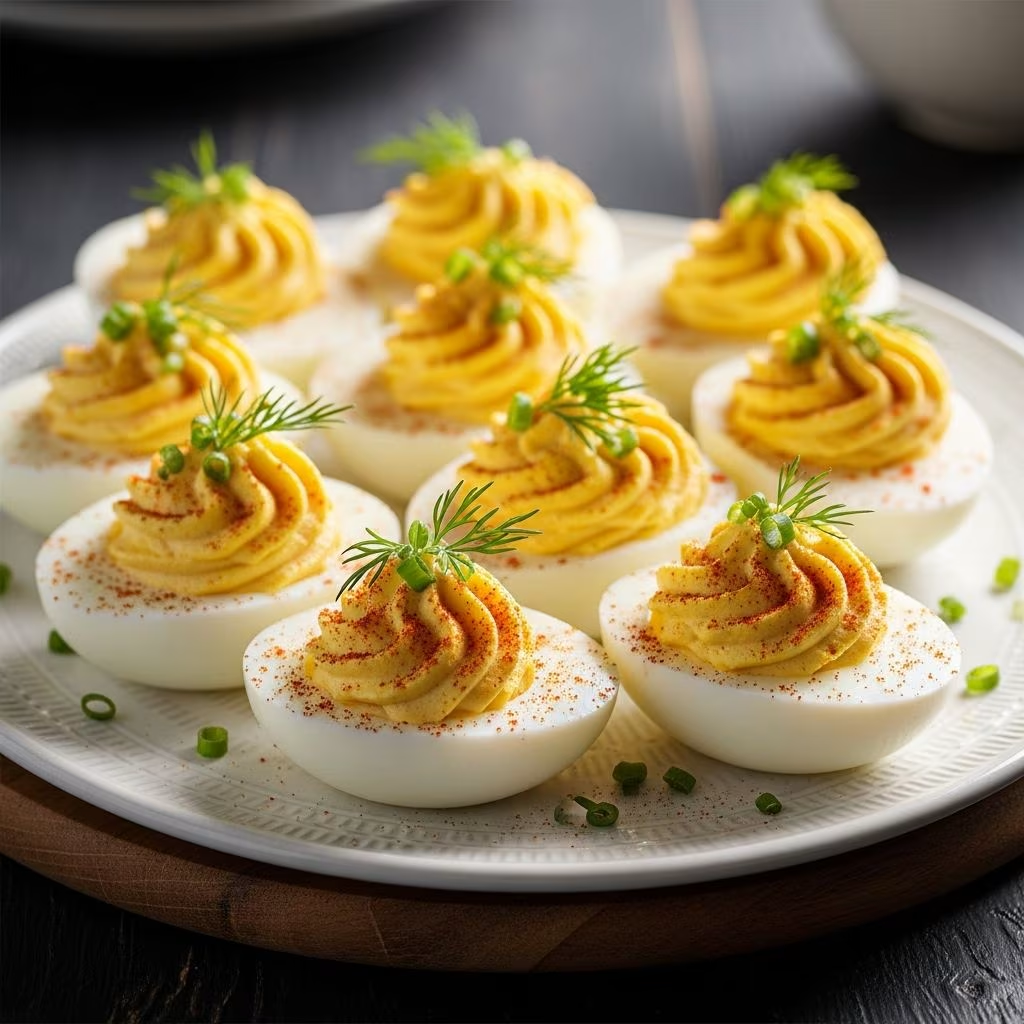
Fill each egg white half with the prepared yolk mixture using one of several methods. A simple approach involves spooning the mixture into each white. For a more polished presentation, transfer the mixture to a piping bag fitted with a decorative tip and pipe it into the whites, creating attractive peaks. This technique works particularly well when serving at formal occasions or for photography.
Garnish each deviled egg just before serving with traditional paprika, which provides both visual appeal and subtle flavor. Other garnish options include finely chopped fresh chives, a sprinkle of cayenne pepper for heat, crispy bacon pieces, fresh dill, or minced parsley. These finishing touches add visual interest and allow guests to identify flavor variations at a glance.
Creative Variations: Beyond the Classic Formula
While the classic version never goes out of style, exploring flavor variations keeps this appetizer exciting. Avocado deviled eggs incorporate one or two mashed avocados into the yolk mixture, creating a creamier texture and richer flavor profile. Bacon lovers can add diced, cooked bacon to the filling, providing smoky crunch. Fresh herb varieties like dill or basil introduce garden-fresh notes.
Southern-inspired versions incorporate hot sauce and garlic powder alongside the traditional ingredients, delivering bolder flavors. Mediterranean variations might feature sun-dried tomatoes, olives, or herbs like oregano. Spicy versions increase the heat quotient with additional cayenne pepper or jalapeño peppers. Sweet variations include a pinch of sugar to balance the savory elements, while others add a teaspoon of sweet pickle juice for complexity.
Storage and Make-Ahead Strategies
Deviled eggs can be prepared substantially in advance, making them ideal for busy hosts. Store filled eggs in sealed containers in the refrigerator until ready to serve, typically up to three days before quality begins to decline. Alternatively, prepare the filling and store it separately from the egg whites, combining them just before serving for maximum freshness and optimal texture.
If preparing eggs more than a day ahead, consider storing the filling and whites separately, then assembling shortly before the event. This prevents the filling from absorbing moisture from the egg whites and maintains the intended texture. Keep deviled eggs refrigerated until serving time, removing them from the refrigerator approximately 15 minutes before guests arrive to allow them to come to room temperature slightly, which enhances flavor perception.
Ingredient Ratio Reference Guide
| Serving Size | Eggs | Mayonnaise | Mustard | Salt & Pepper | Optional Additions |
|---|---|---|---|---|---|
| Individual (1 serving) | 1 | 2 teaspoons | ½ teaspoon | Pinch each | Paprika, optional pickle juice |
| Small gathering (6 servings) | 6 | ¼ cup | 1 tablespoon | To taste | Pickle relish, fresh herbs |
| Medium event (12 servings) | 12 | ⅓ cup | 1½ teaspoons | To taste | Relish, bacon, varied garnishes |
| Large gathering (24 servings) | 24 | ⅔ cup | 3 tablespoons | To taste | Multiple flavor variations |
Frequently Asked Questions
Why do my egg yolks sometimes turn green?
The gray-green ring that occasionally appears on cooked egg yolks results from overcooking and the reaction between the yolk’s iron and sulfur compounds in the white. Prevent this by immediately transferring cooked eggs to an ice water bath to halt the cooking process. Using the recommended cooking times for each method helps avoid this cosmetic issue without affecting taste.
What’s the best way to peel hard-boiled eggs?
The baking soda method significantly improves peeling ease. After cooking and cooling, crack the shell all over, then roll gently to loosen it. Start peeling from the wider end where a small air pocket exists. Peeling under cool running water helps separate the membrane from the egg white, making removal easier and faster.
Can I make deviled eggs without mayonnaise?
Yes, Greek yogurt provides a lighter alternative or can blend with a smaller amount of mayo. Some recipes use Miracle Whip for a tangier filling. Avocado-based fillings work beautifully for those avoiding eggs-based condiments. Adjust seasonings when substituting ingredients since flavor profiles differ from traditional mayonnaise.
How far in advance can deviled eggs be prepared?
Fully assembled deviled eggs keep refrigerated for up to three days. Separating components and assembling just before serving extends the time you can prepare ahead while maintaining ideal texture and freshness. This strategy works particularly well for events where timing constraints limit last-minute preparation.
What garnishes work best for different occasions?
Classic paprika suits any occasion and provides universal appeal. For formal events, consider delicate herb garnishes and piped filling for polished appearance. Casual gatherings accommodate bacon bits, chopped pickles, and bold garnishes. Holiday parties might feature festive touches like pomegranate seeds or microgreens for visual interest.
Troubleshooting Common Issues
If your filling appears too thick, add mayonnaise one teaspoon at a time until reaching desired consistency. If too thin or watery, add more mashed yolk or a touch of additional mayo. When mustard flavor seems overwhelming, dilute it slightly with more mayo and rebalance seasonings. If the filling separates or appears grainy, ensure all ingredients are at similar temperatures and mix more gently with a fork rather than vigorous beating.
When eggs prove difficult to peel, ensure you’re using the baking soda method or pressure cooker approach, both of which significantly improve peeling ease. If yolks appear pale or lack vibrancy, you may be overcooking eggs slightly—reduce cooking times by one minute and try again. If filling tastes bland, taste and adjust salt and mustard gradually, remembering that flavors intensify when eggs are refrigerated.
Selecting Quality Ingredients for Superior Results
Using fresh eggs typically 7-10 days old rather than very fresh eggs improves peeling ease since older egg shells separate more readily from the whites. Select mayonnaise and mustard that align with your flavor preferences, noting that Dijon mustard provides more sophisticated taste while yellow mustard delivers milder flavor. If using pickle relish, choose versions without excessive sugar unless you prefer sweeter results. Fresh herbs should appear vibrant and aromatic, indicating peak flavor content.
Serving Suggestions and Occasions
Deviled eggs shine at holiday gatherings, Easter brunches, summer picnics, and casual entertaining. They work equally well as impressive appetizers at cocktail parties or casual additions to casual potlucks. Their no-heat-required nature and make-ahead capabilities make them ideal for busy hosts. Serve on decorative platters, garnish generously, and watch them disappear quickly as guests discover your flawless preparation.
References
- Easy Deviled Eggs Recipe — Tastes Better From Scratch. Retrieved from https://tastesbetterfromscratch.com/traditional-deviled-eggs/
- Easy Classic Deviled Eggs Recipe — To Simply Inspire. Retrieved from https://www.tosimplyinspire.com/deviled-eggs.html
- Easy Deviled Eggs Recipe — Glenda Embree. Retrieved from https://glendaembree.com/easy-deviled-eggs-recipe
- Classic Southern Deviled Eggs — Southern Bite. Retrieved from https://southernbite.com/classic-southern-deviled-eggs/
- Easy Deviled Eggs Recipe — YouTube, Preppy Kitchen. Retrieved from https://www.youtube.com/watch?v=hqkkwIVEE00